


Why Positive Behavior Supports Matter for Your Child’s Success
Positive behavior supports (PBS) are evidence-based strategies that help children with autism and other developmental challenges thrive. The focus is on understanding behavior, teaching new skills, and creating supportive environments. Effective PBS is defined by:
- Person-centered approach: Plans are built around your child’s unique needs and strengths.
- Proactive strategies: The focus is on prevention rather than punishment.
- Quality of life focus: The goal is to improve overall well-being, not just reduce problem behaviors.
- Family collaboration: Parents are active partners in the process.
- Data-driven decisions: Progress is measured and plans are adjusted accordingly.
Research shows that 80% to 85% of students demonstrate positive behavior when universal supports are in place. Schools implementing PBS see a 90% or more reduction in problem behavior in over half of studies.
PBS emerged as a compassionate alternative to punishment-based approaches. It combines behavioral science with person-centered values, teaching replacement skills while modifying environments to prevent challenges. Instead of just eliminating behaviors, PBS asks, “What is this behavior telling us?” and “How can we help this person get their needs met in a better way?”
I’m Mayer Kulefsky, director of operations at Bedrock ABA. My experience overseeing positive behavior supports programs has shown me how the right approach can transform not just a child’s behavior, but their entire family’s quality of life.
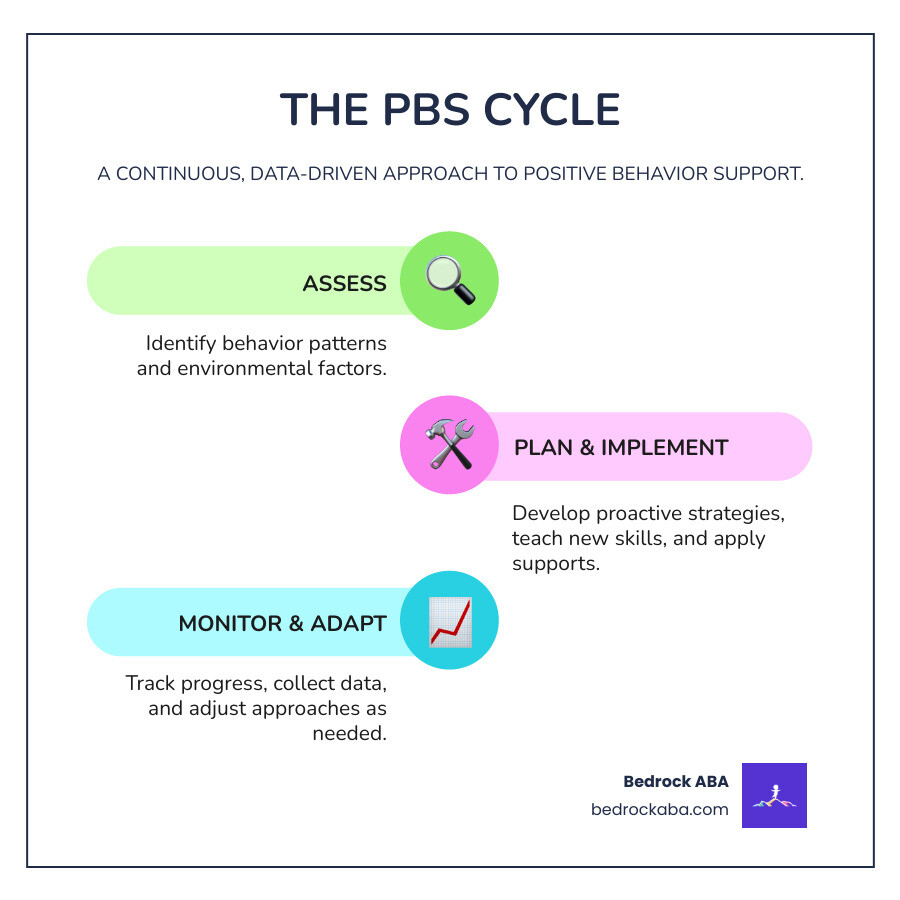
Simple guide to positive behavior supports:
Understanding the Framework of Positive Behavior Supports
Positive behavior supports (PBS) is an evidence-based approach that focuses on improving quality of life while decreasing problem behavior. Instead of just stopping unwanted behaviors, PBS asks deeper questions: What is this person trying to communicate? How can we teach them better ways to get their needs met?
PBS is built around person-centered values, meaning every plan is unique to the individual’s strengths, preferences, and goals. The approach involves teaching new skills while making environmental changes to set people up for success. Instead of reacting to problems, we proactively modify situations and teach replacement skills before challenges arise.
For families wanting to dive deeper, you can find more info about Positive Behavior Support or explore a research-based definition of PBS from leading experts.
Core Principles and Components
The heart of positive behavior supports beats with several core principles that guide everything we do:
- Valued outcomes: We look beyond reducing problem behaviors to help people succeed in relationships, feel satisfied with their lives, and participate in their communities.
- Behavioral & biomedical science: We use principles from applied behavior analysis to understand behavior, while also considering medical factors that might influence actions.
- Validated procedures: We use strategies that research has proven to be effective.
- Systems change: We look at a person’s whole world, which may involve adjusting family routines or collaborating with schools.
- Proactive vs. reactive: We focus on prevention by teaching skills during calm moments and modifying environments to reduce triggers.
- Respect and dignity: Every person is treated with compassion, and we avoid coercive or punitive approaches.
- Collaboration: The best plans happen when families, educators, and professionals work together as true partners.
How PBS Relates to ABA and PBIS
The relationship between Positive Behavior Support, Applied Behavior Analysis (ABA), and Positive Behavioral Interventions and Supports (PBIS) can be confusing. Think of them as a family tree with shared roots.
Applied Behavior Analysis (ABA) is the scientific foundation, providing the principles of learning and behavior. You can learn more info about what is ABA therapy and how does it work on our blog.
PBS grew out of ABA but expanded the focus to be more person-centered, prioritizing quality of life and social belonging. PBS explicitly moved away from punishment-based methods, focusing instead on proactive, preventative strategies. Research shows the familial alliance between PBS and ABA while highlighting their distinct contributions.
PBIS takes PBS principles and applies them at a system-wide level, especially in schools.
| Framework | Primary Focus | Scope | Typical Setting(s) |
|---|---|---|---|
| ABA | Scientific principles of learning and behavior | Broad science, can be applied to any behavior | Clinical, home, school, community (individualized) |
| PBS | Improving quality of life and reducing challenging behavior through proactive, person-centered strategies | Individualized, comprehensive support plans | Home, school, community, residential facilities |
| PBIS | Creating positive, predictable, and safe learning environments | School-wide, tiered prevention model | Schools (K-12), early childhood, juvenile justice |
The Tiered Approach in Schools (PBIS)
When positive behavior supports enter the school world, they often become PBIS—a three-tiered system of support.
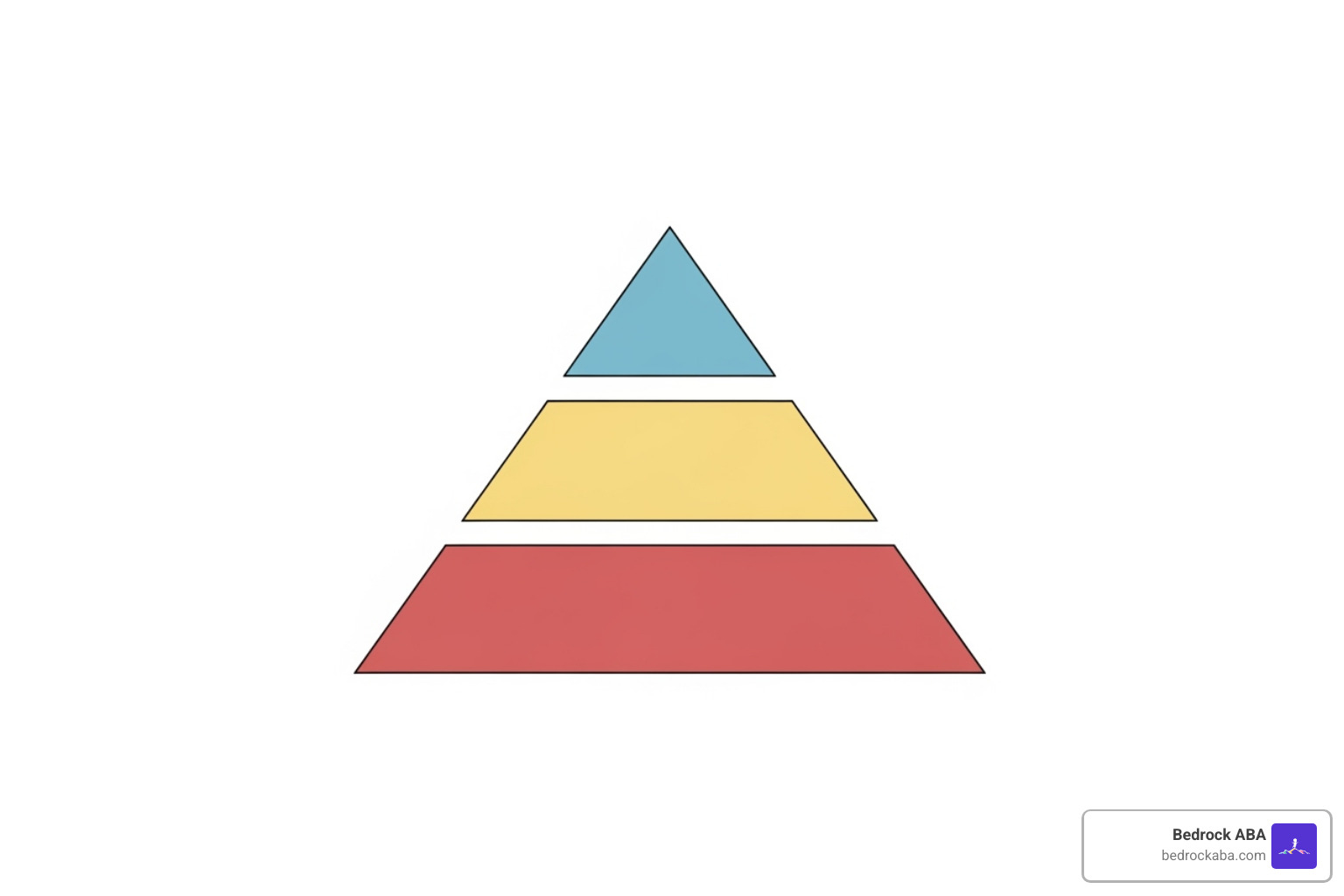
- Tier 1 Universal supports form the foundation for all students (about 80-85%). This includes clearly defined and taught behavioral expectations, like “Be Respectful, Be Responsible, Be Safe.”
- Tier 2 Targeted supports help the 10-15% of students who need extra help. This might include small social skills groups or check-in/check-out systems.
- Tier 3 Intensive supports serve the 1-5% of students with complex behavioral challenges. These students receive highly individualized plans based on functional behavior assessments.
This tiered approach ensures resources are used efficiently while making sure no student falls through the cracks. For educators wanting to learn more, Supporting Positive Behaviour in Alberta Schools: A school‑wide approach provides excellent guidance.
The Goals and Proven Benefits of Implementing PBS
The research is clear: positive behavior supports don’t just reduce challenging behaviors—they transform lives in meaningful, lasting ways.
Improving Quality of Life for Everyone
When we implement PBS, we’re opening doors to a richer, more fulfilling life. Children learn to communicate their needs effectively, which increases personal satisfaction. As they develop appropriate ways to engage with others, improved social interactions and friendships can bloom. This leads to greater community inclusion, allowing families to enjoy restaurants, events, and activities together.
Perhaps most importantly, PBS focuses on supporting families and reducing caregiver stress. When parents feel more confident and the family dynamic improves, stress decreases and joy increases. This emotional regulation component is so crucial that we often integrate strategies from ABA Therapy for Emotional Regulation into our PBS approach.
Practical Applications and Examples
Positive behavior supports shine in their real-world applications across different settings:
- Home settings: PBS transforms daily routines. A morning battle over getting dressed can become a smooth process with visual choices, a picture schedule, and positive reinforcement.
- Teaching communication skills: Instead of acting out in frustration, a child learns to use a “break” card or simple signs to communicate their needs. Providing better tools for communication naturally decreases challenging behavior.
- School settings: Teachers create predictable routines with visual schedules and establish environmental modifications like quiet corners for sensory breaks. The focus shifts from punishment to teaching and celebrating successful behavior.
- Community settings: Families can prepare for outings using social stories. They might choose off-peak shopping times or bring noise-canceling headphones. The goal is to build skills that make community participation successful.
For more on classroom strategies, see Supporting Positive Behaviour in Alberta Schools: A classroom approach.
Measuring Success: What the Research Shows
We believe in letting the data tell the story. Measuring success goes beyond simply counting fewer outbursts—though those improvements matter tremendously to families.
The numbers speak volumes. Research consistently shows that a 90% or more reduction in problem behavior occurs in over half of PBS studies, with complete elimination in over 26% of cases. These are life-changing results backed by rigorous research.
When children spend less time engaged in challenging behaviors, academic improvement and social-emotional competence naturally follow. They participate more in class, complete assignments, and build better relationships.
But the most meaningful measure is quality of life improvement. We assess whether children are happier, more engaged, and able to participate in activities they enjoy. The research on staff training, documented in studies like A review on the effectiveness of positive behaviour supports, shows that when caregivers are properly trained, outcomes improve dramatically. This commitment to evidence-based practice ensures that PBS delivers real, measurable benefits.
What Defines a High-Quality Positive Behavior Supports Provider?
Choosing a provider for positive behavior supports can feel overwhelming. Fortunately, there are clear markers that distinguish exceptional PBS providers.
Key Elements of a Successful PBS Plan

A high-quality PBS plan is a custom roadmap for your child’s success, not a one-size-fits-all template. It should include:
- A Functional Behavior Assessment (FBA): This is the foundation. A thorough FBA involves collecting data to understand the “why” behind a behavior—is it for attention, escape, or sensory input?
- Person-centered planning: Your child and family are at the center of every decision. The plan should reflect your hopes, goals, and concerns.
- Proactive strategies: The focus is on prevention. This means modifying environments and routines to prevent problems before they start.
- Skill-building interventions: Challenging behaviors often occur when a child lacks a better way to get their needs met. We teach replacement skills that serve the same function in a more appropriate way.
- Data-driven decisions: The plan must include clear ways to track progress. Data should be reviewed regularly to see what’s working and what needs to be adjusted.
The Crucial Role of Family and Caregiver Collaboration
The most important person on your child’s PBS team is you. Families who are most involved see the greatest, most lasting results.
- Consistent implementation: For the plan to work, strategies need to be used consistently at home, school, and in the community.
- Empowering parents: A good provider gives you the knowledge and skills to feel confident implementing strategies independently. The goal is to make your daily life easier.
- Open communication: Your insights about your child are invaluable. A collaborative partnership ensures everyone is working toward the same goals. You can find More info about ABA Therapy for Children that highlights our commitment to family involvement.
- Contextual fit: The plan must work within your family’s real-world circumstances. Strategies should fit into your routines and feel manageable.
Ensuring Long-Term Success: Adaptability and Sustainability
The ultimate goal of positive behavior supports is to build skills for a lifetime, not to create dependence on services.
- Adaptability: As your child grows and changes, the plan must evolve too. A quality provider regularly reviews and adjusts plans to meet new goals.
- Cultural responsiveness: Providers should take time to understand your family’s values, traditions, and communication styles, adapting strategies to fit your cultural context.
- Staff training and support: Everyone involved in your child’s care—from teachers to extended family—should understand the plan.
- Reducing dependence: As your child develops skills and you gain confidence, the intensity of professional support should naturally decrease. This is a sign of success. You can learn more about how we structure More info about ABA Behavioral Programs to ensure this long-term success.
A Balanced View: Addressing Criticisms and Ethical Considerations
It’s important to be honest about the ongoing conversations around behavioral interventions. While positive behavior supports have helped countless families, acknowledging thoughtful criticisms helps us ensure we’re truly serving each child’s best interests.
Criticisms from the Neurodiversity Community
The neurodiversity movement has raised important perspectives that we take seriously. Key concerns include:
- Compliance vs. Autonomy: Critics worry that interventions may focus too much on making children fit neurotypical expectations (“masking”) rather than celebrating their unique ways of being.
- Which Behaviors to Change: Advocates question whether all “challenging” behaviors are truly problematic. For example, stimming might be a healthy self-regulation tool that shouldn’t be eliminated.
- Internal Experience: A focus on observable behaviors might miss a child’s internal feelings and motivations.
- Conditional Acceptance: There’s concern that reinforcement might make a child feel accepted only when they meet certain behavioral standards, undermining intrinsic motivation.
Some critics, like Dr. Damian Milton, argue that some interventions can feel dehumanizing. We take these concerns seriously, ensuring our PBS approach is respectful, empowering, and person-centered.
The Debate Around Positive Reinforcement
Positive reinforcement is a cornerstone of PBS, but it has sparked debate. Critics like Alfie Kohn worry that external rewards can undermine a child’s intrinsic motivation to do things for their own satisfaction. There’s also concern about creating “praise junkies” who depend on external validation.
In our practice, we address this by:
- Focusing on natural reinforcers (e.g., the joy of completing a task).
- Gradually fading external rewards as skills develop.
- Respecting each child’s preferences and giving them choices.
The goal is never just compliance; it’s fostering behaviors that lead to greater independence and genuine happiness.
Upholding Ethical Standards in practice
At Bedrock ABA, ethical practice is our foundation. We are guided by several key principles:
- Informed Consent: Families must fully understand the proposed procedures, benefits, risks, and alternatives.
- Right to Refuse Treatment: A child or family can refuse treatment at any time. We never force participation.
- Dignity of Risk: We balance safety with a person’s right to experience life, learn from mistakes, and make meaningful choices.
- Avoiding Coercion: Our interventions empower children by teaching skills, not controlling them through force or manipulation.
- Right to Exist Authentically: We help children steer their world more successfully on their own terms, not to fit a predetermined mold.
These ethical considerations, including those outlined in resources on patient’s rights, guide every decision we make, ensuring our support is both effective and deeply respectful of human dignity.
Frequently Asked Questions about Positive Behavior Supports
How is a Positive Behavior Supports plan created?
A PBS plan is created through a collaborative process that starts with a Functional Behavior Assessment (FBA) to understand the “why” behind a behavior. A team—including the individual, family, and professionals—then works together to develop the plan. It focuses on proactive strategies to prevent challenging behaviors, teaching new communication and coping skills, and making environmental changes to support success. The process is data-driven, with constant monitoring and adjustments to ensure the plan remains effective.
Is PBS only for children with autism?
No. While positive behavior supports are highly effective for children with autism, the framework is flexible and benefits a wide range of individuals. It is used with people of all ages who have developmental disabilities, intellectual disabilities, or emotional and behavioral disorders. The core principles of understanding behavior and teaching skills are universal and can be applied in homes, schools, and communities. You can learn More info about ABA Therapy for Autism on our site, but its applications are much broader.
How long does it take to see results with PBS?
The timeline for results is unique to each individual and depends on factors like the complexity of the behavior and the consistency of implementation across settings. PBS is a marathon, not a sprint; it focuses on creating sustainable lifestyle changes and building skills for life. While some positive changes may be noticeable within weeks, deeper, more meaningful progress often unfolds over months. We use continuous data collection to monitor progress and adjust the plan to ensure it remains effective and grows with your loved one.
Conclusion
Throughout this guide, we’ve explored how positive behavior supports offer a compassionate, evidence-based framework for helping children thrive. The focus extends beyond managing behavior to building meaningful lives filled with connection, independence, and joy.

Effective PBS is built on an ethical foundation of collaboration and respect for each person’s authentic self. At Bedrock ABA, this philosophy guides everything we do. We partner with you to create personalized, family-centered care that fits your life.
When we focus on understanding behavior, teaching new skills, and creating supportive environments, we open doors to new possibilities. If you’re ready to see how positive behavior supports can make a difference for your family, we’re here to help. Learn more about ABA therapy services in Utah and find out how our personalized care can help your child reach their full potential.