


What is ABA Therapy for Children?
ABA therapy for children, or Applied Behavior Analysis, is an evidence-based approach that uses the science of learning to help children with autism and other developmental disorders. It focuses on developing crucial life skills to increase independence and improve quality of life.
Key goals include helping children:
- Improve communication and social abilities.
- Learn daily living skills (e.g., getting dressed, brushing teeth).
- Reduce challenging behaviors.
This therapy is highly individualized and custom to each child’s unique needs.
I’m Mayer Kulefsky, Director of Operations at Bedrock ABA. I am dedicated to enhancing lives through high-quality, individualized ABA therapy for children, ensuring it’s at the heart of every program we develop.
Aba therapy for children terms at a glance:
The Core of ABA Therapy for Children: Goals, Benefits, and Methods
When we talk about ABA therapy for children, we’re delving into a therapeutic approach that has transformed countless lives. It’s built on scientific principles that help us understand why behaviors occur and how we can support positive change.
What are the Foundational Principles of ABA?
At its heart, ABA applies psychological principles of learning theory to change behavior, based on B.F. Skinner’s work on operant conditioning.
The core principles include:
- Positive reinforcement: This is the cornerstone of modern ABA. When a desired behavior occurs, a motivating reward is provided, making that behavior more likely to happen again. For example, if a child asks for a toy politely, they are immediately given the toy.
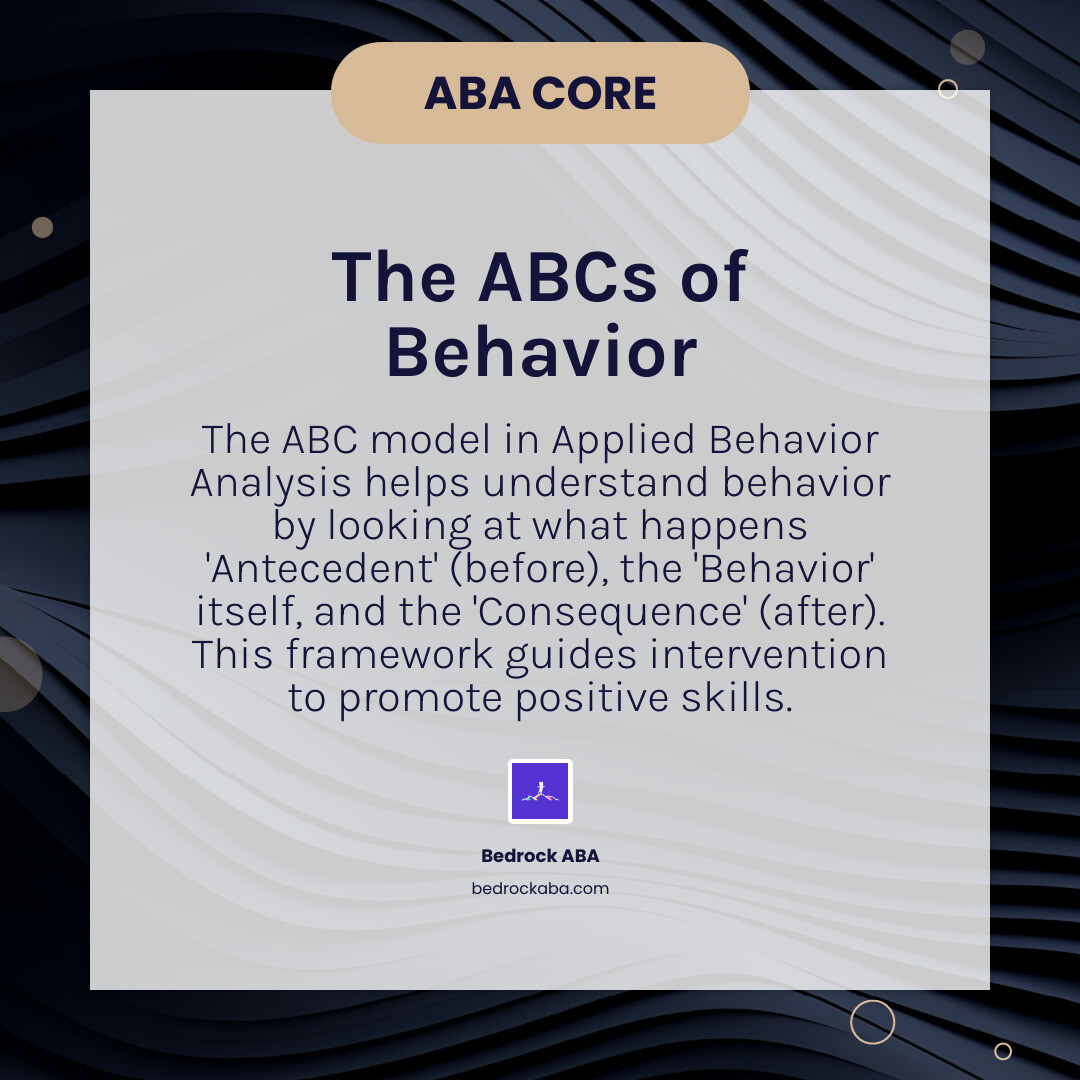
- Understanding behavior: ABA uses the three-stage ABC model to understand learning:
- A – Antecedent: What happens before the behavior (e.g., a teacher asks a student to clean up).
- B – Behavior: The action itself (e.g., the student yells “no!”).
- C – Consequence: What happens after the behavior (e.g., the teacher removes the toys).
By understanding these connections, we can modify the environment or consequences to encourage more helpful behaviors.
- Data-driven decisions: ABA relies on objective data. Therapists track progress to ensure interventions are effective and adjust strategies as needed. This scientific rigor is a hallmark of ABA.
- Skill acquisition: Complex tasks are broken down into small, manageable steps. This makes learning less overwhelming and provides frequent opportunities for success.
- Reducing challenging behaviors: ABA addresses behaviors that interfere with learning or safety. Instead of just suppressing behaviors, we work to understand their function and teach appropriate, alternative ways for the child to meet their needs.
- Scientific approach: ABA is recognized as an evidence-based best practice by leading health organizations, including the US Surgeon General and the American Psychological Association.
Primary Goals and Life-Changing Benefits
The overarching goal of ABA therapy for children is to help each child become as independent and successful as possible, empowering them to thrive in a way that is meaningful to them.

Some of the life-changing benefits include:
- Improved communication: Children develop verbal and non-verbal skills, from basic gestures to carrying on conversations.
- Improved social skills: ABA helps children learn to interact with others, share, take turns, and build friendships, often through role-playing.
- Daily living skills: Therapists work on essential tasks like getting dressed, brushing teeth, and eating independently.
- Academic readiness: ABA can support academic engagement, attention, and following instructions in a classroom setting.
- Increased independence: By teaching a wide range of skills and promoting self-regulation, ABA helps children gain confidence and autonomy.
- Reduced problem behaviors: As children learn effective communication and coping strategies, challenging behaviors often decrease naturally.
- Better family dynamics: Parent training and consistent strategies help families support their child’s development, creating a more harmonious home environment.
Exploring Different ABA Methodologies
ABA is a broad framework, not a single method. Our programs are highly individualized, using various techniques.
Common methodologies in ABA therapy for children include:
- Discrete Trial Training (DTT): A structured, one-on-one method that breaks skills into small, discrete steps taught in a repetitive sequence with immediate reinforcement.
- Pivotal Response Training (PRT): A less structured, play-based approach that focuses on “pivotal” behaviors (like motivation) that lead to widespread improvements. It is child-led and uses natural reinforcement.
- Early Start Denver Model (ESDM): A comprehensive approach for very young children (12–48 months) that combines play-based activities with ABA principles to target multiple goals at once. Scientific research on the Early Start Denver Model has shown its effectiveness.
- Verbal Behavior (VB) therapy: This approach focuses on teaching language by its function (e.g., asking for something, naming something) to motivate communication.
- Natural Environment Teaching (NET): Integrates teaching opportunities into everyday situations and play, allowing the child’s interests to guide the session.
Crafting a Personalized ABA Program for Your Child
At Bedrock ABA, we believe every child is unique. That’s why we don’t use a one-size-fits-all approach to ABA therapy for children. We create a personalized roadmap for your child, highlighting their strengths, addressing challenges, and building on their interests.
The First Step: Comprehensive Assessment
The journey begins with a comprehensive assessment to get to know your child. It starts with an initial consultation where we listen to you, the parents, to understand your hopes and your child’s history.
Next, our Board Certified Behavior Analyst (BCBA) conducts a skill evaluation to see what your child can do across different areas like communication, play, and daily living skills. We always focus on identifying strengths first to make learning fun and effective. This assessment helps us set a baseline to track progress. For challenging behaviors, a Functional Behavior Assessment (FBA) may be conducted to understand why they happen, so we can teach better ways to communicate needs. You can learn more about FBAs here: Functional Behavior Assessments (FBA).
This information helps us create a personalized plan with clear, achievable goals.
How an effective aba therapy for children program is structured
Once we have our roadmap, the therapy begins. Our ABA therapy for children programs are dynamic and adapt to your child’s progress.
Your child’s individualized treatment plan outlines specific goals, such as asking for a toy or playing with friends. We break these goals into small, manageable steps to celebrate every success.
A key component of ABA is data collection. In every session, therapists carefully track your child’s performance. This isn’t about tests; it’s about seeing what works best.

Our BCBAs regularly review this data for regular progress monitoring. This helps us see how your child is learning and if we need to make program adjustments. We share this progress with you in family meetings, keeping you involved. This ensures therapy is always challenging enough to encourage growth but never overwhelming.
Regarding therapy intensity, many intensive programs provide 25 to 40 hours per week for 1 to 3 years. This consistency helps children learn skills faster. The exact number of hours is always based on your child’s unique needs and our BCBA’s recommendations.
The Crucial Role of Family and Caregiver Involvement
Family involvement is vital for success in ABA therapy for children. We believe parents are their child’s most important teachers.
Our BCBAs offer parent training to empower you with practical strategies to use at home. This gives you the confidence to guide your child effectively.
When everyone uses consistent strategies, learning accelerates. We work with families to ensure techniques used in therapy are also applied during daily routines, helping new skills stick. Our goal is generalizing skills—helping your child use what they learn in different settings like home, school, and the community.
Your home environment becomes a place for learning, turning everyday moments into powerful opportunities. For children in school, we encourage school collaboration to ensure consistent support. We see ourselves as part of a teamwork approach, where therapists, BCBAs, parents, and other specialists work together to help your child thrive.
Evidence, Efficacy, and the Evolution of ABA
When considering therapy for your child, it’s natural to ask: does it work? For ABA therapy for children, the answer is a resounding yes. It is one of the most researched and scientifically supported interventions for autism spectrum disorder.
Understanding the evidence for ABA therapy for children
The effectiveness of ABA is backed by extensive scientific research and is recognized as an evidence-based practice by leading organizations.
The US Surgeon General and the American Psychological Association endorse ABA as a highly effective intervention for autism. The Surgeon General noted that ABA accounts for 45% of therapies leading to lasting results for individuals with ASD.
A foundational 1987 study by Dr. O. Ivar Lovaas was instrumental, finding that 47% of children who received intensive ABA treatment achieved typical intellectual and educational functioning, compared to only 2% in a control group. Countless studies since have demonstrated improved cognitive and language outcomes, social skills, and daily living abilities.
A clinical report on ASD management from Pediatrics confirms that intensive, long-term therapy (often 25 to 40 hours per week for 1 to 3 years) rooted in ABA principles improves outcomes for many children with autism.
Acknowledging Criticisms and the Modern Approach
Like any evolving therapy, ABA has faced criticism. It’s important to address these concerns and show how much modern ABA has adapted.
Early ABA methods could be rigid, and it’s crucial to state that aversive techniques are not part of modern, ethical ABA. Critics also raised concerns about robotic responses and “masking”—where autistic children suppress natural behaviors (like stimming) to appear more neurotypical, which could cause distress. Some felt the focus was on compliance vs. understanding the child’s needs.
However, modern ABA has seen a profound evolution to child-led therapy. There is a much stronger emphasis on naturalistic teaching, play-based interventions, and following the child’s motivation. At Bedrock ABA, we strive to make learning feel like fun, not a chore.
A key shift is a focus on assent, meaning we want children to be willing and comfortable participants. Today’s ethical practices, guided by strict standards, prohibit punishment and emphasize positive reinforcement, dignity, and well-being. We also accept the neurodiversity movement, recognizing autism as a natural variation. Our goal is to help children develop skills that improve their quality of life on their own terms, not to “fix” who they are.
Limitations and the Future of ABA Research
While ABA therapy for children is highly effective, we recognize there is always room for growth.
There is a need for more comparative studies to rigorously compare ABA with other interventions. Research into the long-term outcomes is also ongoing. We also know there is significant individual variability in how children respond, underscoring the need for individualized plans.
The field of ABA is dynamic, with ongoing research constantly refining methodologies. The future of ABA research is focused on improving methodologies, comparing approaches, and including measurements of a subject’s Quality of Life (QoL) to ensure our focus remains on what truly improves children’s lives.
Your Practical Guide to Accessing ABA Services
Navigating therapeutic services can feel overwhelming. We want to make accessing ABA therapy for children as straightforward as possible.
Who Provides ABA Therapy and What Are Their Qualifications?
Quality ABA therapy for children is provided by highly trained and certified professionals.
A Board Certified Behavior Analyst (BCBA) leads the therapy program. Holding a master’s degree or PhD, they complete extensive supervised fieldwork and pass a national certification exam. BCBAs conduct assessments, design individualized treatment plans, and supervise the therapy team.
Registered Behavior Technicians (RBTs) work directly with your child under the close supervision of a BCBA. They receive extensive training to implement the treatment plan and collect data during sessions. In many states, both BCBAs and RBTs must hold state licenses. All professionals are committed to ongoing training to stay current on best practices. You can learn more at the Behavior Analyst Certification Board website (BACB) at https://www.bacb.com/.
Where Can Therapy Be Delivered?
One of the great things about ABA therapy for children is its flexibility. Therapy can be delivered in various settings to help children generalize their skills.
- Clinic-based therapy: Centers provide a dedicated learning environment with specialized materials and opportunities for social interaction.
- In-home sessions: Therapy in the home allows skills to be applied directly in a natural environment and easily involves family members.
- School settings: We can collaborate with educators to provide support within the school, helping with academic and social demands.
- Community outings: Sessions may take place in the community (e.g., a park or grocery store) to practice skills in real-world situations.
- Telehealth options: This offers flexibility for services like parent training or consultations.
This flexible delivery means we can customize the setting to optimize your child’s learning.
How ABA Addresses Co-Occurring Conditions
It’s common for children with Autism Spectrum Disorder (ASD) to have other conditions. ABA therapy for children can offer comprehensive support by addressing these challenges alongside core ASD symptoms.
- Anxiety: ABA can teach coping strategies and communication skills to express worry, gradually helping children feel comfortable in anxiety-provoking situations.
- ADHD: Strategies can target behaviors related to attention, focus, and impulsivity, such as teaching self-management skills and using visual schedules.
- Feeding challenges: For picky eaters, ABA can systematically introduce new foods and teach appropriate mealtime habits through positive reinforcement.
- Sleep issues: We can help establish consistent bedtime routines and teach self-soothing techniques to address behavioral factors contributing to sleep difficulties.
ABA often works as part of an integrated treatment plan, complementing other services like speech or occupational therapy to provide holistic support for your child’s overall well-being.
Frequently Asked Questions about ABA Therapy
It’s natural to have questions when exploring options for your child. Here, we address some of the most common questions about ABA therapy for children.
How do I know if ABA is the right choice for my child?
Deciding if ABA is right for your child starts with a professional consultation with a pediatrician, a developmental specialist, or a Board Certified Behavior Analyst (BCBA). They can assess your child’s unique needs.
As you consider it, think about observing your child’s needs. Are they facing challenges with communication, social skills, or daily routines? Also, spend time considering your therapy goals. What do you hope your child will achieve? Because ABA focuses on measurable goals, it can be very effective for reaching developmental milestones. Finally, assess the fit with their philosophy. Modern ABA, like ours at Bedrock ABA, is individualized, positive, and family-centered.
Is ABA therapy covered by insurance?
For children with an Autism Spectrum Disorder diagnosis, ABA is widely considered medically necessary, and insurance coverage has improved significantly.
Most states have coverage mandates requiring private health insurance to cover medically necessary ABA services for autism. Medicaid plans are also required to cover these treatments for children under 21 when prescribed by a doctor.
When navigating insurance plans, we recommend contacting your provider directly to ask about benefits, deductibles, and pre-authorization requirements. If coverage is limited, many providers, including us, offer private pay options and can help you explore grants or other financial assistance.
How long will my child need ABA therapy?
The duration of ABA therapy for children is highly individualized and depends on the child’s specific needs, goals, and rate of progress. There is no one-size-fits-all answer.
Intensive programs often last for 1 to 3 years, but some children may need shorter interventions while others receive services for longer. The therapy is progress-based; we continuously collect data and review it with you to ensure your child is making meaningful strides.
As your child meets goals and generalizes skills, therapy intensity may decrease. Our ultimate aim is to equip them with the skills to thrive, eventually transitioning out of formal ABA services when they are ready.
Conclusion
Taking the first step into ABA therapy for children is a powerful decision that can bring lasting, positive change to your child’s life. At its heart, ABA is about empowering children to reach their full potential by building essential life skills and growing their independence.
Throughout this guide, we’ve seen how this evidence-based therapy improves communication, social skills, and daily living tasks while helping children manage challenging behaviors. We’ve also discussed how modern ABA has evolved to be individualized, positive, and family-focused.
Choosing the right path means understanding the therapy, who provides it, and how it can be custom to your child’s unique needs. When we work together as a team, we can support your child’s growth, helping them move through the world with more confidence and joy.
At Bedrock ABA, we believe every child’s journey is special. We create flexible, custom therapy plans to ensure your child receives personalized care centered around your family.