


Why Emotional Regulation Matters
Aba therapy for emotional regulation teaches the crucial skill of understanding and managing feelings. Emotional regulation is the ability to handle big emotions like anxiety or stress, not by hiding them, but by recognizing them and responding in a healthy way.
For someone searching for “aba therapy for emotional regulation,” here’s a quick overview of what it means:
- Emotional Regulation Defined: The skill of understanding, expressing, and managing your feelings in a way that helps you stay calm and effective.
- Why it’s Crucial for ASD: Individuals with Autism Spectrum Disorder (ASD) often find it much harder to identify their feelings, express them clearly, or cope when emotions become intense. This can affect daily life significantly.
- How ABA Therapy Helps: Applied Behavior Analysis (ABA) therapy uses structured, evidence-based methods to teach these vital emotional regulation skills, providing practical tools and strategies.
Everyone experiences a range of emotions. For individuals with developmental challenges like ASD, managing them can be a constant struggle. Autistic children and teens are four times more likely to have difficulty controlling their emotions than their neurotypical peers, which can lead to challenging behaviors, impact social interactions, and hinder learning.
Emotional dysregulation can manifest as meltdowns, withdrawal, or aggression, often rooted in difficulty identifying feelings, impulsivity, or rigid thinking. Building these skills fosters independence, stronger relationships, and better engagement with learning. ABA therapy offers a proven path to developing these essential life skills.
This guide is brought to you by Mayer Kulefsky, Director of Operations at Bedrock ABA. Mayer is committed to enhancing the lives of individuals with autism and developmental disorders by overseeing high-quality, individualized aba therapy for emotional regulation and other essential skills.

Aba therapy for emotional regulation terms made easy:
Understanding Emotional Dysregulation and Its Impact on Autism
Emotional regulation is a vital skill for daily life and building friendships. For individuals with Autism Spectrum Disorder (ASD), managing feelings presents unique challenges. Let’s explore what emotional regulation means and why it can be particularly difficult for someone with ASD.
Emotional regulation is the ability to understand your feelings and choose a helpful reaction, handling big emotions like anxiety or stress without being overwhelmed. For many, this is an automatic process, like staying calm in traffic despite feeling annoyed. That’s emotional regulation in action.
However, for individuals with ASD, this process can be difficult. Research suggests that challenges with emotion regulation might be a core part of ASD itself. You can dive deeper into this scientific perspective here: Impaired emotion regulation in ASD.
Several things can make emotional regulation particularly tough for someone with ASD:
- Alexithymia: Many individuals with ASD struggle to identify, name, or describe their feelings, making it difficult to manage them.
- Social Communication Difficulties: Challenges in expressing feelings or understanding others can lead to frustration and outbursts when needs aren’t met.
- Sensory Sensitivities: Heightened sensitivity to sounds, lights, or textures can quickly lead to sensory overload, making emotional management extremely difficult.
- Impulsivity and Rigid Thinking: A tendency to react immediately rather than pausing, combined with difficulty adapting to unexpected changes, can be very upsetting.
When emotional regulation is a struggle, the effects can be profound:
- Impact on Behavior: Poor emotional regulation often manifests as challenging behaviors like meltdowns, aggression, self-injury, or withdrawal. These are typically signs of being overwhelmed, not defiance.
- Social Interactions: Difficulty managing feelings can hinder friendships. Outbursts or withdrawal can lead to loneliness and social isolation.
- Learning Interference: Being overwhelmed makes it nearly impossible to focus on learning, significantly impeding progress in school and other settings.
- Overall Well-being: The constant struggle with emotions can lead to anxiety, depression, and other mental health challenges, affecting the individual’s quality of life and causing stress for the family.
The goal isn’t to eliminate feelings, but to help individuals recognize, express, and manage them in healthy ways. Teaching emotional regulation is a foundational step in aba therapy for emotional regulation, helping individuals better engage with life and other ABA goals. For more insights on supporting positive behaviors, check out our resources on Behavior Support Plans.
The ABA Framework for Building Emotional Skills
Applied Behavior Analysis (ABA) therapy offers a structured, evidence-based roadmap for developing emotional regulation skills in individuals with ASD. It helps us understand why behaviors occur and teaches more effective ways to handle big emotions.
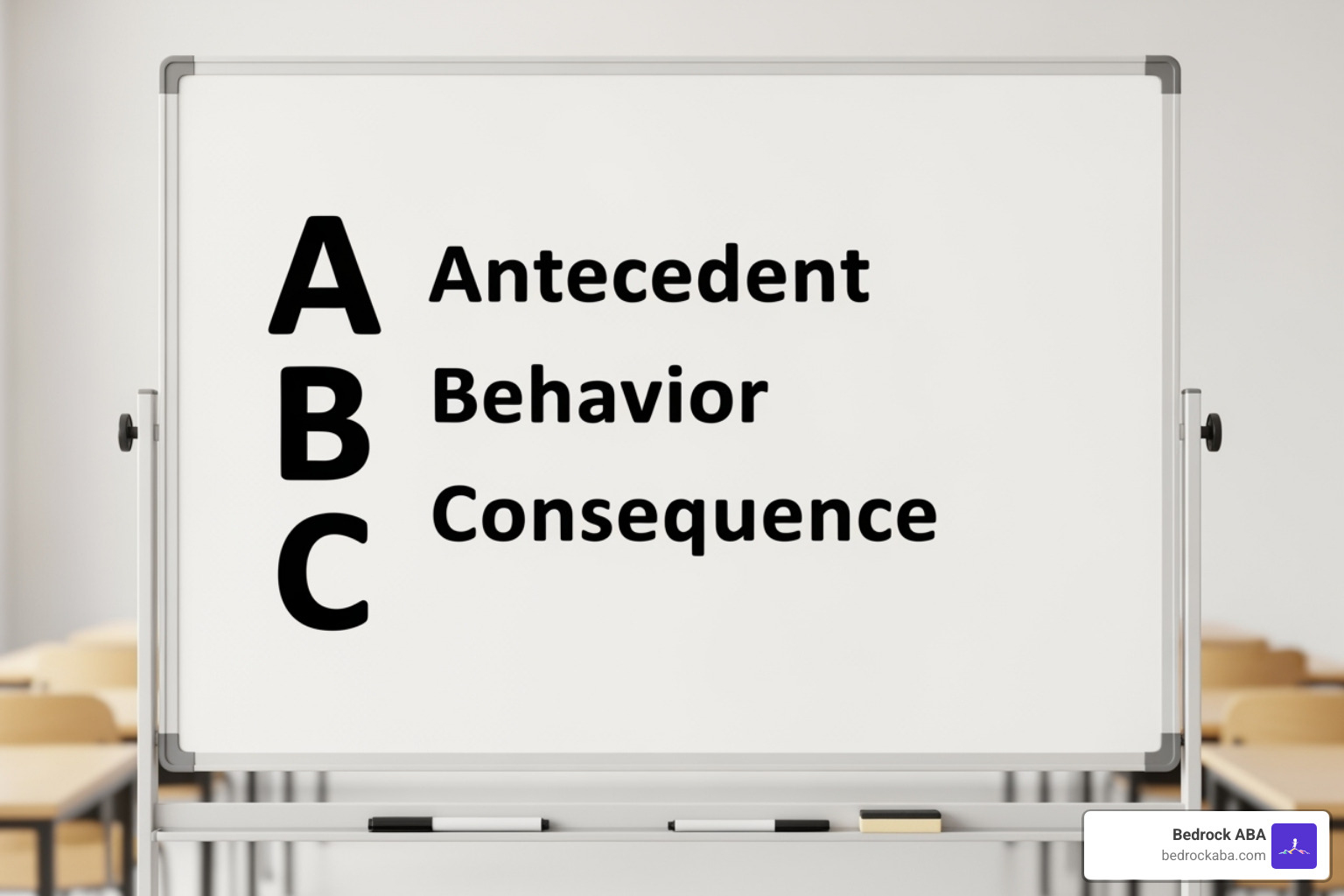
At the heart of aba therapy for emotional regulation is the ABC model. This framework helps us understand what triggers dysregulation. We look at the Antecedent (the trigger, like a loud noise or change in routine), the Behavior (the meltdown or withdrawal), and the Consequence (what happens immediately after, like escaping a task). Understanding these patterns is key.
This analysis is formalized through a Functional Behavior Assessment (FBA), which helps us identify specific triggers and understand the underlying reasons for emotional struggles.
Positive reinforcement forms the cornerstone of our approach. When someone uses a new coping strategy or expresses their feelings appropriately, we celebrate it with praise, a favorite activity, or a token. This makes them more likely to use these new skills again.
A powerful aspect of ABA is breaking down complex skills into manageable steps. Emotional regulation is taught incrementally: first identifying a feeling, then recognizing physical signs, then practicing a coping strategy, and finally applying it in real situations.
Our data-driven approach means we constantly track progress and adjust our strategies based on what’s working and what needs tweaking. For more insights into these fundamental concepts, you can explore our guide on Key Principles Behind ABA Therapy.
Rather than waiting for emotional crises, we focus on proactive skill building. It’s much easier to learn new coping strategies when calm. We practice these skills during peaceful moments, building a toolkit that can be accessed when emotions run high.
Every individualized treatment plan reflects the unique person we’re working with. There’s no cookie-cutter approach in effective aba therapy for emotional regulation—it’s all about finding what works best for each individual and their family.
Core Strategies in ABA Therapy for Emotional Regulation
In aba therapy for emotional regulation, we focus on proactive skill building within a supportive, consistent environment. The goal is to empower individuals to express and manage their feelings, leading to better communication, stronger relationships, and greater independence.

Consistency is key. Skills taught in therapy need to be practiced and reinforced everywhere—at home, in school, and in the community—to ensure they become a natural part of an individual’s toolkit. You can learn more about The Different Types of ABA Therapy Techniques.
Here are some specific ABA strategies we use:
Using Visual Supports to Clarify Emotions
Emotions are abstract concepts that can be difficult for individuals with ASD to grasp. Visual aids make these ideas concrete and easier to understand.
We use tools like emotion charts and feelings thermometers, which use pictures, colors, and words to help individuals identify and label their feelings. A feelings thermometer can also help gauge an emotion’s intensity.
The Stoplight System uses colors to represent emotional states and guide responses: green for calm, yellow for upset (time to use a strategy), and red for overwhelmed (time to use a calming strategy). The Incredible 5-Point Scale is another tool that helps individuals communicate their feelings on a 1-to-5 scale, linking each level to specific actions.
Other effective visual aids include emotion flashcards, color-coded zones (like the Zones of Regulation), First-Then boards for transitions, and personalized social stories. These tools provide a consistent, clear way to process information about emotions.
Teaching Emotion Identification and Labeling
Teaching individuals with ASD to identify and label feelings is vital. Knowing what you’re feeling is the first step to managing it, communicating it, and choosing a coping strategy.
We teach this by:
- Connecting Physical Sensations to Emotions: We help individuals recognize physical clues of emotions, like a “flush of heat” for anger or a “fluttery stomach” for anxiety.
- Receptive Identification: We teach individuals to identify emotions in others using pictures, videos, or real-life examples.
- Expressive Labeling: We teach individuals to express their own emotions using words, pictures, or gestures.
- Discrete Trial Teaching (DTT): DTT breaks down emotion labeling into small, systematic steps, taught with repetition and positive reinforcement.
- Natural Environment Teaching (NET): We practice labeling emotions during natural, everyday moments to help generalize the skill to the real world (e.g., “You’re smiling, you must feel happy!”).
Modeling and Teaching Constructive Coping Mechanisms
Modeling is a powerful teaching tool in emotional regulation, providing a clear example of appropriate behavior for individuals to follow.
Therapists and parents model appropriate emotional responses. For example, a therapist might say, “I’m feeling frustrated, so I’ll take a deep breath.” Parent modeling is also encouraged, such as a parent verbalizing, “I’m feeling overwhelmed, so I’m going to take a break.” This normalizes emotions and demonstrates healthy coping.
Once an emotion is identified, we teach a toolbox of constructive coping mechanisms. These positive strategies include deep breathing exercises, squeezing a stress ball, taking a short break, listening to calming music, using a weighted blanket, counting to ten, or asking for help. We often help families create a personalized “calm-down kit” filled with these tools.
Practicing Skills with Role-Playing and Generalization
Role-playing and generalization are crucial for ensuring emotional regulation skills are functional in the real world, not just in therapy.
We use role-playing scenarios in a safe environment to practice handling triggers, like leaving a favorite activity or losing a game. This allows for rehearsal and feedback. We then gradually introduce challenges to help individuals apply skills in new contexts, building resilience and confidence.
The ultimate goal is for individuals to use their skills spontaneously across all settings:
- At School: Applying coping strategies during a challenging assignment.
- At Home: Managing frustration with siblings or adapting to routine changes.
- In the Community: Regulating emotions during unexpected events.
Consistent reinforcement from everyone is vital for generalization. Seeing a child pause and take a deep breath instead of throwing puzzle pieces is the real magic of consistent practice.
The Crucial Role of Family and Consistency
Mastering emotions through aba therapy for emotional regulation is a collaborative effort. Progress blossoms when families are actively involved and strategies are applied consistently across all environments.

- Family Involvement: Parents are our most valuable partners. Your insights are invaluable for tailoring interventions. We practice Family Integration in ABA to ensure strategies are applied at home.
- Parent Training: We empower parents by teaching them the same strategies used in therapy. This allows you to reinforce skills and provide consistent support, creating a vital unified approach.
- Consistent Reinforcement: Like any new skill, emotional regulation requires consistent practice. Reinforcement from everyone in the child’s life helps solidify new, positive behaviors.
- Creating a Predictable Routine: Predictability reduces anxiety for many with ASD. Consistent daily routines can significantly improve emotional stability by minimizing unexpected triggers.
- Celebrating Small Victories: Recognizing every step forward, like praising a child for using a coping skill, reinforces the behavior and builds confidence for future challenges.
- Building Confidence: Successfully applying new skills fosters confidence, leading to greater independence and willingness to engage in new opportunities.
Tracking Progress in ABA Therapy for Emotional Regulation
In ABA, data is key. Progress tracking allows us to make informed decisions, adjust strategies, and ensure the most effective outcomes.
- Data Collection: We systematically collect data on metrics like the frequency and duration of challenging behaviors, antecedent triggers, and the individual’s independence in identifying emotions and using coping skills. We also track the generalization of skills to new environments and the frequency of spontaneous use, a key indicator of true skill acquisition.
- Measuring Success: Success is measured not just by reducing challenging behaviors, but by acquiring positive skills, like verbally expressing disappointment instead of having a meltdown.
- Adjusting Strategies Based on Data: Data allows us to quickly adjust interventions if a strategy isn’t working or progress has stalled, ensuring therapy remains effective.
- Collaboration and Feedback: Regular communication between therapists and parents is essential for sharing observations and data. This creates a comprehensive picture of progress and helps refine the therapeutic approach.
Frequently Asked Questions about ABA and Emotional Regulation
We often hear many thoughtful questions about how aba therapy for emotional regulation works and what families can expect from the process. Here are some of the most common ones:
How long does it take to see progress in emotional regulation with ABA therapy?
The timeline for seeing progress varies for each individual. Factors like baseline communication skills, consistency of practice across all environments, family involvement, and the intensity of therapy all influence the pace of learning.
While progress is gradual, every step is meaningful. We celebrate all victories, from a child first using a visual aid to identify a feeling to independently using a coping strategy, as each one builds toward greater success.
Can ABA therapy help with anxiety in children with autism?
Yes, aba therapy for emotional regulation is highly effective for managing anxiety in individuals with ASD. We teach practical coping strategies like deep breathing, mindfulness, and using sensory tools. A Functional Behavior Assessment helps identify specific anxiety triggers, allowing for proactive interventions.
ABA also builds social confidence by breaking down social interactions into manageable steps and practicing them in a supportive environment. For specific fears, we may use systematic desensitization, a gradual exposure technique. By teaching individuals to regulate their responses to anxiety, ABA empowers them to face challenges with greater calm.
Is emotional regulation only for children, or can ABA help adults too?
Yes, the core principles of ABA are effective across the lifespan, and aba therapy for emotional regulation can help adults with ASD. Strategies are adapted for age and real-world scenarios, such as:
- Workplace situations: Managing stress, accepting feedback, and navigating colleague interactions.
- Independent living: Handling daily tasks, unexpected changes, and disappointment.
- Relationship management: Expressing emotions clearly and navigating disagreements.
The fundamental techniques (visuals, modeling, role-playing, coping mechanisms, data tracking) remain the same but are customized to the adult’s specific needs and goals. The ultimate aim is to build lifelong skills for independence and well-being.
Conclusion
Learning to manage emotions is about opening doors to a richer, more connected life. For individuals with Autism Spectrum Disorder, mastering emotional regulation is key to better friendships, successful learning, and greater independence. Through aba therapy for emotional regulation, we see incredible changes as individuals learn to replace challenging behaviors with positive coping strategies.
The structured, evidence-based approach of ABA builds a comprehensive emotional toolkit. Individuals learn to recognize their feelings, develop healthy coping mechanisms, and use these skills independently across all environments—at home, school, and in the community.
This approach is powerful because it involves the whole family. When parents and therapists work together consistently, progress accelerates, and every small victory builds confidence. At Bedrock ABA, our family-centered care approach ensures each intervention plan is unique to the individual.
The skills learned through ABA therapy for emotional regulation aren’t just for childhood; they are building blocks for lifelong success, paving the way for meaningful relationships, achievement, and a fulfilling, independent life.
If you’re ready to explore how aba therapy for emotional regulation can support your loved one’s growth and well-being, we’re here to help. Our team is committed to walking alongside your family every step of the way, celebrating progress and adapting our approach as needs evolve.
To learn more about our comprehensive ABA therapy services and how we can support your child’s emotional growth in Utah, please visit Learn more about our ABA therapy services in Utah.