


Why ABA Therapy for Anxiety is Changing Lives
ABA therapy for anxiety is an evidence-based approach that helps individuals with autism spectrum disorder develop coping skills and reduce anxiety symptoms through structured behavioral interventions. This therapeutic method focuses on identifying triggers, teaching replacement behaviors, and using positive reinforcement to build confidence in challenging situations.
Quick Answer: How ABA Therapy Helps with Anxiety
- Identifies specific triggers that cause anxiety in daily situations
- Teaches coping skills like deep breathing and communication strategies
- Uses positive reinforcement to reward brave behaviors and skill use
- Reduces avoidance by gradually exposing individuals to feared situations
- Builds confidence through structured practice and support
Anxiety affects up to 84% of individuals with autism spectrum disorder, making daily activities feel overwhelming. As one parent shared, “Anxiety can be debilitating and can impact every aspect of life. It can make it difficult to manage daily tasks and responsibilities, maintain relationships, or even leave the house.”
The good news? Applied Behavior Analysis offers hope. Unlike traditional talk therapy, ABA works at the behavioral level – teaching practical skills that individuals can use immediately when anxiety strikes. This approach is particularly effective for those with autism because it doesn’t rely on abstract concepts or complex emotional processing.
The power of ABA lies in its systematic approach. By breaking down anxiety into observable behaviors and environmental factors, therapists can create targeted interventions that address the root causes rather than just the symptoms.
I’m Mayer Kulefsky, director of operations at Bedrock ABA, where I’ve overseen the expansion of our behavioral health services across multiple states including Utah. My experience in delivering individualized ABA therapy for anxiety has shown me how this approach transforms lives by giving families practical tools they can use every day.
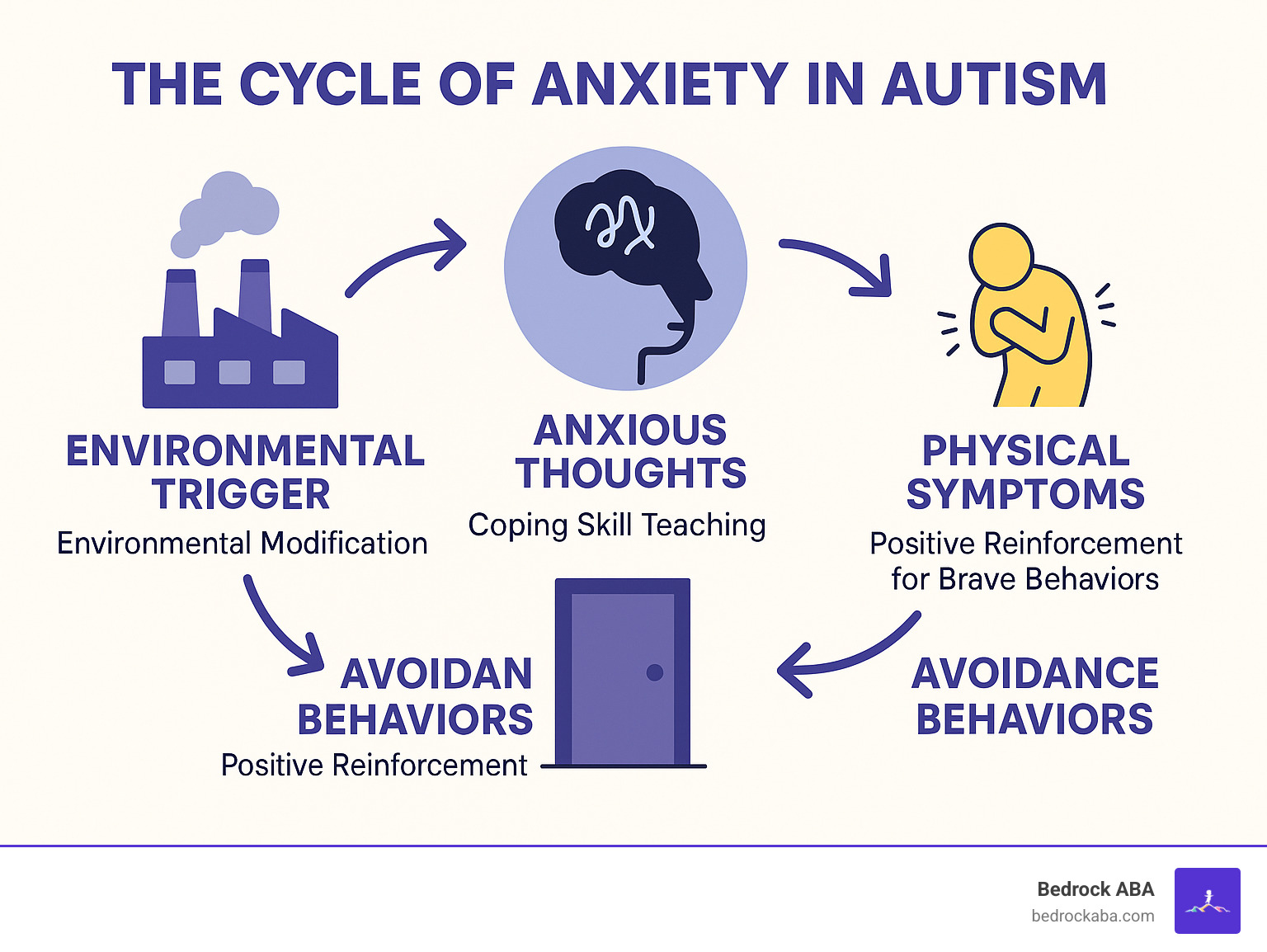
Aba therapy for anxiety terms to learn:
Understanding the Dual Challenge: Anxiety and Autism Spectrum Disorder

Anxiety is more than pre-test jitters; it is a surge of physical, emotional, and behavioral reactions that can shut life down. Research shows 11–84 % of people with autism also meet criteria for an anxiety disorder, so treating both conditions together is the rule rather than the exception.
Why the overlap?
- Social misunderstandings turn everyday chats into high-stakes puzzles.
- Sensory sensitivities make lights, sounds, or textures feel painful.
- Communication gaps create frustration when needs can’t be expressed.
- A strong need for routine means small changes can feel catastrophic.
Common anxiety presentations in autism include:
- Generalized worry about school, friends, and change
- Social anxiety that drives avoidance of groups or speeches
- Specific phobias (fire alarms, certain textures, crowded halls)
When we see meltdowns or withdrawal, we are witnessing genuine fight-or-flight responses—not defiance. Recognizing this sets the stage for compassionate, evidence-based support.
What is Applied Behavior Analysis (ABA) and How Does It Work?
Applied Behavior Analysis is a scientific approach to understanding and modifying behavior that’s been refined through decades of research. Think of it as detective work – we carefully observe what’s happening around a behavior to understand why it occurs and how we can help create positive change.
What makes ABA different from other approaches is its focus on observable behaviors rather than trying to guess what someone might be thinking or feeling inside. This is particularly helpful for aba therapy for anxiety because we can see exactly what’s happening and measure our progress.
More info about what ABA therapy is explains how this evidence-based approach works across different situations and challenges.
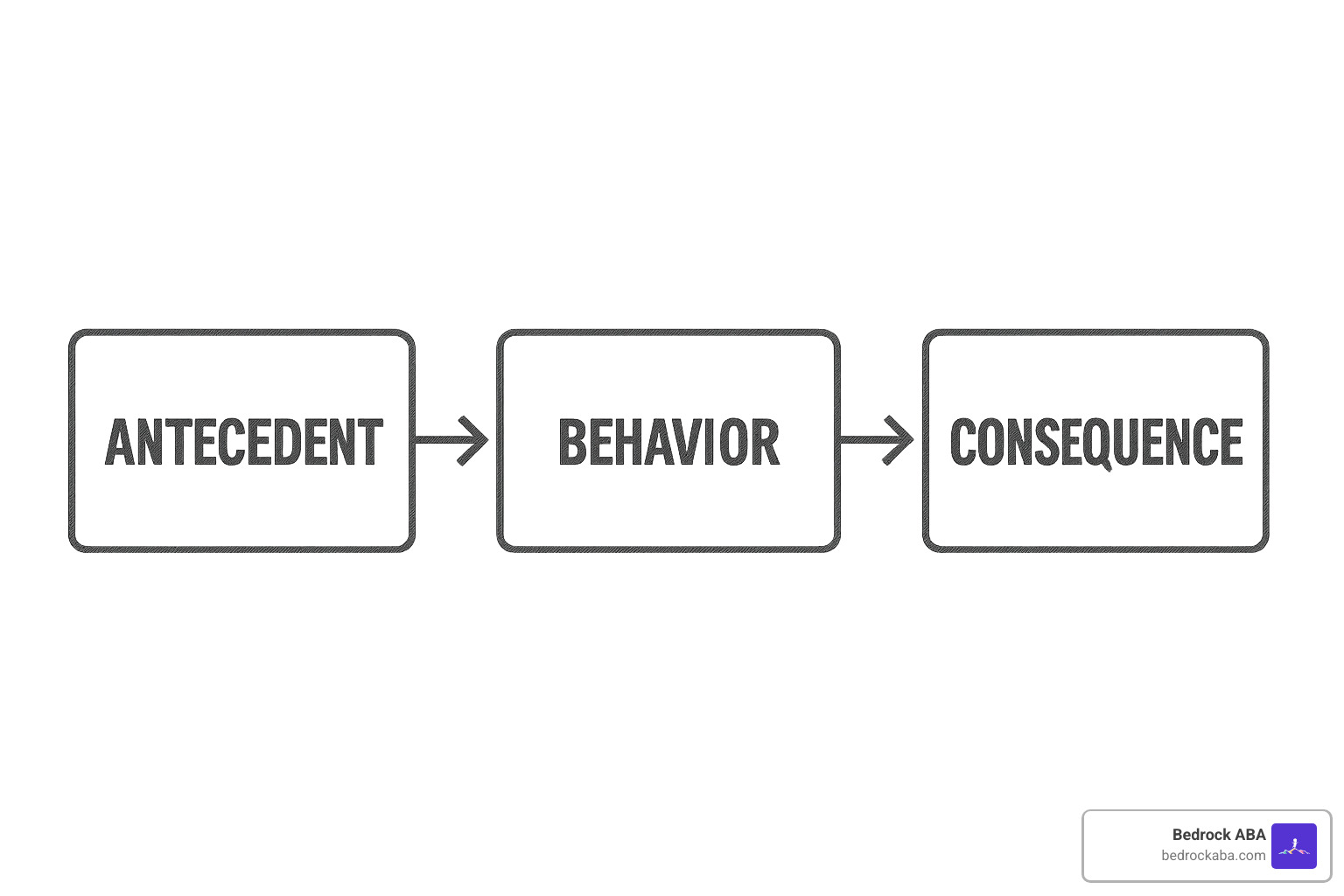
The foundation of ABA rests on the Antecedent-Behavior-Consequence (ABC) model. Every behavior happens for a reason, and understanding this pattern helps us create effective interventions. When we see a child having an anxiety response, we look at what happened right before (the antecedent), what the child actually did (the behavior), and what happened afterward (the consequence).
For example, imagine a child who becomes anxious during transitions. The antecedent might be hearing “time to clean up,” the behavior could be hiding under a table, and the consequence might be avoiding the transition altogether. Once we understand this pattern, we can teach better coping strategies.
Positive reinforcement is another cornerstone of ABA. Instead of focusing on what went wrong, we celebrate and reward the behaviors we want to see more of. When a child uses a coping skill during an anxious moment, we make sure something good happens afterward – whether that’s praise, a favorite activity, or just a warm smile.
Everything we do is guided by data-driven decisions. We carefully track what’s working and what isn’t, adjusting our approach based on real results rather than guesswork. This ensures that each intervention is truly helping the individual make progress.
Key Principles Behind ABA Therapy dives deeper into how these principles create lasting change in everyday life.
When applying ABA to anxiety, we start by identifying environmental triggers – those specific situations, sounds, or changes that tend to spark anxiety responses. Maybe it’s the sound of the school bell, unexpected visitors, or changes in routine. Understanding these triggers helps us prepare and teach coping strategies ahead of time.
We also focus on teaching functional skills that individuals can actually use when anxiety strikes. These might include deep breathing techniques, ways to ask for help, or strategies for managing sensory overload. The goal is giving people practical tools they can rely on in real-world situations.
The beauty of ABA lies in its systematic yet flexible nature. We’re not just hoping anxiety will magically disappear – we’re creating structured learning opportunities that build confidence and competence one step at a time, always adjusting based on what works best for each unique individual.
A Closer Look at ABA Therapy for Anxiety: Techniques and Strategies

ABA works because it pinpoints why anxious behaviors occur and then teaches better options. Below is a streamlined look at the core process.
1. Functional Behavior Assessment (FBA)
We observe the pattern—what happens before, during, and after anxiety. Most behaviors serve one of four functions: to escape, gain attention, access a preferred item, or produce automatic relief. Knowing the function keeps intervention laser-focused.
2. Teaching Replacement Skills
- Gradual exposure built on a fear hierarchy (easy → hard)
- Relaxation: deep breathing, mindfulness, muscle release
- Communication: asking for help, break cards, self-advocacy
These skills let the individual meet the same need (escape, comfort, attention) without a meltdown.
3. Positive Reinforcement
Brave steps are rewarded—through praise, tokens, or a favorite activity—so facing fears becomes more valuable than avoiding them. Consistent, specific reinforcement (“You took three calm breaths when the bell rang—great job!”) builds genuine confidence.
The Different Types of ABA Therapy Techniques offers more detail for families who want to dive deeper.
The Collaborative Path to Success: Customization and Support

No two children share the same triggers, so every plan starts with individualized goals. At Bedrock ABA we use the information gathered during assessment to tailor interventions that fit your child’s routines, interests, and communication style.
Why Teamwork Matters
- Parent training equips families to spot early signs and prompt coping skills at home.
- Teacher collaboration keeps strategies consistent from classroom to kitchen.
- Environmental tweaks—like a quiet corner or visual schedule—reduce unnecessary stressors.
Consistency across settings speeds generalization, turning therapy wins into real-world independence.
Does It Work?
Studies in the Journal of Applied Behavior Analysis report up to a 70 % drop in anxiety behaviors and long-term maintenance of coping skills. Families also note better school performance, richer friendships, and more adventurous play. Evidence shows ABA does more than calm fears—it open ups participation in life.
Frequently Asked Questions about ABA Therapy for Anxiety
Is ABA only for autistic children with anxiety?
No. While ABA meshes naturally with autism, its data-driven, skill-building format can help anyone whose anxiety shows up as observable behavior—whether they have ASD, ADHD, or none of the above.
How long will therapy take?
Timelines vary with severity, learning pace, and follow-through at home and school. Some clients see solid gains in a few months; complex cases may need a year or more. The aim is durable change, not a quick patch.
How is ABA different from talk therapy?
Traditional methods explore thoughts and feelings. ABA focuses on what we can see: triggers, actions, and consequences. By changing the environment and reinforcing new behaviors, anxiety naturally decreases without requiring abstract discussion.
Conclusion
ABA therapy for anxiety offers hope and real solutions for families navigating the challenging intersection of autism and anxiety. This evidence-based approach doesn’t just manage symptoms – it empowers individuals with practical skills they can use throughout their lives.
What makes ABA particularly powerful is its focus on what we can actually see and change. Instead of trying to eliminate anxious thoughts (which is nearly impossible), we teach new behaviors that naturally reduce anxiety and build confidence. When someone learns to ask for help instead of melting down, or uses deep breathing instead of avoiding situations, they’re not just managing their anxiety – they’re taking control of their life.
The change happens gradually but meaningfully. Reduced avoidance behaviors mean individuals can participate in activities they once found impossible. Practical coping skills work in real-world situations, not just therapy rooms. Improved communication helps people express their needs before anxiety overwhelms them. Most importantly, increased confidence creates an upward spiral where each success makes the next challenge feel more manageable.
Success in ABA therapy for anxiety requires teamwork. When parents, teachers, and therapists all speak the same language and use consistent approaches, progress accelerates. This collaborative support creates a safety net that helps individuals feel secure enough to take brave steps forward.
At Bedrock ABA, we understand that every family’s journey is unique. Our family-centered approach means we don’t just work with the individual – we support the whole family system. Whether you need in-person sessions or remote support, we tailor our programs to fit your specific circumstances and goals.
The path forward might feel uncertain right now, but you don’t have to walk it alone. Our experienced team has helped countless families move from anxiety-driven crisis to confident, skillful living. We believe in meeting you where you are and building from there, celebrating every victory along the way.
Taking the first step is often the hardest part. If you’re ready to explore how structured, compassionate intervention can help your family, we’re here to guide you. Learn more about our ABA Therapy Services in Utah and find how we can support your journey toward greater peace and confidence.
Anxiety may feel overwhelming today, but it doesn’t have to define tomorrow. With the right support, evidence-based strategies, and a team that believes in your family’s potential, meaningful change is possible. Every small step forward is worth celebrating – and we’ll be there to cheer you on.