


Why Utah Families Are Choosing In-Home ABA Therapy
In-home aba therapy in utah offers families a personalized, convenient way to help children with autism develop essential skills in their most comfortable environment. Here’s what you need to know:
Key Benefits:
- No waitlists for daytime services in most Utah areas
- Ages served: 18 months to 21 years old
- Insurance coverage: Required by Utah law since 2014 for autism spectrum disorder
- Flexible scheduling: 9-40 hours per week based on individual needs
- Major insurers accepted: Medicaid, Select Health, Blue Cross Blue Shield, United Healthcare, Cigna
Service Areas: Salt Lake County, Utah County, Davis County, Weber County, and surrounding communities
What’s Included:
- Board Certified Behavior Analyst (BCBA) supervision
- Registered Behavior Technician (RBT) direct therapy
- Parent and family training
- Progress tracking and regular assessments
For many Utah families, the comfort of home-based therapy makes all the difference. As one parent shared: “The BCBA and RBT’s that work with my son are amazing! They have an understanding and way of teaching us how to work through his behaviors.”
The natural environment of your living room, kitchen, or backyard becomes the classroom where your child learns real-world skills they’ll use every day. Instead of struggling to transfer skills learned in a clinic setting, children practice communication, social interaction, and daily living tasks exactly where they need to use them.
My name is Mayer Kulefsky, and as director of operations at Bedrock ABA, I’ve helped expand high-quality behavioral health services across multiple states, including Utah, where families consistently tell us that in-home aba therapy in utah has transformed their daily routines. In this guide, I’ll walk you through everything you need to know about getting started, from insurance coverage to what happens during your first session.

Understanding In-Home ABA Therapy in Utah
Applied Behavior Analysis (ABA) therapy is a scientifically proven approach that helps children with autism develop essential life skills through positive reinforcement and structured learning. What makes in-home aba therapy in utah special is that it brings this evidence-based treatment directly into your child’s most comfortable environment – your home.
Since Utah’s autism insurance mandate took effect in 2014, families across the state have gained access to comprehensive ABA services without the financial burden that once made treatment impossible for many families. This groundbreaking law requires insurance companies to cover ABA therapy for people diagnosed with Autism Spectrum Disorder.
The foundation of effective ABA therapy starts with understanding your child’s unique needs through functional assessment. Our Board Certified Behavior Analysts (BCBAs) conduct thorough evaluations to identify why certain behaviors occur and what maintains them. Using proven assessment tools like the ABLLS and VB-MAPP, they create individualized treatment plans that target your child’s specific goals and challenges.
How ABA Principles Translate to the Living Room
When we bring ABA therapy into your home, we’re creating a learning environment where your child can immediately apply new skills to their daily routines. Your living room becomes the place where your child practices turn-taking during family game time. Your kitchen becomes the classroom for requesting snacks and following multi-step directions.
This approach eliminates one of the biggest challenges in traditional therapy: skill generalization. Instead of learning to communicate in a clinic and then struggling to use those same skills at home, your child learns directly in the environment where they need to succeed.
The comfort and familiarity of home also reduces anxiety that can interfere with learning. Children are naturally more relaxed in their own space, surrounded by their favorite toys and family members.
More info about In-Home ABA Therapy
Clinical Team: BCBAs, RBTs & Parents
The magic of in-home aba therapy in utah happens through teamwork between trained professionals and your family. Each team member plays a crucial role in your child’s success.
Your Board Certified Behavior Analyst (BCBA) serves as the clinical director of your child’s program. They conduct the initial functional behavior assessment, develop your child’s individualized treatment plan, and provide ongoing supervision to ensure progress stays on track.
Registered Behavior Technicians (RBTs) work directly with your child during therapy sessions, implementing the treatment plan under BCBA supervision. They collect important data on your child’s progress and practice skills through play and structured activities.
You and your family are essential team members. You provide crucial background information during assessments, practice strategies between sessions, and reinforce positive behaviors throughout daily routines.
Age & Eligibility Guidelines Across Utah
In-home aba therapy in utah serves individuals from 18 months to 21 years old, with services customized for each developmental stage. Whether you have a toddler just beginning to communicate or a teenager working on job skills and independence, our programs adapt to meet your child where they are.
Eligibility requirements are straightforward: Your child needs an Autism Spectrum Disorder diagnosis from a qualified professional, Utah residency in our service areas, and insurance coverage through Medicaid, private insurance, or self-pay options.
Many providers across Utah report no waitlists for daytime services, allowing families to begin therapy within weeks of initial contact.
The Key Benefits of Home-Based vs. Center-Based ABA
When families first consider in-home aba therapy in utah, they often wonder if it’s truly as effective as traditional clinic-based services. The answer is a resounding yes – and then some. Home-based therapy doesn’t just match the effectiveness of center-based care; it offers unique advantages that many families find game-changing.
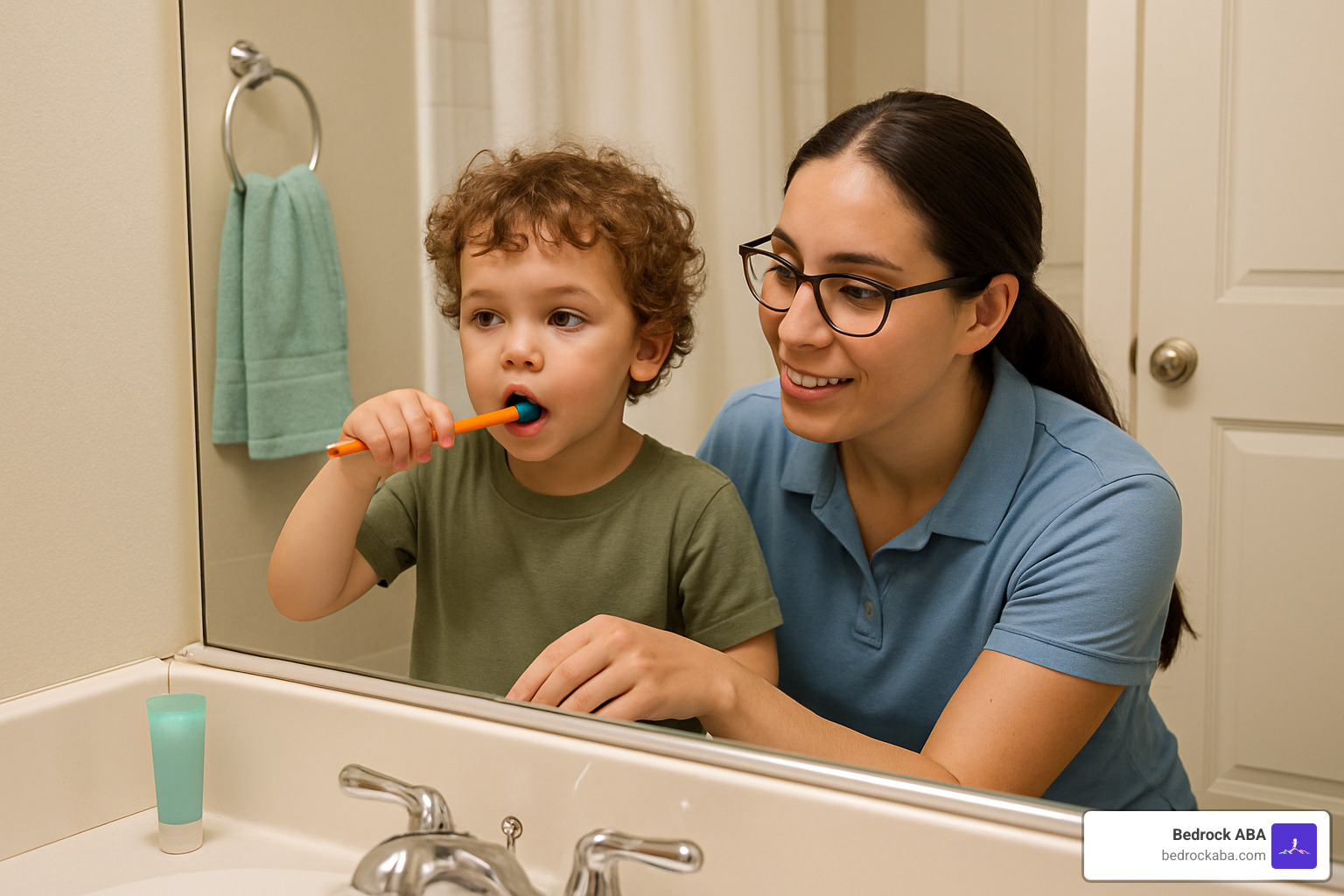
The most immediate difference families notice is the comfort factor. There’s something powerful about learning in your own space – no unfamiliar smells, sounds, or people. Your child can focus on developing new skills without the added stress of navigating an unfamiliar environment.
Flexible scheduling becomes a reality when therapy comes to you. Morning person? We can work with that. Need to avoid nap time? No problem. This flexibility isn’t just convenient – it’s therapeutic, allowing sessions to happen when your child is most ready to learn.
| In-Home ABA | Center-Based ABA |
|---|---|
| Natural environment learning | Structured clinical setting |
| No travel time or stress | Requires transportation |
| Flexible scheduling around family routines | Fixed clinic hours |
| Siblings can participate | Limited family involvement |
| Real-world skill practice | May require skill generalization |
| Comfortable, familiar setting | Professional clinical environment |
Generalization of Skills to Real Life
Here’s where home-based therapy really shines. When your child learns to brush their teeth with our RBT in your bathroom, they’re not just learning the skill – they’re learning it exactly where they need to use it every day. No translation required.
Daily living skills development happens organically during your actual routines. Your child practices requesting breakfast items while standing in your kitchen, learns to put on shoes by your front door, and develops bedtime independence in their own bedroom.
Self-care routines become natural teaching opportunities. Toileting, bathing, dressing, and grooming all happen in the spaces where your child will use these skills independently.
Family Engagement & Training
Perhaps the most transformative aspect of in-home aba therapy in utah is how it changes your role from observer to active participant. You’re not watching through a one-way mirror or getting secondhand reports about what happened in therapy. You’re right there, learning alongside your child.
Caregiver coaching happens naturally when therapy occurs in your home. You see exactly how our RBT handles challenging behaviors, witness the strategies that work best with your child, and practice these techniques with immediate feedback.
The consistency this creates accelerates progress in ways that surprise many families. When everyone in the household uses the same communication strategies, reinforcement approaches, and behavior management techniques, your child experiences a unified, supportive environment that promotes faster skill development.
More info about Family Integration
Convenience & Reduced Stress
The practical benefits of home-based therapy extend far beyond convenience – they create conditions that optimize learning and family well-being. Fewer transitions means less opportunity for anxiety and behavioral challenges that can interfere with skill development.
Many children with autism find transitions particularly challenging. By eliminating the need to travel to appointments, adjust to new environments, and steer clinic routines, we remove barriers that might otherwise interfere with therapeutic progress.
Starting Your In-Home ABA Journey: Assessment, Insurance & Scheduling
Getting started with in-home aba therapy in utah might feel overwhelming at first, but the process is actually quite straightforward. Most families are surprised by how quickly they can move from that first phone call to having therapy sessions up and running in their living room.

The whole journey typically takes just a few weeks from start to finish. We’ve designed our intake process to be as smooth as possible because we know you’re eager to get your child the support they need.
Step-by-Step Intake Process
Your first step is simply picking up the phone or filling out our online referral form. During that initial conversation, we’ll chat about your child’s current challenges, what you’re hoping to achieve, and how our services might fit into your family’s life.
Next comes the paperwork part. We handle the insurance verification for you, reaching out to your provider to check your benefits and find out exactly what’s covered. You’ll know your copay amount and any authorization requirements before we move forward – no surprise bills later.
The home observation is where things get really interesting. A BCBA will visit your home to see your child in their natural environment. They’ll watch how your child interacts during typical routines, talk with you about daily challenges, and start identifying areas where therapy can make the biggest difference.
Based on what they observe, your BCBA creates a treatment plan specifically for your child. You’ll review this plan together, ask questions, and make sure it feels right for your family before anything begins.
Insurance Coverage & Costs Explained
Here’s some good news: Utah law requires insurance companies to cover ABA therapy for autism spectrum disorder. This mandate has been in place since 2014, which means most families have access to coverage.
SelectHealth typically provides comprehensive coverage with minimal copays, while Blue Cross Blue Shield covers medically necessary services with prior authorization. United Healthcare, Cigna, and other major insurers also provide coverage when services are delivered by qualified providers like our BCBAs and RBTs.
If you’re on Medicaid, you’re in great shape. Utah Medicaid covers the full range of ABA services – assessment, direct therapy, family training, and supervision – usually with no copays or deductibles.
For families who prefer private pay or don’t have coverage, we offer transparent pricing and sometimes have scholarship opportunities available.
More info about ABA Therapy Services in Utah
Waitlists, Session Blocks & Typical Hours
One of the biggest advantages of choosing in-home aba therapy in utah right now is that most providers report no waitlists for daytime services. This means your child could start therapy within just a few weeks of your initial contact.
We offer flexible scheduling blocks throughout the day. Morning sessions from 8 AM to noon work well for younger children who are most alert earlier in the day. Afternoon blocks from noon to 4 PM fit nicely around preschool schedules. Evening sessions from 4 PM to 7 PM are perfect for school-age children.
The number of hours your child needs depends on their age, specific challenges, and family goals. We typically recommend a minimum of 9 hours per week to see meaningful progress, though many families find 15 to 25 hours provides the best balance of intensive support and family time.
Individualized Goals & Measuring Progress
In-home aba therapy in utah focuses on developing skills that directly improve your child’s daily functioning and family quality of life. Every goal we set is carefully chosen based on what matters most to your family and what will make the biggest difference in your child’s independence and happiness.
The beauty of home-based therapy is that we can work on real skills in real situations. Instead of practicing pretend scenarios, your child learns to communicate their needs at your dinner table, practices social skills during actual family time, and develops independence in their own bedroom and bathroom.
Communication, Social & Daily Living Targets
Communication goals often become the foundation for everything else your child learns. We start with manding – teaching your child to ask for what they want and need. This might begin with simple requests like “cookie please” or pointing to preferred items, then grow into complex communication about feelings, questions, and social interactions.
Labeling skills help your child understand and describe their world. They learn to name family members, favorite toys, foods, and activities. This vocabulary becomes the building blocks for more advanced communication and social connection.
Social skills development happens naturally when siblings and family members are part of the process. Turn-taking during board games, cooperative play in the backyard, and appropriate social responses during family conversations all become learning opportunities.
Daily living skills are where families often see the most life-changing progress. Self-care routines like toileting, dressing, and hygiene tasks become stepping stones to independence. Simple meal preparation activities – setting the table, making a sandwich, cleaning up – build confidence and practical life skills.
Behavior Reduction & Safety
While we focus primarily on teaching positive behaviors, addressing challenging behaviors is sometimes necessary for safety and learning. Our approach emphasizes understanding why behaviors happen and teaching better alternatives, rather than simply trying to stop unwanted behaviors.
Tantrum management becomes much more effective when we can identify triggers in your child’s natural environment and teach them appropriate ways to express frustration. Maybe they learn to ask for a break when feeling overwhelmed, or use words instead of actions to show disappointment.
Aggression reduction focuses on teaching safe communication alternatives. Children learn that hitting, kicking, or biting don’t get their needs met, but appropriate communication does.
All our staff receive training in Safety Care® Crisis Prevention techniques, ensuring they can safely manage behavioral challenges while maintaining your child’s dignity and your family’s trust.
Transparent Reporting to Families
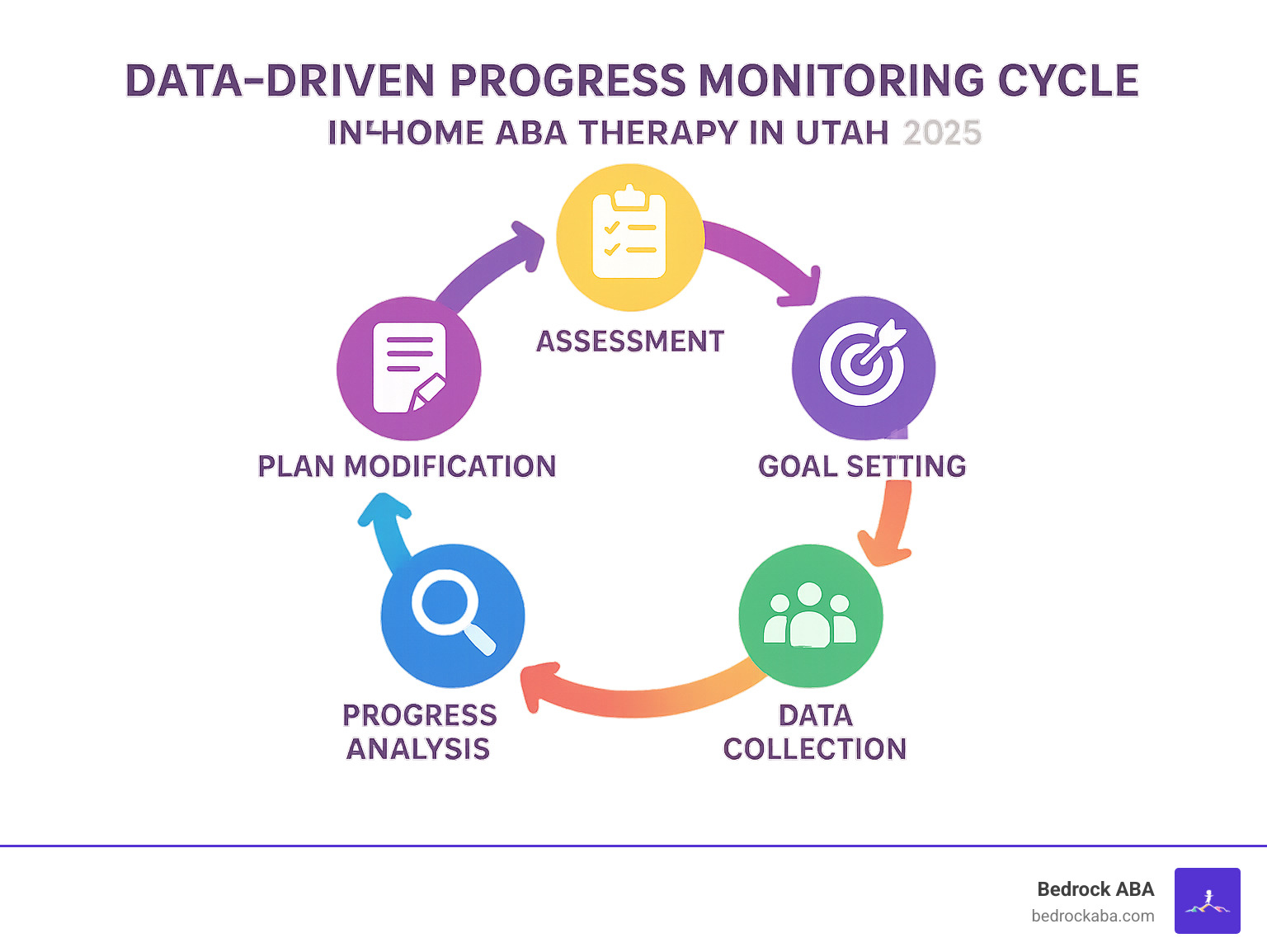
We believe you should understand your child’s progress in detail. Weekly progress updates include clear session notes about what your child accomplished, data graphs that show skill development trends, and specific recommendations for practice between sessions.
Monthly BCBA meetings give you dedicated time to review progress, ask questions, and adjust goals based on what’s working and what needs attention. These meetings can happen in person at your home or via telehealth – whatever works best for your schedule.
Every six months, we conduct comprehensive re-assessments using tools like the ABLLS and VB-MAPP to measure overall progress and plan the next phase of intervention.
More info about ABA Telehealth Therapy

Frequently Asked Questions About In-Home ABA Therapy in Utah
When families first learn about in-home aba therapy in utah, they naturally have questions about how it works, what to expect, and whether it’s right for their child. Let me address the questions we hear most often, so you can feel confident about taking the next step.
Is In-Home ABA Therapy in Utah Covered by Insurance?
The good news is that Utah law requires insurance companies to cover ABA therapy for anyone diagnosed with Autism Spectrum Disorder. This protection has been in place since 2014, and it’s made quality behavioral health services accessible to thousands of families across our state.
Most major private insurance plans provide comprehensive coverage once you receive prior authorization. Medicaid plans offer particularly robust coverage, often with no copays or deductibles for eligible families.
We handle your benefit verification during intake. You won’t have to steer insurance terminology or worry about surprise costs. Our team contacts your provider directly, confirms your coverage details, and explains exactly what you can expect to pay before your first session.
According to Autism Speaks, Utah is among the states with strong autism insurance coverage requirements, making ABA therapy accessible to more families.
How Many Hours of In-Home ABA Therapy in Utah Does My Child Need?
This is probably the question I get asked most, and honestly, there’s no one-size-fits-all answer. Research shows that a minimum of 9 hours per week is needed for meaningful progress, but some children thrive with intensive programs of 25-40 hours weekly.
Your child’s age when starting services makes a big difference. Younger children often benefit from more intensive hours because their brains are so ready to learn new skills. A toddler might do well with 20-25 hours, while a school-age child might see great progress with 15 hours focused on specific goals.
Your BCBA will make individualized recommendations based on comprehensive assessment results, but we can adjust as we go. Many families start with moderate hours and increase or decrease based on how their child responds and what works for their family routine.
What Is the Parent’s Role During Sessions?
This might be the most important question because your involvement directly impacts your child’s success. You’re not just watching from the sidelines – you’re becoming an active member of your child’s therapeutic team.
During sessions, you’ll observe how our RBTs use evidence-based strategies with your child. You’ll see exactly how they prompt communication, reinforce positive behaviors, and work through challenging moments.
Your RBT and BCBA will coach you through practicing these same techniques. Maybe you’ll learn how to use visual supports during your morning routine, or practice specific ways to encourage your child’s communication during snack time.
Between sessions, you become the consistency that accelerates progress. Instead of having different approaches at home versus during therapy, your whole family learns to use the same positive reinforcement strategies and communication techniques throughout the day.
Conclusion
When you’re searching for the right support for your child with autism, in-home aba therapy in utah offers something truly special – the chance to transform your everyday moments into opportunities for growth and connection.
Think about it: your kitchen table becomes the place where your child learns to ask for their favorite snack. Your living room turns into a space where siblings learn to play together. Your own bathroom is where independence in self-care develops naturally. This isn’t just therapy – it’s life happening, with expert guidance right there beside you.
At Bedrock ABA, we’ve seen countless Utah families find that the most powerful learning happens when children feel safe, comfortable, and surrounded by the people they love most. There’s something magical about watching a child master a new skill in their own bedroom, then use that same skill at the dinner table an hour later without missing a beat.
Your family’s story matters to us. Whether you’re just starting to steer an autism diagnosis or you’ve been on this journey for years, we know that no two families are exactly alike. That’s why our BCBAs and RBTs work so closely with you to create an approach that fits your child’s personality, your family’s schedule, and your hopes for the future.
Utah families have a tremendous advantage with strong insurance coverage and our commitment to keeping waitlists short. You don’t have to put your child’s development on hold while you wait for services. Most families can begin their journey within just a few weeks of reaching out to us.
The hardest part is often just making that first phone call. But once you do, you’ll find a team of caring professionals who genuinely understand what you’re going through and are excited to support your family’s unique path forward.
Ready to see how in-home aba therapy can make a difference in your family’s daily life? We’re here to answer your questions, walk you through the process, and help you take that first confident step toward the future you envision for your child.