


Why Effective Aggression Management Matters for Families
ABA therapy for aggression provides evidence-based strategies to help children with autism replace harmful behaviors with positive communication skills. Through structured assessment and individualized intervention plans, ABA addresses the root causes of aggressive behaviors while teaching safer alternatives.
Quick Guide to ABA for Aggression:
- Assessment First: Functional Behavior Assessment identifies triggers and purposes
- Replace, Don’t Just Remove: Teach communication skills that serve the same function
- Positive Reinforcement: Reward appropriate behaviors consistently
- Team Approach: Coordinate between home, school, and therapy settings
- Data-Driven: Track progress with measurable goals and regular adjustments
Aggressive behaviors affect 56% of individuals with autism toward caregivers and 32% toward non-caregivers, according to research. For families, this can mean constant stress, limited community activities, and worry about their child’s safety and future.
The good news? ABA therapy has strong research support for reducing aggression. Functional communication training – a core ABA strategy – is considered a well-established, evidence-based treatment when combined with proper techniques.
As Mayer Kulefsky, director of operations at Bedrock ABA, I’ve seen how ABA therapy for aggression transforms family life when implemented with the right support and consistency. My experience overseeing individualized care across multiple states has shown me that parents become the most powerful advocates for their children when they understand the “why” behind each strategy.
Why a How-To on Aggression Matters
The scope of aggression in autism extends far beyond occasional tantrums. Research shows that 25% of autistic children display aggressive behaviors that significantly impact their daily functioning. These behaviors can range from hitting and kicking to throwing objects or verbal threats.
For families in Utah and Salt Lake City, where we provide services, aggressive behaviors often escalate without proper intervention. The stress on families is immense – parents report feeling isolated, exhausted, and uncertain about their child’s future. The prevalence of aggression makes it one of the most urgent concerns we address, as it poses safety risks and can lead to exclusion from educational and community settings.
Understanding Aggression Through the Lens of ABA
When we talk about ABA therapy for aggression, we need to start with a clear definition. In ABA terms, aggression means any behavior where a child makes contact with another person using enough force to create an audible sound or leave a visible mark. This includes hitting, kicking, biting, hair pulling, scratching, or throwing objects at people.
Why do we define it so precisely? Because vague descriptions like “acting out” don’t give us the specific information we need to create effective interventions. When we know exactly what we’re addressing, we can measure progress and adjust our approach.
Here’s what makes ABA different: we don’t just try to stop the aggressive behavior. Instead, we figure out why it’s happening. From an operant conditioning perspective, every aggressive behavior serves a specific function for your child.
Research shows us there are four main functions that drive aggressive behaviors. Attention-seeking happens when your child learns that hitting reliably gets adult attention – even negative attention. Escape and avoidance occurs when aggression successfully helps your child get out of demands or uncomfortable situations. Access to tangibles means the aggressive behavior helps your child get preferred items or activities. Automatic reinforcement happens when the behavior itself feels good or provides sensory input the child needs.
The connection between autism spectrum disorder and aggression isn’t coincidental. Children with autism often face unique challenges that can create conditions for aggressive behaviors to develop. Difficulty processing sensory information can make everyday environments feel overwhelming. Communication and language challenges leave children frustrated when they can’t express their needs. Problems with emotional regulation make it harder to cope with disappointment or unexpected changes.
Common Causes & Triggers
Sensory overload consistently ranks as our top trigger for aggressive behaviors. Fluorescent lights, unexpected fire drills, crowded hallways, or certain clothing textures can trigger a fight-or-flight response that shows up as aggression.
Communication gaps create incredible frustration for children who know what they want but can’t express it effectively. When words fail, aggression becomes their backup communication system.
Escape and avoidance patterns develop when children find that aggression successfully gets them out of difficult situations. Attention seeking emerges when children receive more intense, immediate adult interaction during aggressive episodes than they get during appropriate behavior.
Aggression vs Other Challenging Behaviors
Self-injury involves your child harming themselves rather than others – behaviors like head banging or self-biting. Property destruction focuses on damaging objects rather than harming people. We think about all challenging behaviors on a severity continuum from mild to severe, which helps determine intervention urgency and safety planning needs.
How ABA Therapy for Aggression Works: Step-By-Step Framework
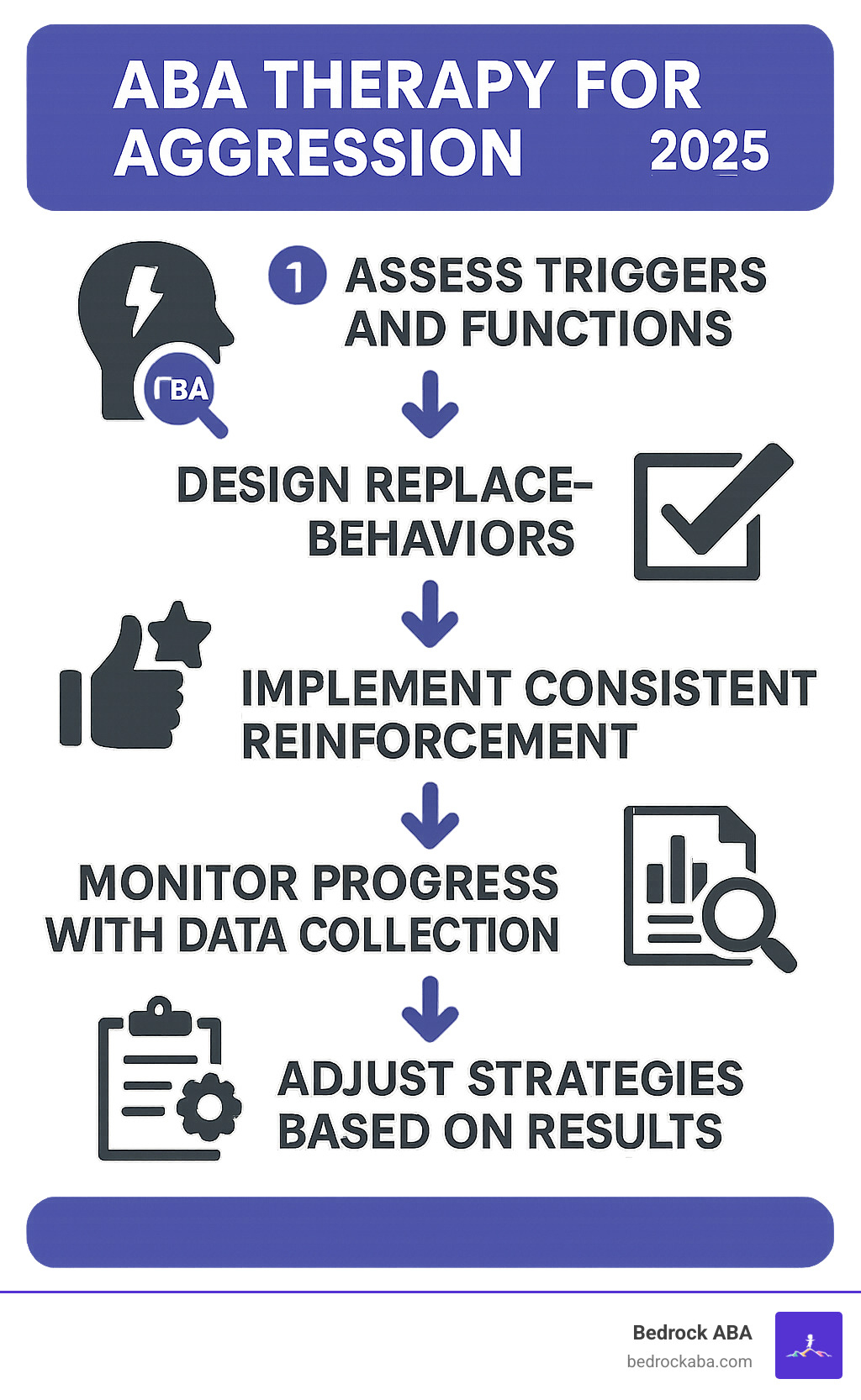
When your child hits, kicks, or throws things, it can feel overwhelming and unpredictable. But ABA therapy for aggression gives us a clear roadmap to figure out the reason behind the behavior and address it effectively.
The heart of our approach is a Functional Behavior Assessment, or FBA. Think of yourself as a detective gathering clues about your child’s behavior. We’re not just looking at what they’re doing – we’re trying to understand why they’re doing it.
Our assessment process follows a logical path. First, we define exactly what the aggressive behavior looks like. Instead of saying “he acts out,” we get specific: “he hits with an open hand on another person’s arm or shoulder.”
Next, we collect baseline data to understand the current situation. How often is this happening? When does it typically occur? The real detective work comes when we identify patterns in the data. What’s happening right before your child becomes aggressive? What usually happens afterward?
Once we spot these patterns, we can hypothesize about the function the behavior serves. Finally, we test our hypothesis by trying small changes and seeing what happens.
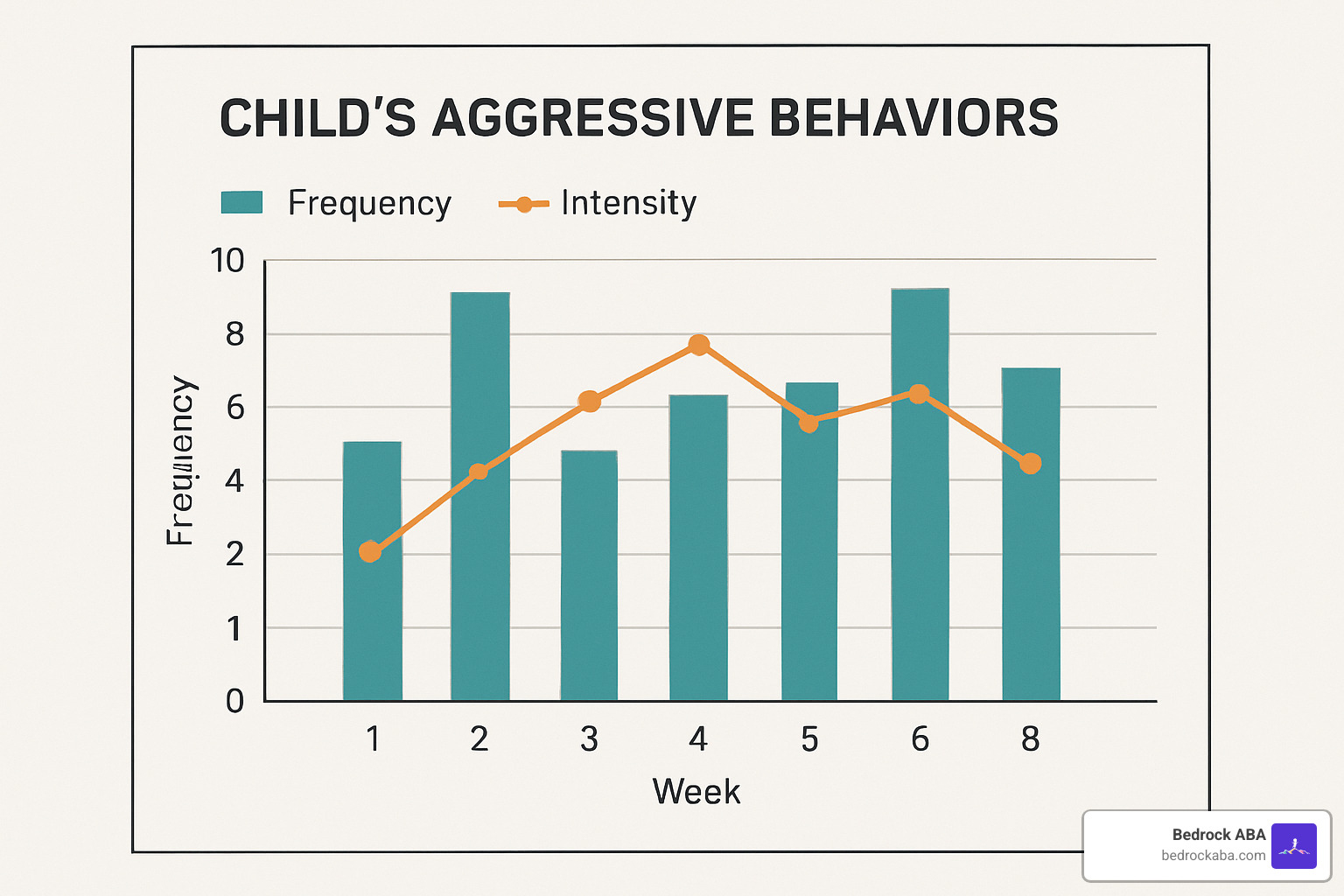
The tools we use make this process manageable for busy families. An ABC chart helps you track the Antecedent (what happened before), the Behavior itself, and the Consequence (what happened after). Behavior graphs turn your daily observations into visual patterns.
Conducting an FBA at Home & School
The beauty of a good FBA is that it happens in your child’s real world. Home observations focus on your family’s actual routines – breakfast time, getting ready for school, homework struggles, and bedtime battles.
School observations reveal different triggers and patterns. The classroom environment, peer interactions, and academic demands all influence behavior in ways that might not show up at home.
Interviews with caregivers help us understand your child’s complete picture. Sometimes we use trial manipulations – small, controlled changes to test our theories.
Interpreting FBA Results for Aggression
Once we’ve gathered information, patterns emerge that explain your child’s aggressive behavior. Attention-maintained aggression typically happens when your child wants interaction but doesn’t know how to ask appropriately. Tangible-maintained aggression is about getting access to something specific. Escape-maintained aggression emerges when your child wants out of a situation. Automatic reinforcement involves aggression that serves an internal purpose.
Scientific research on functional assessment shows us that understanding these different functions is crucial for designing interventions that actually work.
Core ABA Strategies to Reduce Aggression
Think of ABA therapy for aggression like building a toolbox – we need the right tools for each specific situation. Once we understand why your child’s aggression is happening, we can select evidence-based strategies that actually work.
The foundation of our approach is differential reinforcement. DRA (Differential Reinforcement of Alternative behavior) means we reward a specific replacement behavior – like asking for help instead of hitting when frustrated. DRO (Differential Reinforcement of Other behavior) involves rewarding your child for periods when they’re not being aggressive. DRI (Differential Reinforcement of Incompatible behavior) focuses on behaviors that can’t happen at the same time as aggression.
Functional communication training (FCT) becomes the game-changer for most families. Instead of just trying to stop aggression, we teach children how to get their needs met through communication. If your child hits to get attention, we teach them to tap your shoulder and say “excuse me.” If they bite to escape difficult tasks, we teach them to request a break appropriately.
Non-contingent reinforcement (NCR) provides what your child seeks on a regular schedule, regardless of their behavior. When children’s needs are met consistently, the motivation for aggression naturally decreases.
Extinction involves consistently withholding the reinforcement that has been maintaining the aggressive behavior. Token economies create visual reward systems that help children see the concrete benefits of choosing appropriate behaviors.
Teaching Replacement Behaviors
The secret to reducing aggression isn’t just stopping unwanted behavior – it’s giving your child a better way to get their needs met. Mand training focuses on teaching functional requests that serve the same purpose as the aggressive behavior.
For children who aren’t using verbal language yet, Picture Exchange Communication System (PECS) provides a powerful alternative. Sign language offers another communication option. Emotion regulation skills help children recognize and manage their feelings before they escalate to aggression.
Functional Communication Training & Effectiveness
FCT follows a systematic process. First, we identify the function of the aggressive behavior. Then we select a replacement communication that serves the exact same function but in a socially appropriate way.
The teaching phase involves modeling the new skill and creating practice opportunities. Schedule thinning represents the final crucial step – we gradually introduce small delays to make the system sustainable in real-world settings.
Scientific research on FCT success demonstrates significant reductions in aggressive behavior across multiple studies.
Implementing ABA Therapy for Aggression Across Settings
The real test of any aggression intervention isn’t what happens in the therapy room – it’s whether your child uses their new skills at home, school, and out in the community. This is called generalization, and it doesn’t happen automatically.
Consistency becomes your family’s secret weapon. When everyone responds the same way to aggression, children understand what’s expected. At Bedrock ABA, we work closely with families to create unified behavior plans that make sense for everyone involved.
School IEP collaboration ensures your child’s aggression interventions follow them into the classroom. Home routines offer countless opportunities to practice new skills naturally. Community outings might feel scary initially, but they’re crucial for building real-world confidence.
Social stories give children a mental rehearsal before challenging situations. These personalized narratives walk through what will happen and what the child should do.
Parent & Caregiver Roles
Parents hold the most powerful position in their child’s success with ABA therapy for aggression. Modeling appropriate communication happens naturally throughout your day. Reinforcement fidelity means sticking to the plan even when you’re tired or stressed.
Data sharing helps our entire team understand what’s really happening at home. Stress management for caregivers isn’t a luxury – it’s essential for your child’s progress.
Integrating Other Supports
ABA therapy for aggression often works best as part of a coordinated team approach. Sometimes medication can provide stability needed for behavioral interventions to take hold. Occupational therapy addresses sensory processing challenges that often trigger aggression. Speech therapy tackles communication frustrations head-on.

Measuring Success: Evidence, Progress Tracking, Case Studies
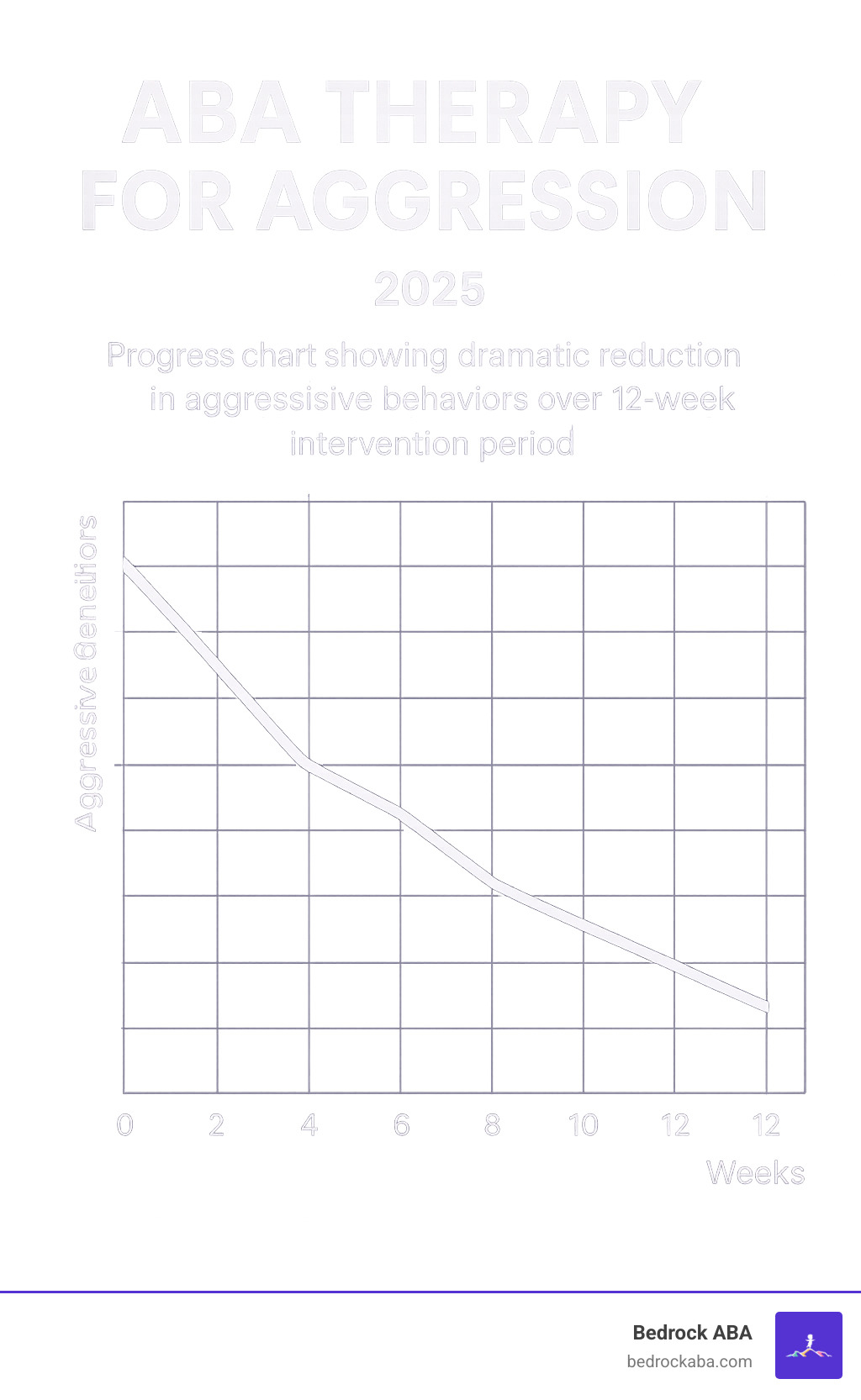
The beauty of ABA therapy for aggression lies in its measurable results. Baseline versus intervention graphs tell the story clearly. Before intervention, we might see 15-20 aggressive episodes daily. After implementing our strategies, that drops to 2-3 episodes per day.
Let me share how this looks in practice. Six-year-old Emma came to us hitting adults about 15 times daily. She was non-verbal and had learned that hitting reliably got her attention and preferred items. Through functional communication training, we taught Emma to hand picture cards to adults when she wanted something. Within eight weeks, her hitting dropped to fewer than 2 episodes per day. More importantly, she was making over 50 appropriate communication attempts daily.
Our second case involved 14-year-old Marcus, whose aggression served a different function. He would throw chairs when presented with academic work, effectively escaping difficult tasks. We combined non-contingent reinforcement with differential reinforcement of alternative behavior. Marcus received regular breaks and learned to appropriately request help. His aggressive episodes dropped from daily occurrences to fewer than one per week.
Benefits and Limitations
ABA therapy for aggression offers compelling advantages backed by decades of research. The approach is thoroughly evidence-based and completely individualized. The skills children learn become natural parts of their communication repertoire.
However, effective ABA intervention demands resource intensity and consistent implementation across all settings. The approach requires trained BCBAs to design and oversee interventions properly. Most families find the time investment substantial, though they adapt quickly when they see progress.
When to Seek Professional Help
Red flags include aggression that causes injury, behaviors escalating in frequency, and aggression preventing participation in activities. Crisis behaviors require specialized safety protocols and intensive intervention. Selecting qualified providers involves checking credentials carefully and ensuring compatibility with your family’s values.
Frequently Asked Questions about ABA Therapy & Aggression
Does ABA work for severe, long-standing aggression?
Yes, research consistently demonstrates that ABA therapy for aggression can create meaningful change even when children have been aggressive for years. However, behaviors practiced thousands of times don’t disappear overnight.
Severe aggression demands intensive intervention initially. This often means more therapy hours per week, stricter safety protocols, and sometimes coordination with medical providers. The key factors that predict success include comprehensive understanding of why the aggression happens, family commitment to consistent implementation, and realistic expectations about timeline.
How long before we see improvements?
Most families notice some initial changes within 2-4 weeks of consistent implementation. These early changes might be subtle – slightly shorter episodes or longer peaceful periods between incidents.
Meaningful reductions in aggression typically take 6-12 weeks of consistent work. The timeline depends on several factors. Attention-seeking aggression usually responds faster than escape-maintained aggression. Children with stronger existing communication skills often progress more quickly.
The most important factor is consistency across all settings. When families, schools, and therapists all follow the same approach, progress accelerates significantly.
Can ABA be combined with medication safely?
Absolutely. Research shows that combining behavioral interventions with appropriate medication can be more effective than either approach alone. The collaboration between your behavior analyst and prescribing physician is crucial.
Medication might help reduce the intensity of aggressive episodes, making it easier for children to learn new skills. Meanwhile, ABA therapy for aggression teaches functional communication and coping skills that can reduce the need for medication over time.
Conclusion
When families first come to us feeling overwhelmed by their child’s aggressive behaviors, they often wonder if things will ever get better. After years of working with families across Utah and Salt Lake City, I can tell you with confidence that ABA therapy for aggression doesn’t just offer hope – it delivers real, measurable change that transforms daily life.
At Bedrock ABA, our family-centered approach recognizes that successful aggression intervention empowers your entire family with understanding, tools, and confidence. Whether we’re working with you in person or providing remote support, our goal remains helping your family thrive together.
Start with understanding – that functional assessment opens up why your child is struggling and points toward solutions that work. Focus on replacement behaviors because telling a child to stop hitting without teaching them how to ask for help is like taking away their voice entirely.
Consistency across all settings accelerates progress. When home, school, and therapy all speak the same behavioral language, children learn faster and feel more secure. Track your progress with simple data collection. Most importantly, stay patient with the process.
Your next steps depend on where you are right now. If aggressive behaviors are escalating or creating safety concerns, don’t wait – seek professional evaluation immediately. If you’re ready to begin systematic intervention, start with basic observation and data collection to understand your child’s patterns.
The journey isn’t always easy, but it’s absolutely worth it. Every family deserves to feel safe, connected, and hopeful about the future.
For more information about how our individualized approach can support your family’s specific needs, explore our in-home ABA services designed to provide flexible, effective intervention in your natural environment.