


Understanding ABA Therapy for Behavior Change
ABA therapy for behavior is a science-based approach that helps children with autism develop new skills and reduce challenging behaviors through positive reinforcement and structured learning.
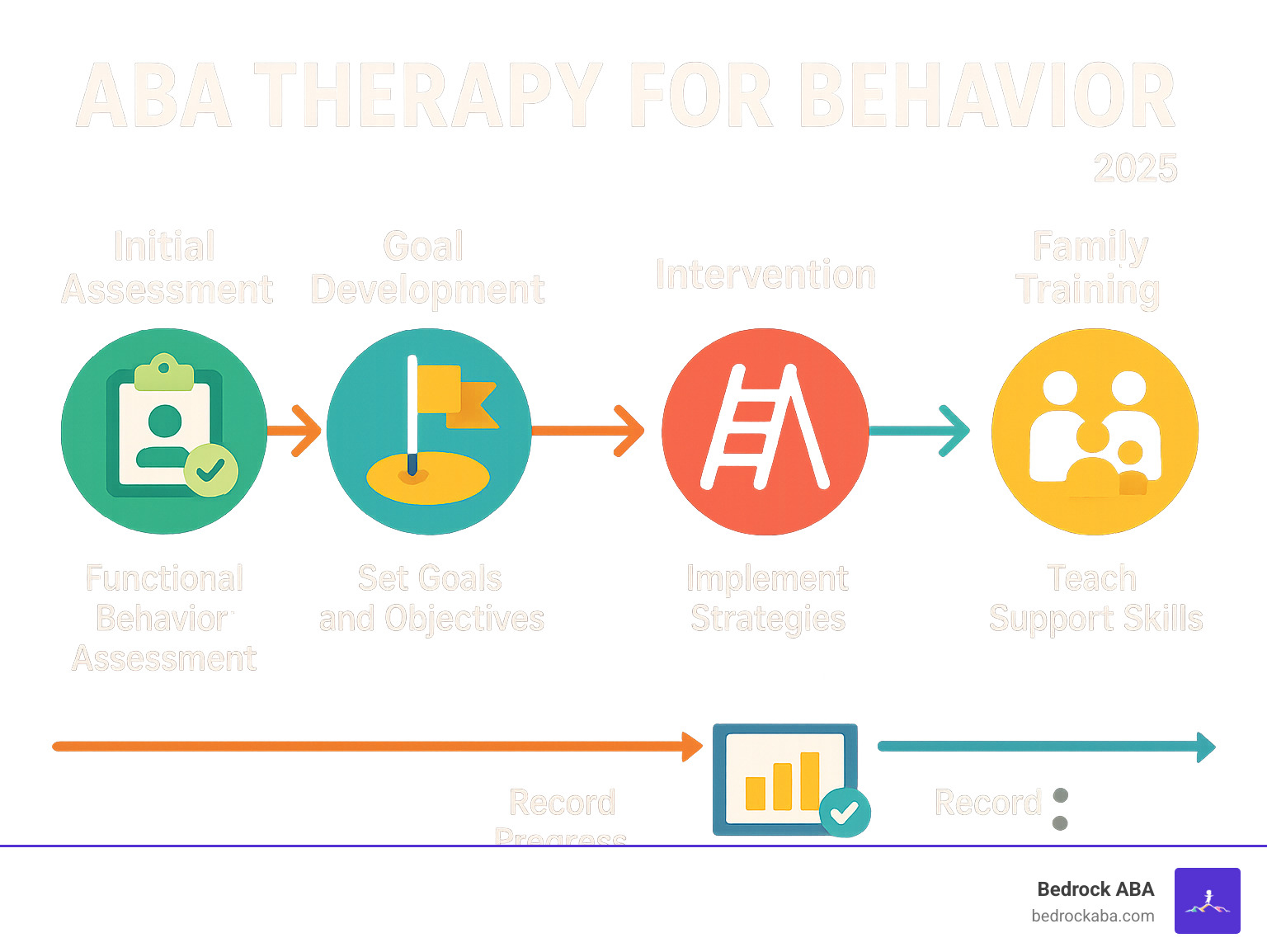
Key Components:
- Assessment: Identifies specific behaviors and skills to target
- Goal Setting: Creates measurable objectives based on your child’s needs
- Intervention: Uses proven techniques like positive reinforcement and prompting
- Data Collection: Tracks progress to adjust strategies as needed
- Family Training: Teaches parents how to support learning at home
Common Behaviors Addressed:
- Communication and language skills
- Social interactions and play
- Daily living skills (eating, dressing, hygiene)
- Reducing tantrums, aggression, or self-injury
- Academic and pre-academic skills
Applied Behavior Analysis has been helping families since the 1960s. Research shows that intensive ABA programs of 25-40 hours per week can lead to significant improvements in language, social skills, and daily functioning for children with autism.
Modern ABA has evolved far beyond rigid, table-based sessions. Today’s ABA therapy for behavior focuses on play-based learning, natural environments, and respecting your child’s individual needs and interests.
Aba therapy for behavior terminology:
ABA Therapy for Behavior: Core Concepts and Principles
ABA therapy for behavior builds on B.F. Skinner’s understanding of operant conditioning – behaviors followed by positive consequences are more likely to happen again. When your child says “please” and gets what they asked for, they’re more likely to use polite language next time.
The formal field of Applied Behavior Analysis was established in 1968 when Baer, Wolf, and Risley published their groundbreaking paper outlining the seven dimensions of ABA. These dimensions ensure every ABA intervention is applied, behavioral, analytic, technological, conceptually systematic, effective, and has generality.
What sets ABA apart is this commitment to data and evidence. We don’t just hope an intervention works – we measure it, track it, and adjust it based on what the numbers tell us.
How aba therapy for behavior aligns with learning theory
The science behind ABA therapy for behavior comes from radical behaviorism, which focuses on how environmental events influence behavior. We use ABC analysis – looking at what happens before a behavior (antecedent), the behavior itself, and what happens after (consequence). This helps us understand why behaviors happen and how to change them effectively.
Ethics & evolution of principles
Modern ABA looks very different from programs of decades past. The field has moved away from punishment-based methods toward positive reinforcement strategies that respect each child’s dignity and individual needs.
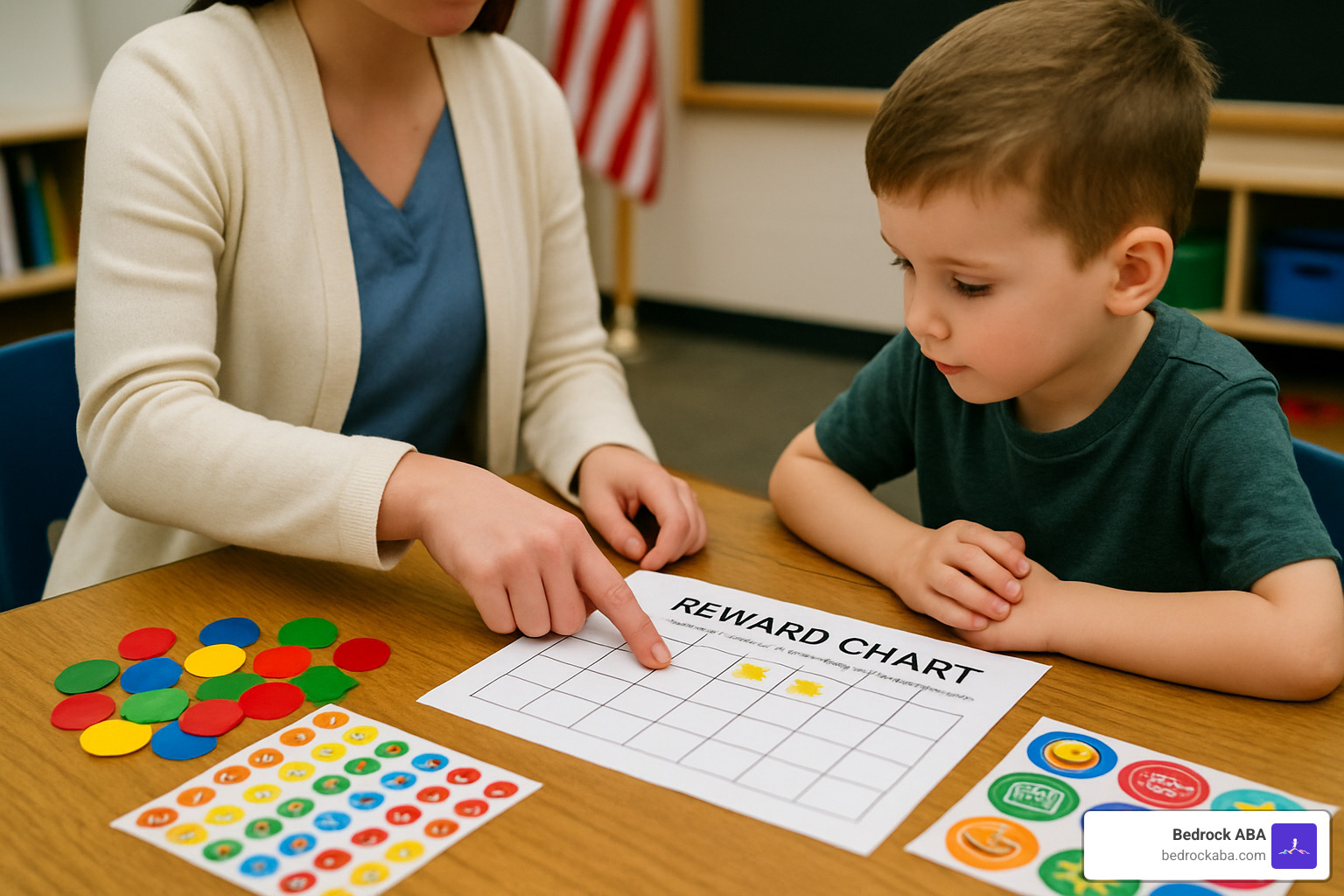
Today’s ABA therapy for behavior focuses on building skills rather than just eliminating behaviors, using natural reinforcers, respecting neurodiversity, involving families in decision-making, and ensuring interventions are socially valid and meaningful.
The neurodiversity movement has rightfully challenged some traditional ABA practices, and we’ve listened. The goal isn’t to make children “look normal” but to help them develop skills that improve their quality of life and help them communicate their needs more effectively.
How ABA Works to Change Behavior Step-by-Step
ABA therapy for behavior starts by figuring out why a behavior happens before we can change it. Every behavior serves a purpose – getting attention, escaping something difficult, accessing something fun, or providing sensory input.
We use ABC analysis – looking at what happens before, during, and after a behavior occurs. The A stands for antecedent (trigger), B is the behavior itself, and C represents the consequence (what happens after).
Once we understand why a behavior is happening through a functional behavior assessment, we design effective interventions that teach better ways to meet the same need.
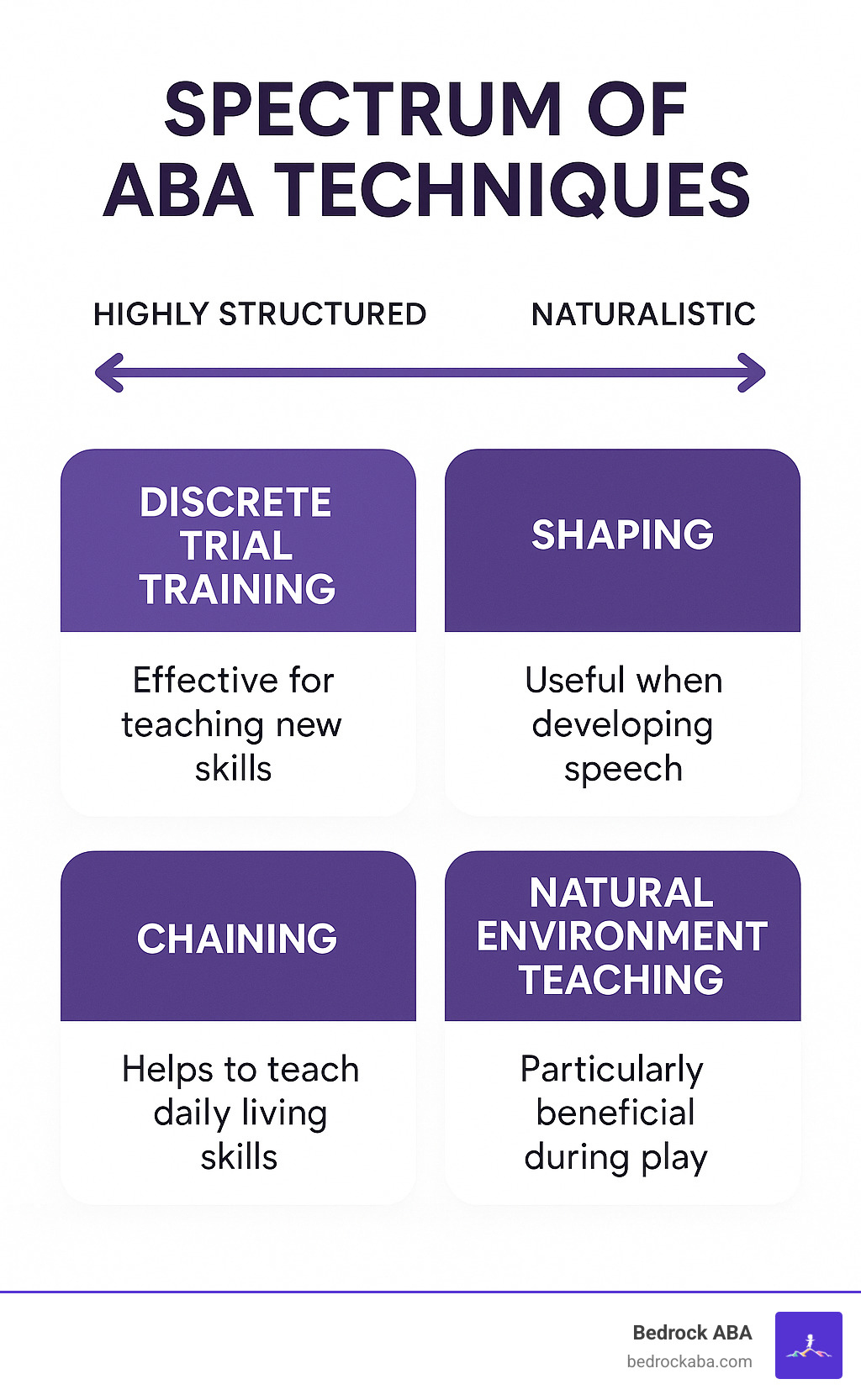
Key techniques include discrete trial training (breaking complex skills into bite-sized pieces), naturalistic teaching (weaving learning into everyday activities), shaping (celebrating small steps toward goals), and chaining (breaking complex behaviors into sequences of smaller steps).
Methodologies & Techniques You’ll Hear About
Discrete Trial Training (DTT) uses repeated practice with clear instructions and immediate feedback. Pivotal Response Treatment (PRT) takes a more natural approach by targeting “pivotal” skills like motivation. Early Start Denver Model (ESDM) combines ABA structure with developmental approaches for very young children. Natural Environment Teaching (NET) focuses on teaching skills exactly where they’ll be used in real life.
Real-life ABA Therapy for Behavior Success Stories
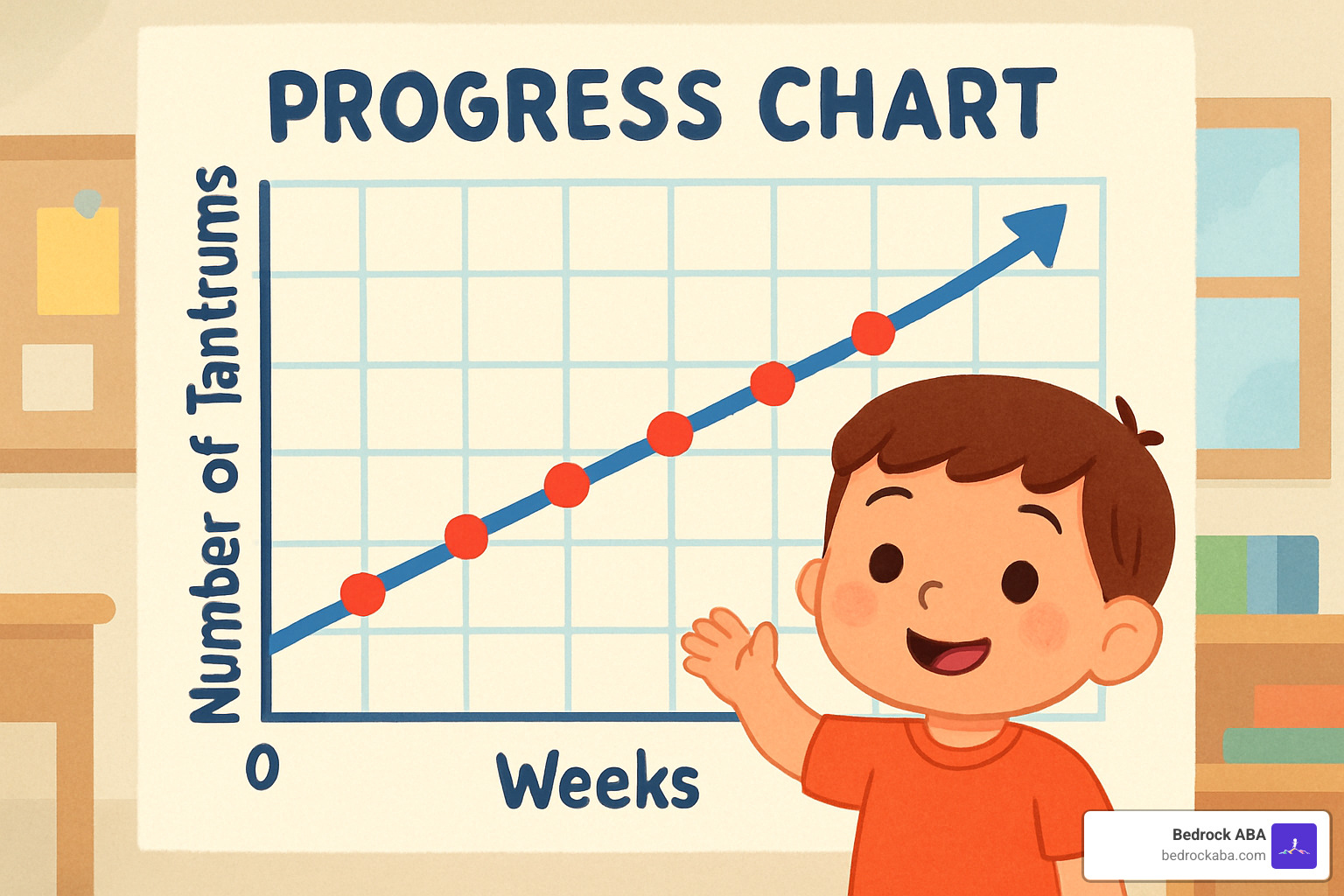
Sarah, a 4-year-old who initially expressed needs through tantrums, learned to use picture cards to request favorite items. Within months, she progressed to using words, then full sentences. Her tantrums decreased by 80% as her communication skills blossomed.
Marcus, age 7, struggled with transitions between activities. Using visual schedules and transition warnings, combined with positive reinforcement, he learned to move between activities independently. Research shows children who receive intensive ABA therapy often maintain their gains years later.
Starting ABA Therapy: Assessment, Goal-Setting & Individualized Plans
Starting ABA therapy for behavior begins with a comprehensive assessment that goes beyond identifying challenges. We look for your child’s strengths, what motivates them, and how they naturally interact with their world.
During the initial intake, we review existing evaluations and get a complete developmental picture. We use proven assessment tools like the VB-MAPP or ABLLS to understand exactly where your child is across different skill areas.
Your priorities matter most. We spend significant time understanding what skills would make the biggest difference in your family’s daily life – whether it’s communication, toilet training, or improving sleep routines.
From this information, we create SMART goals – objectives that are Specific, Measurable, Achievable, Relevant, and Time-bound. These goals become your child’s personalized roadmap for growth.
What to Expect in the First 90 Days
The first three months focus on baseline data collection (weeks 1-2), rapport building (weeks 3-4), systematic intervention (weeks 5-8), and program refinement (weeks 9-12).
Treatment dosage varies by child. Research shows intensive programs of 20-25 hours per week typically yield optimal results, but we work with each family to find a sustainable schedule.
Role of Families & Caregivers
Family involvement is the secret ingredient that makes ABA therapy for behavior truly successful. Through parent coaching, we teach you the same techniques our therapists use. We work closely with your child’s school team, sharing strategies and collaborating on goals. Our ultimate goal is to make you the expert on your child’s needs and the interventions that work best for them.
Evidence, Criticisms, and the Evolution of ABA
ABA therapy for behavior has one of the strongest evidence bases of any autism intervention, with decades of studies showing real, lasting improvements in communication, social connection, and daily living skills.
A comprehensive 2018 Cochrane review found that different children benefit from different approaches. Children with stronger language skills often thrive with 2.5-20 hours per week of naturalistic interventions, while those with more significant delays typically need 25+ hours per week of structured teaching.
However, we must acknowledge research limitations. A 2019 meta-analysis noted that “methodological rigor remains a pressing concern.” This doesn’t mean ABA doesn’t work – it means we need to keep improving our research methods while acknowledging the substantial evidence base that exists.
Addressing Controversies Respectfully
The autism community has raised crucial concerns about traditional ABA practices. Main concerns center around masking and camouflaging – the worry that ABA teaches children to suppress natural autistic behaviors to appear more “normal.” There’s also the issue of autonomy and consent – traditional ABA often didn’t consider what children actually wanted.

At Bedrock ABA, we’ve listened to these concerns and evolved our practices accordingly. We focus on building skills that genuinely improve quality of life rather than forcing children to fit neurotypical molds.
Toward Neurodiversity-Affirming Practice
The field is moving toward Naturalistic Developmental Behavioral Interventions (NDBI) – combining ABA’s systematic approach with deep respect for neurodiversity. Shared decision-making involves children and families in setting goals. Assent procedures ensure children can communicate when they need breaks. We’ve acceptd strength-based approaches that build on children’s natural interests and abilities.
Comparing ABA and Other Behavioral or Developmental Therapies
ABA therapy for behavior is one piece of the puzzle. Positive Behavior Support (PBS) shares similarities with ABA but emphasizes changing the environment to prevent problems. Cognitive Behavioral Therapy (CBT) helps people understand connections between thoughts, feelings, and actions – great for older children who can reflect on their experiences.
Occupational Therapy (OT) addresses the “how” behind behaviors, while Speech Therapy and ABA often work together on communication skills. DIR/Floortime follows your child’s natural interests to build connection.
| Therapy Type | Primary Goals | Methods | Evidence Base |
|---|---|---|---|
| ABA | Behavior change, skill acquisition | Systematic instruction, positive reinforcement, data collection | Extensive research, recognized as evidence-based |
| NDBI | Skill development within natural contexts | Play-based, child-led, naturalistic | Growing research base, combines ABA with developmental approaches |
| CBT | Emotional regulation, coping skills | Talk therapy, cognitive restructuring | Strong evidence for anxiety and depression in verbal individuals |
When to Combine Approaches
Most children benefit from multiple therapies working together. ABA therapy for behavior combines well with other services because its systematic approach can support goals from multiple disciplines. The key is having everyone on the same page, coordinating goals and sharing strategies across all environments.
Measuring Progress & Generalizing Skills Beyond the Therapy Room
ABA therapy for behavior tracks real, measurable changes. We collect frequency data (how often positive behaviors happen), duration data (how long behaviors last), and latency data (how quickly your child responds). We establish mastery criteria – specific benchmarks showing when a skill is truly learned.
The real magic happens when skills move beyond therapy sessions into everyday life. Generalization ensures communication skills learned with us also work at the grocery store and grandma’s house. We promote this by teaching skills in multiple settings with different people and materials.

Tech Tools That Help Track ABA Therapy for Behavior Data
Modern ABA therapy for behavior uses tablet-based recording for real-time data capture. Through secure portals, you can see how your child is doing anytime. Caregiver dashboards let you contribute data from home activities, giving us a complete picture of progress across all environments.
Frequently Asked Questions about ABA Therapy
What behaviors or skills can ABA address?
ABA therapy for behavior can address over 350 socially significant behaviors. Communication (from basic requests to complex conversations), social skills (turn-taking to making friends), daily living skills (toilet training, eating, dressing), academic readiness (following instructions, attention, reading/math), and challenging behaviors (we teach better alternatives rather than just stopping behaviors).
How many hours per week are recommended?
Age plays a significant role – younger children under 5 typically benefit from more intensive services. Your child’s current skill level and other services they receive factor in too. Research suggests 20-25 hours per week is often optimal for significant gains, but we work with families to find sustainable schedules.
What qualifications should an ABA provider have?
Board certification is non-negotiable – look for a BCBA or BCBA-D supervising your child’s program. Direct service providers should be RBTs with proper training. Ongoing supervision should occur weekly. Choose providers whose philosophy aligns with your family’s values and who focus on skill-building rather than just compliance.
Conclusion
ABA therapy for behavior has evolved into a flexible, family-friendly approach that honors what makes your child unique while giving them tools to thrive. At Bedrock ABA, we create personalized plans based on your child’s strengths, interests, and challenges.
Our team combines decades of experience with genuine commitment to best practices. We offer both in-person and remote services because flexibility matters. Whether your child is just starting to communicate or needs help with complex social situations, we support your entire family.
Starting this journey can feel overwhelming, but you’re taking action to help your child succeed. We’d love to talk about your child’s specific needs and how we might help.
More info about ABA services
Your child has incredible potential waiting to be open uped. We’re here to help you find it together, one meaningful step at a time.