


Understanding Autism Spectrum Disorder and Finding the Right Diagnosis
Autism testing near me is often the first search parents make when they notice their child isn’t meeting typical developmental milestones or when adults recognize patterns in their own behavior that suggest they might be on the autism spectrum.
Quick Answer for Finding Autism Testing Near You:
- Start with your pediatrician – they can provide referrals to qualified specialists
- Contact your insurance company for in-network providers (developmental pediatricians, psychologists, neurologists)
- Search university medical centers and children’s hospitals in your area
- Use online directories from Autism Speaks or Psychology Today
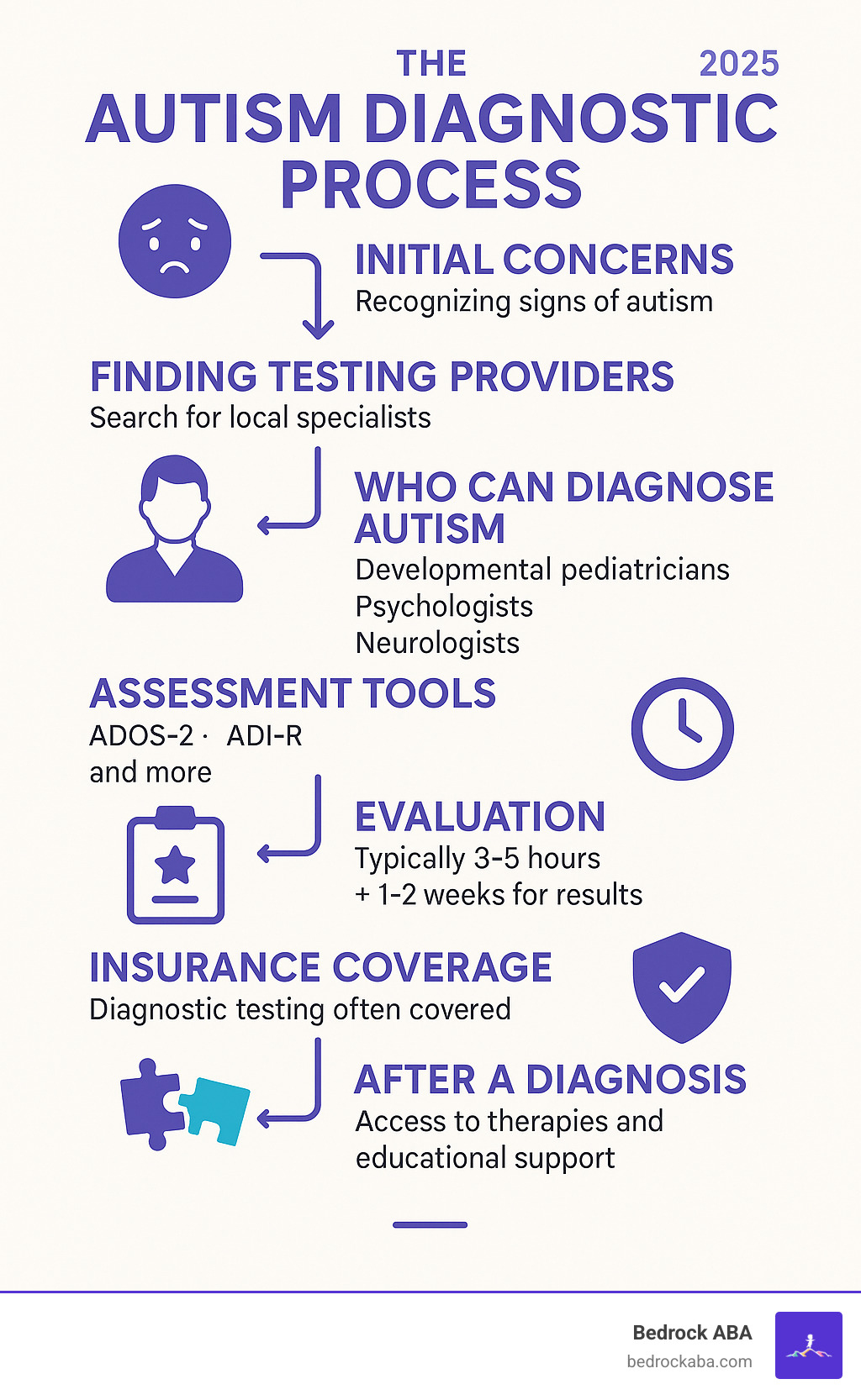
- Expect 3-5 hours of testing with results typically available in 1-2 weeks
- Cost ranges from $1,200-$5,000 but many insurance plans cover diagnostic evaluations
Autism Spectrum Disorder (ASD) is a complex neurodevelopmental condition that affects social communication, interaction, and behavior. The word “spectrum” is key here – autism presents very differently from person to person. Some individuals need significant daily support, while others live independently and may not be diagnosed until adulthood.
Getting an accurate diagnosis is the crucial first step toward accessing the right support and interventions. According to the CDC, autism can be reliably diagnosed by age 2, yet many children don’t receive a diagnosis until much later. Early identification leads to better outcomes through timely intervention.
The diagnostic process involves experienced professionals – typically developmental pediatricians, child psychologists, or neurologists – who use standardized tools and observations rather than medical tests like blood work. There’s no single “autism test,” but rather a comprehensive evaluation that looks at developmental history, current behaviors, and specific assessment tools.
As Mayer Kulefsky, director of operations at Bedrock ABA, I’ve helped countless families steer the path from initial concerns to diagnosis and beyond, connecting them with autism testing near me resources throughout North Carolina and Utah. My experience has shown that while the diagnostic process can feel overwhelming, it’s the gateway to understanding and support that transforms lives.
Autism testing near me terms to learn:
Key Signs and ‘Red Flags’ That May Indicate a Need for Testing
Spotting the signs of autism is the first step toward getting support. While every person on the spectrum is unique, common indicators or “red flags” may suggest a need for professional assessment. These signs, which vary by age, typically involve differences in social interaction, communication, and behavior.

Individuals with autism may also have co-occurring health conditions like gastrointestinal symptoms or epilepsy. While not direct signs of autism, these can prompt medical investigations that may lead to a diagnosis, helping to understand the whole person.
Signs in Young Children (Ages 0-5)
In young children, signs often relate to not meeting typical developmental milestones. The Centers for Disease and Control (CDC) recommends pediatricians screen for autism at 9, 18, and 24 or 30 months, as early detection is key. You can learn more about the CDC’s developmental milestones. Common signs in toddlers and preschoolers include delayed speech or no babbling by 12 months, not responding to their name, and avoiding eye contact. You might also notice repetitive play patterns, like lining up toys, not sharing interests (e.g., not pointing to show you something), getting very upset by minor changes to routines, and having unusual sensory over-or-under-reactions.
Signs in School-Aged Children and Adolescents
As children enter school, signs of autism often become more apparent in social and academic settings. These can include difficulty making friends and understanding unspoken social rules, trouble with back-and-forth conversation, and a literal interpretation of language. This can be part of broader struggles with social communication. Other signs are developing deep, narrow interests, sticking to rigid routines, and experiencing significant anxiety in social situations.
Signs in Adults
Many adults reach adulthood without a diagnosis, having learned to “mask” their differences to fit in. This can be exhausting and lead to burnout, anxiety, or depression. Seeking autism testing near me as an adult can be a validating step toward self-understanding. Common signs include a history of long-term difficulties in social relationships, a persistent sense of feeling “different” or like you’re “masking,” and misunderstanding social cues. A strong preference for solitude, significant sensory issues with lights, sounds, or textures, difficulty with executive functioning (planning, organizing), and a history of anxiety or depression are also common.
The Comprehensive Autism Evaluation Process
An autism testing near me evaluation is not a single test but a comprehensive, multi-step process. It’s designed to create a full picture of an individual’s strengths and challenges, involving a team of experienced professionals who assess developmental history and current behaviors.

What to Expect from an autism testing near me evaluation
The evaluation process is designed to be as smooth as possible. Here’s what to expect from autism testing near me:
- Initial Consultation: A discussion of your concerns to determine if a full evaluation is the right next step.
- Parent/Caregiver Interviews: For children, this involves gathering a detailed developmental history. For adults, it may involve speaking with a family member.
- Questionnaires and Rating Scales: Standardized forms to gather information on behavior, social skills, and daily life management.
- Direct Observation and Interaction: A specialist engages with the individual in structured activities to observe social communication and interaction, which is vital for a behavioral diagnosis.
- Cognitive and Adaptive Behavior Assessment: This evaluates thinking abilities and everyday life skills to understand overall functioning and support needs.
- Feedback Session: A meeting to discuss the findings, provide a diagnosis if applicable, and answer your questions about next steps.
- Comprehensive Report: A detailed written summary of the evaluation, including diagnostic conclusions and personalized recommendations for accessing services and support.
Common Autism Screening and Diagnostic Tools
Professionals use a combination of screening and diagnostic tools. Screening tools identify potential signs that warrant further evaluation, while diagnostic tools are used by clinicians to make a formal diagnosis.
Here are some widely used tools that might be part of an autism testing near me evaluation:
- Modified Checklist for Autism in Toddlers, Revised (M-CHAT-R): A questionnaire for parents of toddlers (16-30 months). A positive screen suggests further assessment is needed but is not a diagnosis.
- Social Attention and Communication Surveillance, Revised (SACS-R) and SACS-Preschool (SACS-PR) Tools: Observational screening tools for children from 12 to 60 months old.
- Social Challenges Screening Questionnaire (SCSQ): A 15-questionnaire for school-aged children.
- Autism Spectrum Quotient (AQ) Test: A 50-question screening tool for individuals 16+ with an IQ over 80.
- Autism Diagnostic Observation Schedule (ADOS-2): A “gold standard” structured assessment where a clinician observes communication, social interaction, and play.
- Autism Diagnostic Interview-Revised (ADI-R): A detailed, structured interview with parents/caregivers about developmental history and behaviors.
- Vineland Adaptive Behavior Scales (VABS): Assesses adaptive behavior skills needed for daily living and independence.
- Social Communication Questionnaire (SCQ): A 40-question parent-completed screening tool for children aged four and older.
Timeline, Cost, and Insurance Coverage
Understanding the logistics of autism testing near me is important. Here’s a breakdown of the typical timeline, cost, and insurance details.
- Timeline: In-person testing usually takes 3 to 5 hours, which may be done in one day or split into multiple sessions. After the evaluation, it typically takes 1 to 2 weeks to receive the comprehensive report.
- Cost: A full evaluation generally costs between $1,200 and $7,000. The price varies based on the provider, location, and how comprehensive the assessment is.
- Insurance Coverage: Many plans cover diagnostic evaluations, but coverage differs. Always contact your insurance provider to understand your benefits, deductible, and any coverage limits. If you have a PPO plan, you may have out-of-network benefits. Providers can often give you a superbill (a detailed receipt) to submit to your insurance for potential reimbursement.
How to Find Autism Testing Near Me
Finding the right place for autism testing near me can feel like a big puzzle, but we’re here to help you put the pieces together. It’s all about knowing where to look and what questions to ask. This ensures you find a qualified and compassionate provider who understands your unique needs.

You might be looking at pediatrician referrals, exploring university medical centers, children’s hospitals, private psychology clinics, or even specialized autism centers. Your insurance provider directory can also be a helpful starting point, along with smart online search strategies.
Steps to Finding a Qualified Provider
Let’s walk through how to find a great provider for autism testing near me:
First things first, start with your pediatrician or family doctor. They are often your best initial guide. Your doctor can offer early screenings and give you a helpful referral to specialists in your area. They often have a trusted network of professionals ready to help.
Next, contact your insurance company. Their website or member services line can provide you with a list of in-network professionals. This is a smart first step to understand your financial options and what your plan covers.
Don’t forget about online directories from organizations like Autism Speaks or Psychology Today. These national resources offer guides where you can search for providers by location, specializations, and age groups. For instance, the Autism Speaks Resource Guide is a comprehensive tool that can help you find local services and support.
It’s also a great idea to explore university medical centers and children’s hospitals. Many of these larger institutions have dedicated autism centers or developmental clinics. These teams are often at the forefront of diagnostic practices and work with many different experts. If you’re in Utah, for example, exploring options in Salt Lake City could be very helpful. Beyond these, consider private psychology clinics and specialized autism centers in your community, as they often offer thorough evaluations.
When searching online, remember to use targeted search terms. Being specific helps narrow down your results. Try phrases like “autism evaluation for adults Utah,” “child psychologist specializing in autism Salt Lake City,” or “neurodevelopmental assessment near me.”
At Bedrock ABA, while our main focus is on providing excellent ABA therapy, we understand the diagnostic journey can be complex. That’s why we can often guide you on the steps to obtain a diagnosis. This ensures you have the necessary documentation to access our services and begin your child’s journey toward support. You can explore our process for getting started on our website.
Questions to Ask a Potential Testing Center
Once you have a list of potential providers for autism testing near me, it’s a great idea to call them. Here are some key questions to ask to make sure they’re the right fit for you and your family:
- What is your diagnostic process? Ask for a clear, step-by-step overview. This includes what specific tools they use (like the ADOS-2 or ADI-R) and how long each part of the evaluation typically takes.
- Who will be conducting the evaluation and what are their credentials? It’s important to know the qualifications and experience of the professionals involved. Are they developmental pediatricians, licensed psychologists, or neuropsychologists?
- Do you have experience with my or my child’s age group? Autism shows up differently across different ages. So, make sure the team has specific experience with infants, school-aged children, adolescents, or adults, depending on who needs the evaluation.
- What is the estimated cost, and do you accept my insurance? Get a clear breakdown of all fees. Understand their billing policies, including if they are in-network with your insurance or if they can provide a superbill for out-of-network reimbursement.
- What is the wait time for an appointment and for the final report? Wait times for autism evaluations can vary a lot, from just a few weeks to several months. Knowing this upfront helps you plan and manage your expectations.
The Benefits of an Official Autism Diagnosis
Receiving an official autism diagnosis is often a truly transformative moment. It’s not just about getting a label; it’s a powerful step that opens doors to understanding, validation, and the right support. For many, it marks the beginning of a journey toward thriving, rather than just coping.
Self-Understanding and Validation
Imagine feeling “different” your whole life, struggling with social rules that seem to come easily to others, or experiencing the world with heightened senses. For many, especially adults who seek an autism testing near me evaluation, a diagnosis can bring immense relief. It provides a clear framework for understanding lifelong experiences, behaviors, and unique ways of thinking that once felt confusing or isolating. This newfound self-knowledge often leads to reduced anxiety and a much stronger sense of identity. As one individual shared, “For many adults, the autism test process is the first time they are understood, heard, and taken seriously by a health care professional.” It’s about finally understanding why you are the way you are.
Access to Therapies and Interventions
One of the most vital benefits of a formal diagnosis is gaining access to crucial therapies, which are often covered by insurance. The most evidence-based intervention available today is Applied Behavior Analysis (ABA) therapy. ABA therapy focuses on developing key skills like social communication, daily living skills, and positive behaviors. At Bedrock ABA, we specialize in creating custom ABA services for children that truly support each child’s individual journey. Our approach is flexible, family-centered, and offers both in-person and remote options to fit your unique needs.
We know that early identification is crucial for better outcomes. When interventions begin early, they can have a much more significant and positive impact on a child’s development. Beyond ABA, a diagnosis can also provide pathways to other important therapies that can make a big difference. These might include speech and language therapy to help with communication challenges, or occupational therapy (OT) to assist with sensory needs and daily activities. You can learn more about all the ways treatment can help at More info about ASD Treatment.
Educational and Workplace Support
An official diagnosis also open ups important educational accommodations and workplace accommodations. For school-aged children, this means access to formal support plans. An Individualized Education Program (IEP) is a legally binding document that outlines specialized instruction, support services, and accommodations to help a student with a disability succeed in school. A 504 Plan is another legal document that details accommodations to ensure a student has equal access to education. These plans ensure your child receives the specific support they need, often including help from school psychologists and special education teachers.
For adults, a diagnosis can lead to reasonable accommodations at work under disability discrimination laws, offering legal protections. This can create a more inclusive and supportive environment, with adjustments like flexible work hours, different communication methods, or sensory-friendly workspaces. With the right supports in place, individuals with autism can truly achieve improved academic and career success, reaching their full potential and thriving in all areas of life.
Frequently Asked Questions about Autism Testing
We understand you might have more questions as you consider autism testing near me. It’s a big step, and having all the information helps. Here are some common inquiries we encounter:
How is autism diagnosed?
Autism isn’t diagnosed with a single blood test or medical scan. Instead, it’s a careful and comprehensive process. A qualified professional, like a psychologist or developmental pediatrician, conducts a thorough evaluation.
This evaluation involves a few key steps. They will observe behavior closely. They’ll also review your or your child’s developmental history. This includes looking at early milestones and how skills developed over time. Standardized tests are also a big part of the process. These tools help professionals compare an individual’s development with others their age.
The diagnosis relies on the professional’s clinical judgment. They use their expertise and a deep understanding of developmental criteria. The official guide for diagnosis is the DSM-5 (Diagnostic and Statistical Manual of Mental Disorders, 5th Edition). This manual outlines the specific criteria for Autism Spectrum Disorder.
Can autism be diagnosed in adults?
Yes, absolutely! Many adults seek and receive an autism diagnosis. It’s becoming more common for people to recognize lifelong patterns in their behavior. These might include social challenges or unique sensory experiences.
The process for adults is quite similar to that for children. However, it focuses more on these lifelong patterns. For many adults, getting a diagnosis can bring immense relief and validation. It helps them understand why they might have felt “different” or struggled in certain situations. Some adults learned to “mask” their autistic traits in childhood. This means they developed ways to blend in, which can be exhausting. A late diagnosis can help them understand their past experiences. It also provides clarity for navigating their present with greater self-awareness.
What happens after a diagnosis?
Receiving an autism diagnosis is just the first step on a new path. After the evaluation, the professional will sit down with you. They’ll discuss the results in detail and recommend next steps.
These recommendations can be varied and personalized. They often include suggestions for different therapies. For example, Applied Behavior Analysis (ABA) therapy is highly effective. Other therapies might include speech therapy to help with communication, or occupational therapy to address sensory needs and daily living skills.
The provider might also help you explore educational support plans. For children, this could mean an Individualized Education Program (IEP) or a 504 Plan in school. You might also be connected with local support groups. These groups offer a wonderful community where you can share experiences and learn from others.
The goal is always to create a plan that helps the individual thrive. Here at Bedrock ABA, we are dedicated to providing personalized ABA therapy for children. We focus on supporting growth in social, academic, and daily living skills. We’re ready to help you understand and steer these important next steps after a diagnosis. You can learn more about autism therapy on our website.
Conclusion: Your Next Steps After an Autism Evaluation
Taking the step to get an autism evaluation is a truly significant moment. It’s not just about a diagnosis; it’s about opening a door to deeper understanding, custom support, and a path toward empowerment for individuals and their families.
Think of it as gaining a clear map for the journey ahead. With this understanding, you can access the right resources and interventions that are designed to significantly improve quality of life. Whether you’ve sought an evaluation for a curious toddler, a questioning adolescent, or even for yourself as an adult, getting these answers lays the groundwork for building a successful and fulfilling future.
At Bedrock ABA, we believe in taking those crucial next steps together. If you’ve recently received a diagnosis and are now exploring therapeutic options, especially in Utah, we invite you to learn more about our ABA Therapy Services in Utah. We’re here to help you steer this exciting new chapter with confidence and support.