


Understanding Autism and the Power of Therapy
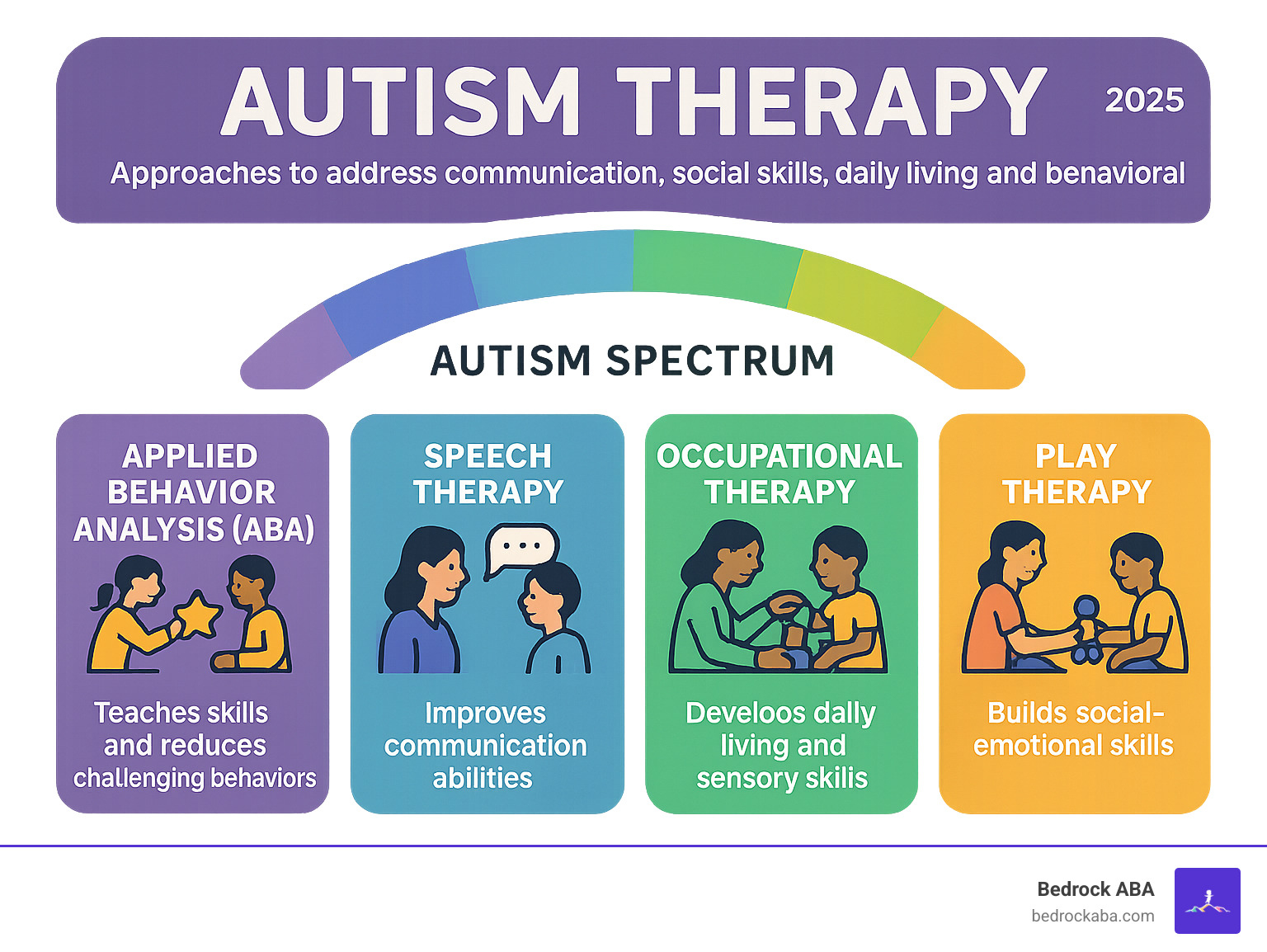
Autism therapy helps children with Autism Spectrum Disorder (ASD) develop essential skills and reach their full potential. Here are the main therapy options available:
Core Evidence-Based Therapies:
- Applied Behavior Analysis (ABA) – Uses positive reinforcement to teach skills and reduce challenging behaviors
- Speech and Language Therapy – Improves communication and social interaction skills
- Occupational Therapy – Develops daily living skills and addresses sensory needs
- Play Therapy – Builds social-emotional skills through structured play
Specialized Approaches:
- Physical Therapy for motor skills
- Equestrian Therapy for social development
- Music and Art Therapy for self-expression
- Cognitive-Behavioral Therapy for emotional regulation
Autism Spectrum Disorder affects about 1 in 44 children and presents unique challenges in communication, social interaction, and behavior patterns. But here’s the encouraging truth: every child with autism has unique strengths and potential.
The right therapy approach can make a profound difference in your child’s development. Research shows that early intervention during the preschool years helps children learn critical social, communication, and behavioral skills that last a lifetime.
What works varies from person to person, which is why individualized treatment plans are so important. Some children thrive with intensive behavioral intervention, while others benefit more from play-based approaches or specialized therapies that address their specific needs.
As Mayer Kulefsky, director of operations at Bedrock ABA, I’ve seen how the right autism therapy approach can transform lives and empower families across multiple states. My experience in behavioral health has shown me that personalized, family-centered care makes all the difference in helping children with autism reach their goals.
Learn more about autism therapy:
Why Early Intervention is a Game-Changer
Starting autism therapy early can change the entire trajectory of a child’s development. During the preschool years the brain is highly adaptable—a concept called neuroplasticity—so new connections form faster and skills stick longer.
Research from the NICHD and guidance from the American Academy of Pediatrics show that children who begin therapy before age 3 make larger gains in communication, social interaction, and daily living skills. In fact, you don’t have to wait for a formal diagnosis; if you notice signs such as limited eye contact, few gestures, or language delays (often visible by 18 months), seek help right away.
Early support benefits the whole family. Parents learn evidence-based strategies they can use at home and in the community, turning everyday moments—mealtime, bath time, play time—into powerful learning opportunities. The sooner therapy begins, the stronger and more natural these family-led supports become.
Core Evidence-Based Autism Therapy Approaches

Families often blend several proven therapies so each area of development—communication, behavior, motor skills—gets the right support.
Applied Behavior Analysis (ABA): The Gold Standard
What Is ABA Therapy And How Does It Work? ABA uses positive reinforcement within the simple Antecedent-Behavior-Consequence framework. A Board Certified Behavior Analyst (BCBA) designs goals, tracks data, and adjusts techniques so children steadily master communication, social, and self-care skills while reducing unsafe or disruptive behaviors. Common ABA formats include Discrete Trial Training, Pivotal Response Training, Early Intensive Behavioral Intervention (EIBI), and Verbal Behavior Intervention.
Speech and Language Therapy: Finding a Voice
Roughly one-third of autistic individuals have limited spoken language. Speech-language pathologists teach verbal skills and alternative systems such as PECS, sign language, or tablet-based AAC. Effective communication lowers frustration, boosts social interaction, and often sparks new language.
Occupational Therapy (OT): Mastering Daily Life

OT targets sensory processing, fine-motor tasks (buttoning, writing), gross-motor coordination, and routines like dressing or tooth-brushing. Through playful, sensory-rich activities therapists build independence that carries over to home and school.
Play-Based Therapy: Learning Through Interaction
Approaches such as DIR/Floortime and JASPER use child-led play to nurture joint attention, emotional connection, and flexible thinking. Twenty-plus hours per week of high-quality play therapy has been linked to broad developmental gains.
Used together, these therapies form a menu that can be mixed and matched to fit your child’s interests, strengths, and goals.
Exploring Other Effective Therapies and Supports
Beyond the core options, targeted therapies can add meaningful layers of growth.
- Physical Therapy (PT) – Improves balance, strength, and coordination so kids can join playground games and sports with confidence.
- Equestrian (Hippotherapy) – The horse’s rhythmic motion calms the nervous system, while caring for the animal boosts social and language skills. See the research summary.
- Music Therapy – Songs and rhythm motivate communication and emotional expression; instruments become a fun way to practice turn-taking.
- Art Therapy – Painting, sculpting, or collage offer non-verbal outlets for feelings while building fine-motor control.
Psychological Supports for Co-Occurring Challenges
Many autistic children also face anxiety or rigid thoughts. Cognitive-Behavioral Therapy (CBT)—adapted with visuals and concrete examples—teaches coping skills, flexible thinking, and emotional regulation.
Building Your Child’s Personalized Autism Therapy Plan

No two children—or families—are alike, so a great plan starts with a thorough assessment of strengths, challenges, and motivators. At Bedrock ABA we pair those insights with your priorities (for example, smoother mornings or better sibling play) to set meaningful, measurable goals.
Multiple therapies often run side-by-side—ABA for behavior foundations, speech for communication, OT for sensory needs. Coordination is key: all providers share data, adjust strategies together, and keep the same goals in sight.
Choosing the Right Program
- Match the approach to your child. Think about learning style, sensory profile, and attention span.
- Verify credentials. ABA programs should be led by a BCBA—learn why at the BACB.
- Look for data-driven progress. Providers should show clear graphs or summaries, not just anecdotes.
- Ask smart questions:
- What training do your therapists have?
- How is progress measured and shared?
- How are parents involved?
- What does a typical session look like?
- How do you handle challenging behaviors?
Parents: The Secret Sauce
Consistent practice at home helps skills generalize beyond the therapy room. We teach families simple strategies—visual schedules, choice making, positive reinforcement—so they can weave learning into everyday life. Celebrating small wins keeps motivation high for everyone.
Frequently Asked Questions about Autism Therapy
What is the most effective therapy for autism?
There is no universal answer. ABA has the strongest research base and often serves as the backbone of a plan, but many children make the best progress when ABA is combined with speech, OT, or play-based methods custom to their needs.
How many hours of therapy does a child need?
Guidelines for intensive ABA (such as EIBI) range from 25–40 hours per week for toddlers and preschoolers. Older children or those with milder needs may benefit from fewer hours or a focus on specific skills. Quality, consistency, and family sustainability matter more than hitting a certain number.
Is autism therapy covered by insurance?
Most private insurers and all Medicaid programs now cover medically necessary autism treatments, including ABA. Coverage details—authorization, copays, hour caps—vary, so call your insurer and ask:
- Which therapies are covered?
- Is pre-authorization required?
- What age or hour limits apply?
Bedrock ABA’s intake team can help you steer benefits and paperwork.
Take the Next Step on Your Therapy Journey
Finding the right autism therapy is a hopeful, life-changing process. Early, individualized, family-centered care allows every child to build the communication, social, and daily-living skills they need to shine.
Bedrock ABA offers flexible, personalized ABA programs—delivered in your Salt Lake City home, in-clinic, or through blended telehealth options—to meet your family where you are. Ready to learn more? Explore our ABA therapy services in Utah and schedule a free consultation today.
Your child’s potential is limitless, and we’re excited to help open up it—together.