


Why Early Intervention is Crucial for Young Children with ASD
ABA therapy early intervention takes advantage of the brain’s highest period of plasticity―birth through about age five. During these years the brain is forming up to 1,000 new neural connections every second, then “pruning” the ones it doesn’t need. Targeted teaching during this window can permanently strengthen the pathways that support communication, social interaction, and daily living skills.
Parents often say they “just knew” something was different before a formal diagnosis. Trust that feeling. Autism can be identified reliably by 18 months, and the CDC’s “Learn the Signs. Act Early.” program urges families to act as soon as concerns appear.
A growing body of research shows that children who begin intensive services before age three are more likely to:
- need fewer supports in school
- develop functional speech
- participate in age-appropriate play and social activities
- require less therapy later in life
Some studies even find that a small percentage no longer meet ASD criteria after very early, intensive treatment. While every child’s path is unique, starting early always means more learning opportunities.
Aba therapy early intervention terms to remember:
Recognizing the Early Signs

Below are some red flags between 12 – 24 months. A child showing several of these should be evaluated:
Communication
- No babbling by 12 months
- Few or no words by 18 months
- Limited response to name
Social interaction
- Rare eye contact
- Little shared interest (does not look where you point)
- Prefers to play alone
Repetitive or sensory behaviors
- Hand flapping, rocking, or spinning objects
- Strong distress with routine changes
- Unusual reactions to sounds, textures, or lights
For a broader look at treatment options, visit More info about ASD Treatment Options.
What is Applied Behavior Analysis (ABA) Therapy?
Applied Behavior Analysis is an evidence-based, data-driven way to teach new skills and reduce barriers to learning. Rooted in B. F. Skinner’s work on how environment shapes behavior, modern ABA breaks learning down into clear, measurable steps so progress is easy to track and adjust.
The approach is always individualized. A Board Certified Behavior Analyst (BCBA) starts with a thorough assessment, writes goals that matter to your family, and supervises Registered Behavior Technicians (RBTs) who work directly with your child.
Core Principles and Techniques of ABA
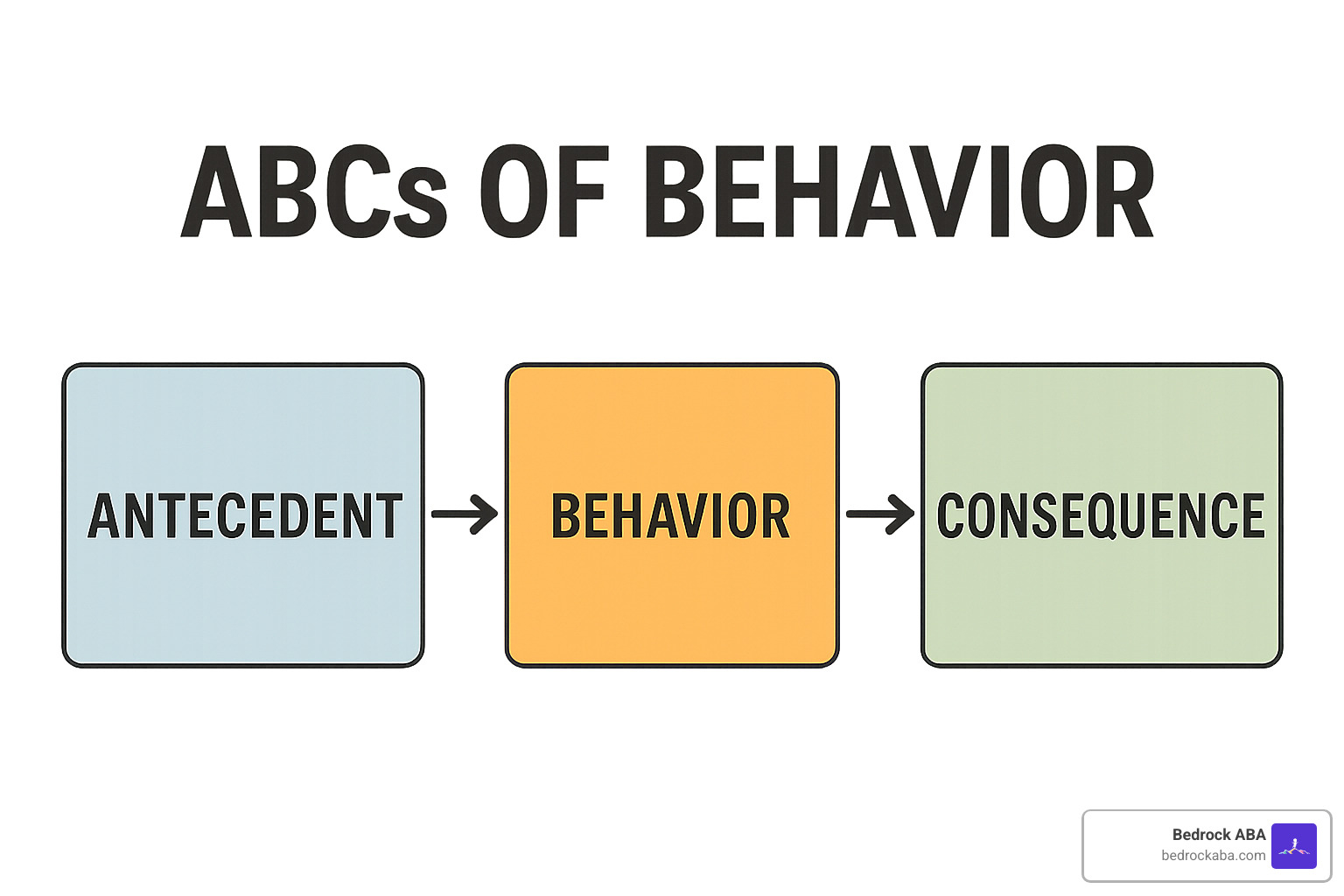
- ABCs (Antecedent-Behavior-Consequence) help us understand why behaviors happen.
- Positive reinforcement increases desired actions with praise, toys, or other meaningful rewards.
- Prompting & fading give just enough help for success, then gradually remove it to build independence.
- Generalization ensures a child can use a new skill with different people, places, and materials.
Common early-intervention tactics include Discrete Trial Training (DTT) for structured practice, Natural Environment Teaching (NET) for learning during play, and Pivotal Response Training (PRT) that targets motivation and communication.
For more background, see The History and Development of ABA Therapy and Key Principles of ABA Therapy: Reinforcement, Behavior, and Learning.
Your Guide to ABA Therapy Early Intervention Programs

Early programs generally fall into two categories:
- Comprehensive ABA (25-40 hours/week) – addresses communication, social, play, and self-help skills all at once. Best for children with wide-ranging needs.
- Focused ABA (10-20 hours/week) – targets a limited set of goals, such as language or reducing specific challenging behaviors.
Services can be delivered:
- In-home – ideal for very young learners and practicing skills where they naturally occur. In-Home ABA Therapy
- Clinic-based – offers structured space, peer interaction, and specialized materials.
- Telehealth – blends convenience with live coaching. Learn more about Virtual ABA Therapy.
What to Expect
After an initial assessment, your BCBA sets measurable goals. One-to-one sessions (typically 1–3 hours) are play-based and fun. As skills grow, short peer groups may be added for turn-taking, sharing, and conversation practice. Progress is reviewed with you at least monthly, and goals adjust as your child masters new abilities. Details about our process are at Our ABA Therapy Process.
ABA vs. Other Early-Intervention Services
Other disciplines (speech, OT, PT) typically provide 1–4 hours/week and focus on single developmental domains. ABA is behavior-focused and, because of its intensity, often serves as the “hub” that coordinates all learning. Many families combine ABA with these therapies for a well-rounded plan. For publicly funded options, see Information on state-run programs under IDEA.
Accessing Services and Addressing Concerns
Taking the first step can feel daunting, yet early action is the single most important factor in successful outcomes. Your observations matter—share them with your pediatrician and ask for screening if something feels off.
Most private insurers in Utah now cover ABA for autism. Contact your plan or let Bedrock ABA verify benefits for you. While a formal diagnosis helps with funding, many families start services while that evaluation is in progress.
Building a support network—other parents, therapists, teachers, and relatives—can lighten the emotional load and create consistent strategies for your child. Read about our Family Integration in ABA Therapy.
How to Begin
- Discuss concerns with your pediatrician.
- Call ABA providers directly; waitlists move faster when you’re proactive.
- Schedule a diagnostic evaluation if recommended.
- Verify insurance and explore state resources through Autism Speaks’ state-by-state guide to services.
Clearing Up Common Myths
- Modern ABA is play-based, not robotic.
- The goal is improved quality of life, not erasing autism.
- Positive reinforcement—not punishment—drives change.
- ABA benefits children across the spectrum, from mild to significant support needs.
Balanced pros and cons are discussed here: Pros and Cons of ABA Therapy.
Frequently Asked Questions about ABA Therapy and Early Intervention
At what age should my child start early intervention?
The research is clear: earlier is better when it comes to ABA therapy early intervention. Signs of autism can be detected as early as 14-18 months, and intervention is most effective before age 5 when the brain’s plasticity is at its peak.
Here’s what many parents don’t realize – it’s never too late to start. While children who begin intervention before age 3 often show the most dramatic improvements, children who start later can still make significant gains. The key is to begin as soon as you have concerns about your child’s development.
The American Academy of Pediatrics recommends autism screening at 18 and 24 months, but don’t wait for these scheduled visits if you notice concerning signs. Research shows that 30% of parents identify concerns before their child’s first birthday, and 80% notice differences by age 2.
Think of it this way: if you’re worried enough to be reading this article, you’re already taking the right first step. Trust your instincts as a parent – they’re often more accurate than you might think.
Do we need a formal autism diagnosis to begin services?
This is one of the most common questions we hear, and the answer might surprise you: No, a formal diagnosis is not always required to start ABA therapy early intervention. Many ABA providers can begin services based on observed developmental needs while a diagnosis is in process.
The diagnostic process can take months, and waiting for a formal diagnosis can delay crucial early intervention. If you’re concerned about your child’s development, it’s better to start services while pursuing a diagnosis rather than waiting.
That said, having a formal diagnosis can be helpful for insurance coverage and accessing additional resources. Work with your ABA provider to understand what’s required for your specific situation and insurance plan.
The bottom line? Acting on concerns early is key. Don’t let paperwork or appointment delays prevent your child from getting the help they need. Many families have told us they wish they had started sooner instead of waiting for all the official documentation to be complete.
How are families involved in the therapy process?
Family involvement is absolutely critical for the success of ABA therapy early intervention. Research consistently shows that children make greater progress when families are actively involved in the therapy process.
Parent training is a core component of effective ABA programs. We teach parents to use ABA strategies in daily routines and activities. This might include how to give effective instructions, use positive reinforcement, or handle challenging behaviors. The goal is to make you feel confident and capable of supporting your child’s development.
Therapists teach parents to use ABA strategies in daily life, creating opportunities for learning during everyday activities like mealtime, bath time, and play. This approach ensures that your child is practicing skills throughout the day, not just during formal therapy sessions.
Consistent approach across all environments is essential for success. We work with families to ensure that strategies used in therapy are also used at home, creating consistency that helps children generalize their skills.
You’ll also be involved in goal setting and progress monitoring. Parents are involved in identifying priorities and setting goals that are meaningful for the family. We regularly share data and progress updates with families, involving them in decisions about adjusting goals or strategies.
For more information about how parents can be involved in their child’s therapy, visit ABA Therapy for Parents.
Conclusion
ABA therapy early intervention offers tremendous hope for children with autism and their families. By taking advantage of the brain’s natural plasticity during the early years, we can help children develop crucial communication, social, and daily living skills that will serve them throughout their lives.
The research is clear: early intervention works. Children who receive intensive, high-quality ABA therapy during their early years often require less support later in life and achieve better long-term outcomes. Some children make such significant progress that they no longer meet the criteria for autism spectrum disorder as they grow older.
As parents, you have the power to make a difference in your child’s life. Every day you wait is a day of missed opportunities during this critical developmental window. But here’s the encouraging news: you don’t have to have all the answers right now. You just need to take that first step.
At Bedrock ABA, we’re committed to providing family-centered care that recognizes the unique needs of each child and family. We understand that every family’s journey is different, and we’re here to meet you exactly where you are. Our flexible approach allows us to deliver services in the setting that works best for you, whether that’s in your home, at our clinic, or through telehealth options.
We serve families throughout Utah, including Salt Lake City, and we’re here to support you every step of the way. Our team understands that starting ABA therapy early intervention can feel overwhelming, but you don’t have to steer this journey alone. We’ll walk alongside you, answering your questions, celebrating your child’s progress, and adjusting our approach as your child grows and develops.
Early intervention is most effective when families, therapists, and other professionals work together as a team. We believe that parents are their child’s first and most important teachers, and we’re here to support and empower you in that role. Together, we can create a consistent, supportive environment that helps your child thrive.
If you’re concerned about your child’s development, don’t wait. The earlier you start, the better the outcomes are likely to be. Trust your instincts – if something doesn’t seem right, it’s worth investigating further. You know your child best, and your observations matter.
Every child has the potential to learn and grow. ABA therapy early intervention can help open up that potential, giving your child the skills they need to thrive. The journey may seem overwhelming at first, but with the right support and intervention, you can help your child reach their full potential.
Ready to take the next step? Explore our ABA therapy services in Utah to learn more about how we can support your child and family. Together, we can jumpstart your child’s development and build a brighter future. Your child’s potential is waiting to be finded – let’s open up it together.