


Why Virtual ABA Therapy Is Changing Lives for Families with Autism
Virtual ABA therapy brings evidence-based Applied Behavior Analysis straight to your living room through secure video platforms. For many families served by Bedrock ABA in Utah and beyond, this simple shift removes the biggest barriers to quality autism support—distance, cost, and scheduling chaos.
Quick answer: What is virtual ABA therapy?
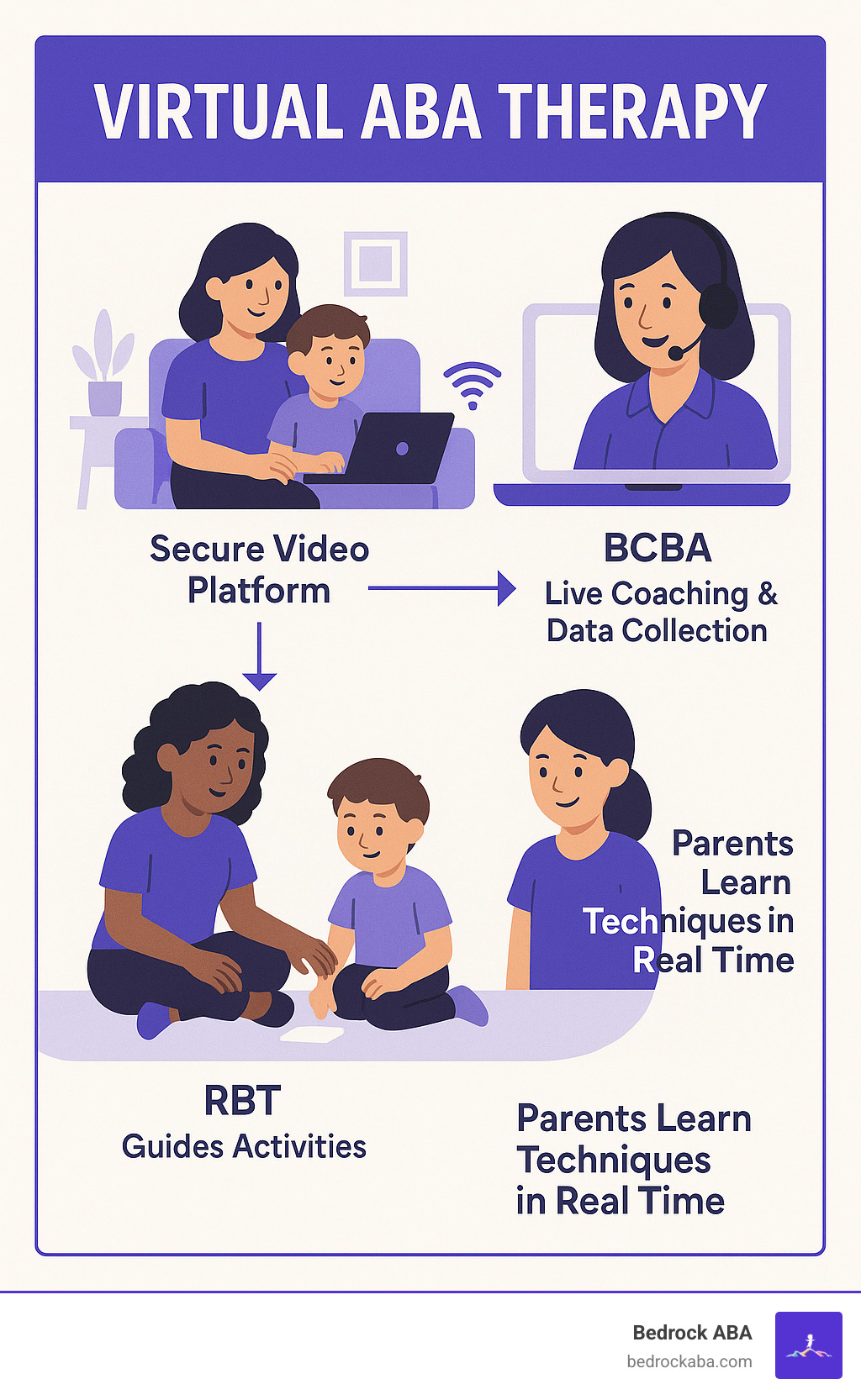
- Live, HIPAA-compliant video sessions with Board Certified Behavior Analysts (BCBAs) and Registered Behavior Technicians (RBTs)
- Same research-backed strategies used in clinics
- Real-time parent coaching and data tracking
- Flexible scheduling that fits work, school, and sibling routines
- Insurance coverage in most states and significant out-of-pocket savings
Why it matters: research shows 86 % of families report fewer challenging behaviors after telehealth ABA, and average costs drop about 66 % compared with traditional services. Families in rural Utah, military households that move frequently, and caregivers protecting immunocompromised children now have an effective, affordable option that happens right where skills are needed most—the home.
The technology has matured far beyond simple video calls. Modern platforms let BCBAs collect real-time data, demonstrate prompting techniques on screen, and graph progress automatically. Most important, parents no longer sit on the sidelines. They become practiced co-therapists, using what they learn during sessions to coach their child throughout the week.
Virtual ABA is not a watered-down replacement for clinic care—it is the same science delivered in a setting that maximizes generalization, minimizes stress, and keeps families at the center of their child’s journey.
What Is Virtual ABA Therapy?
Virtual ABA therapy is standard Applied Behavior Analysis delivered by Bedrock ABA clinicians through encrypted video. Your child still works toward measurable goals in communication, social, and daily living skills—only the location changes.
Why go virtual?
- Nationwide BCBA shortages leave 30 % of families on waitlists; telehealth removes geography from the equation.
- Home sessions happen in the environment where skills will actually be used, promoting faster generalization.
- Parents receive live coaching instead of after-the-fact summaries.
| Virtual ABA | In-Person ABA |
|---|---|
| Home via video | Clinic or home visit |
| Parent-led with BCBA coaching | Therapist-led |
| Flexible scheduling | Fixed slots |
| Lower overhead = lower cost | Higher facility expense |
| No travel time | Commute required |
How It Works (In Three Steps)
- Intake & Consent – 30-minute call to review goals, insurance, and technology.
- Functional Assessment – BCBA observes your child during natural routines (mealtime, play, bedtime) and pinpoints skill gaps.
- Ongoing Sessions – 30–60 minutes, one to five times per week. Parents practice strategies while the BCBA provides real-time feedback and records data with built-in software.
Key Differences From Clinic Care
- Setting: real bathroom, real kitchen, real siblings.
- Caregiver Role: you are hands-on, accelerating progress between visits.
- Peer Interaction: limited on screen; many families add community or school activities for group practice.
- Cost & Flexibility: fewer overhead expenses and no drive time mean therapy can happen before school, during lunch, or after dinner.
Technology Checklist
- Reliable internet (≥10 Mbps up/down)
- Laptop or tablet with camera and mic (phones work in a pinch)
- Quiet, well-lit corner of your home
- Everyday items for reinforcement—favorite snacks, toys, or screen time
Benefits and Challenges of Virtual ABA Therapy
Families who switch to telehealth often report three life-changing perks:
- Access: rural Utah families connect with top-tier BCBAs without hours of driving.
- Consistency: snowstorms, car trouble, or mild illness no longer cancel therapy.
- Affordability: about two-thirds less than clinic care, thanks to eliminated overhead and travel.
Top Benefits
- Convenience reduces parent stress and improves attendance.
- Natural-environment teaching helps skills stick.
- Parent empowerment leads to carry-over between sessions.
- Flexible scheduling fits modern family life.
Limitations (and Work-arounds)
- Tech glitches: providers have quick troubleshooting guides and backup phone lines.
- Screen attention: short segments, movement breaks, or a hybrid model can help.
- Social practice: supplement with community playgroups or periodic in-person sessions.
- Licensing: reputable providers verify BCBA credentials in every state they serve.
Who Thrives With Virtual Services?
- Children needing mild-to-moderate support who can stay engaged on screen for 15-30 minutes.
- Caregivers ready to be active partners.
- Families with stable internet but limited local services.
Virtual ABA may not suit children requiring constant physical prompting for safety or families unable to participate during sessions. Bedrock ABA helps every caller decide if telehealth, in-person, or a blended plan is the best fit.
Inside a Virtual ABA Therapy Session
A typical 45-minute session follows a clear rhythm:
- Check-in (5 min): share wins and challenges since the last meeting.
- Skill Practice (20 min): discrete-trial or naturalistic teaching—e.g., requesting a snack from the real kitchen. Parents apply prompts while the BCBA coaches.
- Reinforcement (throughout): favorite toys, songs, or screen time delivered on the spot.
- Parent Coaching (10 min): trouble-shoot bedtime, mealtime, or homework behaviors.
- Wrap-Up (5 min): review graphed data, set tasks for the week, schedule next visit.
Measuring Progress
- Real-time data entry and automatic graphs track each goal.
- Mastery criteria (e.g., 80 % independence across 3 days) guide next steps.
- Weekly reviews keep plans responsive and effective.
Costs, Insurance, and Getting Started
Bedrock ABA’s telehealth clients typically spend about one-third of what clinic services cost. Savings come from zero travel, lower facility overhead, and more efficient clinician scheduling.
Insurance Coverage
Most major insurers—plus Medicaid in Utah and many other states—now reimburse virtual ABA. You’ll need the usual paperwork:
- Autism diagnosis
- Physician referral
- Prior authorization
Telehealth parity laws often require insurers to reimburse virtual sessions at the same rate as in-person care. If a claim is denied, Bedrock ABA’s team assists with the appeal using documentation that demonstrates medical necessity.
Budget Tips
- Track mileage, parking, and time off work you’re no longer spending on clinic trips.
- Consider a hybrid model: mostly virtual plus quarterly in-person assessments.
- Ask about payment plans or sliding scales while waiting for insurance approval.

How to Begin
- Intake Call (15 min) – discuss goals and verify benefits.
- Virtual Assessment (60-90 min) – BCBA observes daily routines and sets goals.
- Tech Check (10 min) – test video, audio, and screen-sharing tools.
- Start Therapy – many families schedule first sessions within two weeks.
More details: ABA Telehealth Therapy.
Frequently Asked Questions About Virtual ABA Therapy
Is virtual ABA as effective as clinic therapy?
Yes. More than 20 studies—and Bedrock ABA outcome data—show comparable gains in communication, social skills, and behavior when parents engage actively and sessions follow ABA best practices.
What equipment do we need?
A laptop or tablet with camera and mic, stable internet (10 Mbps), and a quiet, well-lit spot in your home. That’s it.
Will my insurance pay?
Most private plans and Medicaid in Utah cover telehealth ABA. Bedrock ABA handles benefit checks and authorizations, and will guide you through any appeals.
What if my child can’t sit still for video?
Sessions can be shortened, broken into movement-rich segments, or combined with occasional in-person visits. Many children build screen tolerance quickly when reinforcement is strong.
Conclusion
Virtual ABA therapy has re-imagined autism support for modern families—delivering clinically proven strategies with best convenience and affordability. From Salt Lake City suburbs to the most remote Utah ranches, Bedrock ABA connects children to skilled BCBAs, empowers caregivers, and achieves measurable change right at home.
Ready to see if telehealth fits your family? Explore next steps at ABA Telehealth Therapy and schedule a no-pressure intake call today.