


What ABA Behavioral Programs Can Do for Your Child
ABA behavioral programs are evidence-based interventions that use learning principles to help children with autism develop essential skills while reducing challenging behaviors. Here’s what you need to know:
Key Components of ABA Programs:
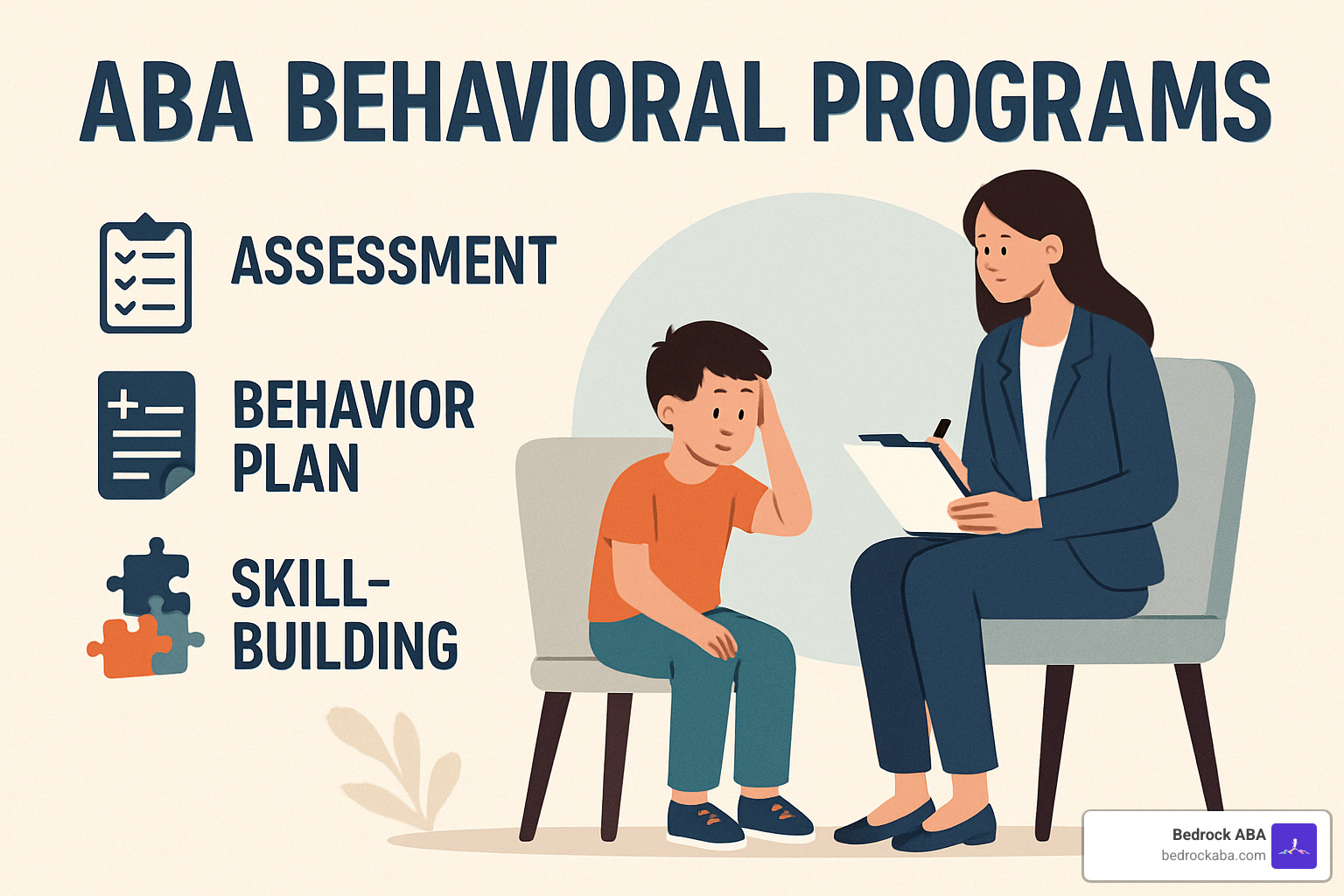
– Assessment & Planning: Functional behavior assessments and individualized treatment goals
– Teaching Methods: Discrete Trial Training (DTT), Pivotal Response Training (PRT), and naturalistic approaches
– Intensity Options: 10-40 hours per week depending on individual needs
– Settings: Home, school, clinic, or telehealth delivery
– Professional Team: Board Certified Behavior Analysts (BCBAs) and trained technicians
Who Benefits: Children and adults with autism, developmental delays, and behavioral challenges
Evidence: More than 20 studies show that intensive ABA (25-40 hours weekly for 1-3 years) improves intellectual functioning, language development, and social skills for many children with autism.
Applied Behavior Analysis has evolved significantly since the 1960s. Modern ABA programs focus on positive reinforcement and naturalistic teaching rather than outdated punishment-based methods. Today’s programs celebrate each child’s strengths while building independence and confidence.
The science is clear: behavior is learned through interaction with the environment. When we change how we respond to behaviors, we can teach new skills and reduce problematic ones. This approach works because it’s based on decades of research into how all humans learn.
As Mayer Kulefsky, director of operations at Bedrock ABA, I’ve seen how aba behavioral programs transform lives across North Carolina and Utah. My experience expanding high-quality behavioral health services has shown me that individualized, family-centered approaches create the most meaningful outcomes for children and their families.
Understanding Applied Behavior Analysis (ABA)
Applied Behavior Analysis is the science of understanding how we learn and change our behaviors. Think of it as a roadmap for teaching new skills while helping reduce behaviors that make life harder for children and families.
The heart of ABA lies in a simple but powerful idea: every behavior happens for a reason. When your child has a meltdown at the grocery store, asks for help with homework, or gives you a hug, there’s always a purpose behind it. Understanding that purpose is the key to helping them learn better ways to get their needs met.
Behaviors typically serve one of four functions. Sometimes children want attention from parents or teachers. Other times they’re trying to escape from something difficult or overwhelming. They might be seeking access to a tangible item like a toy or snack. Or the behavior might provide sensory input that feels good or helps them cope with discomfort.
Once we understand why a behavior occurs, we can teach more appropriate alternatives. If a child hits to get attention, we can teach them to tap someone’s shoulder and say “excuse me” instead. This approach respects the child’s needs while building skills that will serve them throughout life.

Core Principles & Seven Dimensions
Back in 1968, researchers Baer, Wolf, and Risley established seven essential characteristics that make ABA different from other approaches. These dimensions ensure that aba behavioral programs are both scientifically sound and genuinely helpful for families.
Applied means we focus on behaviors that truly matter for your child’s happiness and independence. We don’t work on skills just because they’re easy to measure—we target what will make the biggest difference in daily life.
Behavioral approaches focus on what we can see and measure rather than trying to guess what’s happening inside someone’s mind. Instead of working on “anxiety,” we might teach specific strategies like deep breathing or asking for breaks when overwhelmed.
Analytic practice uses data to prove our interventions actually work. We measure behaviors before starting treatment and track progress throughout to ensure we’re making real improvements, not just hoping for the best.
Technological means our methods are described clearly enough that other professionals could use them consistently. This ensures quality supervision and helps maintain progress when different team members work with your child.
Conceptually Systematic approaches ground every technique in established learning principles rather than using random strategies that sometimes work by chance.
Effective interventions must create meaningful improvements in your child’s life. Small changes on paper aren’t enough—the results need to make a real difference for your family.
Generality ensures that skills learned in therapy transfer to home, school, and community settings. When your child learns to communicate with their therapist, they should also be able to use those same skills with family members and teachers.
Evidence Base & Evolution Since the 1960s
ABA has come a long way since Dr. Lovaas first developed intensive behavioral programs in the 1960s. Those early studies showed remarkable results—children receiving intensive ABA demonstrated significant improvements in IQ scores and many succeeded in regular classrooms.
However, those early programs relied heavily on punishment and rigid drills that would feel outdated today. Modern aba behavioral programs have evolved dramatically, embracing approaches that feel natural and enjoyable for children and families.
Today’s evidence-based practices emphasize positive reinforcement over punishment, using encouragement and rewards to motivate learning. Naturalistic teaching embeds learning opportunities in play and daily routines rather than formal drills. Programs follow the child’s interests and involve families as true partners in the process.
The field has also acceptd neurodiversity considerations, celebrating individual differences while building skills. This shift reflects our growing understanding that there are many ways to be human, and effective programs honor each child’s unique strengths and challenges.
Scientific research on early intensive ABA continues to validate these modern approaches. Contemporary studies show that children receiving quality ABA demonstrate significant improvements in intellectual functioning, language development, and daily living skills.
The elimination of punishment from modern practice represents one of the most important advances in the field. Today’s programs focus entirely on teaching new skills and making learning enjoyable rather than trying to stop behaviors through negative consequences.
ABA principles now extend far beyond autism treatment, informing effective practices in education, organizational behavior management, and many other fields. This broad application demonstrates the universal nature of learning principles that make aba behavioral programs effective for children with diverse needs and goals.
ABA Behavioral Programs: From Methodology to Mastery
The beauty of modern aba behavioral programs lies in their flexibility. Rather than using a one-size-fits-all approach, today’s programs draw from multiple teaching methods to create truly individualized experiences for each child.
Think of it like cooking a meal for your family. You wouldn’t use the same recipe for everyone—you’d consider each person’s preferences, dietary needs, and what they’re in the mood for. ABA behavioral programs work the same way, blending different techniques based on what helps each child learn best.
More info about different techniques
Comprehensive vs. Focused Interventions
When families first learn about aba behavioral programs, they often wonder about the time commitment. The answer depends on your child’s needs and your family’s goals.
Comprehensive programs are like enrolling in a full curriculum. These intensive programs typically involve 10-40 hours per week and address multiple areas of development simultaneously. Your child might work on communication skills in the morning, practice social interaction during snack time, and learn daily living skills like getting dressed or brushing teeth throughout the day.
These programs often target academic readiness, play skills, and behavior management all within the same week. Research shows that children who receive intensive early intervention—especially 20+ hours per week before age 4—often make the most dramatic improvements.
Focused interventions take a more targeted approach. Maybe your child has mastered most skills but struggles with specific challenges like toilet training or asking for help instead of having meltdowns. These shorter-term programs might involve just a few hours per week over several months.
The intensity isn’t about pushing children harder—it’s about providing enough practice opportunities for new skills to stick. Just like learning to ride a bike, some children need more practice sessions to feel confident and independent.
Program Components & Data Systems
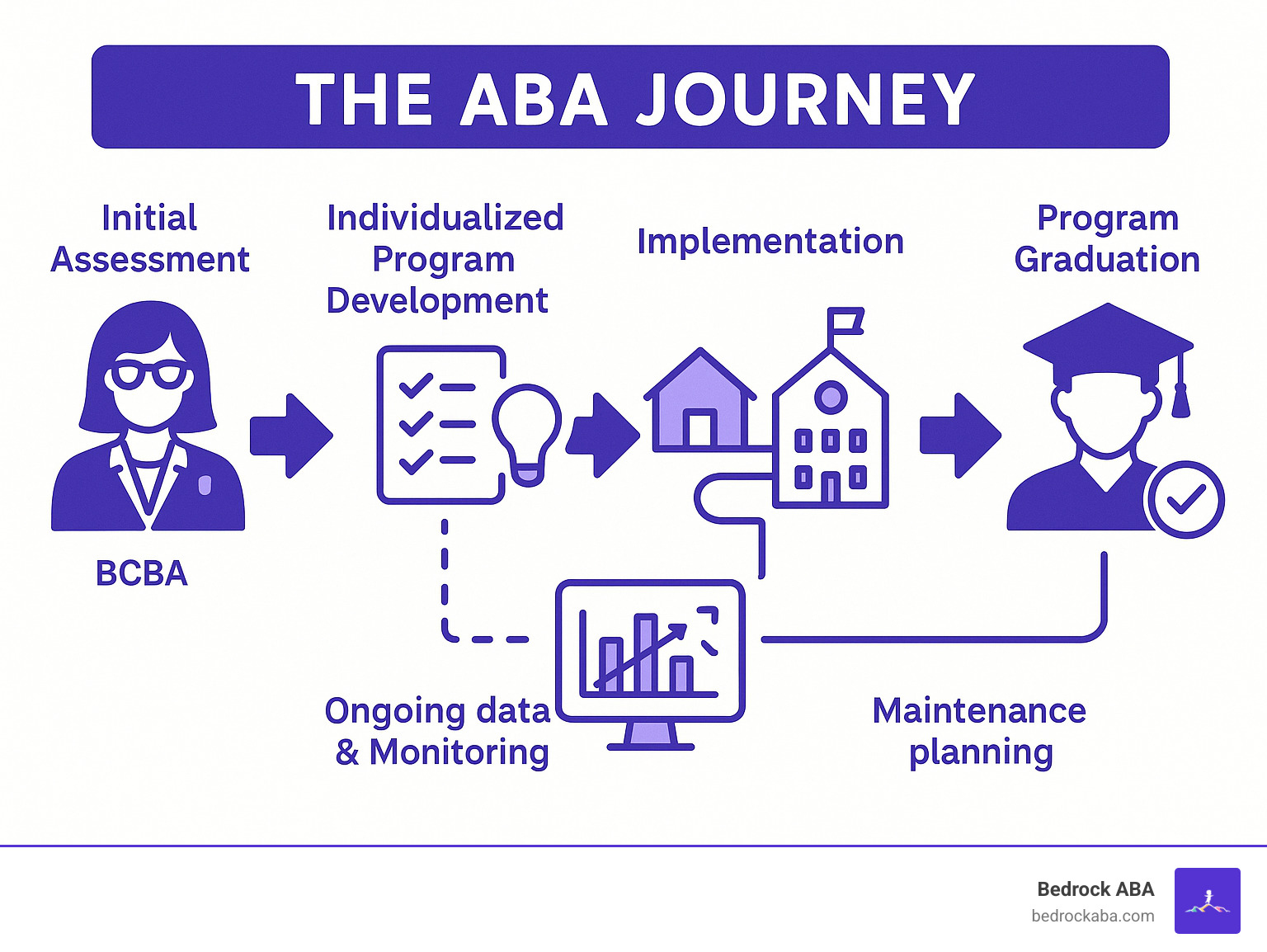
Every effective ABA program starts with getting to know your child as a unique individual. We begin with comprehensive assessments that go beyond just identifying challenges. We want to understand what motivates your child, how they learn best, and what matters most to your family.
From there, we develop individualized treatment plans with goals that are meaningful and achievable. Instead of generic objectives, we create targets like “Sarah will ask for help using words when she’s frustrated with a puzzle” or “Marcus will independently put on his shoes and socks before going outside.”
The teaching happens through various evidence-based methods. Discrete Trial Training (DTT) breaks complex skills into tiny, manageable steps—perfect for children who need clear structure. Pivotal Response Training (PRT) follows your child’s natural interests, turning their fascination with trains into opportunities to practice communication. The Early Start Denver Model (ESDM) makes learning feel like play, while natural environment teaching embeds practice into everyday routines like grocery shopping or bath time.
What sets quality programs apart is the data collection system. We track progress using tools like ABC charts that help us understand behavior patterns, frequency counts for specific behaviors, and trial-by-trial data for skill development. This isn’t about creating paperwork—it’s about making sure our approach is actually working for your child.

Progress monitoring means regularly reviewing this data together. If something isn’t working, we adjust our approach. When your child masters a skill, we celebrate and build on that success. We also plan carefully for generalization—making sure skills transfer from therapy sessions to real life with family members, teachers, and friends.
Settings & Populations Served
One of the most wonderful aspects of aba behavioral programs is their adaptability. These programs can happen wherever your child spends time and learns best.
Many families love home-based services because therapy happens in the most natural environment possible. Your child practices communication skills while playing with their favorite toys, learns daily routines in their actual bedroom, and works on social skills with siblings nearby. Plus, parents can observe and participate directly in their child’s progress.
Center-based programs offer different advantages. These settings provide specialized equipment, opportunities for peer interaction, and a controlled environment that minimizes distractions during intensive learning sessions. Some children thrive with the clear boundaries between “therapy time” and “home time.”
School-based services create seamless integration between therapeutic goals and academic expectations. When your child’s ABA team collaborates directly with teachers, everyone works toward the same objectives using consistent strategies.
The growth of telehealth options has been a game-changer for many families. Remote services provide access for families in rural areas, offer flexibility for busy schedules, and allow for extensive parent coaching. During disruptions like illness or weather, therapy can continue from the comfort of home.
While most people associate ABA with autism support, these programs effectively serve children with developmental delays, individuals with intellectual disabilities, and even adults with acquired brain injuries. The principles of behavior analysis work because they’re based on how all humans learn and adapt.
At Bedrock ABA, we’ve finded that offering both in-person and remote options allows us to meet each family exactly where they are. Some children benefit from the structure of center-based services, while others flourish with the natural environment of home-based therapy. The key is finding what works best for your unique situation.
Implementing & Evaluating Success
The difference between good and great aba behavioral programs comes down to two things: who’s running them and how they measure what matters. At Bedrock ABA, we’ve learned that the best outcomes happen when skilled professionals work closely with families to track progress that truly changes lives.
Qualified Providers & Ethical Practice
Think of ABA credentials like a ladder—each level builds on the last, creating a team with different but complementary skills. The Behavior Analyst Certification Board (BACB) sets the standards that ensure your child receives quality care.
Board Certified Behavior Analysts (BCBAs) are the team leaders. They’ve earned a master’s degree with specialized ABA coursework, completed 2,000 hours of supervised fieldwork, and passed a challenging national exam (with a 72% first-time pass rate). These are the professionals who design your child’s program and make adjustments based on progress.
Board Certified Assistant Behavior Analysts (BCaBAs) have bachelor’s degrees and 1,300 hours of supervised experience. They work under BCBA supervision and can implement programs but can’t design them independently.
Registered Behavior Technicians (RBTs) are often the people your child will work with most directly. They complete 40 hours of training, pass competency assessments, and work under close supervision to implement the programs designed by certified analysts.
About half of U.S. states add their own licensing requirements on top of BACB certification. In Utah, where we provide services, practitioners must meet both national certification and state licensing standards. This dual oversight helps ensure quality and accountability.
The BACB Professional and Ethical Compliance Code guides everything we do. It emphasizes treating every client with dignity, involving families in decisions, using only evidence-based practices, and respecting cultural differences. These aren’t just rules—they’re the foundation of ethical practice that puts your child’s welfare first.
Tracking Outcomes That Matter
Data in aba behavioral programs should tell a story of growth, not just fill out paperwork. We use multiple ways to track progress because numbers alone don’t capture the full picture of a child’s development.
Standardized assessments like the ABLLS-R and VB-MAPP give us objective snapshots of where skills stand across different areas. These tools help us compare progress over time and identify areas that need more attention.
Visual data systems turn numbers into clear pictures of progress. We create graphs and charts that show how quickly your child is learning new skills, whether challenging behaviors are decreasing, and if skills are transferring to different settings like home and school.
But here’s what really matters: social validity. We regularly check whether the goals we’re working on still make sense for your family, whether our methods feel right to you, and whether the changes we’re seeing actually improve your child’s quality of life.
The outcomes we care most about are functional changes that make real differences. Can your child communicate their needs more clearly? Are they more independent with daily routines? Do they participate more in family activities? Are school days going more smoothly? These are the victories that matter most.
We hold regular team meetings where everyone—family members, therapists, teachers, and other professionals—can share observations and suggest adjustments. Your input as a parent is invaluable because you see your child in ways we might miss during therapy sessions.
More info about family integration
At Bedrock ABA, we believe every piece of data should connect to something meaningful in your child’s life. When we track progress, we’re not just measuring compliance with procedures—we’re documenting your child’s journey toward greater independence, confidence, and joy.
Access, Funding, and Career Pathways
Navigating aba behavioral programs can feel overwhelming, especially when you’re trying to understand funding options and find quality providers. The good news? Access to ABA services has improved dramatically over the past decade, and there are more pathways than ever to get the support your child needs.
Insurance Coverage and Funding Options
Every state in the U.S. now requires some level of insurance coverage for autism treatment, including aba behavioral programs. This represents a huge victory for families who previously faced overwhelming out-of-pocket costs.
Private insurance typically covers ABA services when they’re medically necessary, though the details matter. You’ll want to understand your plan’s pre-authorization requirements, annual benefit limits, and which providers are in your network. Don’t forget about copayments and deductibles—these can add up quickly with intensive services.
Medicaid coverage has been a game-changer for many families. Under the Early and Periodic Screening, Diagnostic and Treatment (EPSDT) benefit, Medicaid must cover medically necessary ABA services for children under 21. This ensures that families can access quality care regardless of their income level.
School districts also play a role under the Individuals with Disabilities Education Act (IDEA). While school-based services typically focus on educational goals rather than comprehensive behavioral programming, they can be an important piece of your child’s support system.
Some families choose private pay options to access providers outside insurance networks, receive more intensive services than insurance covers, or start immediately without waiting for authorization. While this requires a significant financial commitment, it can provide more flexibility and control over your child’s treatment.
Scholarship and grant programs offer another avenue for support. Many ABA training programs and providers offer financial assistance, with some scholarships reducing costs by thousands of dollars.
Becoming a Behavior Analyst
The field of behavior analysis offers excellent career prospects for those interested in making a meaningful difference in children’s lives. Job growth is expected to reach 19% from 2021 to 2031—much faster than average for most occupations. Annual wages range from $36,700 to $70,130, with Board Certified Behavior Analysts (BCBAs) typically earning at the higher end.
Educational pathways vary depending on your career goals. A bachelor’s degree prepares you for Registered Behavior Technician (RBT) or Board Certified Assistant Behavior Analyst (BCaBA) roles, while a master’s degree is required for BCBA certification. Doctoral programs open doors to research, university teaching, and advanced clinical supervision roles.
Accredited programs through the Association for Behavior Analysis International (ABAI) automatically meet certification coursework requirements. Top programs consistently report impressive BCBA exam pass rates—some achieving 100% first-time pass rates. Universities like North Carolina Wilmington, Utah State University, and Westfield State University have established excellent reputations in the field.
The 2,000-hour supervision requirement for BCBA certification might sound daunting, but it can be completed through university practicum programs, employer-sponsored supervision, or independent arrangements. Many programs offer hybrid models that combine multiple supervision sources for maximum flexibility.
Scientific research on labor outlook
Choosing Quality Services
Finding the right aba behavioral programs for your child requires asking the right questions. Don’t be shy about thoroughly vetting potential providers—this decision is too important to leave to chance.
Staff credentials should be your first priority. Ask how many BCBAs are on staff, whether they’re licensed through both the BACB and your state, and what kind of ongoing training therapists receive. Weekly supervision ratios matter too—quality programs ensure BCBAs provide regular, meaningful oversight of therapy sessions.
Service delivery varies significantly between providers. Some offer only clinic-based services, while others provide home-based therapy or hybrid models. Ask about typical session structure, available hours per week, and whether there’s a waitlist. Understanding these logistics upfront prevents surprises later.
Programming approaches should align with your family’s values and your child’s needs. Quality providers will explain how they determine goals, how often they re-evaluate progress, and how they handle safety concerns. They should also be transparent about their methods for measuring success.
Business practices might seem less important than clinical quality, but they affect your family’s experience significantly. Understanding insurance acceptance, cancellation policies, staff turnover rates, and transition procedures helps you make an informed decision.
More info about ABA in schools
At Bedrock ABA, we encourage families to visit our facilities, meet our staff, and ask detailed questions about our approach. We believe transparency and open communication are essential for building the trust that makes aba behavioral programs successful. After all, you’re not just choosing a service provider—you’re selecting partners in your child’s growth and development.
Frequently Asked Questions about ABA Behavioral Programs
Parents often have many questions when first learning about aba behavioral programs. These are the ones we hear most often, along with honest answers based on our experience helping families across North Carolina and Utah.
What behaviors and skills can ABA improve?
The beauty of aba behavioral programs lies in their flexibility. If a skill can be observed and measured, ABA can help teach it. Think of it as a toolkit that adapts to each child’s unique needs and family priorities.
Communication often becomes the foundation for everything else. We help children develop verbal language, but we also work with kids who communicate through pictures, gestures, or assistive technology. Sometimes the breakthrough moment comes when a child learns to ask for help instead of having a meltdown, or when they start greeting family members with a smile and wave.
Social skills open doors to friendships and community participation. We teach children how to play with toys appropriately, share with siblings, and steer the complex world of social interactions. For many families, watching their child successfully participate in a playdate or birthday party becomes a treasured milestone.
Daily living skills build independence that lasts a lifetime. Whether it’s learning to use the bathroom independently, getting dressed for school, or helping with household chores, these skills directly impact quality of life for the whole family. We’ve seen how mastering these basics can transform morning routines from stressful battles into smooth, predictable parts of the day.
Academic skills prepare children for success in school and beyond. This might mean learning letters and numbers, developing reading comprehension, or building the focus and organization skills that make learning possible. We work closely with teachers to ensure skills transfer seamlessly between home and school settings.
Challenging behaviors often decrease naturally as children learn better ways to communicate their needs and steer their world. Instead of just trying to stop problematic behaviors, we focus on teaching replacement skills that serve the same function but work better for everyone involved.
The key is always starting with what matters most to your family. Every child’s program looks different because every child and family is unique.
How is progress measured in ABA?
Data drives everything we do in aba behavioral programs, but we make sure the numbers tell a meaningful story about your child’s growth and development.
Before we start teaching anything new, we spend time understanding where your child is right now. This baseline gives us a clear picture of current skills, challenges, and learning patterns. It’s like taking a snapshot that we can compare to later progress photos.
Every session includes careful tracking of how your child responds to different teaching approaches. Our therapists collect data on skill acquisition, behavior patterns, and environmental factors that help or hinder learning. This isn’t busy work—it’s how we know whether our strategies are actually working.
Weekly supervision meetings allow our BCBAs to review all the data and make adjustments in real time. If something isn’t working, we change it quickly rather than continuing ineffective approaches. If a child is progressing rapidly, we can advance to more challenging skills or increase independence expectations.
Monthly team meetings bring together everyone involved in your child’s care. We look at trends over time, celebrate successes, and identify areas where we might need to adjust our approach. These meetings often include discussions about how skills are generalizing to different settings and people.
Visual progress reports help families see growth over time. We use graphs and charts that clearly show skill development and behavior changes. Many parents tell us these visual representations help them see progress they might not notice day-to-day.
Standardized assessments provide broader context about your child’s development. These formal evaluations help us understand how your child’s progress compares to typical developmental milestones and guide decisions about program modifications or transitions.
The goal is always to have data that helps us make better decisions, not just data for data’s sake. When families understand what we’re measuring and why, they become active partners in the process.
What are the main criticisms and how are they addressed?
ABA behavioral programs have evolved dramatically over the decades, largely in response to valid concerns raised by families, autistic self-advocates, and researchers. We believe addressing these criticisms honestly has made our field stronger and more effective.
The historical use of punishment procedures represents ABA’s most significant past failing. Early programs sometimes used time-outs, response cost, and even aversive stimuli to reduce behaviors. Modern aba behavioral programs have moved decisively away from these approaches. We now focus almost exclusively on positive reinforcement and teaching replacement skills. When we do need to address challenging behaviors, we use gentle redirection and environmental modifications rather than punishment.
Repetitive, drill-based teaching was another hallmark of older programs. Traditional Discrete Trial Training involved endless repetition of adult-directed tasks that often felt mechanical and joyless. Today’s approaches embed learning in natural activities, play, and daily routines. Children learn communication skills during snack time, social skills during play, and independence skills during their regular routines.
The goal of making autistic children appear “normal” reflected a fundamental misunderstanding of neurodiversity. Some programs tried to eliminate all repetitive behaviors or self-stimulatory activities without considering their function. We now recognize that many of these behaviors serve important self-regulation purposes. We only address behaviors that interfere with learning, safety, or social relationships—never simply because they look different.
Limited input from autistic voices has been a significant blind spot in program development. Historically, programs were designed without meaningful input from autistic individuals themselves. We’re working to change this by emphasizing person-centered planning, involving families as true partners, and staying informed about perspectives from the autistic community.
Concerns about intensive hours being overwhelming for young children deserve serious consideration. While research supports intensive early intervention, we now individualize treatment intensity based on each child’s needs, tolerance, and family circumstances. Some children thrive with more intensive programming, while others do better with focused interventions targeting specific skills.
The field continues evolving as we learn more about autism, neurodiversity, and effective teaching approaches. We believe the best aba behavioral programs combine scientific rigor with genuine respect for each individual’s unique strengths, challenges, and preferences.
At Bedrock ABA, we’re committed to staying current with best practices while always keeping the child and family at the center of everything we do. Change takes time, but we’re proud to be part of a field that listens, learns, and improves.
Conclusion
When I think about the families we’ve served at Bedrock ABA, I’m reminded that aba behavioral programs aren’t just about data points or skill acquisition—they’re about opening doors to possibilities that might have seemed impossible before.
Every child who learns to communicate their needs, every family that finds peace in their daily routines, and every moment of genuine connection represents the true power of quality ABA services. The science behind these programs is solid, but what makes them truly meaningful is how they transform real lives in real ways.
Modern aba behavioral programs have come so far from the rigid approaches of decades past. Today’s evidence-based interventions focus on building skills that actually matter—the ones that help children participate more fully in family life, succeed in school, and develop meaningful relationships. When implemented with genuine care and respect for each child’s unique personality, these programs create lasting positive change.
At Bedrock ABA, we’ve built our approach around one simple belief: every child deserves personalized care that honors who they are while helping them grow. Whether we’re working with your family in your home, at our centers, or through our telehealth options, our goal remains the same—to provide flexible, family-centered support that fits your life.
We know that choosing ABA services feels like a big decision. That’s exactly why we prioritize transparency and open communication from day one. Our qualified BCBAs and trained technicians don’t just implement programs—they partner with families to ensure that every goal feels meaningful and every intervention produces results you can see and celebrate.
The field of behavior analysis keeps evolving, and we’re committed to growing with it. We listen to feedback from the autism community, stay current with research, and continuously refine our practices to reflect the highest ethical standards. This commitment means that our aba behavioral programs always represent the best of what modern ABA has to offer.
If you’re considering ABA services, trust yourself to ask the hard questions and visit different providers. Quality programs should feel collaborative and hopeful. You should feel heard, respected, and confident that your child’s individuality is being celebrated, not changed.
Here in Utah and beyond, we’re honored to walk alongside families during some of their most important moments. More info about our Utah ABA services is always available, but what matters most is finding the right fit for your unique situation.
The most successful aba behavioral programs don’t aim for perfection—they aim for progress, independence, and joy. They help children develop the skills they need to live their fullest lives while staying true to who they are. That’s the kind of potential we’re passionate about nurturing, one child and one family at a time.