


Why Applied Behavior Analysis Therapists Are Changing Lives
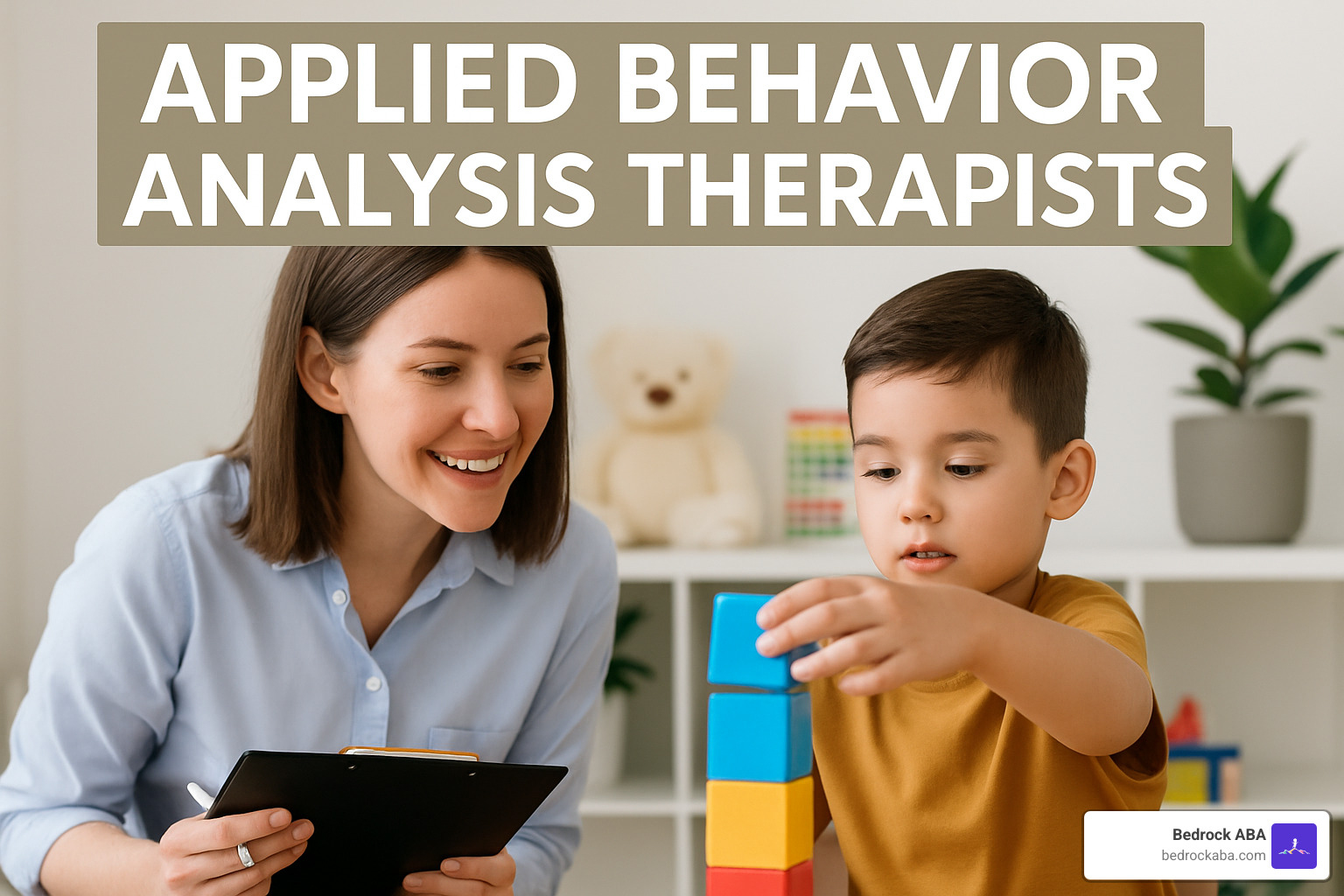
Applied behavior analysis therapists are specially trained professionals who use evidence-based techniques to help children with autism and developmental disabilities build essential life skills. These therapists work under the supervision of Board Certified Behavior Analysts (BCBAs) to implement individualized treatment plans that focus on improving communication, social skills, and daily living abilities.
Key Facts About Applied Behavior Analysis Therapists:
- Training Requirements: Minimum high school diploma plus 40 hours of specialized ABA training for Registered Behavior Technicians (RBTs)
- Supervision: Work under direct oversight of BCBAs who hold master’s degrees and national certification
- Evidence Base: Backed by more than 20 studies showing significant improvements in outcomes for children with autism
- Intensive Programs: Typically provide 25-40 hours per week of therapy for 1-3 years for maximum effectiveness
- Settings: Deliver services in homes, clinics, schools, and community environments
Applied behavior analysis is rooted in the science of learning and behavior. It uses positive reinforcement and systematic teaching methods to help children develop new skills while reducing challenging behaviors. The approach has evolved significantly since its early days, now emphasizing naturalistic teaching strategies and family-centered care.
Modern ABA therapy looks very different from older models. Today’s programs focus on play-based learning, natural environments, and collaborative family involvement. As one expert notes, “If it’s done right, it doesn’t seem like work for the child.”
The effectiveness of ABA therapy is well-documented. In a landmark 1987 study, 47% of children who received intensive ABA therapy achieved normal educational and intellectual functioning. The U.S. Surgeon General and American Psychological Association recognize ABA as an evidence-based best practice treatment.
I’m Mayer Kulefsky, director of operations at Bedrock ABA, where I oversee the delivery of high-quality, individualized ABA services across multiple states including North Carolina and Utah. My experience working with applied behavior analysis therapists has shown me how these dedicated professionals can create meaningful breakthroughs for children and families.
ABA Therapy Fundamentals: Science, History & Modern Practice
Applied behavior analysis has its roots in behaviorism, a psychological approach that emerged in the early 20th century. The field was shaped by pioneers like B.F. Skinner, who developed the principles of operant conditioning – the idea that behaviors are influenced by their consequences. This foundation led to the development of systematic methods for teaching new skills and reducing problematic behaviors.
The modern era of ABA therapy began in the 1960s when Dr. O. Ivar Lovaas first applied behavioral principles to work with children with autism. His groundbreaking 1987 study demonstrated that intensive behavioral intervention could produce remarkable results. In this study, 47% of children who received 40 hours per week of ABA therapy were able to achieve normal educational and intellectual functioning, becoming indistinguishable from their typically developing peers.
Today’s ABA practice has evolved far beyond its early iterations. While early models sometimes used aversive techniques, modern applied behavior analysis therapists focus exclusively on positive reinforcement and naturalistic developmental behavioral interventions. The field now emphasizes:
- Positive reinforcement as the primary tool for behavior change
- Natural environment training that occurs in real-life settings
- Family-centered approaches that involve parents and caregivers as partners
- Play-based learning that makes therapy engaging and fun
How applied behavior analysis therapists implement interventions
Applied behavior analysis therapists use several core techniques to help children learn new skills:
Discrete Trial Training (DTT) breaks complex skills into small, manageable steps. Each trial consists of a clear instruction, the child’s response, and immediate feedback. For example, when teaching color identification, a therapist might present red and blue blocks, ask “Give me red,” and immediately praise the child for selecting the correct block.
Shaping involves reinforcing successive approximations of a target behavior. If a child is learning to say “water,” the therapist might first reinforce any vocalization, then sounds closer to “wa,” and finally the complete word.
Chaining teaches multi-step tasks by breaking them into smaller components. Teaching a child to brush their teeth might involve separate steps: getting the toothbrush, applying toothpaste, brushing upper teeth, brushing lower teeth, and rinsing.
Incidental teaching capitalizes on naturally occurring opportunities throughout the day. When a child shows interest in a toy, the therapist uses that moment to work on communication skills, social interaction, or other target behaviors.
Milestones in ABA evolution
The field reached a major milestone in 1968 when Baer, Wolf, and Risley published their seminal paper defining the seven dimensions of applied behavior analysis. These dimensions ensure that ABA interventions are applied, behavioral, analytic, technological, conceptually systematic, effective, and promote generality.
The development of Positive Behavior Support (PBS) in the 1980s marked another significant evolution. PBS emphasized the importance of understanding why behaviors occur and teaching functional replacement behaviors rather than simply suppressing unwanted behaviors.
Recent years have seen growing attention to neurodiversity-affirming trends in ABA practice. Modern applied behavior analysis therapists increasingly focus on building skills that improve quality of life rather than eliminating behaviors that may be natural expressions of neurodivergence. This shift reflects a more respectful and individualized approach to intervention.
Role & Qualifications of Applied Behavior Analysis Therapists
The field of applied behavior analysis has a clear hierarchy of credentials, each requiring different levels of education and training. Understanding these roles helps families make informed decisions about their child’s care team.
Board Certified Behavior Analysts (BCBAs) represent the highest level of certification. They must hold a master’s degree in behavior analysis or a related field, complete extensive coursework, accumulate 1,500-2,000 hours of supervised fieldwork, and pass a rigorous national examination. BCBAs design treatment programs, conduct assessments, and supervise other team members.
Board Certified Assistant Behavior Analysts (BCaBAs) serve as mid-level practitioners with a bachelor’s degree and specialized training. They work under BCBA supervision to implement programs and collect data.
Registered Behavior Technicians (RBTs) provide direct therapy services under close supervision. They need only a high school diploma plus 40 hours of specialized training, making this an accessible entry point into the field.
All applied behavior analysis therapists must adhere to strict ethical guidelines established by the Behavior Analyst Certification Board. These guidelines emphasize client welfare, professional competence, and integrity in all interactions.
| Credential | Education Required | Supervised Hours | Exam Required | Average Salary |
|---|---|---|---|---|
| BCBA | Master’s degree | 1,500-2,000 | Yes | $70,000 |
| BCaBA | Bachelor’s degree | 1,000 | Yes | $45,000 |
| RBT | High school diploma | 40 hours training | Yes | $39,520 |
Daily responsibilities of applied behavior analysis therapists
The daily work of applied behavior analysis therapists involves much more than just working directly with children. A typical day might include:
Data collection forms the backbone of effective ABA therapy. Therapists carefully track each child’s responses, measuring progress on specific goals. This might involve counting how many times a child initiates communication, timing how long it takes to complete a task, or rating the quality of social interactions.
Program modification happens continuously based on data analysis. If a child isn’t making progress on a particular goal, therapists work with their supervising BCBA to adjust teaching methods, change reinforcement strategies, or modify the environment.
Caregiver coaching ensures that skills learned in therapy sessions generalize to everyday life. Therapists spend time teaching parents and other family members how to implement strategies at home, creating consistency across all environments.
Career outlook & professional development
The field of applied behavior analysis is experiencing tremendous growth. The number of BACB certificants has increased dramatically over the past decade, reflecting growing recognition of ABA’s effectiveness and expanding insurance coverage.
Applied behavior analysis therapists must complete continuing education units to maintain their credentials. This requirement ensures they stay current with the latest research and best practices in the field. Many therapists pursue additional specializations in areas like early intervention, school-based services, or working with specific populations.
Delivering Effective ABA: Process, Settings & Family Collaboration
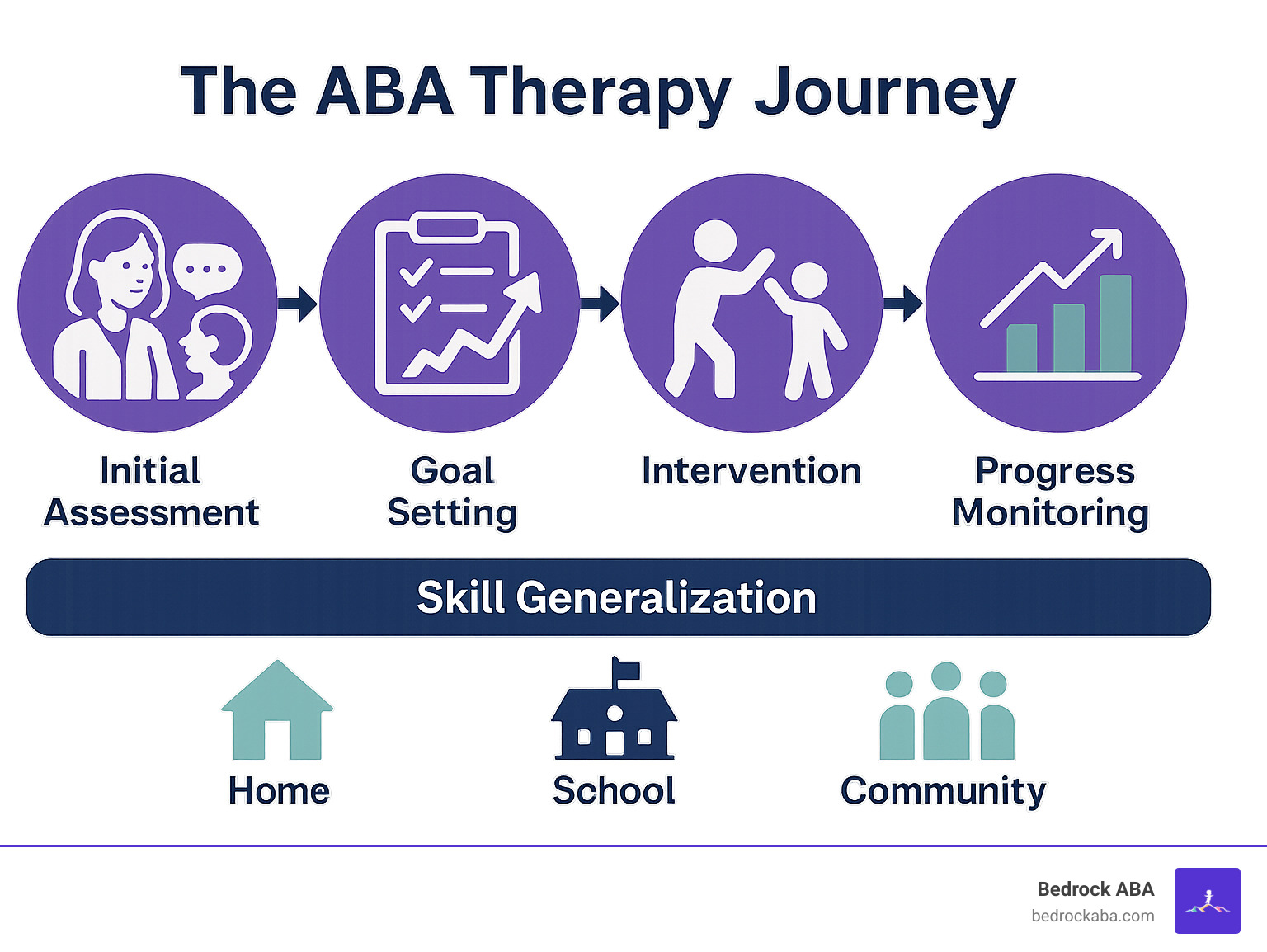
Effective ABA therapy begins with a comprehensive functional behavior assessment (FBA). This process helps applied behavior analysis therapists understand why certain behaviors occur and what functions they serve for the child. The FBA examines antecedents (what happens before a behavior), the behavior itself, and consequences (what happens after).
Based on the FBA results, the team develops specific, measurable goals. These might include increasing communication attempts, improving social interactions, or teaching daily living skills like dressing or eating independently. Each goal includes clear criteria for success and timelines for achievement.
Intervention plans specify exactly how applied behavior analysis therapists will work toward each goal. These plans detail the teaching procedures, reinforcement strategies, and data collection methods. The plans are individualized based on the child’s interests, learning style, and family priorities.
Progress monitoring occurs continuously throughout treatment. Therapists collect data during every session, graphing progress and making adjustments as needed. Regular team meetings ensure everyone stays informed about the child’s development and any necessary program changes.

ABA therapy can be delivered in multiple settings, each offering unique advantages:
Home-based services allow children to learn in their most familiar environment. This setting promotes family involvement and makes it easier to work on daily routines like bedtime, mealtime, and household chores.
Clinic-based programs provide access to specialized equipment and resources. They also offer opportunities for group activities and peer interaction in a controlled environment.
School-based services help children succeed in educational settings. Under the Individuals with Disabilities Education Act (IDEA), schools must provide appropriate supports, and many employ applied behavior analysis therapists or collaborate with outside providers.
Telehealth options have expanded significantly, especially following the COVID-19 pandemic. While not suitable for all interventions, telehealth can be effective for parent training, consultation, and some direct services.
What outcomes can applied behavior analysis therapists achieve?
Research consistently demonstrates that applied behavior analysis therapists can help children make significant gains across multiple areas:
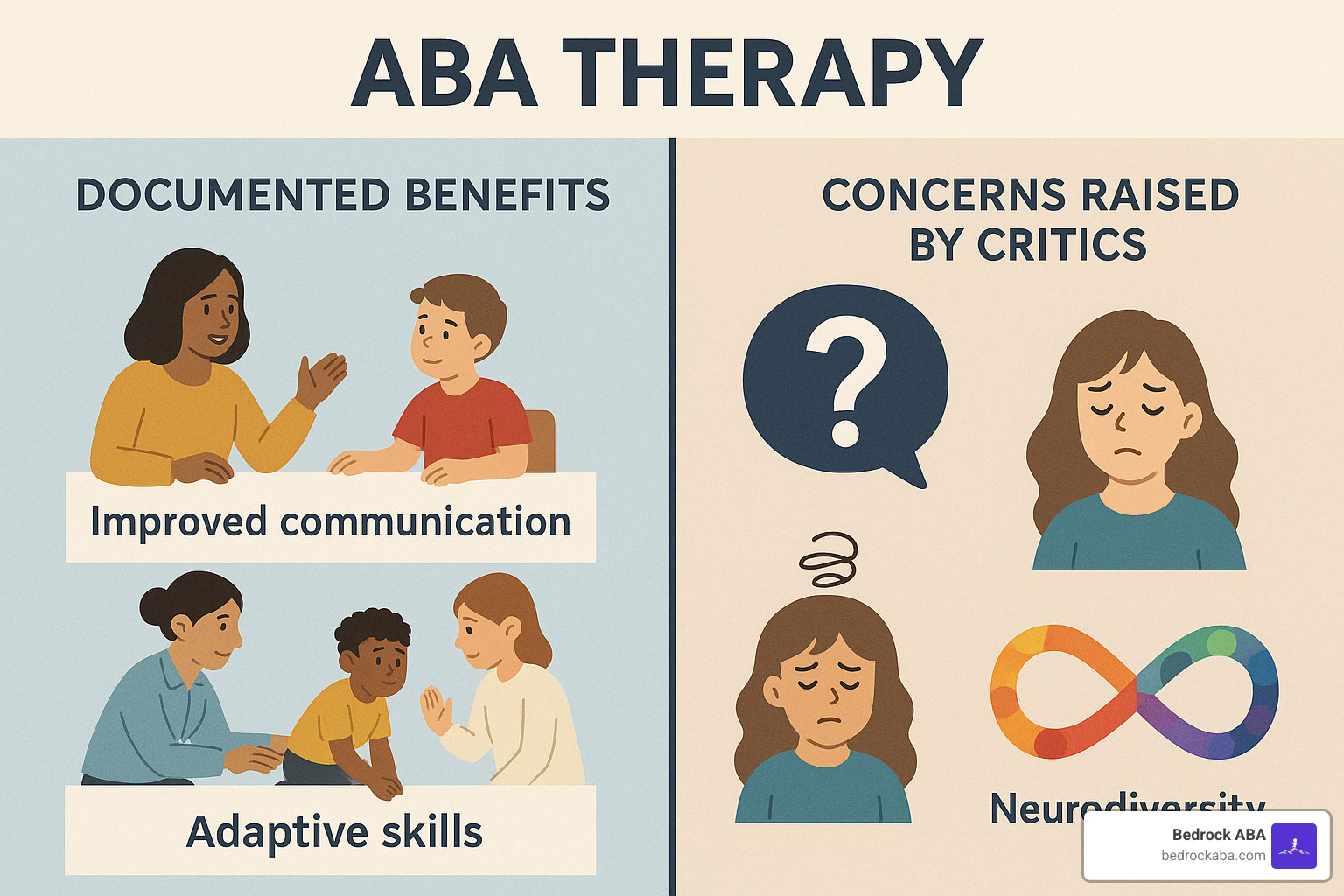
Communication improvements are often among the most dramatic outcomes. Children who were previously nonverbal may learn to use words, picture systems, or communication devices to express their needs and wants. Those with some language skills often expand their vocabulary and improve their ability to engage in conversations.
Adaptive skills development helps children become more independent in daily activities. This might include learning to dress themselves, use the bathroom independently, or follow multi-step routines without constant prompting.
Reduction of challenging behaviors occurs through teaching appropriate replacement behaviors. Rather than simply stopping unwanted behaviors, applied behavior analysis therapists focus on teaching children more effective ways to communicate their needs and cope with difficult situations.
Measuring and visualizing progress
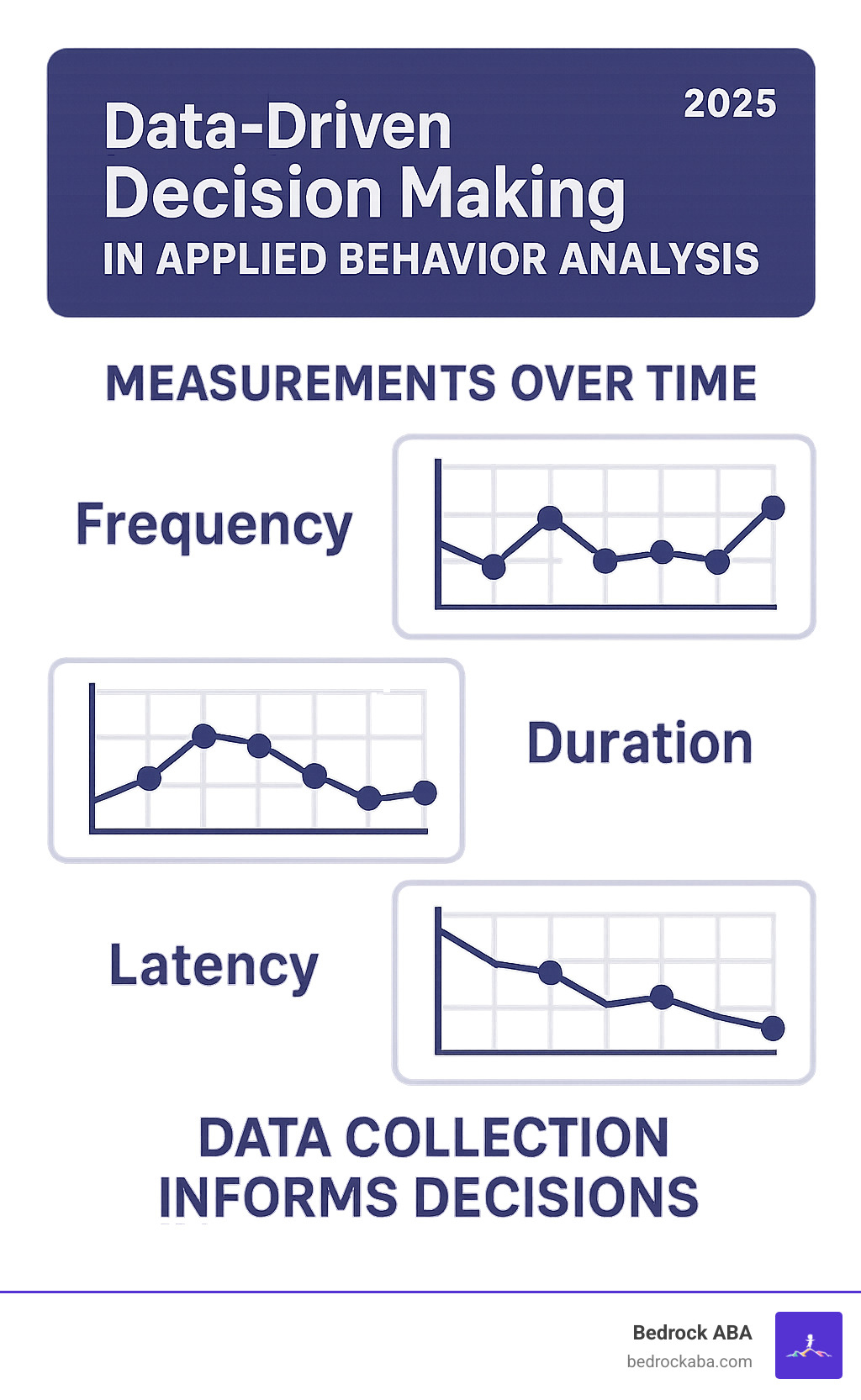
Data collection is fundamental to ABA therapy’s effectiveness. Applied behavior analysis therapists use various measurement systems to track progress:
Frequency data counts how often specific behaviors occur. This might track how many times a child initiates communication during a session or how many tasks they complete independently.
Duration data measures how long behaviors last. This could include timing how long a child engages in appropriate play or how long they can focus on a task.
Latency data tracks the time between an instruction and the child’s response. Decreasing latency often indicates improved understanding and compliance.
Benefits, Evidence & Ongoing Debate
The evidence supporting ABA therapy’s effectiveness is substantial and continues to grow. More than 20 studies have established that intensive and long-term therapy using ABA principles improves outcomes for many children with autism. These studies show improvements in intellectual functioning, language development, daily living skills, and social functioning.
The U.S. Surgeon General and the American Psychological Association have designated ABA as an evidence-based best practice treatment. This recognition reflects the rigorous research demonstrating its effectiveness across diverse populations and settings.
A 2018 Cochrane review, considered the gold standard for medical research, examined multiple studies of ABA interventions. While noting the need for more high-quality research, the review found evidence supporting ABA’s effectiveness for improving certain outcomes in children with autism. You can find scientific research on ABA effectiveness that provides detailed analysis of intervention outcomes.
However, the field of ABA therapy also faces ongoing debate and criticism. Some members of the neurodiversity movement argue that ABA focuses too heavily on making autistic children appear “normal” rather than accepting and accommodating their differences. Critics worry that some practices may be harmful, potentially leading to anxiety, depression, or trauma.
Addressing criticisms constructively
Modern applied behavior analysis therapists and the broader ABA community have taken these criticisms seriously, leading to significant changes in practice:
Avoiding aversives has become standard practice. Contemporary ABA relies exclusively on positive reinforcement and environmental modifications rather than punishment or aversive consequences.
Assent-based practice recognizes that children should have a voice in their treatment. Modern approaches emphasize the importance of child engagement and cooperation rather than compliance at any cost.
Conflict-of-interest disclosure has improved following research showing that many ABA studies failed to disclose authors’ financial interests in ABA services. The field is working toward greater transparency in research and practice.
Future directions for the field
The field of ABA continues to evolve in response to research, criticism, and changing understanding of autism and neurodiversity:
Naturalistic models are becoming increasingly popular. These approaches embed learning opportunities within natural activities and follow the child’s interests and motivations.
Acceptance and Commitment Therapy (ACT) integration represents a newer development that incorporates mindfulness and acceptance strategies alongside traditional behavioral techniques.
Culturally responsive care acknowledges that effective intervention must consider families’ cultural backgrounds, values, and preferences. This includes adapting communication styles, incorporating cultural practices, and respecting diverse perspectives on disability and intervention.
Choosing the Right Applied Behavior Analysis Therapists
Selecting the right applied behavior analysis therapists for your child is one of the most important decisions you’ll make. The quality of the therapeutic relationship significantly impacts outcomes, so it’s worth investing time in finding the best fit.
Start with a credentials checklist. Verify that BCBAs hold current certification through the Behavior Analyst Certification Board and any required state licenses. For RBTs, confirm they’ve completed the required 40 hours of training and maintain active certification.
Supervision ratios matter significantly. BCBAs should provide regular, direct supervision to RBTs and other team members. Ask about supervision frequency, methods, and how supervisors ensure quality control.
Treatment philosophy alignment is crucial. Some programs emphasize intensive, structured approaches while others focus on naturalistic, play-based methods. Neither approach is inherently better, but the philosophy should match your family’s values and your child’s needs.
Insurance coverage varies significantly by state and provider. In Utah, where we serve families, most major insurance plans cover ABA therapy when medically necessary. However, coverage details like session limits, copayments, and provider networks differ substantially.
Family fit encompasses factors beyond clinical credentials. Consider whether the therapist’s communication style matches your preferences, if scheduling works with your family’s needs, and whether you feel comfortable with their approach to involving parents and siblings.
Interview questions for prospective therapists
When meeting with potential applied behavior analysis therapists, consider asking:
Scope of practice questions help clarify what services they can provide. Ask about their experience with children similar to yours, their approach to challenging behaviors, and how they handle situations outside their expertise.
Data sharing practices should be transparent and regular. Inquire about how often you’ll receive progress reports, what data will be shared, and how decisions about program changes are made.
Emergency procedures become important when working with children who may have challenging behaviors. Understand their crisis management protocols and how they coordinate with families during difficult situations.
Frequently Asked Questions about Applied Behavior Analysis Therapists
Are applied behavior analysis therapists only for autism?
While applied behavior analysis therapists are most commonly associated with autism treatment, they work with a much broader range of conditions. ABA techniques are effective for children with intellectual disabilities, ADHD, anxiety disorders, and various developmental delays. The principles of behavior analysis can be applied to help anyone learn new skills or reduce problematic behaviors.
How many hours per week are typically recommended?
Research shows that intensive ABA programs of 25-40 hours per week for 1-3 years produce the most significant outcomes. However, modern practice recognizes that not all children need or benefit from such intensive schedules. Many families find success with 10-20 hours per week, especially when combined with other services and strong family involvement.
The optimal intensity depends on factors like the child’s age, severity of challenges, family capacity, and individual response to intervention. Applied behavior analysis therapists work with families to determine the right balance between therapeutic intensity and family life.
What role do parents play in sessions?
Parent involvement is crucial for successful ABA therapy. Applied behavior analysis therapists typically spend 30-60 minutes per week specifically training parents and caregivers. This training helps ensure that skills learned in therapy sessions generalize to everyday life.
Parents might observe sessions to learn techniques, practice implementing strategies under therapist guidance, and receive coaching on how to handle challenging situations. The goal is to create consistency between therapy sessions and daily routines, maximizing the child’s opportunities to practice new skills.
Some programs emphasize parent-implemented interventions, where parents become the primary implementers of ABA strategies under professional supervision. This approach can be particularly effective for families who prefer to maintain primary responsibility for their child’s intervention.
Conclusion
Applied behavior analysis therapists represent a vital resource for families navigating autism and developmental disabilities. Through evidence-based practices, individualized programming, and collaborative family partnerships, these professionals help children develop essential skills for independence and success.
At Bedrock ABA, we’ve seen how the right therapeutic approach can transform lives. Our flexible, family-centered model recognizes that every child is unique, requiring individualized strategies delivered by skilled, compassionate professionals. Whether providing services in homes, clinics, or community settings across Utah and Salt Lake City, our applied behavior analysis therapists are committed to ethical, effective intervention that respects each child’s dignity and potential.
The field continues to evolve, incorporating new research, responding to valid criticisms, and developing more naturalistic, respectful approaches. The focus remains on helping children thrive while supporting families throughout their journey.
If you’re considering ABA therapy for your child, take time to research providers carefully, ask detailed questions, and trust your instincts about fit and philosophy. The right applied behavior analysis therapists can make an extraordinary difference in your child’s development and your family’s quality of life.