


What ASD Treatment Options Are Available Today
ASD treatment involves a range of evidence-based approaches custom to each individual’s unique needs. If you’re looking for immediate guidance on autism spectrum disorder treatment options, here’s what you need to know:
- Behavioral therapies: Applied Behavior Analysis (ABA), Early Start Denver Model (ESDM), and Pivotal Response Training (PRT) have the strongest scientific support
- Developmental therapies: Speech therapy, occupational therapy, and physical therapy address specific skill areas
- Educational interventions: Structured teaching approaches and individualized education plans (IEPs)
- Medication: No medications treat core autism symptoms, but some can help manage associated conditions like irritability, anxiety, or hyperactivity
- Early intervention: Services before age 3 show significantly better outcomes
ASD is a neurodevelopmental condition affecting approximately 1 in 31 children in the United States, according to recent CDC data. While there is no cure for autism, research consistently shows that early, intensive intervention can substantially improve outcomes and quality of life.
Every person with autism has unique strengths and challenges, which is why effective ASD treatment requires individualized planning and a combination of therapeutic approaches. The goal isn’t to “fix” autism but to build skills, reduce challenges, and support each person’s development and independence.
My name is Mayer Kulefsky, Director of Operations at Bedrock ABA, where I’ve dedicated my career to enhancing the lives of individuals with autism through evidence-based ASD treatment programs across multiple states including North Carolina and Utah. I’m passionate about helping families steer the often complex world of autism services to find the right supports for their loved ones.
Understanding Autism & Core Goals of Care
Autism Spectrum Disorder isn’t just a diagnosis—it’s a different way of experiencing the world. As parents, you might notice your child sees, hears, and interacts with their environment in unique ways that reflect this neurodevelopmental difference.
The journey typically begins during regular check-ups with your pediatrician through developmental screenings. If your doctor notices potential signs of autism, they’ll refer you for a comprehensive evaluation with specialists like developmental pediatricians or child psychologists. These professionals will observe how your child communicates, their play patterns, and any repetitive behaviors to determine if autism is present.
Many children with autism experience companion challenges that deserve attention alongside their autism. Your child might struggle with sleep, have tummy troubles, feel anxious, or process sensory information differently than their peers. Some may also have ADHD, seizure disorders, or emotional regulation difficulties. Understanding these co-occurring conditions helps create a truly comprehensive care plan.
What Is ASD Treatment Aiming For?
When we talk about ASD treatment, we’re not trying to change who your child is—we’re helping them thrive as themselves. Think of treatment as building a bridge between your child’s unique perspective and the world around them.
Effective autism care focuses on helping your child build essential communication and social skills at their own pace. We emphasize fostering independence through daily living skills that match their developmental level. For children struggling with behaviors that might hurt themselves or limit their opportunities, we work to reduce these challenges while understanding the needs behind them.
At Bedrock ABA, we believe in nurturing your child’s social-emotional growth—helping them understand their feelings and connect with others in meaningful ways. Above all, we prioritize quality of life—because therapy should ultimately lead to more happiness, comfort, and meaningful engagement for your child.
Our approach recognizes and celebrates your child’s unique strengths. We don’t just focus on challenges—we build upon natural abilities and interests to help your child flourish in their own way.
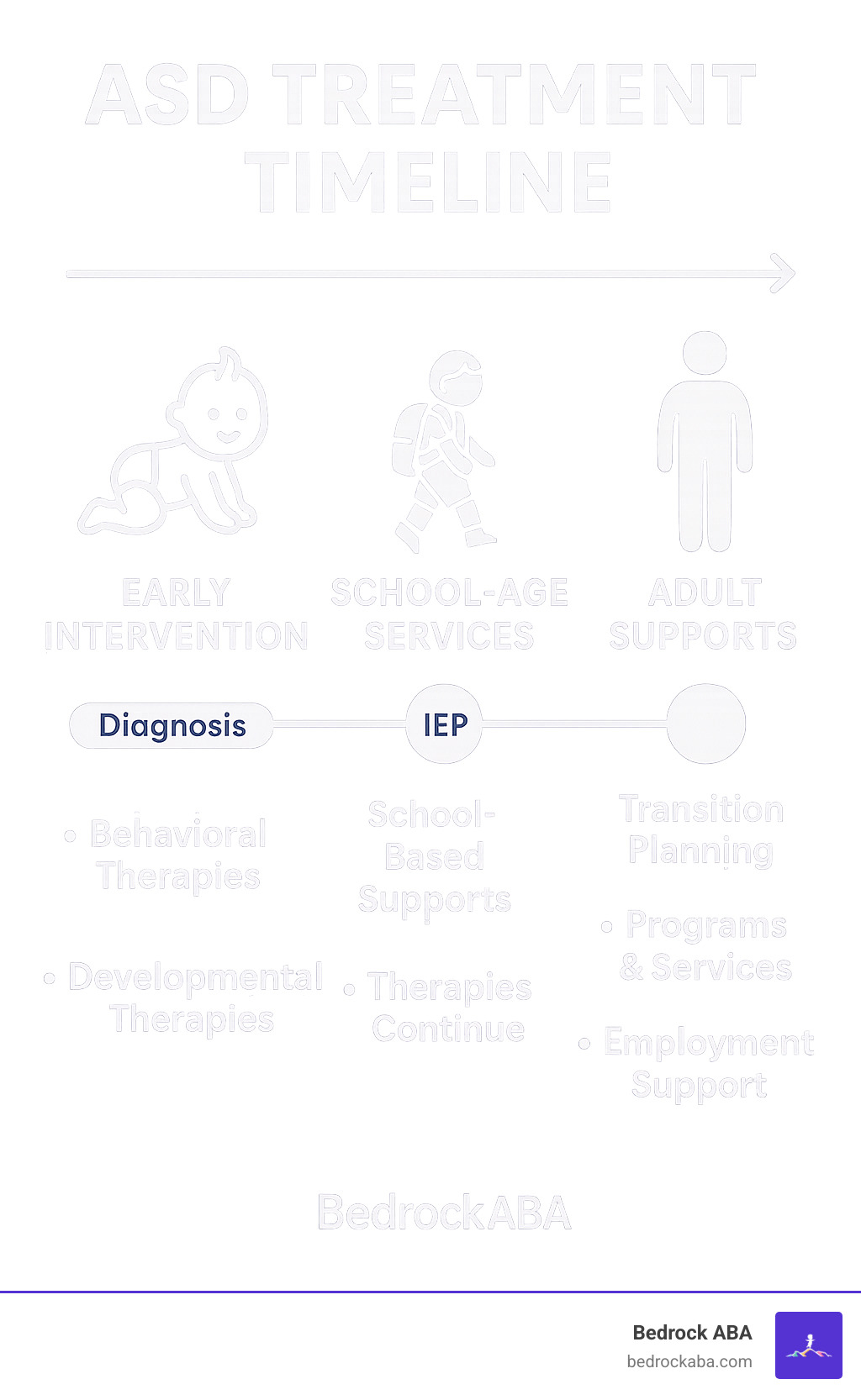
How ASD Treatment Evolves Across the Lifespan
Your child’s needs will change as they grow, and their ASD treatment should evolve accordingly:
During the precious early childhood years (0-5), we focus on intensive early intervention, teaching you strategies to support your child’s development at home, and building foundations in communication and play. All U.S. states provide early intervention services until age 3—a valuable resource for families.
As your child enters school age (6-18), support expands to include school-based services through Individualized Education Plans (IEPs), continued therapies, and more emphasis on social skills with peers. Academic accommodations and emotional regulation strategies become increasingly important during these years.
The transition to adulthood (16-22) brings focus to vocational training, independent living skills, and self-advocacy. Schools provide transition planning services to connect your young adult with appropriate adult support systems.
In adulthood, supports shift toward employment assistance, living arrangements (independent or supported), community inclusion, and ongoing skill development and mental health support.
Throughout this journey, the most effective ASD treatment approaches recognize that autism is lifelong, and help families prepare for and steer transitions between life stages. At Bedrock ABA, we partner with you to create a roadmap that evolves as your child grows, always keeping their unique needs and your family’s priorities at the center of our work.
Evidence-Based Therapies: The Heart of ASD Treatment
When we talk about ASD treatment, evidence-based therapies are truly the foundation of care that makes a real difference. These aren’t just trendy approaches—they’re methods backed by serious research showing they help children and adults with autism develop meaningful skills and enjoy a better quality of life.
Applied Behavior Analysis – The Gold Standard
Applied Behavior Analysis (ABA) stands out as the most scientifically supported approach for autism intervention. But let me clear up a common misconception—ABA isn’t a rigid, one-size-fits-all program. It’s actually a flexible framework based on how we all learn, using positive reinforcement to help children develop helpful behaviors while reducing those that might get in their way.
What makes ABA special is how it’s custom to each child. We use positive reinforcement to celebrate successes, break down complex skills into manageable steps, and provide just the right amount of help—gradually stepping back as a child masters new abilities. Most importantly, we focus on making sure these skills transfer to real-life situations, whether that’s at home, school, or out in the community.
For younger children with significant needs, Early Intensive Behavioral Intervention (EIBI) might involve 20-40 hours weekly of one-on-one therapy. The research is clear—this intensive approach helps many children make substantial gains in thinking, speaking, and daily living skills.
At Bedrock ABA, we believe therapy should be both effective and joyful. Our ABA programs emphasize family involvement and natural learning opportunities rather than strict compliance. We want children to genuinely enjoy their therapy sessions! More info about ABA services
ABA and Speech Therapy Synergy
Communication challenges touch nearly every person with autism, which is why speech and language therapy is such a vital piece of comprehensive ASD treatment. When speech therapy and ABA work in harmony, the results can be remarkable.
Speech-language pathologists focus on building verbal skills, teaching non-verbal communication like gestures and facial expressions, and helping children understand the social rules of conversation. For children who aren’t speaking yet, they might introduce alternative communication systems—from simple picture cards to sophisticated digital devices that generate speech.
At Bedrock ABA, we don’t work in silos. Our therapists collaborate closely with speech professionals to reinforce communication goals throughout the day. We use consistent strategies, implement helpful tools like social stories and visual supports, and make sure parents learn the same techniques to use at home. This coordinated approach means children practice their new skills across different settings with different people—exactly what they need to truly master communication. More info about ABA and speech
Occupational & Physical Therapies in ASD Treatment
Many children with autism experience differences in how they process sensory information or coordinate their movements. This is where occupational therapy (OT) and physical therapy (PT) come into the picture as valuable components of ASD treatment.
Occupational therapists help with the “occupations” of childhood—playing, learning, and developing independence. They might work on fine motor skills like holding a pencil or buttoning a shirt, teach strategies for managing overwhelming sensory experiences, or practice daily living skills like brushing teeth or getting dressed.
Physical therapists focus on the bigger movements—running, jumping, balancing, and coordination. Many children with autism benefit from this support to develop the physical skills they need for playground play, physical education class, or simply navigating their world with confidence.
I’ve seen how these therapies can transform a child’s experience. Something as simple as learning to tolerate the feel of different fabrics or mastering the coordination to ride a bike can open up whole new worlds of independence and enjoyment.
Medication for Co-Occurring Symptoms
It’s important to be clear about this: there are currently no medications that treat the core symptoms of autism itself. However, many individuals with autism experience additional challenges that can respond well to medication as part of their overall ASD treatment plan.
For irritability or aggression, medications like risperidone and aripiprazole have received FDA approval specifically for children with autism. The research is encouraging—a 2009 study in Pediatrics found that 52% of children taking aripiprazole experienced significant reductions in irritability symptoms compared to just 14% on placebo.
Other medications might help with anxiety, depression, attention difficulties, or sleep problems, though the evidence varies. Melatonin, for example, has shown promising results for the sleep onset difficulties that many children with autism experience.
When considering medication, partnership with the right doctor is essential. Look for a physician experienced in treating individuals with autism, start with conservative dosing, watch carefully for side effects, and regularly reassess whether the medication is still needed. Most importantly, medication should always be part of a comprehensive approach, not a standalone solution. Scientific research on medications
| Approach | Focus | Evidence | Best For | Limitations |
|---|---|---|---|---|
| ABA Therapy | Behavior change, skill building | Strong research support | Skill development, reducing challenging behaviors | Requires significant time commitment |
| Developmental Therapies | Building developmental skills through relationship | Moderate research support | Social communication, emotional development | May need combination with behavioral approaches |
| Pharmacological | Managing specific symptoms | FDA-approved for irritability only | Co-occurring conditions (anxiety, irritability, hyperactivity) | Does not address core autism symptoms |
Supporting Therapies & Whole-Person Health
Effective ASD treatment isn’t just about core therapies—it’s about nurturing the whole person. Think of it as tending a garden: while evidence-based therapies form the foundation, these supporting approaches help individuals with autism truly flourish in all areas of life.
Complementary Approaches to ASD Treatment
While proven therapies should always lead the way, several complementary approaches can improve overall well-being when used alongside traditional interventions.
Mindfulness and yoga have become increasingly popular for good reason. These gentle practices help children and adults with autism develop better body awareness, reduce anxiety, and improve attention span. Picture a child learning to take deep breaths when feeling overwhelmed—these simple techniques provide practical tools for everyday life.
Nutrition plays a crucial role in everyone’s health, but it may have particular importance for some individuals with autism. A well-balanced diet rich in colorful fruits, vegetables, lean proteins, and whole grains provides the foundation for brain development and function. Some families find that omega-3 fatty acid supplements offer modest benefits for certain behaviors, while probiotics may help address the gastrointestinal issues that frequently accompany autism.
Some parents explore specialized approaches like gluten-free/casein-free (GFCF) diets. While some families report improvements, I always recommend working with a registered dietitian familiar with autism before making significant dietary changes. Remember to make changes gradually, monitor carefully, and watch for both benefits and potential nutritional gaps.
Creative therapies open new channels for expression and connection. Music therapy has shown particular promise for improving social engagement—there’s something magical about the way rhythm and melody can reach children who struggle with traditional communication. Art therapy offers a nonverbal outlet for expression, while drama therapy creates structured opportunities to practice social scenarios in a supportive environment.

The human-animal bond can also be therapeutic for many individuals with autism. The gentle rhythm of horseback riding (hippotherapy), the unconditional acceptance of a therapy dog, or structured activities with service animals can help develop social skills and emotional regulation. I’ve seen children who rarely speak become chatty when interacting with a gentle therapy dog—these connections can be truly transformative.
When considering any complementary approach, safety comes first. Always pursue these alongside evidence-based therapies (not as replacements), work with qualified professionals, set measurable goals, and maintain a healthy skepticism about exaggerated claims. Scientific research on NDBI
Identifying and Avoiding Harmful “Cures”
Unfortunately, vulnerable families searching for help are sometimes targeted by those promoting unproven and potentially harmful “treatments” marketed as autism “cures.” As a parent or caregiver, being informed is your best defense.
Chelation therapy sounds scientific but poses serious dangers including kidney damage and, in tragic cases, death. The theory that autism is caused by heavy metal poisoning lacks scientific support, making these risks completely unjustifiable.
Hyperbaric oxygen therapy places a person in a pressurized chamber with increased oxygen. While it has legitimate medical uses for certain conditions, it hasn’t been proven effective for autism and carries risks of ear trauma, fire hazards, and oxygen toxicity.
Perhaps most troubling is MMS (Miracle Mineral Solution), which is actually industrial bleach. The FDA has explicitly warned against its use, as it can cause serious intestinal damage. No child should ever be given bleach as a “treatment.”
Extreme restrictive diets can lead to nutritional deficiencies that are particularly concerning for growing children. Similarly, unproven stem cell therapies often come with astronomical costs and significant health risks.
Be wary of red flags like claims of “curing” autism, treatments based solely on testimonials rather than research, therapies focused on “detoxification,” approaches that blame vaccines without evidence, expensive treatments with money-back guarantees, or practitioners who discourage consulting with medical doctors.
At Bedrock ABA, we believe in empowering families with honest, accurate information. We want you to feel confident in your child’s care plan, knowing it’s built on solid evidence rather than empty promises. We encourage you to discuss any treatment you’re considering with trusted healthcare providers and to approach claims with a healthy dose of critical thinking.
The goal isn’t to “fix” autism but to support your child’s development and well-being with approaches that are both effective and respectful of who they are.
Choosing & Monitoring an ASD Treatment Plan
Creating an effective ASD treatment plan isn’t about following a one-size-fits-all approach—it’s more like crafting a custom roadmap for each child’s unique journey. At Bedrock ABA, we believe that families should be at the center of this process, working alongside professionals to build a plan that feels right for your child and your family values.
How ASD Treatment Is Individualized
When I sit down with families to develop treatment plans, I often tell them, “Your child isn’t just a diagnosis—they’re a whole person with unique likes, dislikes, strengths, and challenges.” This philosophy guides how we personalize ASD treatment at every step.
We start with a comprehensive assessment that goes beyond just checking boxes. We want to understand how your child communicates, what makes them light up with interest, how they process sensory information, and what daily skills they’re working on. We also take time to listen to what matters most to you as a family—because your priorities and concerns are essential pieces of the puzzle.
The most successful therapy sessions incorporate what your child already loves. Does your child adore dinosaurs? We might practice conversation skills while exploring a dinosaur museum book. Is music their passion? We could work on turn-taking through shared instrument play. When learning feels fun and meaningful, children engage more deeply and progress more quickly.
Your family’s culture and values create the context for everything we do. Perhaps in your family, independent mealtime skills are particularly important for participating in traditional family dinners. Maybe your cultural background emphasizes certain social courtesies or celebrations. We honor these priorities and incorporate them into meaningful goals that fit your family’s life.
Therapy can happen in different settings, and each offers unique benefits. Home-based services allow us to work on skills right where they’ll be used every day—like practicing morning routines in your actual bathroom or social skills with siblings in the family room. Center-based sessions might offer more structured environments and chances to practice peer interactions. Many families benefit from a mix of settings to promote skill generalization. We’re flexible in meeting you where you are—literally! More info about in-home ABA
Tracking Progress & Adjusting Interventions
I often tell parents that good ASD treatment is like navigating with GPS—we need to regularly check our position, see if we’re moving in the right direction, and recalculate our route when necessary.
Behind every successful therapy program is thoughtful data collection. It might sound technical, but it’s actually quite practical. We’re simply keeping track of what’s working and what isn’t. When working on reducing meltdowns, for example, we might note what happens right before they occur (the antecedent), what the meltdown looks like (the behavior), and what follows (the consequence). These ABC patterns help us understand triggers and find effective solutions.
Beyond day-to-day tracking, we use standardized assessments periodically to measure progress more formally. Think of these as mile markers on our journey—they help us see how far we’ve come in areas like communication, daily living skills, and social interactions. These assessments provide objective information to complement what we observe in therapy sessions.
Teamwork makes the dream work in effective ASD treatment. Regular team meetings bring together everyone supporting your child—therapists, teachers, family members, and other providers. These collaborative discussions ensure we’re all rowing in the same direction. We typically review the full treatment plan every 3-6 months, but we’re constantly making smaller adjustments based on your child’s progress and feedback.
The beauty of a well-designed treatment plan is its flexibility. Children grow and change, and their therapy should evolve with them. When your child masters greeting peers, we celebrate that victory and move on to maintaining conversations. If a particular approach isn’t clicking after giving it a fair try, we’ll pivot to something that better matches your child’s learning style.
At Bedrock ABA, we believe in complete transparency about your child’s progress. You’ll never be left wondering how things are going—we provide regular updates, share our data in family-friendly formats, and genuinely want your input on what you’re seeing at home. After all, you know your child best, and your insights are invaluable to the treatment process.
Frequently Asked Questions about ASD Treatment
When should ASD treatment begin?
The simple answer? As early as possible. When it comes to ASD treatment, timing really matters. Research consistently shows that children who receive support during those crucial early developmental years tend to make more significant progress.
You don’t even need to wait for an official diagnosis to begin. If you notice developmental concerns in your child, it’s worth reaching out right away. Every state offers early intervention services for children under 3 who show developmental delays, and these can begin based on observed concerns rather than a formal autism diagnosis.
I often tell parents that their instincts matter. The American Academy of Pediatrics recommends developmental screening for all children at 9, 18, and 30 months, with autism-specific screening at 18 and 24 months. But if something feels off before these checkpoints, don’t hesitate to speak up.
Early intervention is so powerful because young children’s brains are remarkably adaptable. They’re like little sponges, absorbing and responding to therapeutic approaches much more readily than older brains. Starting therapy during those preschool years or earlier can create a foundation that supports development for years to come.
Are there medications for core autism symptoms?
I wish I could tell you there’s a medication that addresses the core features of autism, but currently, there isn’t. No FDA-approved medications specifically treat the fundamental aspects of autism spectrum disorder – the social communication challenges and restricted or repetitive behaviors that define the condition.
That said, pharmaceutical research continues to evolve, with several promising clinical trials underway that might change this landscape in the future.
Where medications do play an important role is in managing the various conditions that frequently accompany autism:
Irritability and aggression can be addressed with medications like risperidone (Risperdal) and aripiprazole (Abilify), which have FDA approval specifically for treating irritability in children with ASD.
Attention difficulties often respond to stimulant medications when ADHD co-occurs with autism.
Anxiety and depression may be treated with antidepressants, though responses vary significantly between individuals.
Sleep problems, particularly difficulty falling asleep, often improve with melatonin supplements.
Seizures, which affect about 20-30% of people with autism, typically require anti-epileptic medications.
I always emphasize to families that medication decisions should involve a healthcare provider experienced in treating individuals with autism. Careful monitoring for both effectiveness and side effects is essential, and medications work best when they’re part of a comprehensive ASD treatment plan that includes behavioral and educational interventions.
Can adults still benefit from starting ASD treatment?
Absolutely! While we often focus on early intervention, the truth is it’s never too late to benefit from appropriate ASD treatment. I’ve seen adults make remarkable progress when they finally receive support custom to their needs.
For adults who are newly diagnosed or who haven’t received adequate support previously, beginning treatment can be transformative. Many adults report that simply understanding their diagnosis brings tremendous relief – finally having an explanation for lifelong challenges can be incredibly validating.
The benefits of starting treatment in adulthood can include improved social skills and relationship development, better strategies for managing sensory sensitivities, improved executive functioning skills (like organization and time management), greater independence in daily living, and stronger self-advocacy abilities.
Adult-focused interventions typically look different from childhood approaches. They often include cognitive-behavioral therapy adapted for autism, adult-specific social skills groups, vocational rehabilitation services, independent living skills training, and peer support groups. The emphasis shifts toward quality of life, independence, and meaningful community participation rather than changing core characteristics.
Many adults find that appropriate accommodations in work or educational settings make a world of difference, even without intensive therapy. Small adjustments like noise-canceling headphones, flexible work schedules, or written instructions can dramatically improve functioning and reduce stress.
At Bedrock ABA, while our primary focus is on children and adolescents, we recognize the importance of lifelong support. We’re happy to help connect adults with autism to appropriate resources and support services in the Salt Lake City area. Because everyone deserves the chance to thrive, regardless of when their autism journey began.
Conclusion
Navigating ASD treatment can feel like steering through uncharted waters at first. But take heart – with reliable information and the right support team, you can make choices that truly improve your child’s life and development.
Throughout this guide, we’ve explored the many facets of autism care, and several important themes have emerged:
Evidence matters most. The strongest results come from therapies with solid scientific backing – particularly ABA, speech therapy, and occupational therapy. When considering any treatment option, always ask about the research supporting it.
Early intervention creates powerful opportunities. Starting therapy during those first formative years gives children the best chance to develop crucial skills. That said, I’ve witnessed remarkable progress in older children and adults too – it’s truly never too late to benefit from quality support.
Personalization isn’t just nice – it’s necessary. The most effective treatment plans are built around your child’s unique strengths, challenges, and interests. At Bedrock ABA, we take time to understand what makes your child tick, including their favorite activities and natural motivations.
Comprehensive care creates a multiplier effect. When different evidence-based approaches work together – like ABA supporting speech goals or occupational therapy techniques incorporated into daily routines – progress often accelerates across all areas of development.
Family involvement transforms outcomes. Your participation in therapy isn’t just helpful – it’s essential. When families actively engage in the process, skills transfer more naturally to everyday life. We see parents not as bystanders but as the most important members of the treatment team.
Regular progress monitoring keeps treatment on track. By consistently collecting data and assessing development, we ensure that interventions remain effective and can quickly adjust when needed. This isn’t just about measuring – it’s about celebrating every milestone, no matter how small.
Approach “miracle cures” with healthy skepticism. If something sounds too good to be true in the autism treatment world, it usually is. Always consult trusted healthcare providers before trying unproven approaches, especially those making extraordinary claims.
Treatment needs evolve as your child grows. What works beautifully at age 4 might need adjustment by age 10. As children develop, their support plans should evolve too, with goals shifting toward increasing independence and community participation.
At Bedrock ABA, we’re passionate about providing warm, family-centered therapy that respects each child’s unique personality. Our flexible approach, including in-home therapy and telehealth options, fits seamlessly into your family life in Salt Lake City and throughout Utah.
We firmly believe in your child’s potential. With thoughtful support, children with autism can make remarkable progress toward meaningful goals. Our team of caring professionals works alongside families to build on natural strengths while developing essential skills.
If you’re weighing ASD treatment options for your child, I invite you to learn more about our approach and how we might support your family’s journey. More info about ABA therapy services in Utah
You don’t have to steer this journey alone. With the right team behind you, your child can develop the skills they need not just to get by, but to truly thrive and live a fulfilling life.