


Why Behavioral Health Salt Lake Services Matter
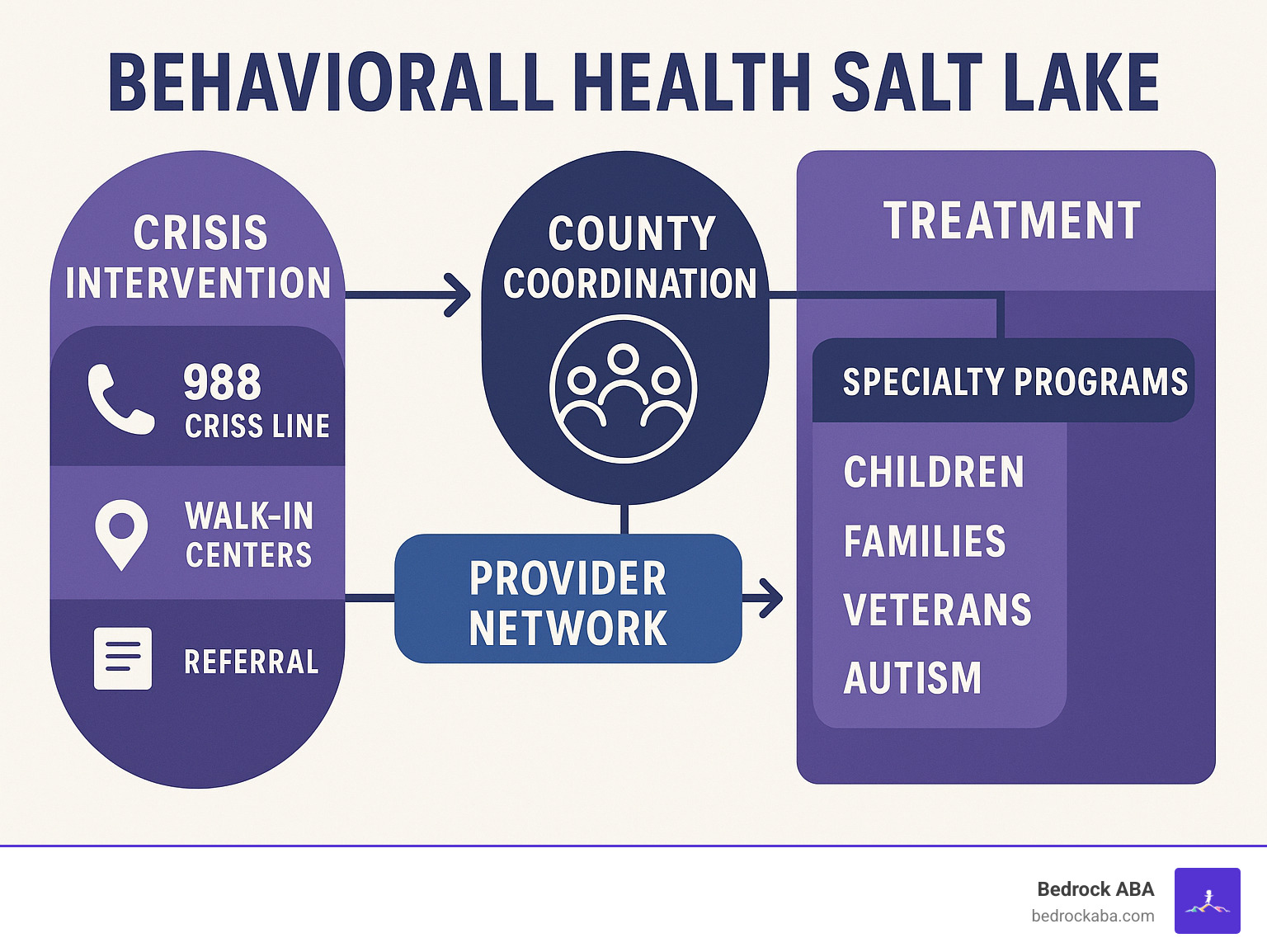
Behavioral health salt lake describes the network of mental-health and substance-use resources available in Salt Lake County. From 24/7 crisis lines to autism services, residents can find help fast—often the same day—through county programs, community providers, and private hospitals.
Quick Access Guide:
– Crisis support: call or text 988 (24/7, free, confidential)
– Assessment & referral: Salt Lake County Behavioral Health Services (385) 468-4707
– Walk-in care: several locations accept drop-ins anytime
– Specialty programs: children, veterans, dual diagnosis, autism, and more
– Payment: Medicaid, commercial insurance, sliding scale, no-cost assessments
A former patient put it best: “I had been suicidal for years…Coming here, they gave me hope back.” Knowing your options before a crisis hits can be lifesaving.
Salt Lake County coordinates a prepaid Medicaid plan so cost is rarely a barrier, and strict HIPAA plus 42 C.F.R. Part 2 rules keep your information private.
I’m Mayer Kulefsky, director of operations at Bedrock ABA. Our team delivers family-centered Applied Behavior Analysis for children with autism, and we routinely guide families to the broader resources outlined in this guide.
Why This Guide Matters
Behavioral health needs can escalate quickly. Families often tell us they wish they had known about walk-in assessments, mobile crisis teams, or specialized youth programs sooner. Clear information and early family involvement consistently improve recovery rates. Use this guide as your roadmap so you’re prepared long before an emergency.
Understanding Behavioral Health in Salt Lake County
When we talk about behavioral health salt lake services, we’re looking at a comprehensive approach that brings together mental health and substance use treatment under one umbrella. Think of it as recognizing that your mind and body work together – depression might lead to drinking problems, or anxiety could make ADHD symptoms worse. That’s why the best care addresses everything at once.
Mental health treatment covers conditions like depression, anxiety, PTSD, and developmental disorders. Substance use disorder treatment includes detox, rehabilitation, and the ongoing support that helps people stay in recovery. Many people need both types of help, which is why Salt Lake County designed its system to coordinate care instead of making you bounce between different offices.
Salt Lake County acts like the conductor of an orchestra when it comes to behavioral health salt lake services. The county doesn’t provide therapy sessions directly, but it manages the pre-paid Medicaid plan that funds most public behavioral health services. Think of it as the county writing the checks while local treatment organizations do the hands-on work with patients.
This setup actually works pretty well. The county handles the paperwork and insurance headaches, while specialized providers focus on what they do best – helping people get better. It’s like having a dedicated manager so the therapists can spend their time doing therapy instead of fighting with insurance companies.
Your privacy gets serious protection in behavioral health salt lake services – more than you might expect. Regular medical records follow HIPAA rules, which are pretty strict. But if you’re getting help for substance use, your records fall under an even tougher law called 42 C.F.R. Part 2. This means your addiction treatment information can’t be shared with anyone – not even your regular doctor – without your written permission.
The Scientific research on brain imaging & mental health happening right here in Utah keeps pushing treatment forward. Local institutions are constantly learning new things about how the brain works and what helps people heal. This research gets woven into the care you receive, so you benefit from the latest findings.
Key Statistics & Local Needs
The numbers coming out of behavioral health salt lake services tell a pretty encouraging story. Between July and December 2023, patients rated their experiences highly across the board. People felt treated with dignity and respect – scoring 4.53 out of 5. Even better, patients felt better after treatment, also rating their improvement at 4.53 out of 5. Overall satisfaction hit 4.44 out of 5.
These aren’t just numbers on a report. They represent real people who walked into treatment feeling hopeless and walked out with tools to build better lives. That’s what good behavioral health care looks like in action.
The 988 Suicide & Crisis Lifeline has become a lifeline for our community – literally. This number works 24/7, it’s completely free, and you don’t have to give your name if you don’t want to. When you call or text 988, you’re connected to local crisis services that understand what resources are available right here in Salt Lake County.
Adult ADHD represents one of the fastest-growing areas of need. More than 8.7 million adults nationwide have received ADHD diagnoses, and it consistently ranks in the top ten mental health searches online. This tells us that many adults are finally getting answers about struggles they’ve had their whole lives – difficulty focusing, staying organized, or managing impulsive behaviors.

Behavioral Health Salt Lake & Privacy Protections
Your privacy rights in behavioral health salt lake services go way beyond what most people realize. Under HIPAA, you can ask providers to limit how they use your information, request that they contact you in specific ways (like calling your cell instead of home), look at your own records, ask for corrections if something’s wrong, and find out who else has seen your information.
Substance abuse treatment records get even stronger protection under that 42 C.F.R. Part 2 law we mentioned. This means if you’re getting help for drinking, drug use, or addiction, your treatment records are locked down tight. Even in emergencies, providers have to be very careful about sharing this information without your written permission.
Every behavioral health salt lake provider has a privacy coordinator – someone whose job is helping you understand your rights and making sure your information stays protected. You can ask for paper copies of privacy policies, file complaints if you think your privacy was violated, and cancel any permissions you’ve given for sharing information.
Accessing Behavioral Health Salt Lake Services
Finding help shouldn’t feel like solving a puzzle. Salt Lake County created multiple entry points so you can start care the moment you’re ready.
Begin with the county’s assessment line (385) 468-4707 (Mon–Fri, 8 AM-5 PM). Think of this team as your behavioral-health GPS: they match you with the right provider and funding option.
What if it’s 2 AM? Several facilities accept 24/7 walk-ins for same-day mental-health or addiction assessments—no appointment needed.
Prefer talking (or texting) first? Dial 988 or text (385) 474-8887 for instant, local crisis support. Telehealth options also let you see therapists or prescribers from home—ideal for busy parents or residents without transportation.
Crisis Intervention Steps
- Call or text 988 for immediate counseling and safety planning.
- If needed, 988 can dispatch mobile crisis teams—licensed professionals who come to you.
- For intensive stabilization, staff may direct you to a receiving center instead of a hospital ER.
Inpatient vs. Outpatient
• Inpatient: 24/7 care, safest choice for severe symptoms, medical detox, or suicide risk.
• Intensive Outpatient (IOP): several therapy hours per day, home at night.
• Outpatient: weekly or bi-weekly sessions that fit work or school schedules.
Paying for Care
Medicaid through Salt Lake County’s plan covers most publicly funded services without copays. Commercial insurance must offer parity for behavioral health, and many clinics provide sliding-scale fees. No-cost assessments remain available regardless of insurance or income.
Specialized Programs, Populations & Community Support
Every journey is different, so behavioral health salt lake services tailor programs to specific needs.
- Children & Teens: therapy paired with speech, recreation, or day-treatment schooling (ages 2–18).
- Seniors: depression, anxiety, and cognitive-change care coordinated with primary doctors.
- Dual Diagnosis: integrated mental-health and substance-use treatment.
- Military Families: trauma-focused programs like Strong Hope.
- Detox & Withdrawal: safe medical supervision plus links to ongoing recovery.
- Housing & Employment: case management for people whose basic needs block progress.
- Peer Support: mentorship from people with lived experience.

ABA & Pediatric Interventions
At Bedrock ABA, Board Certified Behavior Analysts create individualized treatment plans for children with autism. Parent training speeds progress, and families can choose in-home or clinic-based sessions. Learn more about local options: ABA Therapy Services in Salt Lake City.
Insurance usually covers ABA for children with an autism diagnosis, though prior authorization is required. Regular BCBA supervision and six-month reassessments keep goals on track.
Resources After Treatment
Support doesn’t end at discharge. Salt Lake County offers condition-specific support groups, recovery coaching, and caregiver education. Volunteering or donating strengthens these programs for the next family in need.
Frequently Asked Questions about Behavioral Health Salt Lake
What should I do if someone is in a behavioral health crisis?
When someone you care about is in crisis, every moment counts. Behavioral health salt lake providers have created a clear emergency response system that can literally save lives when you know how to use it.
Your first step is always calling or texting 988. This connects you immediately to the Suicide & Crisis Lifeline, where trained counselors are standing by 24/7 to provide free, confidential support. These aren’t just operators taking messages – they’re skilled crisis intervention specialists who can talk someone through their darkest moments while coordinating with local mobile crisis teams.
If there’s immediate physical danger, don’t hesitate to call 911 and specifically request officers trained in crisis intervention. Many local police departments now have specialized teams who understand mental health emergencies and can respond appropriately.
While waiting for help, stay with the person if it’s safe to do so. Remove any potential means of self-harm from the area, but focus mainly on listening without judgment. This isn’t the time to try solving their problems or minimizing their feelings – your job is keeping them safe and connected to professional help.
Mobile crisis teams represent one of the most valuable resources in our behavioral health salt lake system. These licensed mental health professionals can come directly to your location, providing face-to-face assessment and de-escalation support. They’ll evaluate safety, coordinate next steps, and help determine whether someone needs safety planning, outpatient referrals, or voluntary hospitalization.
How do confidentiality laws protect my mental health records?
Your privacy in behavioral health salt lake services gets more protection than almost any other type of medical information. Understanding these protections can help you feel more comfortable seeking the help you need.
HIPAA provides your baseline rights for all health information. You can access your own records, request restrictions on how information is used, ask for alternate communication methods (like having them call your cell phone instead of your home), and receive detailed accounting of who has accessed your information.
Substance abuse treatment records receive even stronger protection under a federal law called 42 C.F.R. Part 2. This means if you’re getting addiction treatment, your records cannot be shared with anyone – not even other doctors treating you – without your written permission. The exceptions are extremely limited and usually involve life-threatening medical emergencies.
You have significant control over your information sharing. You can request that your details not be included in electronic health networks, designate specific people who can receive information about your care, and revoke any authorization you’ve given at any time by simply providing written notice.
Every behavioral health salt lake provider has privacy coordinators available to help you understand exactly how your information is used and to address any concerns. These aren’t just administrative staff – they’re specifically trained to protect your confidentiality rights and help you steer the system.
The bottom line? Your mental health and addiction treatment information is some of the most protected health data in the entire medical system. These laws exist because lawmakers understood that people need to feel safe seeking behavioral health treatment.
Which services are available for uninsured residents?
Not having insurance doesn’t mean you’re locked out of behavioral health salt lake services. The system includes multiple pathways specifically designed to help uninsured residents access the care they need.
Salt Lake County operates its publicly funded behavioral health system to serve all county residents, regardless of insurance status. This managed system contracts with local providers to ensure everyone can access basic mental health and substance abuse treatment services.
No-cost assessments are available 24/7 at facilities like Salt Lake Behavioral Health. These comprehensive evaluations help determine what level of treatment you need and connect you to services you can actually access. The assessment itself doesn’t require upfront payment, and staff will work with you on financial arrangements for ongoing care.
Many community mental health centers offer sliding scale fee programs that adjust costs based on your family size and income. These programs can make ongoing therapy and psychiatric services affordable even when you’re working with limited financial resources.
Crisis services operate on a “treatment first, payment later” basis. The 988 Lifeline, mobile crisis response teams, and emergency stabilization services are available to everyone regardless of ability to pay. When someone is in crisis, the focus stays on immediate safety and stabilization – financial arrangements get sorted out afterward.
Community organizations, faith-based programs, and peer support groups provide additional resources at no cost. While these aren’t replacements for professional treatment, they offer valuable ongoing support while you work to access formal behavioral health salt lake services. Many people find these community connections become important parts of their long-term recovery and wellness plans.
Conclusion & Next Steps
Finding the right support for yourself or your family doesn’t have to feel overwhelming. Behavioral health salt lake services create a safety net that catches people at every stage – whether you’re facing a crisis today or looking for preventive care to stay healthy.
At Bedrock ABA, we see ourselves as part of this larger community of care. Our family-centered approach to Applied Behavior Analysis therapy helps children with autism and developmental disabilities build essential life skills. But we know that’s just one piece of the puzzle. Some families need crisis support first, others benefit from therapy or addiction treatment, and many find that combining different services works best.
What makes our community special is how these services work together. When a family calls us about ABA therapy, we might also connect them with speech therapy, support groups, or mental health counseling if that’s what their child needs. Our ABA Therapy Services in Utah complement the broader network by focusing on what we do best – helping children learn new skills while supporting their whole family.
Recovery looks different for everyone. A teenager struggling with depression might start with crisis support, move to outpatient therapy, and eventually just need occasional check-ins. A child with autism might thrive with ABA therapy combined with occupational therapy and family training. A veteran dealing with PTSD might find healing through specialized trauma programs designed for military families.
The beauty of having so many options is that you can find what works for your situation. And if one approach doesn’t fit, you can try something else. There’s no shame in changing direction or asking for different kinds of help as your needs evolve.
Your community needs you, too. Every time someone shares their story, volunteers at a mental health event, or simply treats behavioral health challenges as normal medical conditions, it makes it easier for the next person to seek help. You might save someone’s life just by mentioning that you’ve been to therapy or that your child benefits from specialized services.
Taking that first step starts with being prepared. Save 988 in your phone for crisis support. Know where your nearest walk-in center is located. Understand what your insurance covers. Build relationships with providers before you urgently need them.
Most importantly, practice talking about mental health like you would any other health topic. When we normalize these conversations, we create a community where seeking help feels natural instead of scary.
The path forward begins wherever you are right now. Maybe that’s calling a crisis line, scheduling an assessment, researching ABA therapy for your child, or simply acknowledging that you could use some support. Behavioral health salt lake services exist to meet you exactly where you are and walk alongside you toward better days ahead.
Every person who reaches out makes it a little easier for the next person to do the same. That’s how we build a community where everyone can thrive, where getting help is seen as taking care of yourself, and where hope always has room to grow.