


Why RBT Telehealth Jobs Are Revolutionizing Behavior Therapy

RBT telehealth jobs are changing how behavior therapy reaches families, offering remote positions that let you provide life-changing ABA services from anywhere. Here’s what you need to know:
Quick Facts About RBT Telehealth Jobs:
– Average Pay: $16-23/hour depending on state and experience
– Growth Rate: 22% projected growth for behavior analysts over the next decade
– Requirements: 40-hour RBT training, BACB certification, reliable internet
– Work Setup: Flexible scheduling, home-based, direct BCBA supervision via video
The demand is huge. Companies across the U.S. are scrambling to fill remote RBT positions as 50% of children miss out on needed mental health care. Meanwhile, 49 states fall below benchmarks for autism care, creating a massive workforce gap that telehealth can help bridge.
Remote RBT work isn’t just convenient – it’s necessary. Families in rural areas finally have access to quality ABA therapy. Parents can participate directly in sessions from their living rooms. And RBTs can serve clients nationwide without the burnout of daily commutes.
As Mayer Kulefsky, director of operations at Bedrock ABA, I’ve seen how RBT telehealth jobs have expanded our ability to serve families across multiple states while giving our team members the flexibility they need. The shift to remote delivery has opened doors for both therapists seeking work-life balance and families who previously couldn’t access our services.
For more information about ABA therapy and its evidence base, the Association for Behavior Analysis International provides comprehensive resources for professionals and families.
1. What Exactly Does a Remote RBT Do?
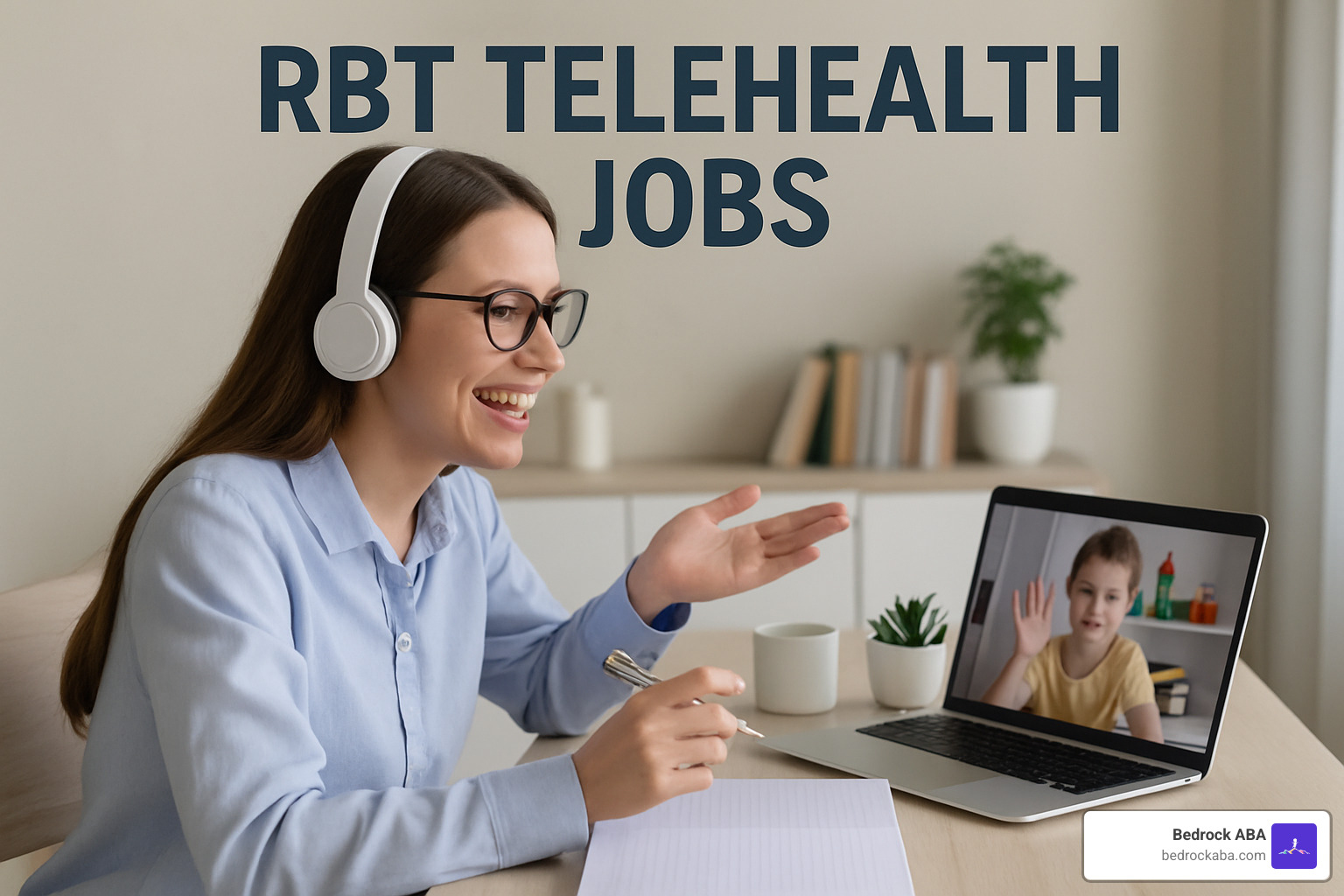
Picture this: You’re sitting at your home desk in your favorite comfy clothes, helping a 6-year-old in Arizona learn to communicate better while his mom cheers him on from their kitchen table. That’s the reality of RBT telehealth jobs today.
A Registered Behavior Technician working remotely delivers the same evidence-based ABA interventions as their in-clinic counterparts, just through a computer screen. You’re still implementing behavior intervention plans designed by your supervising BCBA, but now you’re doing it by coaching families in real-time through secure video platforms.
Your day might include collecting behavioral data as you watch a child practice social skills during a virtual playdate, or running skill acquisition programs where you guide parents through teaching their child to follow multi-step instructions. The magic happens when you’re coaching parents and caregivers – turning them into confident co-therapists who can continue the work between your sessions.
One of the most rewarding parts? You’re still maintaining that crucial regular supervision with your BCBA through video check-ins, but you’re also helping families access quality ABA therapy who might never have been able to visit a clinic. More info about virtual ABA therapy shows how this approach often leads to better outcomes because kids are learning skills in their natural environment.
Key Differences Between In-Clinic and Telehealth Service
Working remotely means becoming a master coach rather than a hands-on instructor. Instead of directly controlling the therapy environment, you’re teaching parents how to set up their living room for success – where to place materials, how to minimize distractions from siblings, and when to take breaks.
Prompting gets creative when you can’t physically guide a child’s hands. You’ll find yourself saying things like, “Dad, can you show Emma how to point to the blue car?” or using visual cues on your screen to help children follow along. It’s like being a director of a very important family movie.
The biggest shift is caregiver involvement. Parents go from watching sessions to actively participating in every moment. Mom becomes your co-therapist, implementing the exact techniques you’re teaching her. This means interventions don’t stop when your session ends – they continue throughout the week, often leading to faster progress than traditional therapy.
Certification & Licensing Requirements You Can’t Skip
Getting into RBT telehealth jobs requires the same solid foundation as any ABA position. You’ll need to complete your 40-hour RBT training course that covers everything from behavior analysis principles to professional ethics.
Next comes the practical stuff – passing the BACB competency assessment where you demonstrate your skills, followed by the RBT certification exam administered by the Behavior Analyst Certification Board. Don’t forget the background check (required by BACB) and current CPR certification that most employers want to see.
The ongoing requirements include earning continuing education units to keep your certification active and ensuring you meet any state licensure requirements for telehealth practice. Some states have specific rules about providing services across state lines, so it’s worth checking these details early.
The good news? With over 2,100 remote positions currently available nationwide, the investment in proper training and certification opens doors to flexible, meaningful work that fits your life while making a real difference for families.
2. Top 7 Benefits of RBT Telehealth Jobs
Working from home as an RBT isn’t just about wearing pajama pants during video calls (though that’s definitely a perk). RBT telehealth jobs offer genuine advantages that can transform your career and personal life in ways you might not expect.
The zero commute benefit alone is life-changing. Instead of spending 1-2 hours daily stuck in traffic or driving between client homes, you’re walking from your kitchen to your home office. That’s 5-10 extra hours per week that suddenly belong to you again. One of our remote RBTs told me she uses that time to take her dog on longer walks and actually cook dinner instead of grabbing fast food on the way home.
Flexible scheduling becomes possible when you’re not bound by clinic hours or travel time between appointments. Many telehealth positions let you work around school pickup times, other commitments, or even pursue additional education. This flexibility is especially valuable for parents or anyone juggling multiple responsibilities.
Your job opportunities expand dramatically with nationwide caseload potential. Instead of being limited to families within driving distance, you can serve clients across multiple states where you’re licensed. This is particularly powerful for RBTs in areas with fewer local ABA providers – suddenly you have access to positions across the entire country.
Reduced burnout is something we hear about consistently from our remote team members. Working from the comfort of your own space, without the stress of commuting or unfamiliar clinic environments, helps many RBTs feel more energized and engaged with their work. The familiar surroundings seem to create a calmer baseline for handling challenging sessions.
The pandemic-proof nature of telehealth work proved invaluable during COVID-19, but the security extends beyond health crises. Weather emergencies, car troubles, or other disruptions that would normally prevent you from reaching clients don’t affect your ability to provide services remotely.
Many RBTs find excellent supplemental income opportunities through remote work. Part-time or PRN telehealth positions often offer evening or weekend hours that complement other jobs perfectly. Some RBTs work traditional positions during the day and pick up telehealth clients in the evenings for extra income.
The environmental benefits might not be the first thing you think about, but they’re real. Eliminating daily commutes significantly reduces your carbon footprint – something many healthcare professionals appreciate as part of their commitment to overall well-being.
How Telehealth Improves Client Access & Outcomes
Remote ABA services are breaking down barriers that have kept families from getting help for years. Rural families who previously drove hours to reach the nearest ABA clinic can now access quality services from their living rooms. I’ve worked with families in small Montana towns who finally got consistent therapy for their children after years of being on waiting lists.
Transportation challenges, work schedules, and childcare issues often prevent families from accessing traditional clinic-based services. Telehealth eliminates these obstacles entirely. Parents don’t need to take time off work, arrange childcare for siblings, or worry about reliable transportation to keep appointments.
Scheduling becomes much more flexible when you’re not limited by physical clinic space and travel time between appointments. This often means shorter wait times for families to start services and more accommodating session times that work with family routines.
The research backs up what we’re seeing in practice. Scientific research on telehealth ABA outcomes shows that remote delivery can be just as effective as in-person services when implemented properly. Often, outcomes are even better because interventions happen in the child’s natural environment where skills need to be used.
Challenges & How to Overcome Them
Let’s be honest – RBT telehealth jobs aren’t without their challenges, but most have straightforward solutions once you know what to expect.
Technology glitches will happen, usually at the worst possible moments. The key is preparation: always have a backup plan including a mobile hotspot, alternative communication methods, and a troubleshooting routine you can walk families through quickly. Test everything before each session – it takes two minutes and prevents major disruptions.
Keeping children engaged through a screen requires different skills than in-person work. Interactive games, frequent movement breaks, and involving parents as co-facilitators help maintain attention. Many remote RBTs become more creative with their approaches, which actually improves their overall therapy skills.
HIPAA compliance in home environments needs careful attention. Use only HIPAA-compliant platforms, secure your workspace, and educate families about privacy requirements. It’s not complicated, but it does require consistency.
State regulations vary for telehealth practice, so staying informed about requirements in all states where you provide services is essential. This is usually a one-time learning curve that becomes routine.
Building rapport through a screen feels awkward at first, but most RBTs adapt quickly. Consistent scheduling with the same clients, engaging virtual activities, and incorporating family members actually often leads to stronger therapeutic relationships than traditional clinic work.
The challenges are real, but they’re manageable with the right preparation and mindset. Most RBTs find that the benefits of remote work far outweigh the initial learning curve.
3. Where to Find RBT Telehealth Jobs Right Now
The hunt for RBT telehealth jobs doesn’t have to feel overwhelming when you know where to look. Right now, opportunities are popping up faster than ever across multiple channels.
Specialized ABA job boards are your best friend here. These platforms speak your language and understand exactly what you’re looking for. They’re built specifically for behavior analysis professionals, so you won’t waste time sifting through irrelevant postings.
National ABA companies are scrambling to fill remote positions across multiple states. These larger organizations often provide comprehensive training and support for telehealth delivery, with established technology and systems that make remote work successful.
Don’t overlook school districts in your search. Many are now offering remote behavioral support services, especially as virtual learning becomes more common. These positions often come with excellent benefits and stable schedules.
Healthcare staffing agencies have caught onto the telehealth trend too. Many now specialize in remote placements and can match you with both temporary assignments and permanent positions.
Setting up LinkedIn job alerts is like having a personal assistant scanning the job market 24/7. Use specific terms like “remote RBT,” “telehealth behavior technician,” and “virtual ABA therapist” to catch new postings immediately.
For a deeper dive into finding and landing these opportunities, our comprehensive guide Remote RBT Jobs: Opportunities and Tips for Success walks you through every step of the process.
Application Tips That Get Interviews
Landing interviews for RBT telehealth jobs requires highlighting your remote work capabilities. Employers want to know you can thrive in a remote environment before investing in training.
Technology skills need to be front and center on your application. Mention specific platforms you’ve used and any experience helping families troubleshoot tech issues. Employers worry about RBTs who might struggle with technical aspects.
Customize your resume for each application. Emphasize any remote work experience, even if it wasn’t in ABA. Parent training or coaching experience is valuable for telehealth positions since you’ll be guiding caregivers through interventions.
Strong references who can speak to your independence and professionalism are crucial. Remote work requires self-motivation and excellent communication skills.
The remote job market moves quickly, so follow up within 24-48 hours of applying. A quick email reiterating your interest helps keep your application top of mind.
4. A Day in the Life: Tools, Tech & Supervision
Picture this: It’s 9 AM and you’re settling into your home office with coffee, ready to help families across multiple states. This is the reality for many RBTs working in rbt telehealth jobs – a flexible, meaningful career from anywhere.
Your morning starts with a quick prep routine. You’re reviewing progress notes, checking your internet connection, and pulling up digital data sheets. A quick platform test ensures everything runs smoothly before sending that reminder text to parents.
When sessions begin, you spend the first few minutes briefing parents on today’s goals. For the next 45 minutes, you’re coaching both child and parent through structured activities, collecting real-time data, and celebrating every victory.
Post-session documentation takes about 10 minutes – updating progress, noting breakthrough moments, and planning next week’s activities. You upload session recordings for your BCBA supervisor to review later.
Your weekly supervision check-in happens via video call. Your BCBA reviews recorded sessions, discusses challenging cases, and helps you fine-tune intervention strategies with specific feedback that helps you grow professionally.
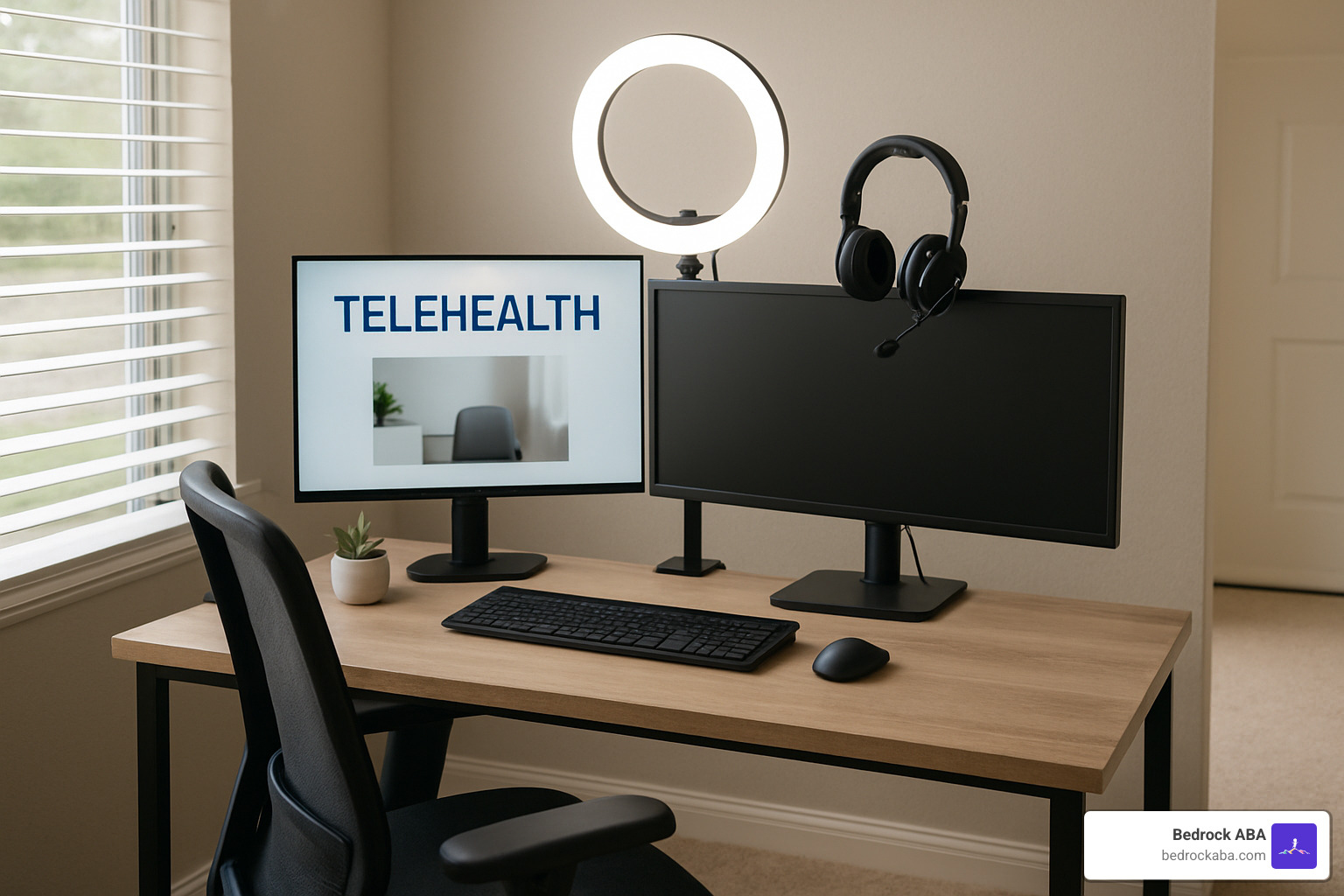
Must-Have Equipment Checklist
Setting up your home office for rbt telehealth jobs doesn’t require breaking the bank, but quality equipment makes a huge difference in professional success.
Your laptop or desktop computer becomes your command center – choose one with enough processing power to handle video calls without lag. High-speed internet is absolutely non-negotiable – aim for at least 25 Mbps download and 10 Mbps upload speeds.
A professional headset with noise cancellation transforms your audio quality and helps you focus during sessions. Pair this with an HD webcam for crystal-clear video that lets you catch subtle behavioral cues.
Encrypted, HIPAA-compliant software protects client privacy while meeting legal requirements. Most employers provide platform access, but familiarize yourself with multiple systems.
Don’t overlook the backup mobile hotspot – it’s your insurance policy against internet outages. Good lighting makes you look professional and helps families see your expressions clearly.
Most RBTs invest between $500-800 in their home setup, and this investment typically pays for itself within the first month.
How Remote Supervision Works
Remote supervision often provides more detailed feedback than traditional in-person oversight. Your BCBA supervisor has access to recorded sessions, allowing multiple reviews and specific guidance.
Live observation sessions happen when supervisors join video calls to watch you work in real-time. Recorded session reviews offer deeper learning opportunities, and virtual team huddles keep everyone connected.
For more detailed information about how this supervision model works, check out our guide: More info about ABA Telehealth Therapy.
5. Salary, Career Growth & Staying Ahead in RBT Telehealth Jobs

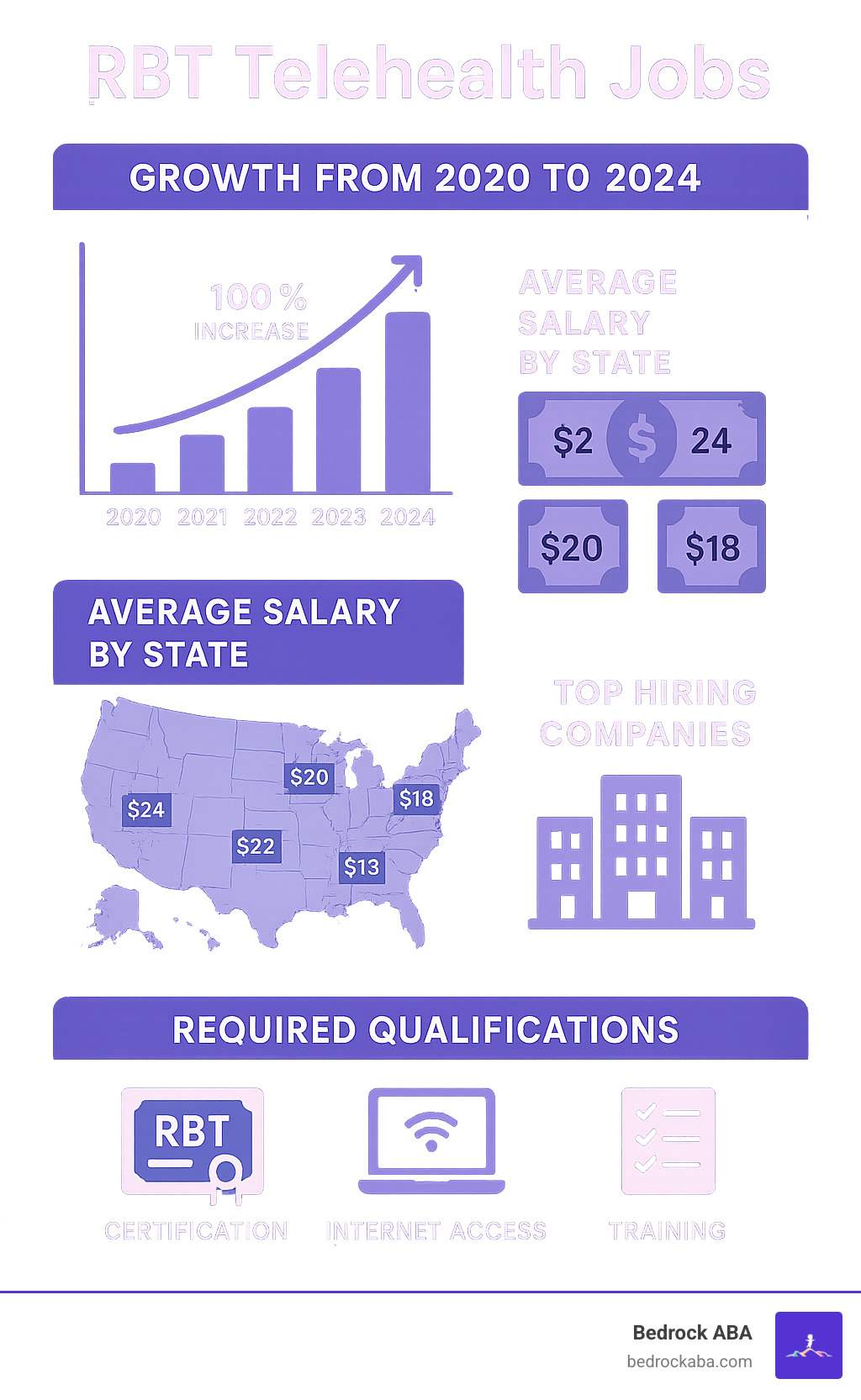
RBT telehealth jobs offer competitive compensation that’s improving as demand grows. Entry-level remote RBTs typically start around $16.21 per hour, while experienced professionals can earn up to $20.00 per hour. Location still matters – California leads at $23.07 per hour, while other states average $14-16 per hour.
Annual salaries range from $29,890 in lower-cost states to $48,394 in higher-paying markets. Many remote RBTs live in lower-cost areas while serving clients in higher-paying markets.
Several factors influence earning potential: geographic location of clients, experience level, education background beyond basic requirements, scheduling flexibility (evenings/weekends pay more), and multi-state licensing for broader client access.
Market Outlook for RBT Telehealth Jobs
The future looks bright. BCBAs are projected to grow by 22% over the next decade, while ABA therapists overall are growing at 14%. More children are aging into services as autism diagnosis rates rise and insurance coverage expands to include telehealth ABA services.
Data shows BCBA job postings grew from 28,967 in 2010 to 65,366 in 2023, with approximately 9,100 new ABA therapist openings expected in the next decade.
Five Ways to Boost Your Remote RBT Pay
- Multi-state credentials – serve broader client bases and earn premium rates
- Evening and weekend availability – often earn 10-20% more than daytime shifts
- Developing niche specializations – focus on specific populations or techniques
- Performance-based negotiation – use documented outcomes during reviews
- Continuing education – additional certifications justify higher pay scales
The telehealth revolution is creating unprecedented opportunities for RBTs to build fulfilling, well-compensated careers from anywhere.
Frequently Asked Questions about rbt telehealth jobs
What states allow RBTs to work across lines under telehealth compacts?
There’s no universal telehealth compact for RBTs like some other healthcare professions have. Each state handles RBT telehealth jobs licensing differently. Many states have reciprocity agreements or faster licensing processes for qualified RBTs. Always check with each state’s licensing board before providing services across state lines.
How many telehealth hours count toward BCBA supervision requirements?
The BACB treats telehealth supervision hours the same as in-person supervision when they meet quality standards. You still need that 5% supervision ratio of your direct service hours. However, some states have specific requirements about remote versus in-person supervision ratios. Always double-check current BACB guidelines and your state’s requirements.
Can brand-new RBTs start remote, or should they get in-person experience first?
You can absolutely start your career remotely, but most professionals recommend some in-person experience first if possible. However, some companies offer comprehensive remote training programs that set new RBTs up for success from day one.
Look for positions offering comprehensive onboarding, regular supervision beyond minimums, peer mentorship, and ongoing professional development. Don’t let the remote aspect scare you away from starting your RBT career – with proper training and supervision, you can develop excellent skills while helping families from home.
Conclusion
RBT telehealth jobs aren’t just changing how we deliver behavior therapy – they’re revolutionizing what it means to have a meaningful ABA career. You get to help families transform their lives while maintaining the work-life balance you’ve been searching for.
The numbers tell an incredible story. With autism diagnoses rising and 22% projected growth in our field, families desperately need what we offer. Yet half of all children can’t access needed mental health care, and 49 states fall short of autism care benchmarks. Remote RBTs are filling gaps that have existed for decades.
Telehealth changes the game for everyone. Parents become true partners in their child’s progress. Kids learn skills in their natural environment where they’ll actually use them. RBTs get to skip commutes, work flexible hours, and serve families across state lines while building the career they want.
At Bedrock ABA, we’ve watched our telehealth team members flourish with higher engagement, less burnout, and consistently higher job satisfaction. There’s something special about being invited into a family’s living room – even virtually – that creates deeper connections and better outcomes.
The technology works, families need us, and opportunities keep multiplying. Whether you’re a seasoned RBT ready to ditch your commute or someone new to the field who loves flexible remote work, RBT telehealth jobs offer something remarkable: a career that fits your life instead of taking it over.
You’re not just building better work-life balance – you’re pioneering the future of behavior therapy. Every session proves that quality ABA care can reach anywhere. Every family you serve remotely breaks down another barrier to access.
Ready to make a real difference from your comfortable chair? More info about Careers at Bedrock ABA, where we’re building something special with passionate professionals who believe exceptional care shouldn’t be limited by geography.