


Why Home-Based ABA Therapy Is Changing Autism Care
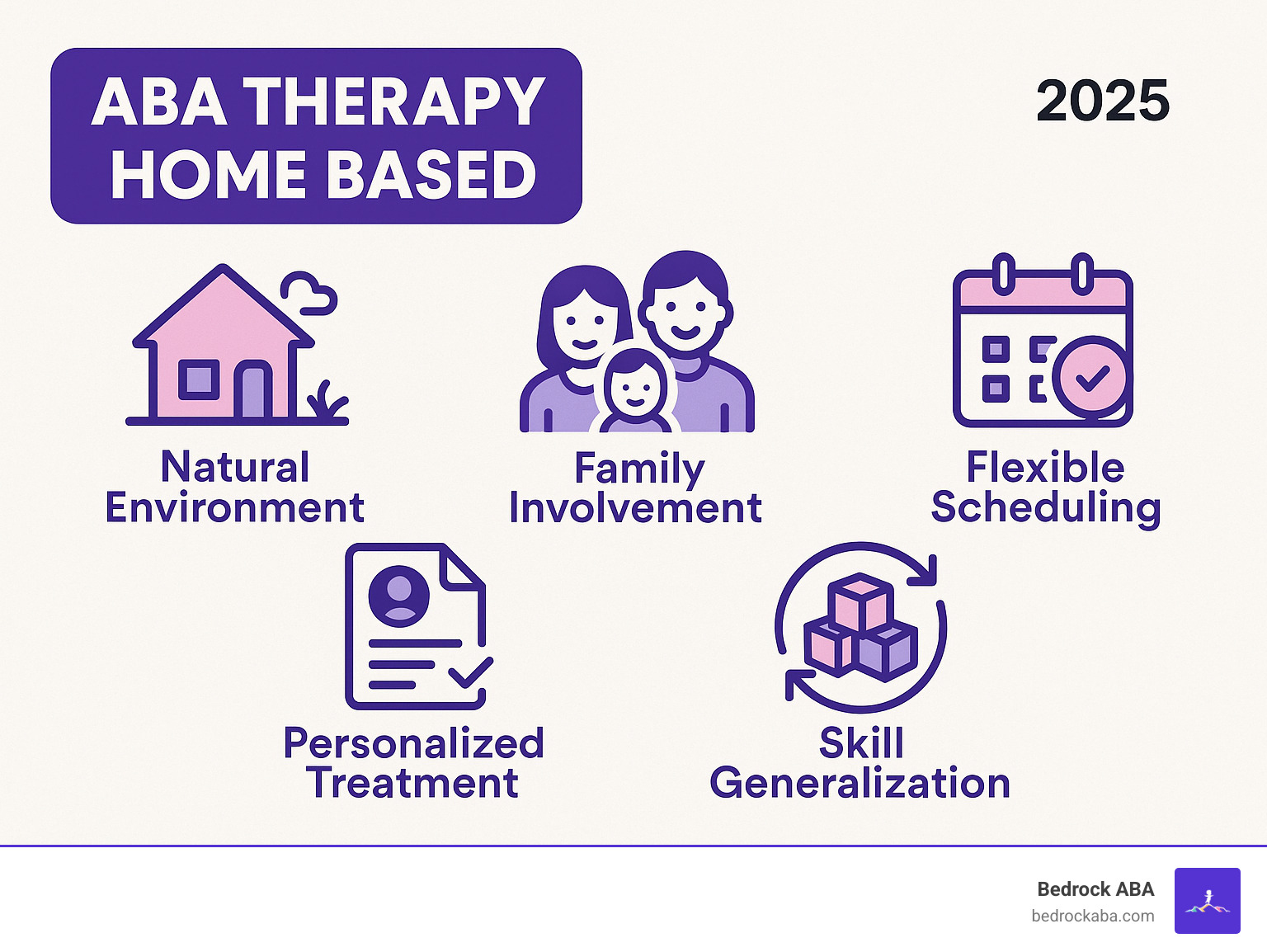
ABA therapy home based brings personalized autism support directly into your home. This approach allows children to learn essential skills in their most comfortable environment while giving parents the tools and training to support their child’s progress.
Key benefits of home-based ABA therapy:
- Natural learning environment – Children practice skills where they’ll actually use them
- Increased family involvement – Parents and siblings become active participants in therapy
- Flexible scheduling – Sessions fit around your family’s routine
- Better skill generalization – Skills learned at home transfer more easily to daily life
- Reduced anxiety – Familiar surroundings help children feel safe and focused
- Personalized approach – Therapy uses your child’s own toys, spaces, and interests
Home-based ABA therapy empowers caregivers to get involved with their child’s treatment. Research shows that when parents actively participate in ABA therapy, children make greater progress and generalize skills more effectively.
As Mayer Kulefsky, director of operations at Bedrock ABA, I’ve seen how ABA therapy home based programs transform entire families by creating supportive environments. My experience has shown that bringing therapy into the home provides the most meaningful and lasting results for children with autism.
Aba therapy home based terms you need:
The “Home Advantage”: Unpacking the Core Benefits of In-Home ABA

With ABA therapy home based, your child learns skills like brushing their teeth in their own bathroom or sharing during playtime with siblings. This approach brings learning directly into the spaces where your child will use these skills daily. When children learn in their own environment, skill generalization happens more naturally. Instead of wondering if a skill learned in a clinic will transfer home, your child is already practicing at their own sink.
Daily routines become learning opportunities, and the comfort and safety of home reduce anxiety, helping children focus. For busy families, the convenience is a major benefit. Reduced transitions mean less stress for everyone, especially for children who struggle with changes in routine. Most importantly, increased family involvement transforms the therapeutic experience. Parents learn techniques alongside their child, creating consistency that accelerates progress.
For more insights into how this approach supports children’s development, check out More info about ABA Therapy for Children.
How Familiarity Breeds Success
Learning in the natural environment where skills will be used is highly effective. When your child practices getting dressed in their own bedroom, they’re building real-world independence. Practicing skills in real-time allows therapists to address challenges as they occur. If meltdowns happen during dinner prep, the therapist is there to work through it in your actual kitchen.
Using familiar toys and items turns everyday objects into powerful learning tools, increasing engagement. This familiar environment also plays a huge role in reducing anxiety. Home is where children feel most secure, creating ideal conditions for learning. Scientific research on family-centered ABA demonstrates how this integrated method supports the entire family system.
The Crucial Role of Parent and Family Involvement
At Bedrock ABA, we believe you’re your child’s most important teacher. Parent training is the foundation of our ABA therapy home based programs. During sessions, you’ll learn the same techniques your therapist uses, so you can reinforce skills throughout the day and handle challenging behaviors with confidence.
Sibling participation creates natural opportunities for practicing social skills like sharing and turn-taking. When everyone in the household, including grandparents and other caregivers, understands the approach, it creates consistent reinforcement and a unified support system. Collaborative goal setting ensures therapy addresses what matters most to your family, from morning routines to social skills. This process of empowering caregivers creates lasting change that extends far beyond formal therapy sessions.
For more information about how we integrate families into the therapeutic process, visit More info about At-Home Autism Therapy.
A Look Inside a Typical Home-Based ABA Therapy Session
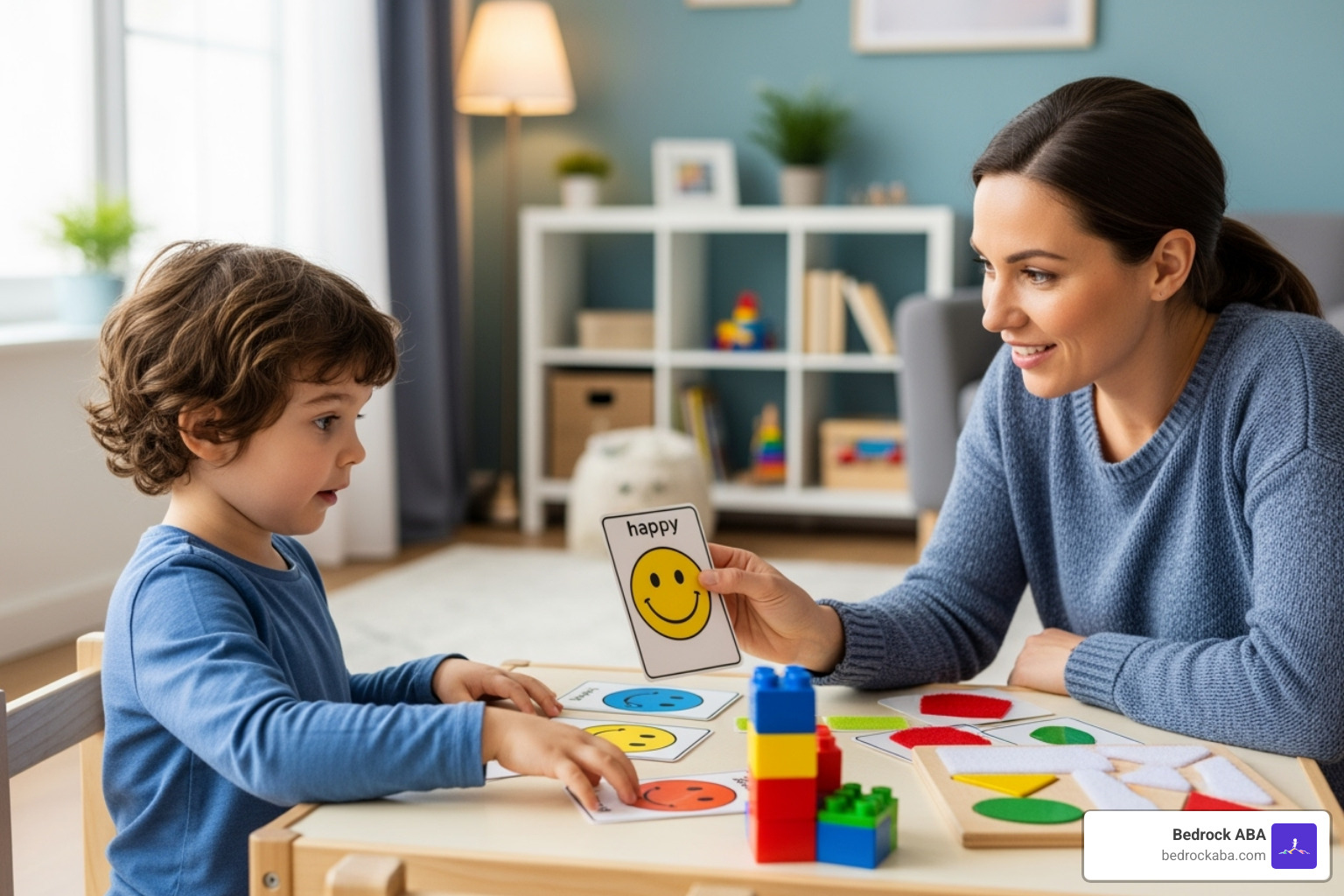
ABA therapy home based sessions are natural, engaging, and often fun. Each session follows your child’s individualized treatment plan, so no two are alike. A therapist might work on communication skills using your child’s favorite toys, then transition to practicing self-help skills like brushing teeth. It’s play-based learning where goals are woven into activities your child enjoys.
Throughout each session, the therapist collects data on your child’s progress. This scientific approach ensures every session builds on the last. The key ingredient is positive reinforcement: when your child demonstrates a new skill, they receive praise or access to a preferred toy, making learning a positive experience. Structured activities are designed to feel natural, like practicing turn-taking during a board game or following directions while cooking a snack. For a deeper understanding of these techniques, check out More info about What is ABA Therapy and How Does It Work?.
The Therapy Team: Roles of the BCBA and RBT
Your ABA therapy home based team consists of a Board Certified Behavior Analyst (BCBA) and a Registered Behavior Technician (RBT).
The Board Certified Behavior Analyst (BCBA) is the architect of your child’s therapy. A BCBA holds an advanced degree and certification and conducts the initial assessment to understand your child’s unique needs. They design a personalized treatment plan with measurable goals and provide ongoing program supervision. By reviewing data and observing sessions, the BCBA adjusts strategies as your child develops, acting as the clinical lead for your child’s care.
Your Registered Behavior Technician (RBT) is the hands-on professional who works directly with your child. RBTs are trained and certified to implement the BCBA’s treatment plan. They use techniques like positive reinforcement and prompting to help your child master new skills, making learning fun and engaging. RBTs work under close BCBA supervision and participate in regular progress meetings to discuss your child’s development.
This collaborative team structure ensures your child receives consistent, high-quality care. To learn more about these professionals, visit More info about Applied Behavior Analysis Therapists.
Preparing Your Home for ABA Therapy Home Based
Getting your home ready for ABA therapy home based is simple and doesn’t require turning your house into a clinic.
- Create a dedicated space: A quiet corner of a room, free from major distractions, works perfectly.
- Minimize distractions: Turn off the TV and put away toys that aren’t part of the current activity.
- Gather preferred items: Your therapist will use your child’s favorite toys and books as powerful, motivating learning tools.
- Ensure safety: We’ll help you do a quick safety check of the therapy space to address any potential hazards.
- Establish a consistent schedule: Predictability helps reduce anxiety and prepares your child for learning. A responsible adult must be present in the home during all sessions.
These simple preparations create an environment where your child can thrive.
Home-Based vs. Center-Based ABA: A Clear Comparison
Choosing the right environment for ABA therapy is a key decision. Both ABA therapy home based and center-based programs offer significant benefits, but they serve different needs. The best choice depends on what helps your child thrive.
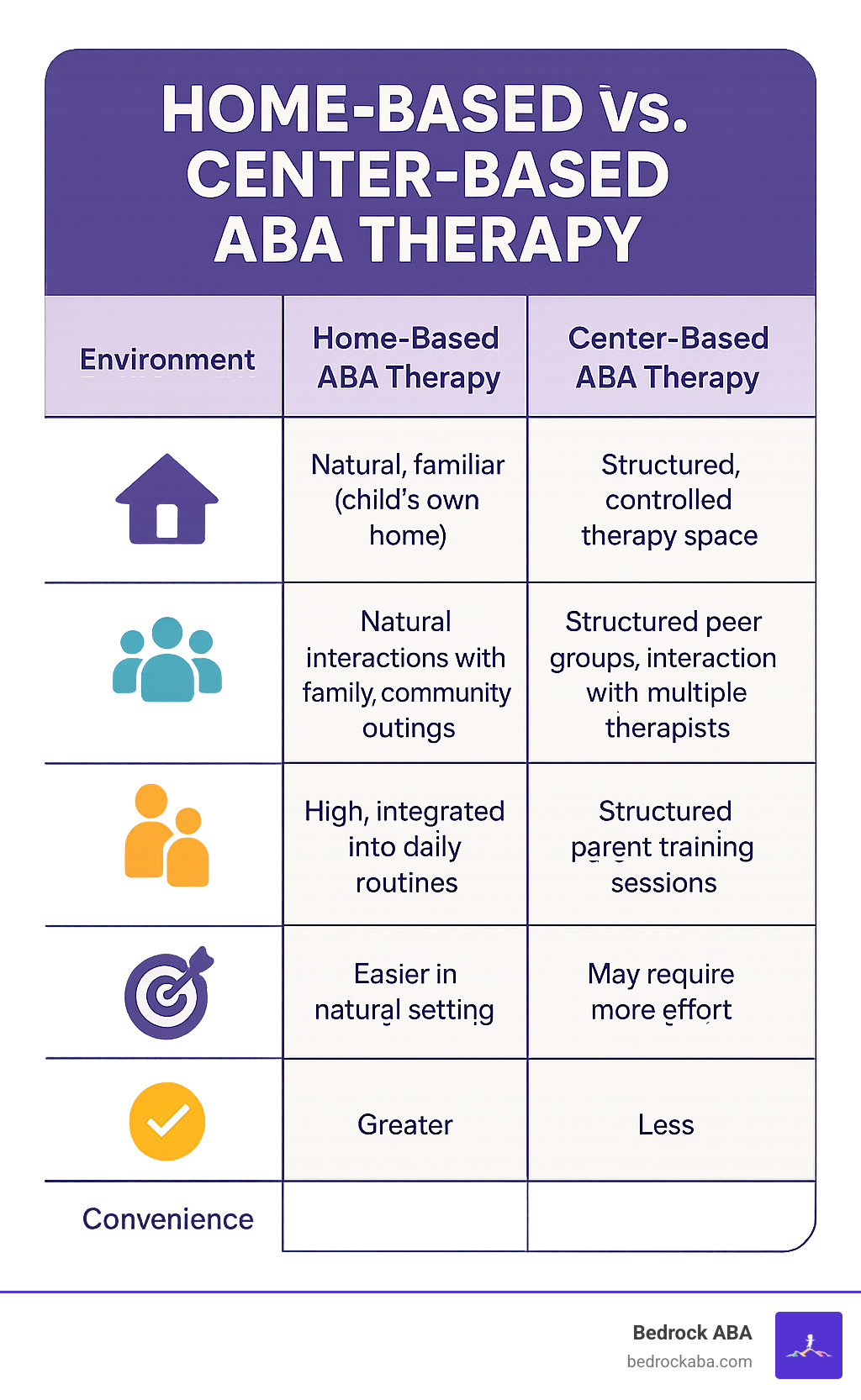
| Factor | Home-Based ABA Therapy | Center-Based ABA Therapy |
|---|---|---|
| Environment | Natural, familiar, personalized (child’s own home) | Structured, controlled, dedicated therapy space |
| Socialization | Natural interactions with family, community outings | Structured peer groups, interaction with multiple therapists |
| Parent Involvement | High, integrated into daily routines, hands-on training | Structured parent training sessions, observation rooms |
| Skill Generalization | Easier, direct application in real-life settings | Requires specific planning to transfer skills to home/community |
| Convenience | High, no travel required, flexible scheduling | Requires travel to center, set operating hours |
| Distractions | Potential for home distractions, can be managed | Fewer distractions, controlled setting |
| Resources | Uses home items, therapist brings materials | Wide range of specialized materials and equipment |
| Therapist Integration | Becomes part of family routine, close relationship | Professional, more formal relationship |
Home-based therapy excels in areas like convenience and skill generalization. The natural environment allows children to immediately apply what they’re learning in real-life contexts. Center-based programs, however, offer a more structured environment with specialized equipment and built-in peer interaction. With ABA therapy home based, parents become integral partners, receiving hands-on training during daily routines.
Choosing the Right Setting for Your Child
The decision between ABA therapy home based and center-based services depends on your child’s unique needs and personality. If your child struggles with transitions, has sensory sensitivities, or feels anxious in new environments, the comfort of home can make a significant difference. When challenging behaviors occur primarily at home, in-home therapy allows therapists to address them in real-time.
Your family lifestyle also plays a role. The flexibility of in-home therapy can be a game-changer for busy families. However, some children do better with clear boundaries between home and therapy, or if their social goals require structured peer groups, a center might be a better fit. We can help you evaluate your child’s individual needs to determine the best environment for them to learn and grow. For more insights, explore More info about ABA Therapy for Autism.
Building Essential Skills with ABA Therapy Home Based
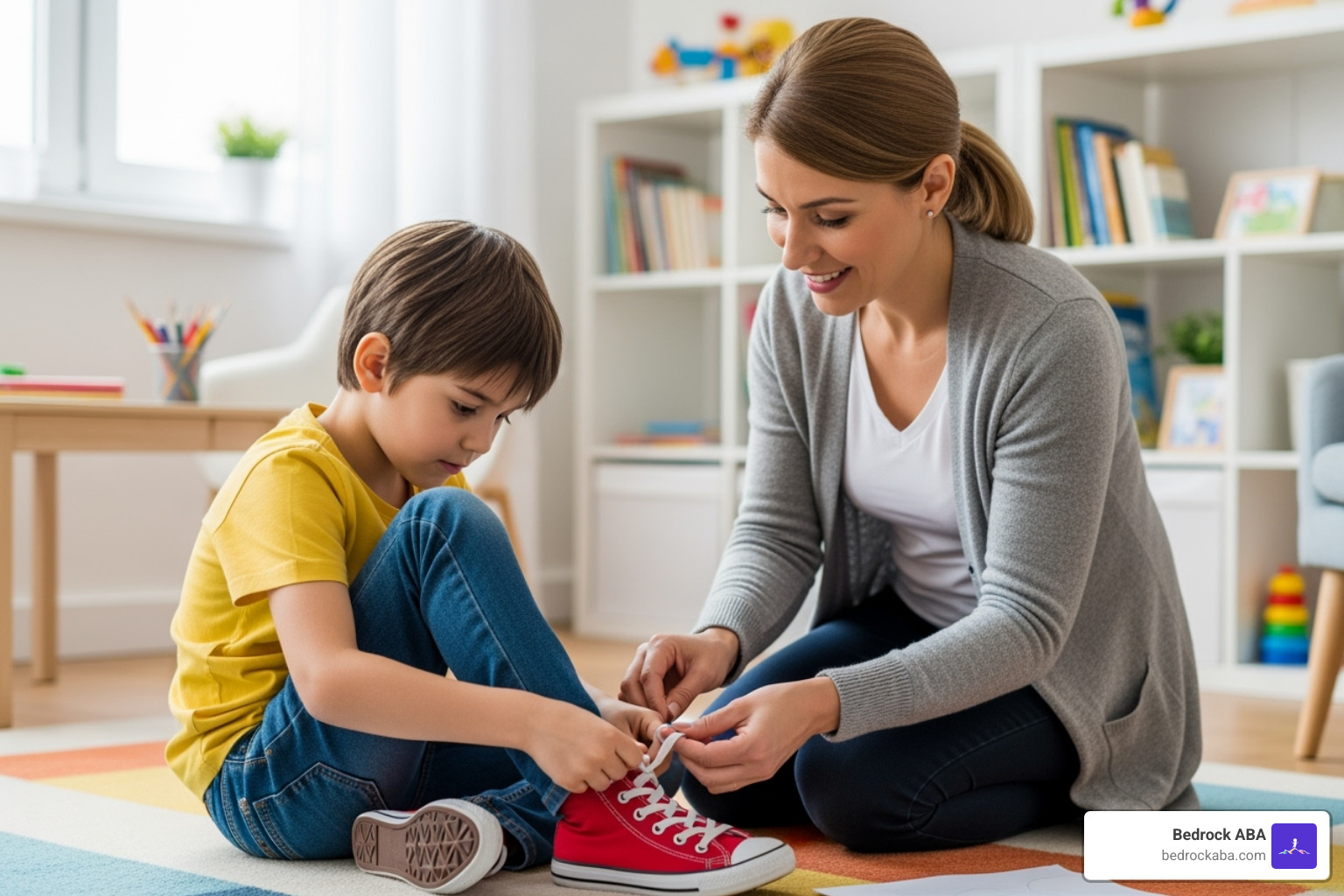
ABA therapy home based is highly effective because your child masters new skills right where they’ll use them. Learning to tie shoes in their own bedroom or practicing conversation at the dinner table are not just exercises; they are building blocks for independence.
Home-based therapy naturally weaves skill-building into your child’s world. We help your child improve communication skills by asking for a snack in your kitchen or develop social skills during family game night. Play skills flourish with their own toys, and practical self-help skills like dressing and grooming are practiced in their real-life context. Ordinary activities like setting the table become learning opportunities for daily living skills. This approach also excels at reducing challenging behaviors by addressing them in the situations where they occur. For families wanting to learn more, More info about ABA Therapy for Kids provides additional insights.
Key Skills Targeted in Home Sessions
An ABA therapy home based program focuses on skills that directly impact daily independence and family life.
- Dressing and grooming: Mastering zippers, buttons, and selecting appropriate outfits in their own room.
- Toilet training: Learning this crucial skill in the comfort and privacy of their own bathroom.
- Mealtime routines: Practicing using utensils, trying new foods, and participating in family meals.
- Following instructions: Learning to respond to requests in meaningful, everyday situations.
- Sharing and turn-taking: Developing social skills during natural interactions with siblings and family.
- Community safety: Practicing skills on real outings, like at the grocery store or local park.
Navigating Potential Challenges
While ABA therapy home based offers tremendous benefits, it requires some adjustments. We work with families to make the transition smooth.
- Disrupting family routines: We work closely with you to find session times that complement your family’s rhythm. Soon, therapy becomes an integrated part of your routine.
- Privacy concerns: Our therapists are trained to be respectful guests in your home. Clear communication helps establish a positive working relationship.
- Managing sibling dynamics: We help families involve siblings appropriately and manage feelings of curiosity or jealousy.
- Consistency across caregivers: Our parent training ensures that all family members and caregivers can reinforce the skills being taught, creating a powerful, unified support system.
The key to success is open communication and patience as everyone adjusts. Most families find the benefits far outweigh the initial adjustments.
How to Find and Get Started with Home-Based Services
Taking the first step toward ABA therapy home based can feel like a big task, but the process is straightforward. Here’s how to get started:
- Find a qualified provider: Ask for recommendations from your pediatrician or local support groups. Ensure the provider employs certified professionals, including Board Certified Behavior Analysts (BCBAs) and Registered Behavior Technicians (RBTs).
- Verify insurance coverage: ABA therapy is typically covered by insurance for an Autism Spectrum Disorder diagnosis. We can help you steer your benefits and also offer private pay options.
- Initial consultation: This is a conversation for us to learn about your child and for you to ask questions. We’ll discuss your family’s needs and goals.
- Assessment process: A BCBA will observe and interact with your child to understand their strengths and challenges, forming the basis of the treatment plan.
- Goal setting: We work with you to create measurable goals that matter to your family, moving your child toward greater independence.
For families in our area, you can find More info about ABA Therapy Utah County.
Questions to Ask a Potential Provider
Choosing the right provider is a big decision. Asking thoughtful questions will help you feel confident in your choice.
- What are your therapist’s qualifications? Ensure BCBAs design the program and RBTs implement it under proper supervision.
- How is progress measured? A quality program is data-driven. Ask how they track and share progress with you.
- How often is the BCBA on-site? Consistent BCBA supervision is crucial for maintaining quality care and adapting the program as your child grows.
- What does parent training involve? Understand how you’ll be supported and empowered to help your child. You should be a partner in the process.
The right provider will welcome your questions and take the time to address your concerns. If someone seems rushed or dismissive, that may be a red flag.
Conclusion
Choosing ABA therapy home based offers a personalized approach that meets your child in the comfort and safety of their own home. This natural learning environment creates powerful opportunities for skill development that can’t be replicated elsewhere. Your child learns practical skills in the context of your family’s daily life, leading to better natural skill generalization.
Home-based ABA transforms parents into active partners. Through parent training and collaborative goal setting, you become equipped to support your child’s growth every day. Our BCBAs and RBTs guide you through techniques, helping you find new ways to connect with your child.
This personalized journey adapts to your child’s interests and your family’s priorities. It’s therapy that fits your life. While bringing therapy into your home requires some adjustment, families consistently find that the benefits—reduced anxiety, increased engagement, and meaningful skill development—are well worth it.
At Bedrock ABA, we are passionate about creating these transformative experiences. We believe that when children learn essential skills in their most comfortable environment, remarkable things happen. Your child’s journey toward reaching their full potential can begin right at home.