


What Is ABA Therapy for Kids?
ABA therapy for kids is a science-based approach that helps children with autism and developmental disorders learn important life skills through positive reinforcement. This evidence-based treatment focuses on improving specific behaviors like communication, social interactions, learning readiness, and daily living skills.
Quick Overview of ABA Therapy for Kids:
- Definition: Applied Behavior Analysis that uses positive reinforcement to teach skills and reduce challenging behaviors
- Who benefits: Children with autism spectrum disorder, ADHD, developmental delays
- Age range: Typically starts between ages 2-6, but beneficial at any age
- Setting: Home, clinic, school, or community settings
- Session length: Usually 1-8 hours per session, 10-40 hours weekly
- Key providers: Board Certified Behavior Analysts (BCBAs) and Registered Behavior Technicians (RBTs)
- Main goals: Improve communication, social skills, independence, and reduce challenging behaviors
If you’ve recently received an autism diagnosis for your child, you might feel overwhelmed by the treatment options available. ABA therapy stands out because it’s recognized by both the U.S. Surgeon General and the American Psychological Association as an effective intervention for autism.
What makes ABA therapy unique is its highly individualized approach. Rather than following a one-size-fits-all program, BCBAs create custom plans based on your child’s specific needs, strengths, and interests.
Why This Guide Matters
If you’re new to ABA therapy, this guide will walk you through everything you need to know to make informed decisions about your child’s care. We’ve created this step-by-step overview to help you understand what ABA therapy for kids involves, how it works, and what to expect when starting treatment.
Understanding Applied Behavior Analysis (ABA)
At its heart, ABA therapy for kids is like learning the language of behavior. It’s a scientific approach that helps us understand why children do what they do and how we can guide them toward positive growth.
The Science Behind Behavior
Behavior is like a conversation between your child and their environment. ABA uses the principles of operant conditioning—we learn from consequences. When a child receives something enjoyable after a behavior, they’re more likely to repeat it.
What makes ABA effective is its clarity. Rather than guessing if therapy is working, everything is measured and tracked. Your child’s therapist will create a clear starting point, set specific goals, track progress, and make adjustments based on how your child responds.
The ABC model is the backbone of understanding behavior:
– Antecedent: What happens right before (like a request to clean up toys)
– Behavior: What your child actually does (picks up toys or has a tantrum)
– Consequence: What follows (praise, help, or attention)
The Seven Dimensions of ABA
Quality ABA therapy for kids follows seven key dimensions:
- Applied: Focusing on skills that matter in your child’s daily life
- Behavioral: Working with actions we can see and measure
- Analytic: Collecting data to show how approaches are helping
- Technological: Using clearly defined techniques consistently
- Conceptually Systematic: Grounding everything in behavioral science
- Effective: Creating meaningful improvements
- Generalization: Ensuring skills transfer beyond therapy to home, school, and community
Positive Reinforcement 101
The magic of modern ABA therapy for kids happens through positive reinforcement—celebrating behaviors we want to see more of. Your child’s therapy team will find what truly motivates your unique child and deliver these motivators immediately after positive behaviors.
For example, if your child is learning to request a drink:
– Initially, they might receive both the drink and praise when using correct words
– Over time, just getting the requested drink becomes the natural reward
– Eventually, the social exchange itself becomes rewarding
Many children thrive with token systems—earning stars or points for positive behaviors that add up to larger rewards. The goal is always to help your child respond to the same types of natural reinforcement that motivate all of us in everyday life.
More info about key principles
ABA Therapy for Kids: Goals, Techniques & Session Flow
Main Goals of ABA Therapy for Kids
When your child begins ABA therapy for kids, they’ll start on a journey customized to their unique needs. Most children work on:
- Communication skills – from basic requesting to complex conversations
- Social skills – making eye contact, taking turns, sharing toys, and recognizing emotions
- Daily living skills – toilet training, dressing, and safety awareness
- Behavior management – reducing tantrums and teaching alternative responses
- Academic readiness – following directions and mastering basic concepts
What makes ABA effective is how these goals get broken down into tiny, achievable steps, allowing your child to experience success after success.
Core Methodologies Explained
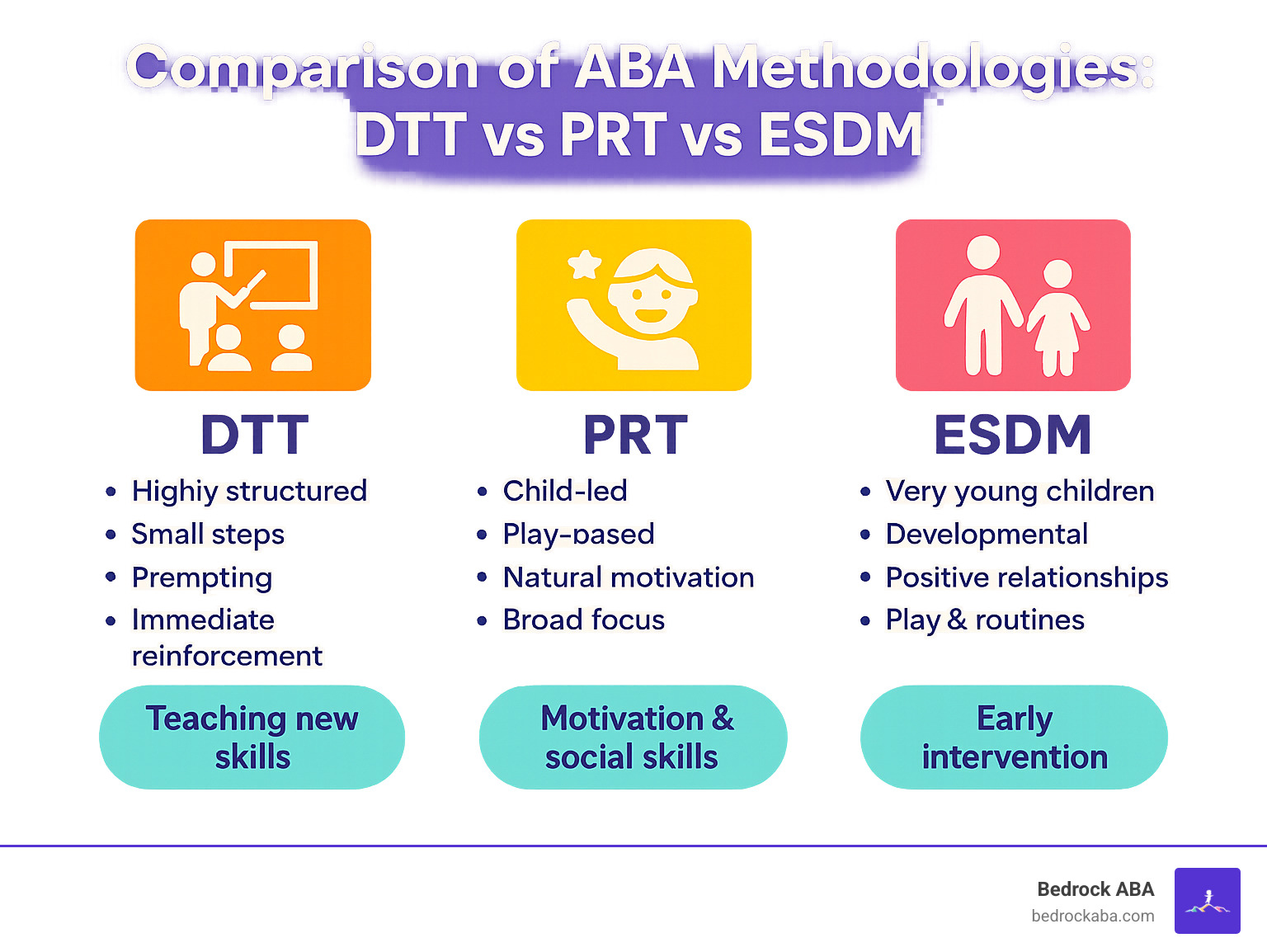
ABA therapy for kids offers different teaching approaches that can be mixed and matched based on what works best for your child:
Discrete Trial Training (DTT) creates a structured learning environment where skills are taught in small, clear steps with immediate reinforcement for success.
Pivotal Response Treatment (PRT) follows your child’s natural interests, teaching crucial skills through activities they already enjoy.
Early Start Denver Model (ESDM) blends ABA principles with developmental psychology for very young children (12-48 months).
Natural Environment Teaching (NET) takes advantage of teachable moments throughout the day, helping skills transfer naturally to real-world settings.
Functional Communication Training (FCT) teaches appropriate alternatives to challenging behaviors.
Inside a Typical ABA Therapy for Kids Session
Most ABA sessions follow a rhythm that balances structure with flexibility:
- Pairing (5-15 minutes): Building rapport and trust through play
- Structured learning (20-40 minutes): Formal teaching of specific skills
- Natural play and generalization: Practicing skills in more natural activities
- Daily living skills: Using opportunities like snack time to practice requesting and cleaning up
- Parent training: Reviewing progress and teaching techniques to use at home
Throughout the session, therapists collect data to track responses and guide adjustments to the treatment plan. Sessions may take place at home, in a clinic, at school, or in community settings depending on your child’s needs.
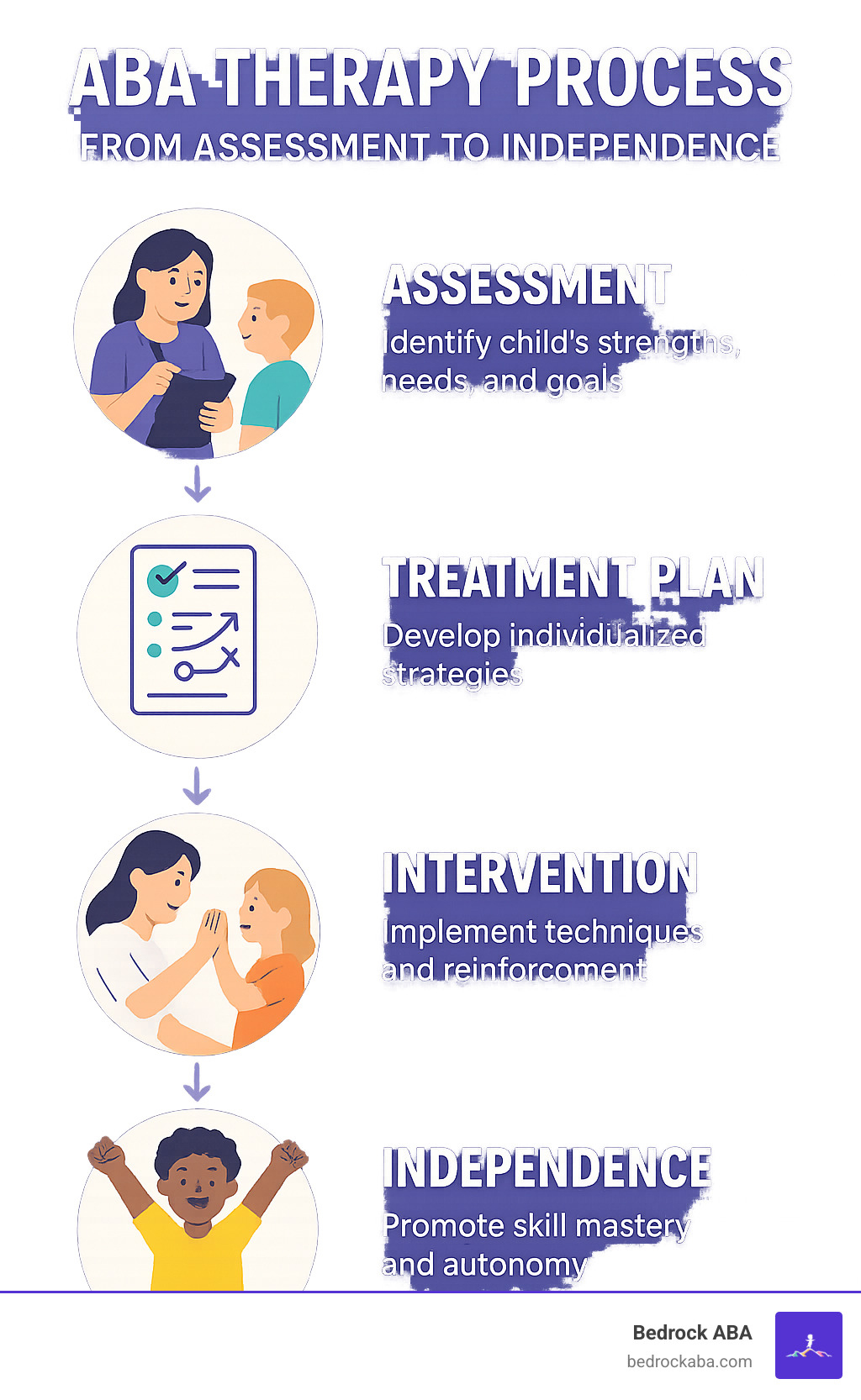
Developing & Implementing an Individualized ABA Plan
Every child is wonderfully unique, which is why ABA therapy for kids always begins with getting to know your child’s specific needs, strengths, and personality.
Assessment & Goal-Setting Steps
The journey toward effective therapy typically unfolds through several important stages:
- Initial consultation: Meeting your family, gathering background information, and explaining the process
- Comprehensive assessment: Conducting a Functional Behavior Assessment (FBA) and evaluating skills using tools like the VB-MAPP or ABLLS-R
- Preference assessment: Identifying your child’s favorite activities and interests to find natural motivators
- Treatment plan development: Creating specific, measurable goals and determining teaching strategies
- Family review: Discussing findings, proposed goals, and incorporating your priorities
Who Delivers Therapy?
ABA therapy for kids works as a team effort:
- Board Certified Behavior Analyst (BCBA): The program architect with advanced degrees who spends 1-4 hours weekly supervising care, analyzing data, and training team members
- Registered Behavior Technician (RBT): The direct service provider who implements the treatment plan daily and collects data
- Collaborative professionals: Often includes speech therapists, occupational therapists, and other specialists working together
Measuring Progress & Adjusting Goals
One powerful aspect of ABA therapy for kids is its data-driven approach. Therapists collect specific data during every session on behaviors, responses to instructions, and learning activities.
RBTs collect data daily, BCBAs review it weekly, and monthly progress reports show your child’s development. When your child consistently demonstrates a skill (typically 80-90% accuracy across multiple sessions), we consider that skill mastered and move on to new challenges.
This systematic approach ensures that therapy remains effective, relevant, and focused on the skills that matter most to your family.
More info about ABA Services for Children
Evidence, Benefits, and Considerations

What the Research Says
When it comes to evidence-based interventions for autism, ABA therapy for kids stands on solid ground. Over the past several decades, more than 20 substantial studies have demonstrated that intensive, long-term therapy using ABA principles significantly improves outcomes for many children with autism.
The numbers tell a compelling story: about 70% of children show meaningful improvements in intellectual functioning, 65% in language development, 60% in daily living skills, and 75% in social functioning.
Both the U.S. Surgeon General and the American Psychological Association have recognized ABA as an evidence-based best practice treatment. Research suggests that early intervention (before age 5) produces the most significant gains, though people of all ages can benefit.
Intensive programs providing 25-40 hours weekly for 1-3 years often produce substantial improvements, but many children make wonderful progress with less intensive programs of 10-20 hours weekly, especially with strong parent involvement.
Benefits Beyond Autism
While ABA therapy for kids is most commonly associated with autism, its principles help children with various challenges:
- ADHD: Developing better focus, impulse control, and organizational skills
- Oppositional Defiant Disorder: Learning to express frustration appropriately and follow directions
- Down Syndrome: Building communication, self-care abilities, and academic readiness
What makes ABA so versatile is its individualized, data-driven approach that addresses each child’s specific challenges while building on their natural strengths.
Addressing Common Criticisms
Like any therapeutic approach with a long history, ABA therapy for kids has evolved significantly. Modern ABA focuses exclusively on positive reinforcement, avoids punishment-based strategies, emphasizes child engagement, and respects individual differences.
Today’s best practices clearly distinguish between harmful behaviors (like self-injury) and harmless differences (like hand-flapping when excited). The focus is on building skills that improve quality of life while respecting each child’s unique personality and communication style.
Modern ABA sessions blend structured teaching with naturalistic, play-based activities that incorporate children’s interests and adapt to different learning styles.
Scientific research on ABA effectiveness
CDC autism statistics
How Families Can Get Started & Support Therapy at Home

Finding & Vetting an ABA Provider
Finding the right provider begins with recommendations from your child’s pediatrician, local autism support groups, or your insurance company’s in-network providers list.
When evaluating potential providers, ask about:
* Qualifications of their BCBAs and RBTs
* How they develop individualized treatment plans
* Their approach to parent involvement
* Staff retention rates
* Their methods and emphasis on positive reinforcement
If you encounter waitlists, use this time productively by asking for parent training resources or considering telehealth options for initial parent training.
Funding ABA & Understanding Insurance
As of 2023, all 50 states require some coverage for ABA therapy through private insurance, and Medicaid must cover ABA services deemed medically necessary for children under 21.
Before starting services, familiarize yourself with key insurance terms that affect your costs:
* Deductible: What you’ll pay before insurance kicks in
* Copayments/Coinsurance: Your portion of each session’s cost
* Out-of-pocket maximum: When insurance covers 100%
* Network: Providers covered by your plan
If insurance falls short, explore additional funding through state developmental disability services, school districts, autism-specific grants, or HSA/FSA accounts.
Common Activities in ABA Therapy for Kids at Home
As a parent, you can reinforce skills at home through:
Visual supports:
* Visual schedules for daily routines
* First-then boards (“First homework, then iPad”)
* Choice boards for communication practice
Communication opportunities:
* Placing favorite items just out of reach
* Offering small portions at snack time
* Presenting choices throughout the day
Social skills practice:
* Board games for turn-taking
* Emotion cards for recognizing feelings
* Role-playing common social scenarios
Daily living skills:
* Visual recipes with pictures for each step
* Backward chaining for dressing skills
The key is keeping it positive and celebrating progress, no matter how small.
Frequently Asked Questions about ABA Therapy for Kids
How long does ABA therapy for kids take?
Each child’s journey is unique, but typically:
- Most early intensive programs run for about 1-3 years
- Focused interventions targeting specific skills might take 6 months to a year
- After main goals are achieved, many families transition to periodic maintenance sessions
Factors influencing duration include age at start, severity of challenges, learning pace, and family participation. Most children follow a natural progression:
- Starting with more intensive therapy (20-40 hours weekly)
- Gradually reducing to 15-25 hours weekly as skills develop
- Further reducing to 10-15 hours as independence grows
- Eventually transitioning to occasional check-ins
The ultimate goal is for your child to gain the skills they need to thrive independently.
Is ABA therapy for kids effective for older children?
While early intervention is ideal, it’s never too late to benefit from ABA therapy for kids. For school-age children and adolescents, we adapt our approach to be age-appropriate and relevant, focusing on:
- Practical life skills needed for independence
- Navigating social relationships with peers
- Self-management strategies
- Community-based learning opportunities
Older children often show improved classroom behavior, better peer relationships, greater independence in daily living, fewer challenging behaviors, and valuable self-advocacy skills.
Can ABA therapy for kids be done via telehealth?
Telehealth ABA comes in several forms:
- Direct therapy with a therapist working through video
- Parent coaching where the therapist guides you in implementing techniques
- Hybrid approaches combining in-person and virtual sessions
- BCBA supervision of in-person RBT sessions
Telehealth works best for children with some communication skills, families with strong parent involvement, and cases focusing primarily on parent training and behavioral strategies.
Benefits include eliminating transportation barriers, access to specialists regardless of location, practicing skills in your home environment, flexible scheduling, and potentially reduced costs.
Bedrock ABA offers telehealth options for families in Utah, providing flexible ABA therapy for kids that can adapt to your unique circumstances and needs.
Conclusion
The journey of ABA therapy for kids is much like learning to ride a bicycle – there are wobbly starts, occasional falls, and that magical moment when everything comes together. As your child progresses, you’ll witness small victories that gradually build into significant achievements that transform daily life for your entire family.
Family involvement is the secret ingredient in successful ABA therapy. The techniques you learn alongside your child become valuable tools you’ll use for years to come. When parents actively participate, skills generalize more quickly across different settings, creating lasting change.
Progress isn’t always a straight line upward. There will be plateaus, occasional setbacks, and unexpected breakthroughs. This natural ebb and flow is part of every child’s development, and your therapy team will be there to adjust strategies, celebrate successes, and problem-solve through challenges.
The partnership between families and professionals creates a powerful support system for children receiving ABA therapy for kids. At Bedrock ABA, we believe this collaborative approach leads to the most meaningful outcomes – helping children develop the communication, social, and daily living skills they need to thrive.
Every child deserves the opportunity to reach their potential in a supportive environment that respects their unique personality while helping them grow. With consistent, compassionate, and evidence-based intervention, children can make remarkable progress toward a more independent and connected life.