


What Is At Home Autism Therapy? Quick Answers for Busy Parents
at home autism therapy is when therapy services for children with autism—such as ABA, speech, or occupational therapy—are delivered right in your living room instead of a clinic or center. This approach offers flexibility, active parent involvement, and uses your child’s familiar routines to build important life and social skills.
Here’s what busy parents need to know about at home autism therapy:
| What is it? | Evidence-based autism therapy done by professionals (and parents) in your home. |
|---|---|
| Common therapies | ABA (Applied Behavior Analysis), speech therapy, occupational therapy, play-based interventions |
| Who provides it? | Board Certified therapists (BCBAs, SLPs, OTs), therapy assistants, and trained parents/caregivers |
| Key benefits | – Real-life practice in familiar spaces – Family/sibling involvement – Flexible scheduling |
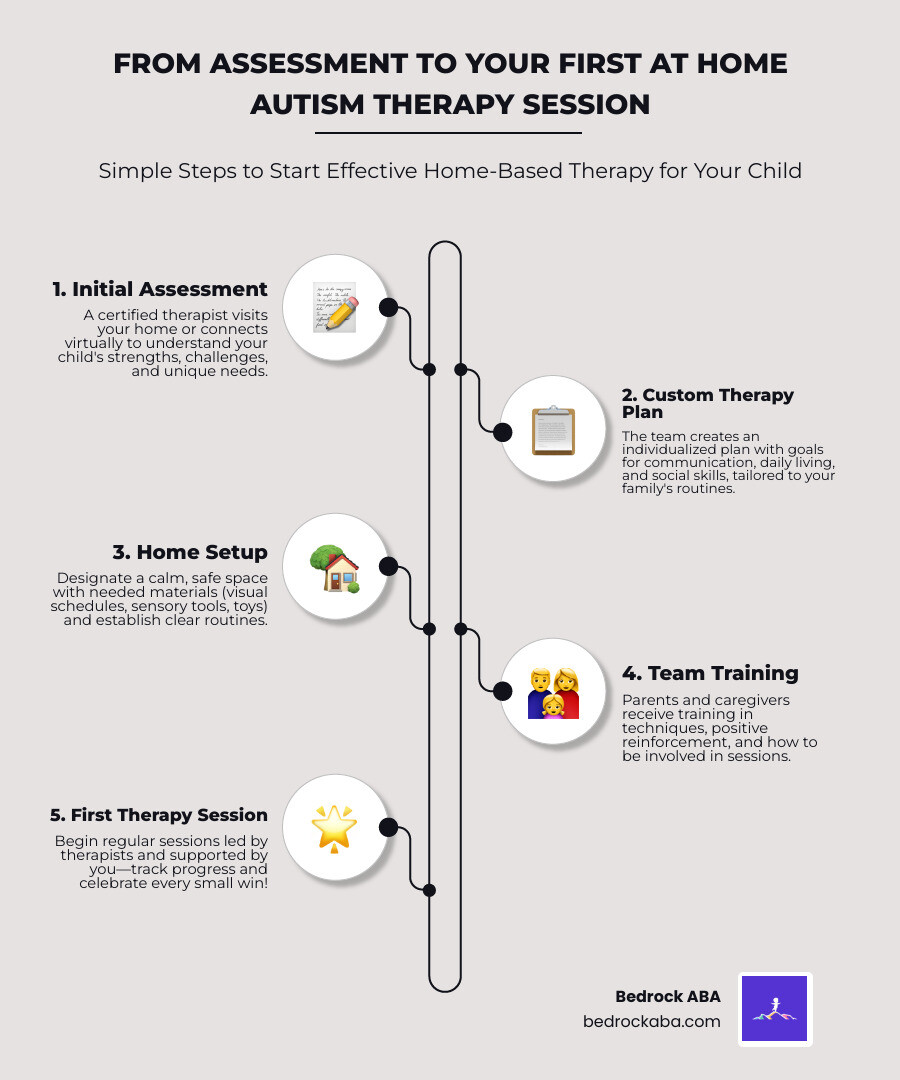
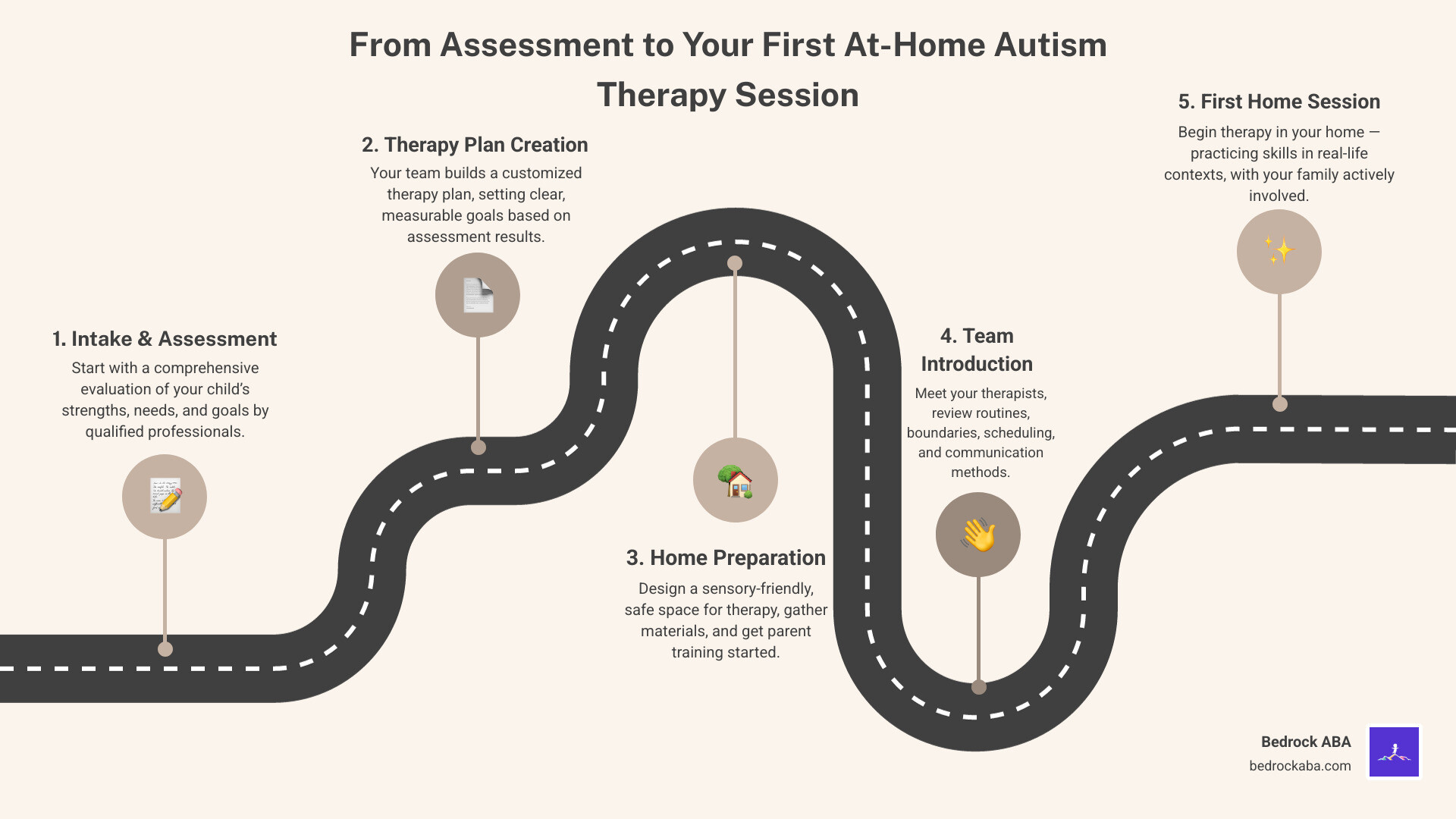
| How to get started | Assessment → Therapy plan → Set up your space → Regular sessions and progress checks |
Therapy at home makes learning part of everyday life—think getting dressed, mealtime, or playtime. Early intervention and consistency matter most. Parent and family participation means your child’s gains are more likely to last and show up where they count—in real life.
“Research shows that the more therapy hours—especially with parents involved—the bigger the impact on your child’s communication, learning, and social skills.”
My name is Mayer Kulefsky, director of operations at Bedrock ABA. I’ve helped hundreds of families start and succeed with at home autism therapy across several states, and I’m passionate about turning daily routines into real progress.
At-Home Autism Therapy: Why & When
Why do so many families choose at home autism therapy? In one word: real-life. When therapy takes place at home, your child learns and practices new skills in the same spaces where life actually happens—at the dinner table, in the backyard, or during bedtime routines. That’s where growth matters most, and where it’s most likely to last.
Science backs this up. Early, consistent, and family-focused therapy has the biggest impact. Both the American Academy of Pediatrics and the National Autism Center recommend 25–40 hours a week of ABA for the strongest gains in language, learning, and everyday skills. But here’s the twist—research shows that when parents get involved, kids learn faster and keep those skills longer. This study on parent-led therapy is a great resource if you want the details.
At home autism therapy offers so many natural advantages. Parents and siblings can join in, whether during play, meals, or routines. Everyday places—like your living room or kitchen—become “classrooms” for practicing social skills, communication, and independence. Plus, you skip the hustle of driving to appointments; the therapy comes to you. You can also tailor your child’s program: comprehensive ABA at 25–40 hours/week, or a shorter, more focused plan at 10–20 hours/week, depending on your goals and insurance options.
Key Benefits of “at home autism therapy”
When therapy happens at home, the benefits add up. Dose-dependent outcomes mean that the more therapy hours—especially with parents joining in—the bigger the improvements your child can make. These gains show up in speech, daily living, play, and social connections.
Sessions at home also open the door to sibling bonding. Brothers and sisters often get involved in games and learning, which can lead to stronger relationships and more natural social growth. Therapists can weave goals right into your family’s daily routines, so learning feels meaningful and not forced—think helping set the table, sharing toys, or practicing bedtime steps together.
Potential Drawbacks & Smart Solutions
It’s true—at home autism therapy can come with challenges. Having therapists in your space can feel like an adjustment. Talk openly about boundaries and expectations, and use rooms with doors if you need privacy. Space is another common concern. Not everyone has a spare room, but a decluttered corner, a portable table, or even a therapy mat can work wonders.
Parents sometimes worry about burnout. Remember to build in self-care time and tag in other caregivers when possible. Lean on your BCBA for ideas if things feel overwhelming—they’re there to support you, not just your child. And when it comes to safety, always check your therapist’s credentials. At Bedrock ABA, every provider is background-checked, trained, and supervised for your peace of mind.
Choosing at home autism therapy means bringing learning and progress right into your family’s world. With the right support, challenges become manageable, and the benefits can last a lifetime.
Preparing Your Home and Your Role
Before your first session of at home autism therapy, it helps to set up a space where your child can feel safe and ready to learn. Don’t worry—you don’t need a fancy therapy room or designer decor! The goal is an area that’s organized, calm, and welcoming for both your child and the therapy team.
Think about how you can declutter the area you’ll use. Too many toys or distractions can make it hard for your child to focus. Put away anything you don’t need during therapy time. Good lighting matters, too; soft lamps or natural light work wonders, but keep it comfortable—no spotlight interrogation vibes needed!
It’s also smart to have a calming corner nearby. Just a couple of pillows, a favorite blanket, or some fidget toys can help your child regroup if things get overwhelming. Safety is a top priority: double-check that sharp objects, electrical cords, and cleaning supplies are out of reach, and outlets are covered.
Visual schedules—like a simple chart or whiteboard—can show your child what’s coming next. Transitions become much easier when your child knows what to expect. And if your child uses an AAC device or a communication app, always keep it charged and within arm’s reach.
Gather therapy materials—think flashcards, puzzles, favorite toys, timers, and small rewards—in one materials bin. This keeps everything you need handy so you’re not scrambling mid-session.
But the space is only half the story—the real magic happens with your involvement.
The Parent & Family Playbook
You are the heart of your child’s at home autism therapy team. Your steady support and day-to-day modeling make all the difference.
Start by observing sessions and asking questions. Watch how the therapist works and don’t be shy about jotting down notes. Over time, you’ll get more comfortable using these strategies yourself.
Tracking your child’s progress is powerful. Simple data sheets or a tracking app make it easy to mark wins, challenges, and any help your child needed. Not a data geek? No worries—a quick note or smiley face works wonders.
Positive reinforcement is your secret sauce. Celebrate every small step—high-fives, favorite snacks, story time, or extra play go a long way. Kids thrive on immediate, meaningful rewards.
Modeling is key, too. Show your child how to brush teeth, tie shoes, or greet a sibling by doing these things together. Set consistent rules for everyone in your home, and follow through every time—predictability helps kids feel secure.
Make therapy a family affair if you can. Invite siblings or grandparents to join turn-taking games or help with snack time. The more your child sees these new skills in real life, the faster they’ll stick.
Want more ideas on stepping up your skills? Take a look at our ABA Therapy for Parents guide.
With a bit of prep and a lot of heart, you’ll make your home the perfect place for your child to grow and thrive with at home autism therapy.
Therapies & Techniques You Can Start Today
You might be surprised by how many powerful therapies you can do right at home. At home autism therapy doesn’t cut corners—it simply brings proven interventions into your own space, with plenty of ways for parents to jump in between professional sessions.
The most common options for at home autism therapy include Applied Behavior Analysis (ABA), speech and language therapy, occupational therapy (OT), play-based approaches like Floortime and PCIT, Natural Environment Teaching (NET), social and joint attention games, and even modern tech like telehealth or virtual reality. For a closer look at how Bedrock ABA delivers these services in-home, visit our In-Home ABA Therapy page.
Applied Behavior Analysis (ABA) at Home
ABA is the gold standard for autism therapy—and yes, it works beautifully right at home. The heart of ABA is understanding what happens before, during, and after a behavior (the ABC model: Antecedent, Behavior, Consequence). For example, you might ask, “What do you want to drink?” (antecedent). Your child says, “Juice!” (behavior), and you offer a favorite sticker or big smile (consequence).
Reinforcement is key: reward those positive steps, whether it’s a hug, a token on a board, or a little extra time with a beloved toy. If a behavior isn’t one you want to see more of, extinction means gently not reacting or reinforcing it, while helping your child practice something better.
Task analysis is another ABA tool—think of breaking down something like brushing teeth into bite-sized steps and teaching each one by one. And as your child learns, you’ll use prompting—verbal, visual, or physical cues—to help, phasing them out as independence grows.
Quick tip: More therapy hours generally lead to greater progress. Comprehensive ABA at home often means 25–40 hours per week, while focused programs may be 10–20 hours.
Speech & Communication Boosters
Building communication at home can start with AAC devices (speech apps or picture boards) if your child needs them. Throughout the day, try narrating what’s happening—“We’re putting on socks. One, two!”—to model language in real time. Reading aloud is another simple but powerful tool; encourage your child to fill in words, act out parts, or just enjoy the story together. Visual supports—like picture charts or “first/then” boards—help keep communication clear and routines predictable.
Occupational & Sensory Integration Ideas
A calm, organized environment makes a world of difference. Therapy swings (or even a rocking chair) can help some children relax and feel their bodies. Sensory boxes filled with rice, beans, or water beads make for great tactile learning—try hiding small toys inside for a treasure hunt. And don’t underestimate the value of fine-motor crafts like stringing beads or squishing putty; these hands-on activities help with coordination and focus.
Play-Based & Relationship-Building Approaches
Play is a powerful teacher. Floortime means joining your child on their level, following their lead, and sharing in their interests, while gently introducing new ideas or language. Simple turn-taking games (like “Simon Says” or rolling a ball) teach patience and social skills. Pretend play—with dolls, action figures, or toy kitchens—opens doors to social scripts and creativity. And social stories (short, simple books about real-life situations, using photos when possible) can help your child prepare for new experiences or routines.
For even deeper connection, relationship-based methods like PCIT (Parent-Child Interaction Therapy) and RDI (Relationship Development Intervention) are wonderful for building emotional flexibility, awareness, and dynamic thinking.
Whatever your child’s needs or strengths, there’s a way to practice and grow in your home—everyday moments, familiar spaces, and lots of family support. At home autism therapy puts you and your child right in the driver’s seat, with evidence-based tools and a whole team cheering you on.
For more about in-home and telehealth options, or to explore what might work best for your family, don’t hesitate to reach out or visit Bedrock ABA’s In-Home ABA Therapy page.
Tracking Progress, Costs & Combining Services
When it comes to at home autism therapy, consistency is only half the story—knowing what’s working (and what’s not) makes all the difference. Let’s talk about how to keep your child’s therapy on track, keep your budget healthy, and make sure every part of your child’s day is working together.
Measuring Success in “at home autism therapy”
Progress can be hard to notice in the day-to-day, so having a plan to track it is essential. Start by comparing baseline vs. mastery: for any new skill, jot down where your child started (for example, needing five prompts to brush their teeth) and watch for changes (maybe now they only need one prompt—or none!).
Notice the percent independence your child shows with each task. If your child could only put on their shoes with total help before, but now does it 60% on their own, that’s real growth. Celebrate those small wins—they add up!
Video sampling is a handy tool. Occasionally record sessions (with everyone’s okay) and share them with your BCBA or watch them together. You’ll spot progress that can be easy to miss in the moment.
Regular check-ins help, too. Weekly BCBA reviews—in person or through telehealth—give your team a chance to look at your notes or videos, talk about what’s going well, and tweak goals if needed.
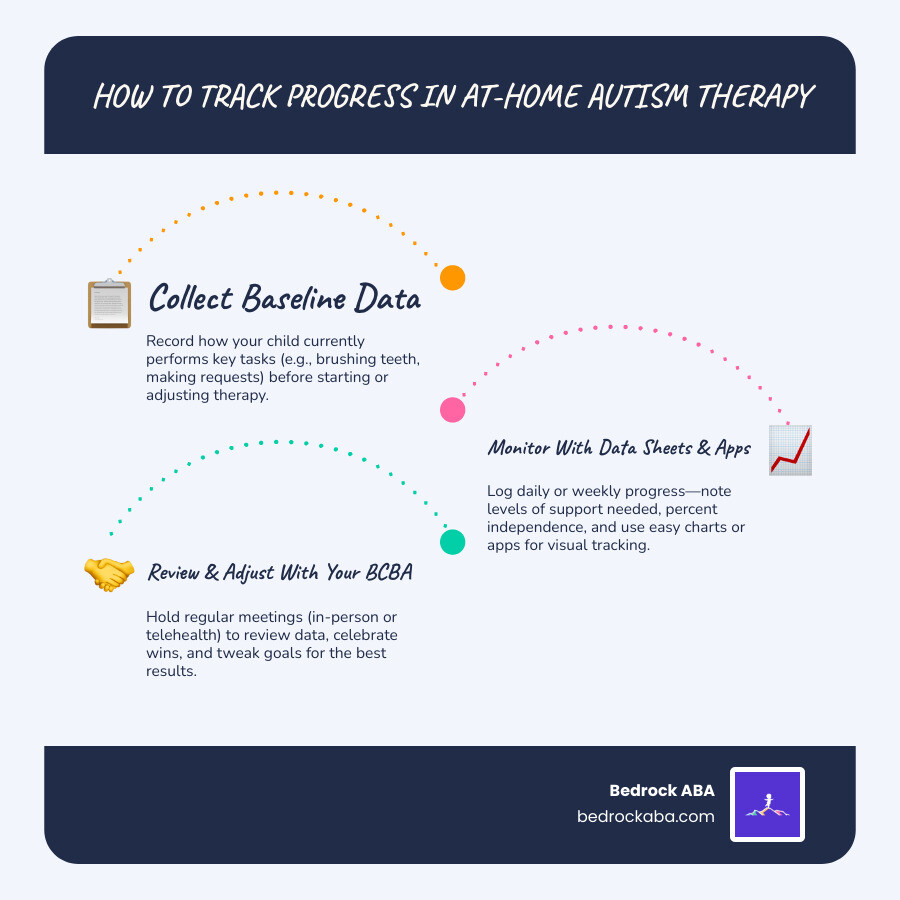
To make tracking easier, try using data collection apps or simple spreadsheets. A quick glance at a goal graph can be so motivating—for you, your child, and your therapy team!
Tracking Costs and Insurance
Therapy is an investment, so make sure you know how the finances work. Most insurance plans in Utah (and across the country) cover ABA, but you’ll want to check your policy for coverage codes, session limits, and copays. ABA therapy can cost anywhere from $5,000 to $80,000 per year, but with insurance, grants, and state funds, families rarely pay that full amount.
Be sure to plan for copays and ask about out-of-pocket maximums up front. Medicaid and some other programs even offer full coverage for eligible families. If you need extra support, look into what’s available through the Utah Autism Council or federal programs—sometimes little-known resources can make a big difference.
Blending Home, School & Clinic Supports
Your child’s world is bigger than home, so good therapy connects the dots. IEP alignment means working with your school team to make sure everyone is aiming for the same goals. Keep a shared communication notebook or use an app so everyone (therapists, teachers, parents) stays in the loop.
Don’t forget respite care—caring for your child is a team effort, and everyone needs a break sometimes. Ask your provider about local respite options so you can recharge and show up as your best self.
For families who need even more flexibility, telehealth add-ons are a great supplement to in-home sessions. You can combine in-person and virtual visits to fit your schedule and your child’s needs. For more on this, visit our ABA Telehealth Therapy page.
[TABLE] Comparing Home vs Center vs Telehealth Delivery Models
| Model | Pros | Cons |
|---|---|---|
| Home | Familiar, flexible, family-involved | Privacy, space limits, parent burnout |
| Center | Specialized equipment, peer interaction | Commute, less individualization, schedule |
| Telehealth | No commute, expanded access, parent coaching | Tech needs, engagement limits, screen fatigue |
No two families are the same—so whether you choose at home autism therapy, center-based, telehealth, or a mix, the most important thing is finding the blend that helps your child thrive.
Conclusion
At home autism therapy isn’t just a convenient option—it’s a powerful, science-backed way to help your child make real gains in the place where they’re most comfortable: home. By bringing therapy right into your living room, kitchen, or backyard, you’re giving your child the chance to learn and grow in their own familiar world. And let’s be honest—sometimes, pajamas make the best therapy uniform.
At Bedrock ABA, we know that every family is unique. That’s why we tailor each therapy program to fit your schedule, your routines, and your child’s strengths. Whether you need in-person sessions, telehealth support, or a mix of both, our caring Utah-based team is ready to walk with you from that first assessment all the way to celebrating your child’s newest skill.
If you’re wondering when to start, the answer is simple: there’s no better time than now. The earlier and more consistently you integrate therapy into daily life, the more your child can achieve. And remember, you don’t have to do it alone—our team is here to coach, encourage, and adapt along the way.
Curious about remote options or how telehealth might work for your family? Visit our ABA Telehealth Therapy page for details about flexible home-based sessions and expert parent coaching.
Let’s work together to make your home the happiest, most productive space for your child’s journey. Every routine, every giggle, every step forward matters—and at Bedrock ABA, we’re honored to be part of your story.
If you’d like to get started or just have questions, don’t hesitate to reach out to the Bedrock ABA team for a free consultation. We’re here—and excited—to help your family thrive, one home sweet therapy session at a time.