



Understanding ABA Therapy: A Clear Guide for Parents
ABA therapy is a scientifically-backed treatment that helps children with autism develop essential life skills and reduce challenging behaviors. Based on the principles of learning, it uses positive reinforcement and data-driven strategies to teach communication, social skills, and daily living activities.
Key Facts About ABA Therapy:
- What it is: Applied Behavior Analysis – a therapy based on the science of learning.
- Who it helps: Primarily children with autism, but also those with ADHD, OCD, and other developmental needs.
- How it works: Uses positive reinforcement to teach new skills and reduce harmful behaviors.
- Where it happens: Home, school, clinic, or community settings.
- Who provides it: Board Certified Behavior Analysts (BCBAs) and Registered Behavior Technicians (RBTs).
- Evidence: Endorsed by the US Surgeon General and American Psychological Association.
If you’re a parent exploring autism treatment, you may find conflicting information about ABA therapy. While some sources praise its effectiveness, others raise concerns about outdated methods. The truth is that modern ABA therapy has evolved significantly from its early practices.
Today’s ABA focuses on play-based learning, respects individual differences, and prioritizes building skills over simply eliminating behaviors. Research shows that intensive ABA therapy (25-40 hours per week) can lead to significant improvements in communication, social skills, and independence.
As Mayer Kulefsky, director of operations at Bedrock ABA, I’ve seen how high-quality ABA therapy can be transformative. When implemented thoughtfully and collaboratively with families in North Carolina and Utah, it empowers children with autism to thrive.
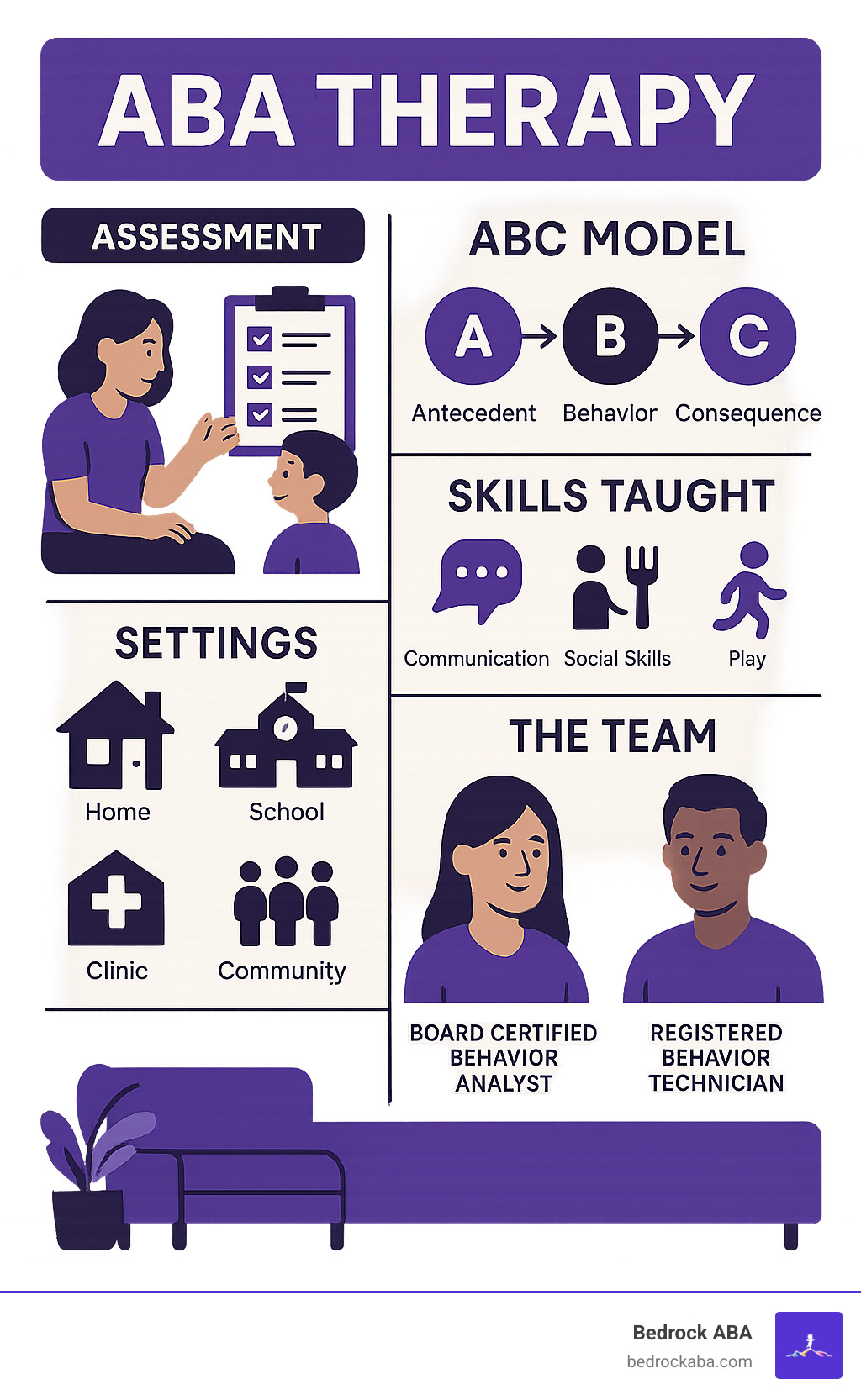
Aba therapy definitions:
What is ABA Therapy and How Does It Work?
At its core, Applied Behavior Analysis is the science of understanding behavior and using that knowledge to help people learn. Think of it as a roadmap for learning. ABA therapy helps identify the reasons behind a child’s actions—like a meltdown at the grocery store—to teach more effective ways to communicate and cope.
This approach is built on decades of behavioral science and focuses on “socially significant behavior,” meaning skills that matter in your child’s daily life, like asking for help or brushing their teeth.
The key is positive reinforcement. When a child uses a desired skill, like saying “please,” they receive a positive outcome, such as praise and the item they asked for. This makes them more likely to use that skill again.
What sets ABA therapy apart is its data-driven approach. Therapists track progress in every session, allowing them to celebrate wins, adjust strategies when needed, and create truly individualized treatment plans that evolve with your child. You can explore the scientific research on behavior analysis to learn more.
Core Principles: The ABCs of Behavior
In ABA therapy, we use the ABC model to understand behavior: Antecedent, Behavior, and Consequence.
- The Antecedent is what happens right before a behavior (e.g., you ask your child to put on their shoes).
- The Behavior is the action itself (e.g., they put on their shoes or refuse).
- The Consequence is what happens immediately after, which influences whether the behavior will happen again (e.g., getting to go outside).
Understanding the function of behavior—what your child is trying to achieve—is key. Are they seeking attention, escaping a task, or looking for sensory input? Once we know the “why,” we can teach them better ways to get their needs met. Modern ABA therapy focuses on positive reinforcement to build skills, rather than punishment, supporting both skill acquisition and decreasing challenging behaviors.
What Specific Skills Does ABA Develop?
ABA therapy is versatile and custom to each child’s needs. Key areas of focus include:
- Communication skills: Learning to express needs and wants, from basic requests to complex conversations, using spoken words, signs, or devices.
- Social skills: Initiating play, understanding social cues, taking turns, and building friendships to feel more confident in group settings.
- Daily living skills: Building independence in self-care tasks like dressing, eating, toileting, and personal hygiene.
- Play and leisure skills: Exploring toys and imaginative play, and developing hobbies for lifelong enjoyment.
- Academic skills: Supporting success in school with pre-academic skills like matching and sorting or more advanced concepts.
- Motor skills: Improving fine motor skills (like holding a pencil) and gross motor skills (like jumping and running) for better coordination.
While building new skills is the priority, ABA therapy also helps reduce harmful behaviors by teaching safer, more effective ways for children to communicate and cope.
Types and Techniques of Modern ABA Therapy
Modern ABA therapy has transformed into a flexible, child-centered approach. Forget the old image of a child drilling flashcards at a table. Today, learning happens in naturalistic teaching environments—the living room, the playground, or during snack time. When therapy feels like play, it becomes a natural part of your child’s day.

Families often hear about Early Intensive Behavioral Intervention (EIBI), a comprehensive program of 25-40 hours per week for young children. But intensive doesn’t mean rigid. Programs can be comprehensive (addressing a wide range of skills) or focused (targeting specific needs). Natural Environment Teaching (NET) is a popular technique that uses a child’s interests—like trains or dolls—as the vehicle for teaching everything from colors to social skills. This approach respects a child’s learning style while delivering effective, evidence-based intervention. For more details, you can find more info on ABA techniques.
Common ABA Therapy Techniques
Therapists use various techniques, choosing the right tool for your child’s needs:
- Discrete Trial Training (DTT): A structured method that breaks skills into small, manageable steps with clear instruction and immediate feedback. It’s used strategically for specific skill-building.
- Pivotal Response Training (PRT): A play-based approach that follows the child’s lead to target “pivotal” areas like motivation, which helps improve many other skills at once.
- Early Start Denver Model (ESDM): A comprehensive, play-based model for young children that focuses heavily on social communication through fun, interactive routines.
- Verbal Behavior (VB): Teaches the function of language, helping children understand that words have power to make requests, label items, and connect with others.
- Picture Exchange Communication System (PECS): Helps non-verbal children learn to communicate by exchanging pictures for desired items, building a bridge to more complex language.
- Naturalistic Developmental Behavioral Interventions (NDBIs): Blends developmental science with behavioral principles, using proven strategies to accelerate learning in joyful, meaningful ways.
How Progress is Measured and Monitored
ABA therapy is a science, and we track progress with precision. The process begins with collecting baseline data to document your child’s current abilities, creating an accurate starting point.
During each session, therapists collect data on specific skills, such as new words used or time spent playing with a peer. This data is often turned into visual graphs that make progress easy to see, serving as a celebration chart for your family.
This information is used to continuously fine-tune the approach. Through regular assessments and data review, the therapy team can make treatment plan modifications to ensure the program remains effective and appropriately challenging. This entire process is done in close collaboration with your family, ensuring that the skills learned in therapy translate meaningfully into your daily life.
The Practice of ABA: Who, What, and Where
ABA therapy is a highly personalized service delivered in various settings to make learning as natural and effective as possible.

Common therapy settings include:
- Home-based therapy: Allows skills to be taught and practiced in the child’s natural environment.
- Clinic-based therapy: Offers a structured learning environment with specialized materials and peer interaction opportunities.
- School settings: Helps children apply learned skills directly to academic and social situations, with therapist-teacher collaboration.
- Community outings: Generalizes skills to real-world settings like parks, stores, or libraries.
- Telehealth: Provides remote options for parent training and consultation, offering flexibility and accessibility.
The ABA Therapy Team and Their Qualifications
A quality ABA therapy program involves a dedicated team of professionals certified by the Behavior Analyst Certification Board.
- Board Certified Behavior Analyst (BCBA): The team leader, holding a master’s degree or higher. The BCBA conducts assessments, designs the individualized treatment plan, analyzes data, and supervises the team.
- Board Certified Assistant Behavior Analyst (BCaBA): Holds a bachelor’s degree and works under the supervision of a BCBA to implement treatment plans and supervise technicians.
- Registered Behavior Technician (RBT): The frontline therapist who works directly with your child, implementing the plan designed by the BCBA. They complete a 40-hour training course and receive ongoing supervision.
The Crucial Role of Parents and Caregivers in ABA Therapy
Parents and caregivers are essential members of the treatment team. Your involvement is crucial for lasting success. A key component of any good program is parent training, which empowers you with the tools to support your child’s learning in everyday life.
Your active participation helps with the generalization of skills, ensuring that what’s learned in therapy is used at home, at school, and in the community. By collaborating on family goals and maintaining open communication with the therapy team, you create a consistent and supportive environment that maximizes the impact of ABA therapy.
Evaluating ABA: Evidence, Evolution, and Ethics
When researching ABA therapy, you’ll find a wide range of opinions. The field has evolved significantly from its early days in the 1960s. While early interventions by researchers like Ivar Lovaas showed promising results, some methods were rigid and would be considered inappropriate today.
Modern ABA therapy has transformed. The focus has shifted from compliance to building skills for independence and happiness, celebrating each child’s unique strengths.
| Historical ABA Practices | Modern, Neurodiversity-Affirming ABA Practices |
|---|---|
| Often compliance-focused, rigid | Individualized, flexible, child-led when appropriate |
| May have included aversive techniques | Exclusively uses positive reinforcement, avoids punishment |
| Emphasis on “normalizing” behavior | Focus on building functional skills for independence and quality of life |
| Limited focus on client assent | Prioritizes client assent, choice, and dignity |
| Primarily DTT-based | Uses diverse techniques (PRT, NET, ESDM, etc.) |
| May have suppressed self-stimulatory behaviors | Respects stimming unless harmful, teaches alternatives if needed |
Today’s approach prioritizes your child’s comfort, preferences, and dignity. The goal is not to “fix” autism but to empower children with tools to communicate, form relationships, and steer daily life with greater independence.
What the Research Says About Effectiveness
The scientific evidence supporting ABA therapy is extensive. It is recognized as an evidence-based practice by the US Surgeon General and the American Psychological Association. While the landmark 1987 Lovaas study was groundbreaking, its methods are now outdated. More recent research, including Cochrane reviews, confirms that ABA approaches are effective, though different techniques work better for different children.
Studies consistently show that intensive programs (typically 25-40 hours per week) can lead to meaningful improvements in communication, social skills, and daily living abilities. Current research focuses on ensuring these skills transfer to real-world settings and are maintained over time. You can explore more studies on ABA effectiveness for a deeper look at the data.
Criticisms and the Neurodiversity Movement
It’s crucial to acknowledge the valid concerns raised by autistic adults and advocates in the neurodiversity movement. Their voices have been instrumental in pushing the field toward more ethical, respectful practices. Some who received early forms of ABA describe feeling that their authentic selves were suppressed, highlighting the importance of ABA’s evolution.
The neurodiversity movement views autism as a natural variation, not a disorder to be cured. This has raised important questions about therapy goals, stimming suppression, and masking. These concerns have profoundly shaped modern ABA therapy. Ethical practitioners now prioritize client assent—ensuring children are willing and respected participants. Harmless stimming behaviors are respected as a form of self-regulation, and trauma-informed care is a cornerstone of quality ABA.
The goal is not to make children appear “typical” but to expand their choices and opportunities. The ongoing conversation between ABA and the neurodiversity movement keeps the focus on helping children thrive while honoring who they are. You can learn more about these perspectives on neurodiversity.
How to Find and Choose an ABA Provider
Finding the right ABA therapy provider can feel daunting, but you can steer the process step by step. The journey often begins with your pediatrician, who can provide a referral. An official autism diagnosis is typically the first step, as most insurance plans require it to cover services. The CDC Milestone Tracker App can help you track your child’s development for these discussions.
Most states now mandate insurance coverage for autism treatment, and Medicaid plans generally cover medically necessary ABA therapy for children. Once you have a diagnosis and referral, you can start exploring providers.

Schedule initial consultations to interview potential providers. This is a long-term partnership, so it’s crucial to find a team you feel comfortable and confident with.
What to Look for in a Quality Provider
When evaluating providers, look for these key indicators of quality:
- BCBA certification and state licensing: Ensure all supervising clinicians are board-certified and properly licensed. Ask about background checks for all staff.
- Individualized programs: A quality provider will create a unique treatment plan based on a thorough assessment, not a one-size-fits-all program.
- Parent involvement and training: The provider should see you as a key member of the team and offer regular training and opportunities for collaboration.
- Ethical practices: The provider must be committed to positive reinforcement and prioritize your child’s comfort, dignity, and assent.
- A neurodiversity-affirming approach: Therapy should focus on building functional skills for independence and happiness, not on making your child “look normal.”
- Clear communication and supervision: Ask about the supervision structure for therapists and how you will communicate with the supervising BCBA.
- Data collection and progress monitoring: The provider should use objective data to track progress and share it with you in a clear, understandable way.
What to Expect from an ABA Therapy Program
Starting ABA therapy follows a structured process to ensure the best outcomes.
- Initial Assessment: A BCBA conducts a comprehensive evaluation to understand your child’s skills, challenges, and preferences. This often includes a Functional Behavior Assessment (FBA) to understand the “why” behind certain behaviors.
- Treatment Plan: Based on the assessment, the BCBA develops an individualized treatment plan with clear, measurable goals that are meaningful to your family.
- Therapy Sessions: Registered Behavior Technicians (RBTs) work directly with your child, using play-based and structured activities to implement the plan. They collect data throughout each session to track progress.
- Ongoing Monitoring and Adjustments: The BCBA regularly reviews data, observes sessions, and meets with you to discuss progress. The plan is adjusted as needed to ensure it remains effective and evolves with your child.
Open communication is key. You should always feel like an informed and essential partner in your child’s journey.
Conclusion
We hope this guide has clarified what modern ABA therapy is all about: opening doors for your child to communicate, make friends, and steer life with greater confidence. The field has evolved to emphasize respect, dignity, and joy in learning. Research shows that when done right, ABA therapy can make a profound difference.
However, not all providers are created equal. The key is finding a team that sees your child as a whole person, listens to your family’s goals, and celebrates every victory. You want a provider who respects your child’s unique personality and works collaboratively with you.
At Bedrock ABA, we believe every child deserves therapy that feels right for them and their family. Our flexible, family-centered approach means we tailor our services to your child’s specific needs, whether through in-home, clinic-based, or remote sessions. Our commitment is to ethical, evidence-based practice that puts your child’s well-being first. We’re here to support not just your child, but your entire family on this journey.
If you’re considering ABA therapy, trust your instincts and ask questions. The right fit is out there, and your child’s future is bright.