


Why Becoming an ABA Therapist is a Rewarding Career Path
An aba therapist works with individuals, primarily children with autism, to help them develop essential life skills and reduce challenging behaviors using evidence-based techniques. Here’s a quick overview of this career path:
Career Levels:
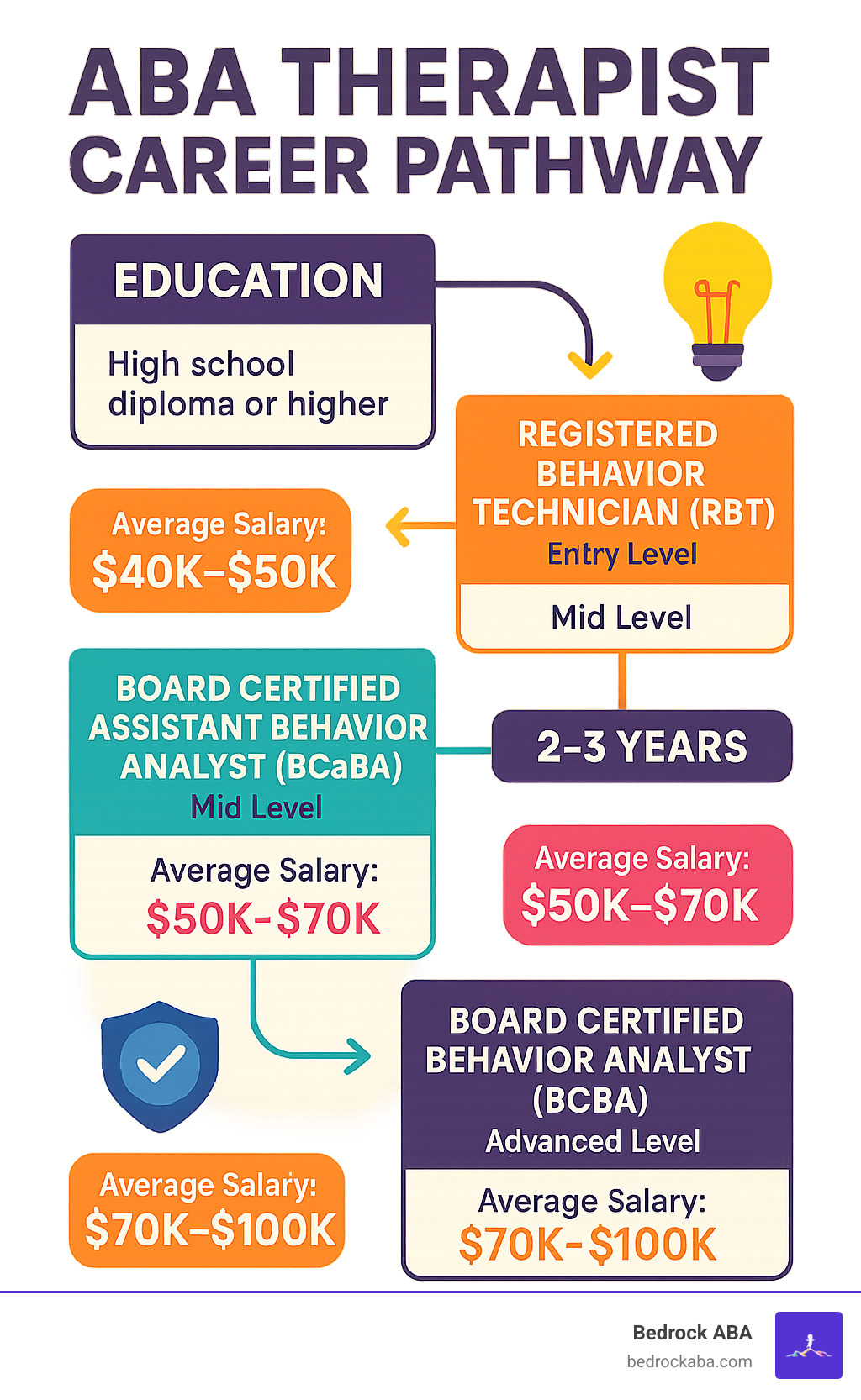
- Entry: Registered Behavior Technician (RBT) – high school diploma + 40-hour training
- Mid: Board Certified Assistant Behavior Analyst (BCaBA) – bachelor’s degree
- Advanced: Board Certified Behavior Analyst (BCBA) – master’s degree + supervised experience
- Settings: Homes, schools, clinics, and community centers
Applied Behavior Analysis (ABA) is one of the most effective, scientifically-backed approaches for helping children with autism gain communication skills, social abilities, and independence. The demand for qualified ABA professionals is growing as more families seek early intervention, which research shows can lead to significant improvements in intellectual functioning, language, and daily living skills.
As director of operations at Bedrock ABA, I’m Mayer Kulefsky. I’ve spent years connecting skilled aba therapist professionals with families who need support. I’ve seen how rewarding this career is for those committed to making a real difference in children’s lives.
Basic aba therapist vocab:
What is ABA Therapy? A Foundation for Aspiring Therapists
Applied Behavior Analysis (ABA) is a scientific approach to understanding how people learn and behave. As an aba therapist, you’ll use its principles to help individuals develop meaningful skills and overcome challenges. The focus is on “socially significant” behaviors–the skills that matter for daily life, independence, and community connection.
ABA’s power lies in its research foundation. Since the 1960s, it has helped individuals with autism and other developmental disorders make remarkable progress. The evidence-based practice is endorsed by the US Surgeon General and the American Psychological Association due to countless studies proving its effectiveness.
The Goals and Benefits of ABA
Because every person is unique, ABA therapy is completely individualized. As an aba therapist, you’ll help people build skills that open new doors. Key areas of focus include:
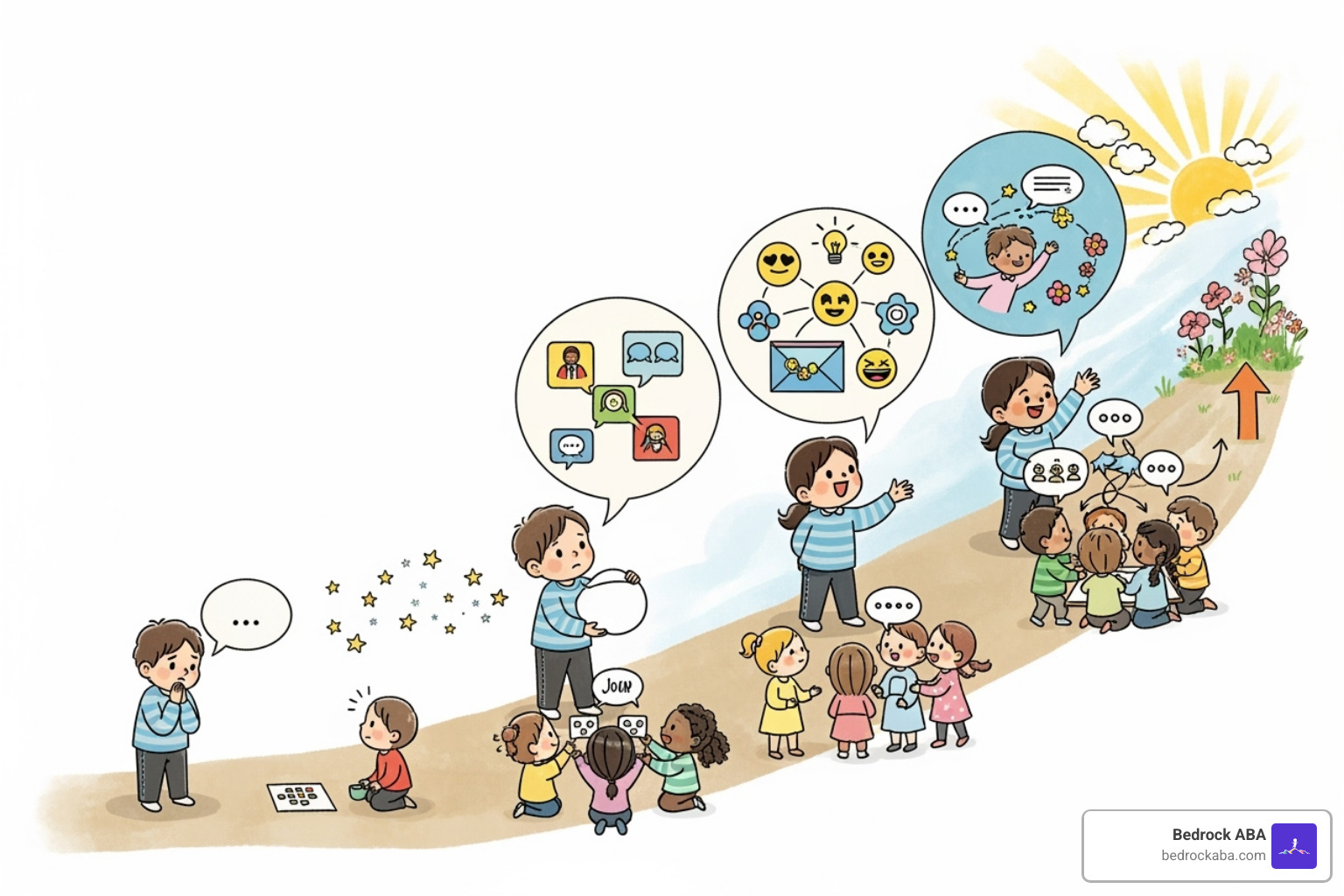
- Communication: Helping individuals find their voice, whether through words, pictures, or gestures.
- Social Skills: Teaching how to understand social cues, share, take turns, and build friendships.
- Daily Living Skills: Fostering independence in tasks like dressing, hygiene, or managing money.
- Academic Skills: Supporting school success by improving attention and problem-solving.
- Reducing Challenging Behaviors: Compassionately teaching better ways to communicate needs instead of just stopping unwanted behaviors.
All these goals work toward promoting independence. Scientific research on improving adaptive living skills confirms that intensive ABA therapy leads to significant gains in intellectual functioning, language, and social skills.
The Evolution of ABA Therapy
ABA has evolved significantly since its early days. In the 1960s, Dr. O. Ivar Lovaas pioneered Early Intensive Behavioral Intervention (EIBI). His 1987 study showed that intensive intervention could lead to remarkable improvements for children with autism.
However, early methods sometimes relied on rigid, punitive techniques. The field has since undergone a complete change.
Modern ABA has shifted entirely to positive reinforcement, celebrating and rewarding desired behaviors. This creates a joyful, supportive learning environment. Today’s compassionate approach accepts play-based learning and natural teaching opportunities, making therapy engaging and meaningful. The goal isn’t to make someone “normal” but to help them develop skills that increase their choices, independence, and happiness.
The Core Responsibilities of an ABA Professional
An aba therapist uses a thoughtful, scientific approach to help children grow. Everything is built on data, not hunches. We track progress to see what works and adjust what doesn’t. This systematic method ensures every decision is smart and supportive.
ABA therapy is highly individualized. No two children are alike, so no two treatment plans are either. We tailor programs to each child’s unique personality, interests, and strengths. A child who loves trains might learn counting with train cars, while another might practice communication by requesting art supplies.
Collaboration with families is essential. Parents and caregivers are the experts on their children, and we work closely with them, teaching them the same techniques we use so learning continues outside of therapy sessions. This consistency helps children make faster progress.
One of the unique aspects of being an aba therapist is working in various settings. We might be in a home helping with a morning routine, at a school supporting social skills during recess, or at a grocery store teaching real-world skills. This flexibility ensures children learn where they’ll actually use their new abilities.

Developing and Implementing Treatment Plans
Therapy begins with a Functional Behavior Assessment (FBA), where a Board Certified Behavior Analyst (BCBA) acts like a detective. They observe the child, talk with the family, and collect data to understand why a challenging behavior is happening. We also conduct skill assessments to map out the child’s current abilities and identify areas for support.
Based on this information, the BCBA creates individualized, measurable goals, such as “Jamie will request items using two-word phrases in 8 out of 10 opportunities.” These goals are reviewed and updated regularly. As an RBT, you’ll implement these plans in daily sessions, collect data, and work with families. Parent and caregiver training is a huge part of the job, as consistency is key to success.
The Different Roles on an ABA Team
ABA therapy is a team effort, with each member bringing different skills to help children reach their full potential.
- Registered Behavior Technicians (RBTs) are the frontline aba therapist professionals. They work directly with children, implementing treatment plans and collecting data. This role requires a high school diploma and a 40-hour training course.
- Board Certified Assistant Behavior Analysts (BCaBAs) have a bachelor’s degree and more advanced training. They can conduct some assessments, help design treatment plans, and often supervise RBTs, all under the supervision of a BCBA.
- Board Certified Behavior Analysts (BCBAs) are the clinical leaders. With a master’s degree and extensive supervised experience, they conduct initial assessments, design all treatment plans, supervise the team, and make final clinical decisions.
The role of the BCBA in supervision and program design is crucial. They analyze data and adjust goals, but they rely on RBTs and BCaBAs to implement plans and provide real-time feedback. This team collaboration creates a powerful support system where clinical expertise and daily observations come together to help children thrive.
How to Become an ABA Therapist: A Step-by-Step Guide
Becoming an aba therapist is a journey with multiple pathways, whether you want to work directly with children or eventually supervise programs. What matters most is your commitment to helping others and your willingness to learn.

Step 1: Meet the Educational Requirements
You can enter the ABA field at different points depending on your education and goals.
- Registered Behavior Technician (RBT): This entry-level path requires a high school diploma (or equivalent) and a 40-hour training course. It’s a great way to start working directly with children quickly.
- Board Certified Assistant Behavior Analyst (BCaBA): This mid-level role requires a bachelor’s degree. Degrees in psychology, special education, or child development provide a strong foundation.
- Board Certified Behavior Analyst (BCBA): The highest level requires a master’s degree in behavior analysis or a related field that includes a verified ABA course sequence.
Step 2: Gain Supervised Practical Experience
Hands-on experience is where you learn to be an effective aba therapist. All certification levels require supervised fieldwork, where you apply classroom knowledge to real-world situations.
For BCBAs, this typically means 2,000 hours of supervised fieldwork (or 1,500 in a concentrated program). These hours must be overseen by a qualified BCBA who provides feedback and guidance. Many university programs include internships and practicum components that help fulfill this requirement.
Finding a qualified supervisor is crucial. A good supervisor acts as a mentor, shaping your professional development and ensuring you meet all certification standards.
Step 3: Obtain Certification and Licensure
The Behavior Analyst Certification Board (BACB) is the non-profit organization that manages all ABA certifications and sets professional standards.
- RBT Certification: After your 40-hour training, you’ll pass a Competency Assessment and the RBT exam.
- BCaBA/BCBA Certification: Candidates for these levels take their respective exams after completing all degree and supervised fieldwork requirements. The BCBA exam is particularly rigorous, and it’s not uncommon for candidates to take it more than once.
In addition to BACB certification, many states have their own state licensure laws to practice legally. These requirements vary, so research the regulations in the state where you plan to work.
For the most current information, learn more at the Behavior Analyst Certification Board website. The field is always evolving, so staying updated is key.
Modern ABA: Techniques, Ethics, and the Neurodiversity Conversation
Today’s ABA therapy is very different from its early days. As an aba therapist, you’ll be part of a field that practices client-centered care, meaning the individual’s preferences, strengths, and goals drive every decision. Modern ABA is flexible, respectful, and deeply ethical.

Key ABA Techniques You’ll Use
An aba therapist uses a toolkit of teaching methods, chosen based on what works best for each child.
- Discrete Trial Training (DTT): Breaks skills into small, manageable steps. It’s structured but always uses positive reinforcement, never punishment.
- Pivotal Response Training (PRT): Teaches within play by following the child’s interests. The reward is natural, like getting the toy car they asked for.
- Natural Environment Teaching (NET): Teaches skills in real-life settings, like the grocery store or playground, to promote generalization.
- Picture Exchange Communication System (PECS): Helps non-speaking children communicate by exchanging pictures for items or activities.
- Verbal Behavior (VB): Focuses on teaching the function of language—how to use words to ask for things, make comments, and answer questions.
Ethical Considerations for an ABA therapist
Ethics are the foundation of our practice. The ethics code for behavior analysts from the BACB guides our work. Key principles include upholding client dignity, obtaining consent and assent (listening to the child’s behavior), using the least restrictive procedures, maintaining confidentiality, and avoiding dual relationships that could create conflicts of interest.
Addressing the Neurodiversity Movement as an ABA therapist
The neurodiversity movement, which views autism as a natural difference rather than a disorder, has brought important conversations to our field. Autistic adults have shared powerful stories that have helped us improve our practice.
These conversations have shifted our focus from normalization to quality of life. We ask, “How can we help this child live their best life?” instead of “How can we make this child look more typical?” We focus on skill-building (like asking for help) over normalization (like forcing eye contact). We don’t target harmless self-soothing behaviors (stims) that help a person regulate.
Client choice and autonomy are paramount. We involve children in their own goals and teach self-advocacy. Our neurodiversity-affirming practices build on each child’s unique strengths, accepting that different isn’t wrong. We aim to give individuals more tools to steer a world not always designed for them. For more on this, see research on reconciling perspectives through a neurodiversity framework.
Frequently Asked Questions about a Career in ABA
How long does it take to become an ABA therapist?
The timeline to become an aba therapist depends on your chosen certification level.
- RBT: This is the fastest route. The 40-hour training, competency assessment, and exam can be completed in a few weeks to a couple of months.
- BCaBA: This path requires a four-year bachelor’s degree plus supervised fieldwork. Expect the total process to take 4-6 years from the start of your undergraduate studies. Many people work as an RBT while completing their degree.
- BCBA: This is the most comprehensive journey. It requires a master’s degree (2-3 years) and 1,500-2,000 hours of supervised fieldwork. From the start of college, becoming a BCBA can take 6-8 years or more.
What skills are essential for a successful ABA therapist?
A successful aba therapist needs a blend of heart and mind. Key skills include:
- Patience and Empathy: Progress often comes in small steps. You must be able to connect with and support both children and their families through challenges.
- Strong Communication: You need to listen actively, explain complex ideas simply, and build trust with families.
- Analytical Skills: ABA is data-driven. You’ll need to spot patterns, track progress, and use data to solve problems and adjust strategies.
- Resilience and Professionalism: Some days are challenging. Maintaining ethical standards, confidentiality, and a positive attitude is crucial for providing consistent, high-quality care.
Is ABA therapy only for autism?
While ABA therapy is most commonly associated with autism spectrum disorder, its principles apply to all human behavior. The science of behavior analysis is effective for teaching new skills and can help children with other developmental differences.
We often use ABA strategies to help children with ADHD improve focus, those with Oppositional Defiant Disorder (ODD) learn to express frustration appropriately, and those with Down syndrome build communication and daily living skills.
Beyond therapy, behavior analysis principles are used everywhere—in business to improve productivity, in hospitals to help patients adhere to treatments, and in schools to create effective teaching methods for all students. As an aba therapist, you are applying these powerful, scientifically-backed methods to help children improve their quality of life.
Conclusion
The journey to becoming an aba therapist is a choice to make a tangible difference in the world, one child at a time. This career offers the unique reward of seeing children find new ways to communicate, build friendships, and grow more independent.
The field of ABA continues to expand, meaning excellent job prospects for dedicated professionals committed to ethical, client-centered care. There is a pathway that fits your goals, whether you start as an RBT or pursue a BCBA from the beginning.
Modern ABA is a compassionate practice that honors each child’s unique strengths. The focus is not on making children “look typical” but on giving them the skills to live fulfilling lives on their own terms. This shift toward neurodiversity-affirming practices makes the work even more meaningful.
At Bedrock ABA, we know that great therapy starts with great therapists. We are committed to supporting our professionals as they deliver the highest quality care. Our flexible, family-centered approach means you’ll work in natural settings—homes, schools, or our clinics in Utah—where children and families feel most comfortable.
If you are drawn to a career that blends scientific rigor with human connection, becoming an aba therapist could be your path. The children and families in our community need skilled, compassionate professionals ready to help them reach their full potential.
Ready to learn more? Visit our ABA therapy services page to see how Bedrock ABA is making a difference in children’s lives across Utah and Salt Lake City.