


When Your Child Needs More Than Love and Patience
Child behavior therapy is a specialized treatment that helps children develop better coping skills, manage emotions, and improve their behavior through evidence-based techniques like positive reinforcement, cognitive behavioral therapy, and parent training programs.
Quick Guide to Child Behavior Therapy Options:
- Cognitive Behavioral Therapy (CBT) – Best for anxiety, depression, and emotional regulation
- Applied Behavior Analysis (ABA) – Most effective for autism spectrum disorders and developmental delays
- Parent Training Programs – Essential for ADHD, defiance, and improving family dynamics
- Play Therapy – Ideal for younger children who struggle to express emotions verbally
Every parent knows the struggle: the grocery store scream over candy, the park meltdown when it’s time to leave, the refusal to share toys. Most of the time, this is normal. Children are learning to handle big emotions in small bodies.
But sometimes, these behaviors become more than a phase. When tantrums are daily, when an 8-year-old’s meltdowns resemble a toddler’s, or when teacher calls are frequent, many Utah parents wonder if it’s time for professional help.
The good news is that behavior therapy works. Research shows it helps children develop emotional control, social skills, and confidence, while parents learn effective strategies that replace frustration with hope.
But finding the right help can feel overwhelming. Where do you start, and what kind of therapy is best?
I’m Mayer Kulefsky, Director of Operations at Bedrock ABA. I’ve spent years helping Utah families access quality child behavior therapy and have seen how the right support transforms children’s lives and their families.
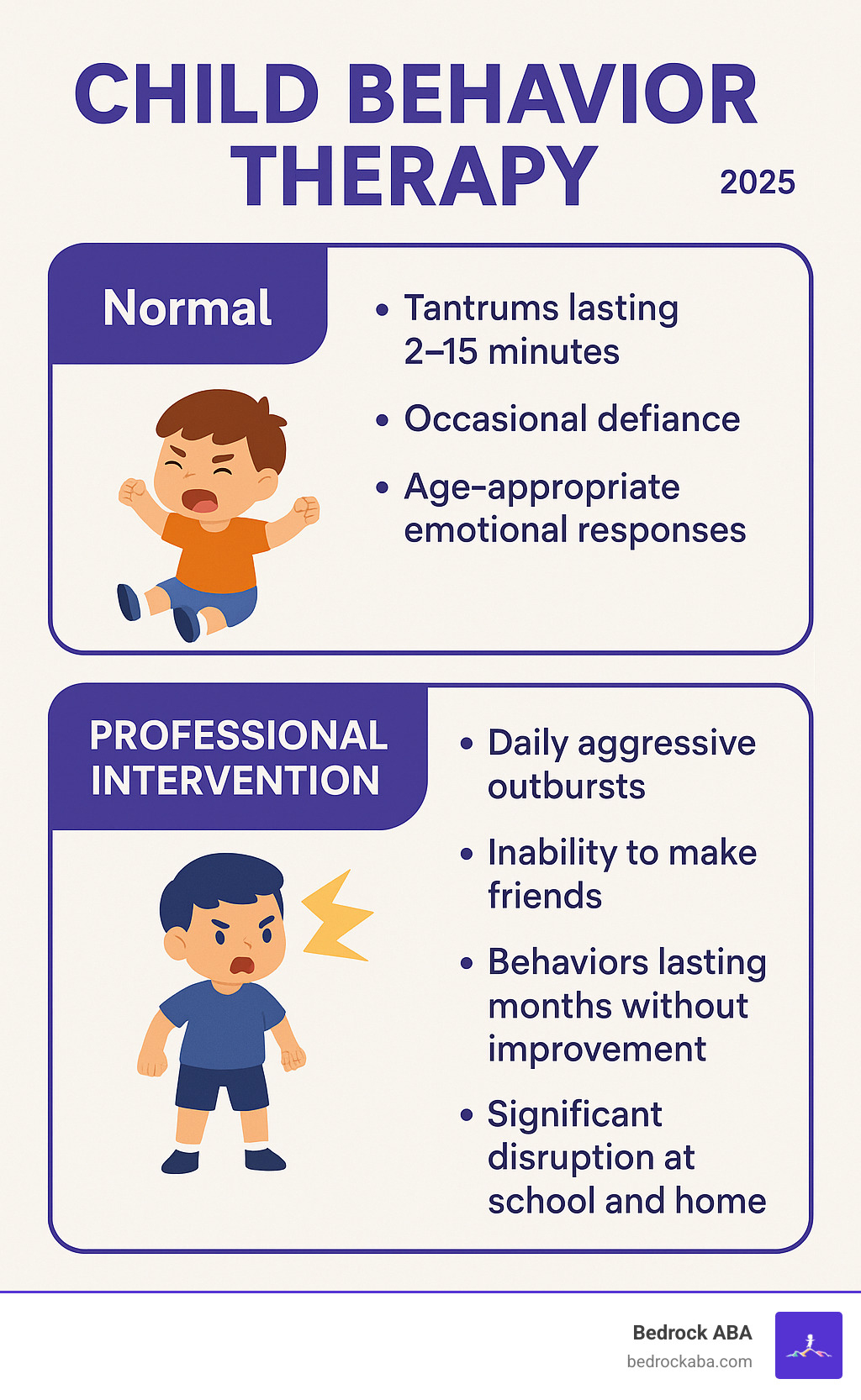
Is It More Than a Phase? Recognizing When Your Child Needs Support
Refusing to put on shoes, homework meltdowns, and bedtime arguments are often part of typical childhood behavior. It’s how kids learn to steer their world and test boundaries.
But sometimes, a nagging feeling suggests something more. When tantrums are longer, more frequent, or too intense for their age, it’s crucial to understand what’s normal for your child’s developmental stage versus what might signal a need for support. A two-year-old’s tantrum over a cup color is normal; a twelve-year-old’s is not. Age-appropriate behavior is a key distinction.
Family dynamics, like a recent move, divorce, or loss, also play a role. Challenging behavior can be a child’s way of processing big emotions. Understanding this context helps determine if it’s a temporary response to stress or something requiring professional attention. Before concluding there’s a problem, consider the behavior’s duration, severity, and impact on your child’s life. You can find helpful guidance on factors to consider before concluding there’s a problem.
Red Flags: Warning Signs That Professional Help Is Needed
“Red flag” behaviors aren’t about being a “bad” kid; they are signals that your child could benefit from learning new coping skills through child behavior therapy. It’s their way of asking for help.

- Frequent school disruptions: Regular calls from teachers or time spent in the principal’s office often signal a deeper struggle.
- Difficulty with friendships: If your child consistently struggles to make or keep friends, they may need help with social skills.
- Aggression: Frequent or intense physical or verbal aggression toward people or animals is a serious concern.
- Lack of empathy: An inability to show remorse after hurting someone or causing damage may indicate a need for professional help.
- Self-injury: Any form of self-harm, like hitting or hair-pulling, requires immediate professional support.
- Refusal to change: When consistent parenting strategies don’t improve behavior over several months, it may be time for professional help.
These behaviors that could indicate a more problematic issue don’t mean you’ve failed as a parent. They mean your child needs the additional tools that child behavior therapy provides. Getting help sooner allows your whole family to start feeling better.
What is Child Behavior Therapy and How Does It Work?
Imagine your child confidently handling frustration and building genuine friendships. That’s the goal of child behavior therapy, a goal-oriented approach that helps children learn to manage their emotions and develop healthier behaviors.
This approach isn’t about “fixing” a child but empowering them with practical tools. They learn to recognize feelings, understand triggers, and find better ways to respond. As a result, children often become less impulsive and defiant, with fewer meltdowns. They gain control over self-defeating thoughts and develop lifelong problem-solving and coping skills. Research shows that behavioral therapy helps children understand their thoughts and feelings, leading to lasting positive change.
Core Principles of Child Behavior Therapy
Child behavior therapy is built on powerful, straightforward principles of learning.
- Positive reinforcement: This is a key tool. When a child demonstrates a positive behavior—like sharing, completing homework, or using words instead of hitting—that behavior is rewarded with praise, attention, or a small privilege.
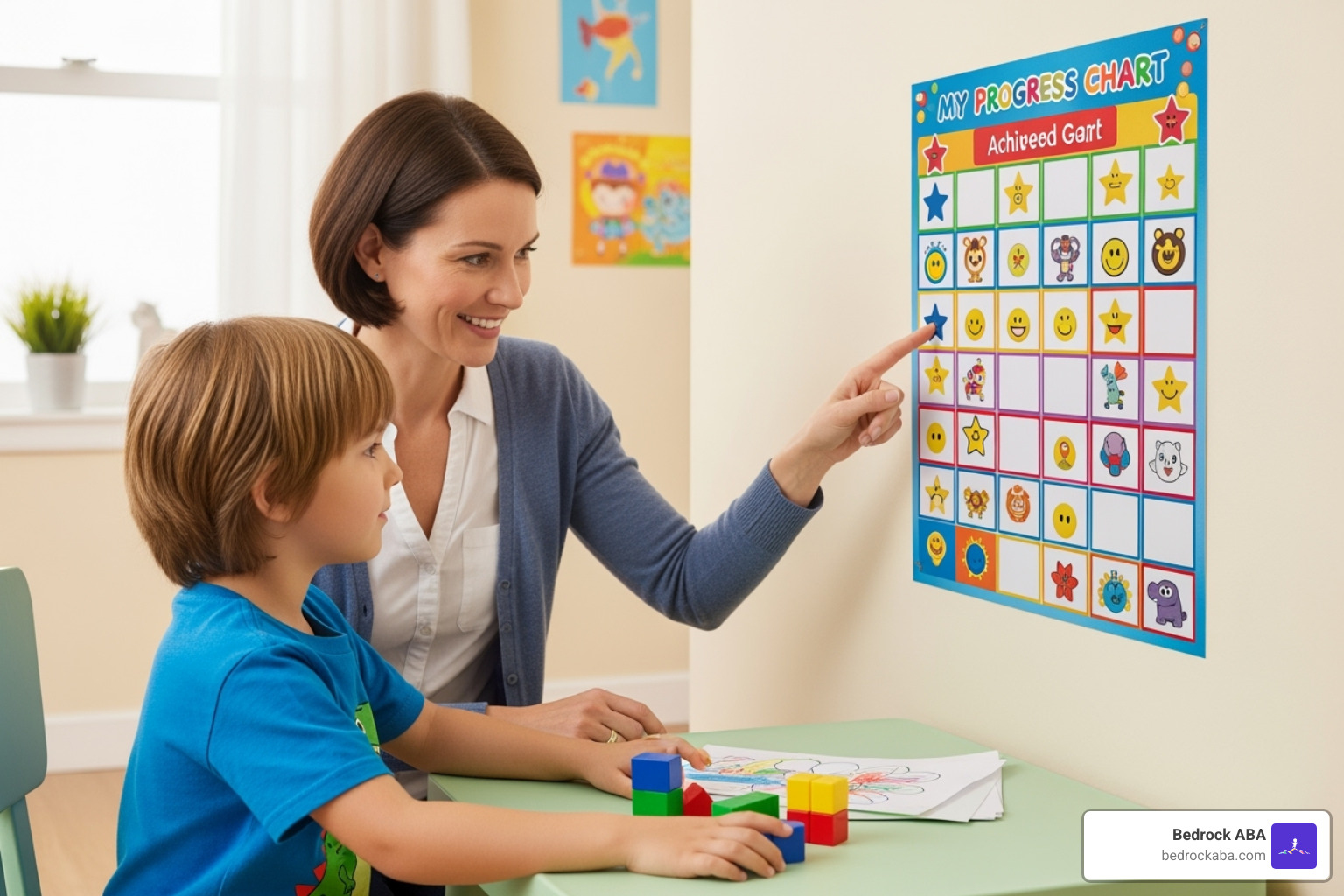
- Ignoring unwanted behavior: For minor, non-harmful misbehaviors like whining, removing your attention can help the behavior fade.
- Consistent consequences: Predictability helps children learn. If hitting means losing tablet time today, it should mean the same thing tomorrow.
- Removing triggers: Setting a child up for success can be as simple as avoiding known triggers. If crowds are overwhelming, choosing quieter alternatives can prevent a problem before it starts.
The CDC provides excellent information about behavior therapy’s basic principles and strategies that expand on these core concepts.
Common Techniques Used in Therapy Sessions
Therapists use a variety of fun techniques, matching the approach to the child’s age and personality.
- Play therapy: Using play, the natural language of younger children, to work through emotions and practice new skills.
- Role-playing: A safe way to practice tricky social situations, like making friends or responding to teasing.
- Modeling: The therapist demonstrates desired behaviors, like staying calm or asking for help, which children naturally copy.
- Cognitive restructuring: For older children, this helps them challenge and change negative thought patterns.
- Exposure therapy: Gradually and safely facing fears, like a fear of dogs, in manageable steps.
These behavioral therapy techniques that can help a child are often combined into fun exercises like Future Forecasts, Magic Detective games, and Fear Ladder challenges. Effective therapy feels more like play than work, making it easier for children to learn.
Understanding the Different Types of Child Behavior Therapy
Different types of child behavior therapy work better for different situations. Choosing the right one is like picking the right tool for a job. Understanding the main approaches—Cognitive Behavioral Therapy (CBT), Applied Behavior Analysis (ABA), and Parent Training Programs—helps you make the best choice for your family.
| Therapy Type | Best For | Core Focus | Parent Involvement |
|---|---|---|---|
| Cognitive Behavioral Therapy (CBT) | Anxiety, depression, OCD, PTSD | Connecting thoughts and actions, developing coping strategies | Moderate – learning to support child’s new skills |
| Applied Behavior Analysis (ABA) | Autism Spectrum Disorder, developmental delays | Improving communication, social skills, daily living skills | High – implementing strategies at home |
| Parent Training Programs | ADHD, Oppositional Defiant Disorder | Teaching parents effective behavior management techniques | Very High – parents are the primary focus |
Cognitive Behavioral Therapy (CBT)
Cognitive Behavioral Therapy helps children see how their thoughts, feelings, and behaviors are connected. It is highly effective for children with anxiety, depression, OCD, and PTSD. CBT teaches them to identify and replace negative thought patterns—like “I’m going to fail this test”—with more realistic ones. Research consistently shows CBT’s effectiveness in helping children develop lasting coping strategies and practical skills for managing overwhelming emotions.
Applied Behavior Analysis (ABA)
Applied Behavior Analysis uses a scientific approach to change behavior based on the idea that positive reinforcement encourages repetition of desired behaviors. ABA is the evidence-based best practice treatment for children with Autism Spectrum Disorder, focusing on improving social skills, communication, and daily living skills. ABA’s data-driven approach is unique; progress is carefully measured, so everyone knows what’s working. The evidence-based best practice treatment approach ensures your child gets the most effective support.
Parent Training Programs
Sometimes the most effective child behavior therapy involves teaching parents new skills. Parent Training Programs recognize you are the most important person in your child’s success. These programs are particularly effective for ADHD and Oppositional Defiant Disorder (ODD). Approaches like Parent-Child Interaction Therapy (PCIT), Triple P, and Incredible Years teach you specific techniques for managing challenging behaviors. Parent training empowers the whole family, and behavioral parent training has substantial empirical support, showing these methods work.
How to Find Help: Locating a Therapist in Utah
Finding the right child behavior therapy in Utah doesn’t have to be overwhelming. There are excellent resources to guide your family to the support you need.
A comprehensive evaluation is the best first step. This assessment helps professionals understand your child’s challenges and determine the best therapeutic approach. Your pediatrician is a great place to start; they can rule out medical issues and refer you to trusted local professionals. For conditions like ADHD in children under 12, the American Academy of Pediatrics recommends referrals for behavior therapy training.
Insurance coverage is another key piece. Many private health plans cover child behavior therapy, and Medicaid often covers medically necessary ABA therapy for children under 21. Call your provider to understand your benefits.
Here in Utah, Bedrock ABA provides personalized Applied Behavior Analysis (ABA) therapy to support growth in social, academic, and daily living skills. We offer flexible in-person and remote options to fit your family’s schedule and needs.
Finding a Qualified Child Behavior Therapist in Utah
Choosing the right therapist is a critical decision. You need someone with the right training, experience, and fit for your family. Key things to look for include:
- Professional Credentials: For ABA, look for Board Certified Behavior Analysts (BCBAs) and Registered Behavior Technicians (RBTs). For other therapies, seek licensed psychologists, social workers, or family therapists.
- Relevant Experience: Ask about their experience with children facing challenges similar to yours, whether it’s autism, ADHD, or anxiety.
- Therapy Approach: Ensure their methods (CBT, ABA, parent training) align with your child’s needs and your family’s goals.
- Parental Involvement: Ask how they plan to involve your family. Many effective programs include parent training to support progress at home.
- Measuring Progress: Effective therapy includes measurable goals and regular progress reviews. Ask how they track and discuss progress.
- Practical Considerations: Scheduling, location, and insurance acceptance are important. At Bedrock ABA, we offer both in-person and remote options for Utah families.
The American Psychological Association Psychologist Locator and your pediatrician are valuable resources for finding qualified professionals. When you’re ready to explore ABA services in Utah, we’re here to answer your questions and help support your child’s development.
Frequently Asked Questions about Child Behavior Therapy
As a parent, it’s natural to have questions about child behavior therapy. Here are clear answers to help you feel confident about this important step.
How long does child behavior therapy typically last?
There’s no one-size-fits-all answer. The duration of child behavior therapy depends on your child’s needs, the complexity of the challenges, and the type of therapy. Parent training programs often last 8-12 sessions, while Applied Behavior Analysis (ABA) for autism can be a longer-term commitment of months or years to achieve significant gains. Your family’s consistency in applying strategies at home also helps children progress faster. Your therapist will set realistic expectations with you.
Is medication necessary along with behavior therapy?
This depends on your child’s specific condition. For young children (ages 2-5) with ADHD, the American Academy of Pediatrics recommends behavior therapy be tried first. For older children with ADHD, combining therapy with medication is often most effective. For other conditions like anxiety or depression, therapy alone is often highly effective. Always consult with a medical doctor or psychiatrist about medication, as they can determine if it’s a helpful part of your child’s overall treatment plan.
How do I know if the therapy is working?
Effective child behavior therapy shows clear, measurable progress. Key signs of success include:
- Meeting Measurable Goals: Good therapy starts with specific, achievable goals, like reducing meltdowns or improving social interactions.
- Data-Driven Progress: Therapists often use data collection to objectively track how your child is progressing.
- Regular Progress Reviews: You should have consistent check-ins with your therapist to discuss what’s working and adjust strategies.
- Real-World Improvements: You’ll notice positive changes at home, at school, and in the community.
- Improved Happiness and Coping: Your child should seem happier, more confident, and better able to regulate their emotions and use new coping skills.
Progress isn’t always a straight line, but the overall trend should be positive. Trust your instincts and communicate openly with your therapy team.
Your Path to a Happier, Healthier Family
Starting child behavior therapy can feel like a big step, but it can transform your family’s daily life. When children learn to manage emotions and develop coping strategies, the entire family dynamic can shift toward peace and connection.
The changes go beyond reducing difficult behaviors. Your child learns to understand their thoughts and feelings, make thoughtful choices, and develop self-control. They gain lifelong problem-solving abilities and coping mechanisms and build a more positive self-image.
For children with ADHD, anxiety, or autism, these therapies provide needed support. Parents feel empowered with a practical toolkit of effective strategies, leading to stronger family relationships. Building confidence is a key outcome, as children learn they have the tools to handle challenges.
At Bedrock ABA, we are passionate about helping Utah families create lasting positive change. Our personalized Applied Behavior Analysis (ABA) therapy is designed around your child’s unique needs. We offer flexible, family-centered care with both in-person and remote options to make quality support accessible for busy Utah families.
We are committed to supporting growth in social, academic, and daily living skills to guide your family toward a happier, healthier future. Every child deserves to feel confident and capable.
Ready to take the next step? Learn more about ABA therapy services in Utah and find out how we can support your child’s journey to reach their full potential.