


Why Online ABA Training Is Changing Autism Support
ABA therapy online programs are revolutionizing how parents, therapists, and educators gain the skills needed to support children with autism. Whether you’re looking to become a certified behavior analyst or strengthen your current abilities, these digital training options offer unprecedented flexibility and accessibility.
Quick Answer for ABA Therapy Online Programs:
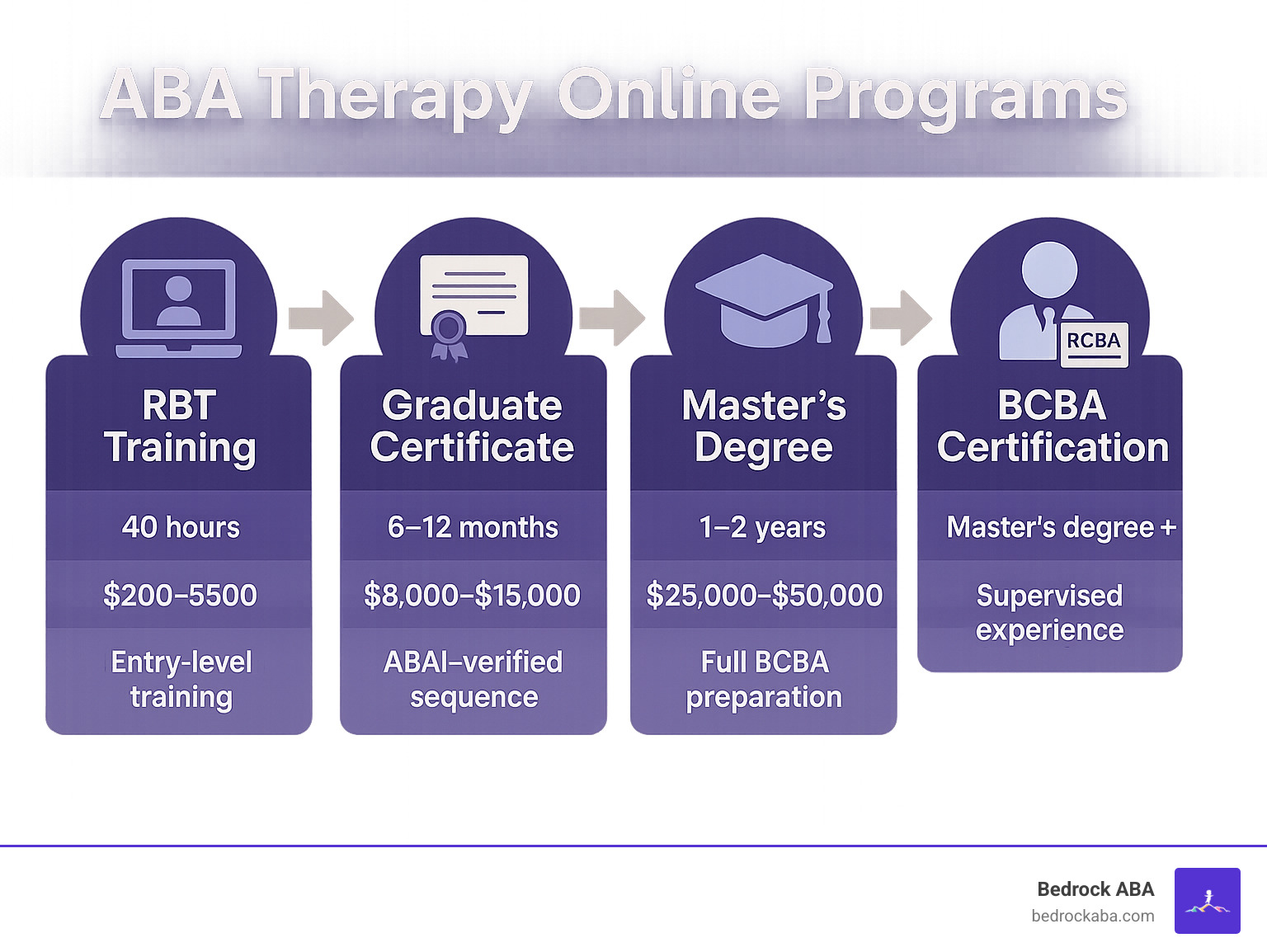
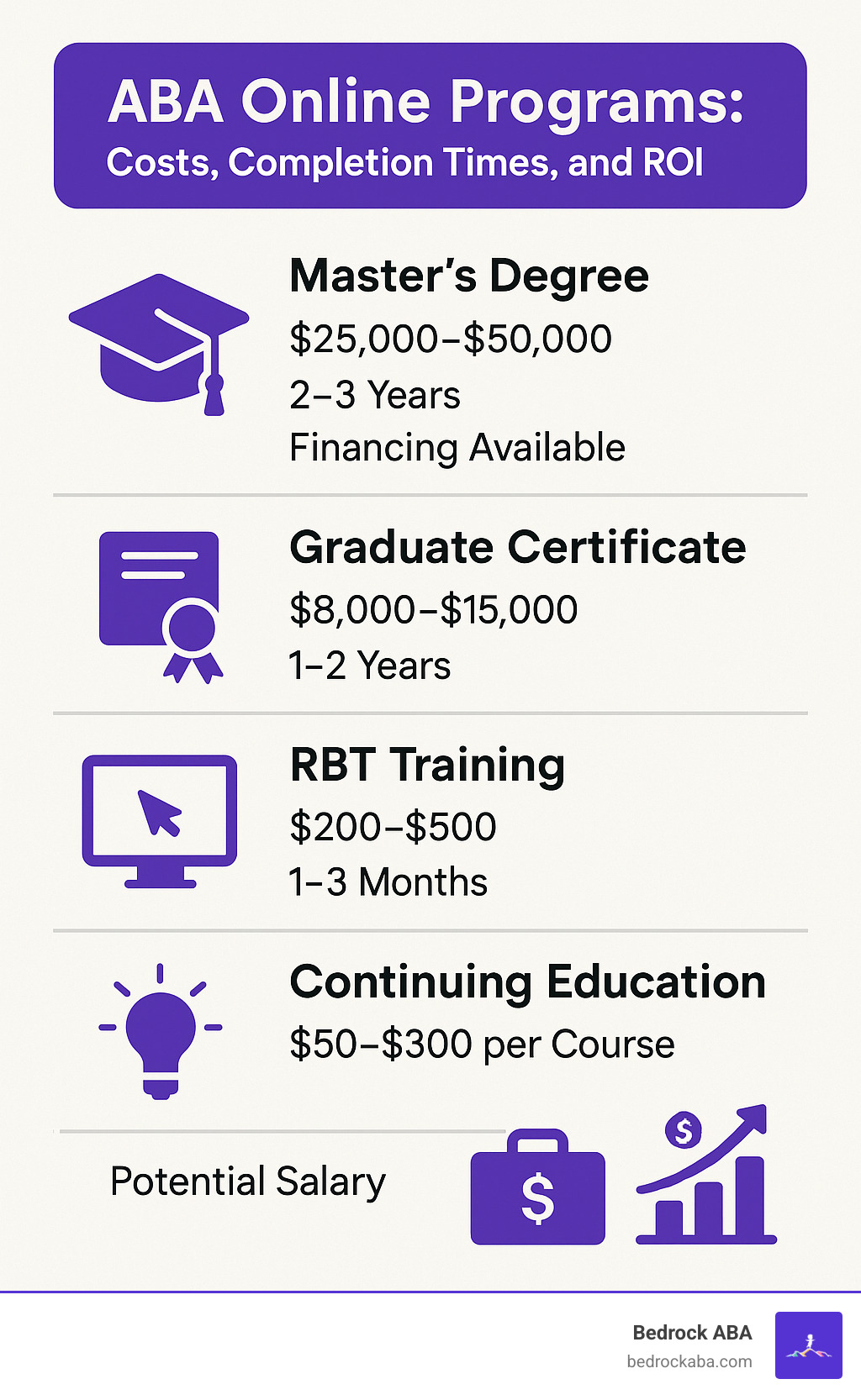
• RBT Training: 40-hour entry-level courses ($200-$500)
• Graduate Certificates: ABAI-verified sequences (6-12 months, $8,000-$15,000)
• Master’s Degrees: Full BCBA preparation (1-2 years, $25,000-$50,000)
• Continuing Education: CEU courses for existing professionals ($50-$300 per course)
The demand for qualified ABA professionals has exploded. Employment for Board Certified Behavior Analysts is projected to grow over 18% nationwide within the next 10 years. Yet 49 states fall below the per capita benchmark for certified providers, creating massive service gaps.
This shortage directly impacts families like yours. Long waitlists for in-person services leave parents scrambling for support. Online training programs help bridge this gap by preparing more qualified professionals faster than ever before.
Most online ABA master’s programs can be completed in 1 to 2 years, with credit requirements ranging from 30 to 58 credits. Many don’t require the GRE, making them accessible to career changers and busy parents who want to help their own children while building professional skills.
The flexibility is game-changing. As one parent-turned-professional shared: “Knowledge of ABA has empowered me to help my son overcome challenges and acquire new skills.”
What Are ABA Therapy Online Programs?
ABA therapy online programs transform how we learn Applied Behavior Analysis, bringing world-class training directly to your living room. These digital platforms teach the same evidence-based principles that have helped countless children with autism, but with the flexibility that busy families and working professionals desperately need.
Think of these programs as your virtual gateway to becoming an autism support professional. Whether you’re aiming for entry-level RBT credentials or working toward the advanced BCBA qualifications, online platforms meet you where you are. No more driving across town for evening classes or rearranging your entire schedule around rigid campus requirements.
The magic happens through a blend of synchronous and asynchronous learning. Live sessions let you ask questions and connect with classmates in real-time, while self-paced modules accommodate those unpredictable moments when life (or your child’s needs) take priority.
Scientific research on ABA effectiveness consistently validates what many families already know—ABA works. Online programs democratize access to this gold-standard training, helping tackle the nationwide shortage of qualified providers one student at a time.
Key Features of Modern Platforms
Today’s ABA therapy online programs aren’t just digital textbooks with fancy graphics. They’re sophisticated learning ecosystems designed to mirror real-world practice.
Interactive modules immerse you in realistic scenarios through video demonstrations and case studies. You’ll work through actual behavior challenges, not just memorize theoretical concepts. Data-collection software mirrors the tools you’ll use professionally, so there’s no learning curve when you start working with clients.
Parent coaching tools are particularly valuable if you’re already supporting a child with autism at home. These features help bridge the gap between what you’re learning and what your family needs right now.
The technology feels intuitive rather than overwhelming. Most platforms work seamlessly on phones and tablets, so you can squeeze in a lesson during lunch breaks or while waiting for appointments.
How Online Delivery Works
The backbone of effective online ABA training is the learning management system—your digital classroom that never closes. These platforms organize everything from lecture videos to assignment submissions in one convenient location.
Live video sessions maintain the human connection that makes learning meaningful. You’ll participate in case discussions, present findings, and get immediate feedback from instructors who understand the real-world challenges you’ll face.
Tele-supervision revolutionizes the traditional mentorship model for BCBA candidates. Your supervisor can observe your work remotely, review recorded sessions, and provide guidance without geographical limitations. This flexibility often means access to better supervisors and more consistent support.
HIPAA compliance isn’t just a checkbox—it’s built into every aspect of these platforms. When you’re working with sensitive client information during training, you can trust that privacy standards exceed what’s required.
The result feels surprisingly personal despite being digital. Many students report stronger relationships with online instructors than they experienced in traditional classroom settings, largely because the technology enables more frequent, focused interactions.
Roundup: Best Types of ABA Therapy Online Programs for Every Career Stage
Finding the right ABA therapy online programs can feel overwhelming with so many options available. We’ve spent months analyzing dozens of programs to help you find the perfect fit for your career goals and life situation.
Whether you’re a parent wanting to better support your child, a teacher looking to expand your skills, or someone considering a complete career change, there’s an online program designed for your needs. The key is understanding which type aligns with your current situation and future aspirations.
All quality programs must follow the BCBA Test Content Outline to ensure you’re properly prepared for certification exams. This alignment isn’t just a nice-to-have—it’s essential for your success.
University Master’s & BCBA Tracks: ABA Therapy Online Programs for Future Analysts
If you’re serious about becoming a Board Certified Behavior Analyst, a master’s degree program is your best path forward. These comprehensive programs typically require 30-60 credits and provide the deep foundation you need to truly understand ABA principles.
The coursework covers everything from basic learning theory to complex intervention design. You’ll dive into the seven dimensions of ABA—Applied, Behavioral, Analytic, Technological, Conceptually Systematic, Effective, and Generality. These aren’t just academic concepts; they’re the building blocks you’ll use every day when working with children and families.
Supervised fieldwork is where theory meets reality. BCBA candidates must complete at least 1,500 concentrated or 2,000 unrestricted supervised hours. Many programs have partnerships with local clinics and schools to help you find quality placements. Others provide support in connecting with supervisors in your area.
Some programs offer thesis options for students interested in research, while others focus purely on clinical preparation. Choose based on your career goals—research tracks open doors to university positions, while clinical tracks prepare you for direct service roles.
The results speak for themselves. Top programs report first-time BCBA exam pass rates as high as 100%, with many consistently achieving rates above 90%. These numbers matter because they reflect how well the program prepares you for real-world success.
Graduate Certificates & Post-Master’s Options
Already have a master’s degree in psychology, education, or a related field? Graduate certificate programs offer a streamlined path to BCBA eligibility without starting from scratch.
These ABAI-verified course sequences pack all the essential ABA training into a focused timeframe, typically 6-12 months. The intensity works well for motivated professionals who want to transition careers quickly while maintaining their current employment.
Concentrated fieldwork options allow you to complete supervision requirements more efficiently than traditional tracks. This appeals especially to working professionals who need flexibility but want to move forward decisively.
Many certificate programs include built-in exam preparation components—practice tests, study groups, and specialized review courses. This focused approach often results in impressive pass rates, as students benefit from concentrated, exam-focused instruction.
RBT Training: Entry-Level ABA Therapy Online Programs
Starting your ABA journey as a Registered Behavior Technician makes perfect sense, especially if you’re a parent wanting to help your own child or someone exploring whether this field is right for you.
The 40-hour competency training covers all the essentials: implementing behavior plans, collecting accurate data, and maintaining safety protocols. This foundation prepares you to work directly with children under BCBA supervision.
Skills assessments ensure you can actually apply what you’ve learned, not just memorize it. Many programs use video modeling and virtual practice scenarios to build your confidence before you work with real clients.
Competency evaluations are conducted by qualified supervisors who verify you’re ready to work safely and effectively. This step protects both you and the families you’ll serve.
The investment is modest—typically $200-$500—but the impact is significant. RBTs provide crucial direct support to children and families while gaining experience that can lead to advanced career opportunities.
Continuing Education & Exam Prep Suites
Already working in the field? Staying current with best practices and maintaining your credentials requires ongoing education. Online continuing education offers the flexibility busy professionals need.
Type-2 CEUs meet BACB requirements for certification renewal while keeping you updated on emerging research and techniques. Topics range from new intervention strategies to ethical considerations in modern practice.
8-hour supervision training is essential for experienced BCBAs who want to mentor the next generation of professionals. This specialized training teaches you how to effectively guide BCBA candidates through their fieldwork requirements.
Practice exams and study materials help both new and experienced professionals prepare for certification exams. Many include detailed explanations that deepen your understanding beyond simple test preparation.
On-demand webinars provide flexible access to expert presentations on specialized topics like cultural considerations in ABA, organizational behavior management, and working with specific populations.
How to Choose the Right ABA Therapy Online Program
Selecting the right ABA therapy online program requires careful consideration of your goals, circumstances, and resources. We’ve helped hundreds of families steer these decisions, and certain factors consistently predict success.
Start with your credential goals. If you want to become a BCBA, you’ll need a master’s degree or graduate certificate from an ABAI-verified program. For immediate impact as a parent or paraprofessional, RBT training might be perfect. Career changers often benefit from certificate programs that build on existing education.
Consider your budget realistically. Master’s programs range from $25,000-$50,000, while certificates cost $8,000-$15,000. RBT training is much more affordable at $200-$500. Factor in opportunity costs—can you maintain current income while studying?
Evaluate fieldwork support. BCBA candidates need extensive supervised experience. Some programs have partnerships with local organizations, while others require students to find their own placements. In areas like Utah where we operate, this support can make or break your success.
Research pass rates and outcomes. Programs should transparently report BCBA exam pass rates, job placement statistics, and graduate satisfaction. High-quality programs typically achieve 90%+ first-time pass rates.
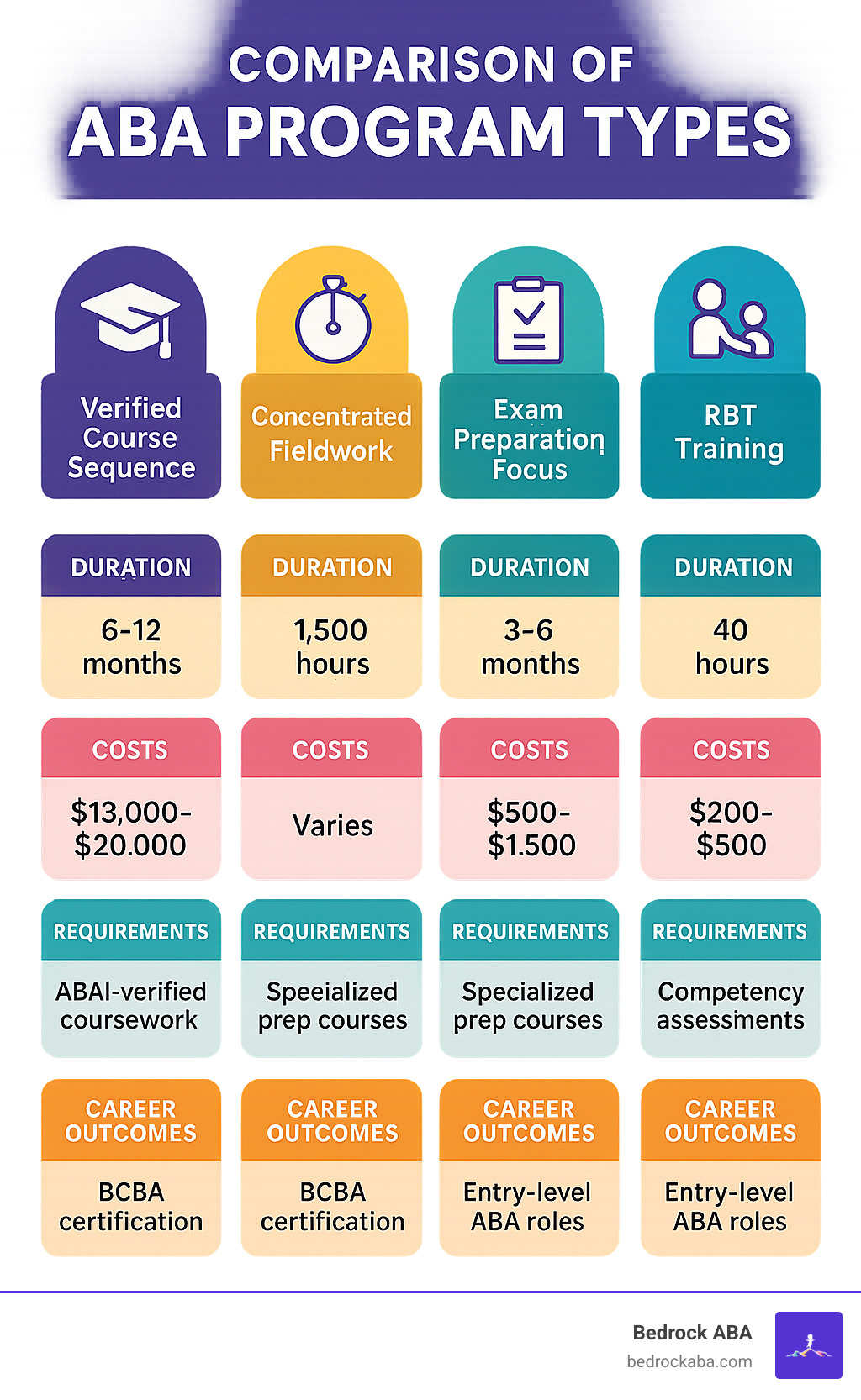
| Program Type | Duration | Cost Range | Best For |
|---|---|---|---|
| Master’s Degree | 1-2 years | $25,000-$50,000 | Future BCBAs |
| Graduate Certificate | 6-12 months | $8,000-$15,000 | Career changers with degrees |
| RBT Training | 40 hours | $200-$500 | Entry-level professionals |
| Continuing Education | Ongoing | $50-$300/course | Current professionals |
Must-Have Accreditations & Credentials
Never compromise on accreditation—it determines whether your education will be recognized by employers and certification boards.
ABAI verification ensures the program meets Behavior Analyst Certification Board requirements for BCBA eligibility. Without this, you cannot sit for the BCBA exam regardless of your grades or effort.
Regional accreditation from bodies like the Higher Learning Commission validates the institution’s overall quality and allows students to access federal financial aid.
QABA approval (Quality Assurance for Behavior Analysis) provides additional verification that programs meet professional standards and prepare students for real-world practice.
Practical Considerations
Time commitment varies significantly. Full-time students can complete master’s programs in 12-18 months, while part-time options may take 2-3 years. Consider your family and work obligations realistically.
Technology requirements include reliable internet, webcam, and microphone for live sessions. Some programs require specific software for data collection practice or virtual reality components.
Financial aid options include federal loans, scholarships, and employer tuition reimbursement. Military personnel may qualify for additional benefits. Some programs offer payment plans to spread costs over time.
Clinical placement assistance varies dramatically between programs. Ask specific questions about how they help students find supervision opportunities, especially in rural areas where BCBAs may be scarce.
For families we work with in Salt Lake City and throughout Utah, we often recommend starting with foundational training while exploring longer-term educational goals. More info about key principles can help you understand what you’ll be learning.
Frequently Asked Questions about ABA Therapy Online Programs
When families ask us about ABA therapy online programs, these three questions come up most often. Let’s explore the details so you can make informed decisions about your education and career path.
How long do online ABA programs take?
The time commitment for ABA therapy online programs varies dramatically based on what you’re trying to achieve and how much time you can dedicate to studying.
RBT training is the quickest entry point at just 40 hours total. Most people knock this out in 1-2 weeks while working around their regular schedule. It’s perfect if you want to start helping children right away or test whether ABA is the right field for you.
Graduate certificates typically take 6-12 months if you’re studying full-time, though part-time students often need up to 18 months. These programs are ideal for career changers who already have a master’s degree in psychology, education, or a related field.
Master’s degree programs require the biggest time investment. Full-time students usually finish in 1-2 years, while part-time learners might need 2-3 years to complete all requirements. You’ll also need to complete supervised fieldwork hours, which can extend your timeline.
The beauty of online learning is flexibility. Unlike traditional semester schedules, many programs offer multiple start dates throughout the year. You can often speed up or slow down based on your family’s needs and work commitments.
Can all BCBA supervision hours be completed virtually?
This question gets complicated because the rules keep evolving, especially after the pandemic changed how we think about remote supervision.
Here’s what we know right now: some supervision can happen virtually, but not all of it. The Behavior Analyst Certification Board requires a portion of your supervision to be conducted in-person. The exact percentages depend on whether you’re pursuing concentrated fieldwork (1,500 hours) or unrestricted fieldwork (2,000 hours).
Concentrated fieldwork typically has stricter in-person requirements, while unrestricted fieldwork allows more flexibility with virtual supervision. However, these guidelines continue to evolve as the field adapts to new technology and research on supervision effectiveness.
State licensing boards can impose additional requirements beyond what the BACB mandates. Some states are more restrictive about virtual supervision, while others have acceptd the flexibility that telehealth supervision provides.
Our advice? Always verify current guidelines with both the BACB and your state licensing board before starting any program. Rules that applied last year might have changed, and you don’t want any surprises when it’s time to apply for certification.
What is the average cost range for accredited online programs?
Cost is often the deciding factor for families, and we get it—education is a significant investment. Here’s what you can expect to pay for quality ABA therapy online programs.
Master’s degree programs represent the biggest financial commitment at $25,000-$50,000 total. Public universities often cost less, especially if you qualify for in-state tuition. Private institutions might charge more upfront but sometimes offer better financial aid packages that reduce your actual out-of-pocket costs.
Graduate certificates are the middle ground at $8,000-$15,000 total. These programs pack all the essential BCBA preparation into a concentrated timeframe, making them cost-effective for people who already have master’s degrees in related fields.
RBT training is incredibly affordable at just $200-$500. Many employers reimburse this cost, making it essentially free for people already working in education or healthcare settings.
Continuing education courses for maintaining certifications typically run $50-$300 per course. Most employers cover these costs as part of professional development budgets.
Cheaper isn’t always better. Programs with higher upfront costs often provide better job placement support, higher exam pass rates, and stronger alumni networks. These benefits can pay for themselves through better career opportunities and faster certification success.
Consider the return on investment too. BCBAs in many areas earn $60,000-$80,000 annually, making even expensive programs worthwhile investments in your family’s future.
Conclusion
ABA therapy online programs have opened doors that many families thought were permanently closed. If you’re a parent watching your child struggle with autism, or a professional who wants to make a real difference, these programs offer hope wrapped in flexibility and backed by science.
The numbers tell a powerful story. With over 18% employment growth projected for behavior analysts and critical shortages in 49 states, we’re facing both a crisis and an opportunity. Every person who completes quality online ABA training helps bridge that gap—and potentially changes a child’s life trajectory.
We’ve witnessed this change countless times at Bedrock ABA. Parents who start with basic RBT training often find they have a gift for this work. Educators who pursue graduate certificates bring new skills back to their classrooms. Career changers who commit to full master’s programs find purpose they never expected.
The beauty of online learning isn’t just convenience—it’s democratization. A single parent in rural Utah can access the same high-quality training as someone in a major metropolitan area. Working professionals can build new skills without abandoning current responsibilities. Geographic barriers that once limited opportunities simply disappear.
But here’s what really matters: every child with autism deserves skilled, compassionate support. When you invest in proper ABA training, you’re not just advancing your career. You’re joining a community of people who understand that small, consistent interventions can create profound changes.
The evidence supporting ABA is overwhelming, and online education makes this evidence-based training more accessible than ever. Whether you start with a 40-hour RBT course or dive into a comprehensive master’s program, you’re taking a step that ripples outward—affecting not just one child, but entire families and communities.
Quality matters deeply in this field. Choose ABAI-verified programs with transparent outcomes and strong support systems. The investment pays dividends throughout your career, but more importantly, in the lives you’ll touch along the way.
At Bedrock ABA, we see how proper training transforms both professionals and families. Our telehealth services complement formal education by providing real-world experience where theory meets practice. More info about ABA Telehealth Therapy shows how digital platforms are creating new possibilities for meaningful intervention.
The future of autism support is bright, flexible, and increasingly accessible. By choosing the right online ABA training program, you’re not just learning new skills—you’re becoming part of a movement that ensures every child has the opportunity to reach their full potential.