


The Growing Demand for ABA Administration Jobs
ABA administration jobs are increasingly in demand as the field of Applied Behavior Analysis continues to expand rapidly across the United States. If you’re looking for non-clinical roles in the ABA field, here are the key administrative positions currently available:
- Program Director: Oversees clinical operations, staff management, and program development ($70,000-$100,000+)
- Intake Coordinator: Manages new client onboarding and insurance verification ($45,000-$55,000)
- Patient Access Supervisor: Coordinates referrals and schedules assessments ($53,000-$68,000)
- Clinic Manager: Handles day-to-day operations and facility management ($60,000-$85,000)
- Talent Acquisition Specialist: Recruits and onboards clinical and administrative staff ($50,000-$70,000)
The field of Applied Behavior Analysis is experiencing unprecedented growth, with BCBA job postings increasing from 28,967 in 2010 to over 65,000 in 2023. This expansion isn’t limited to clinical roles—administrative positions have become essential to the effective delivery of ABA services across schools, clinics, and healthcare organizations.
Behind every successful ABA therapy program is a team of dedicated administrators who ensure operations run smoothly, from patient intake to insurance verification, scheduling, and program management. These professionals make it possible for BCBAs and therapists to focus on what they do best: providing quality care to individuals with autism and developmental disabilities.
As Director of Operations at Bedrock ABA, I’ve witnessed how crucial effective administration is to delivering quality ABA services. My experience overseeing ABA administration jobs across multiple states has shown that strong administrative teams are the backbone of successful therapy programs.
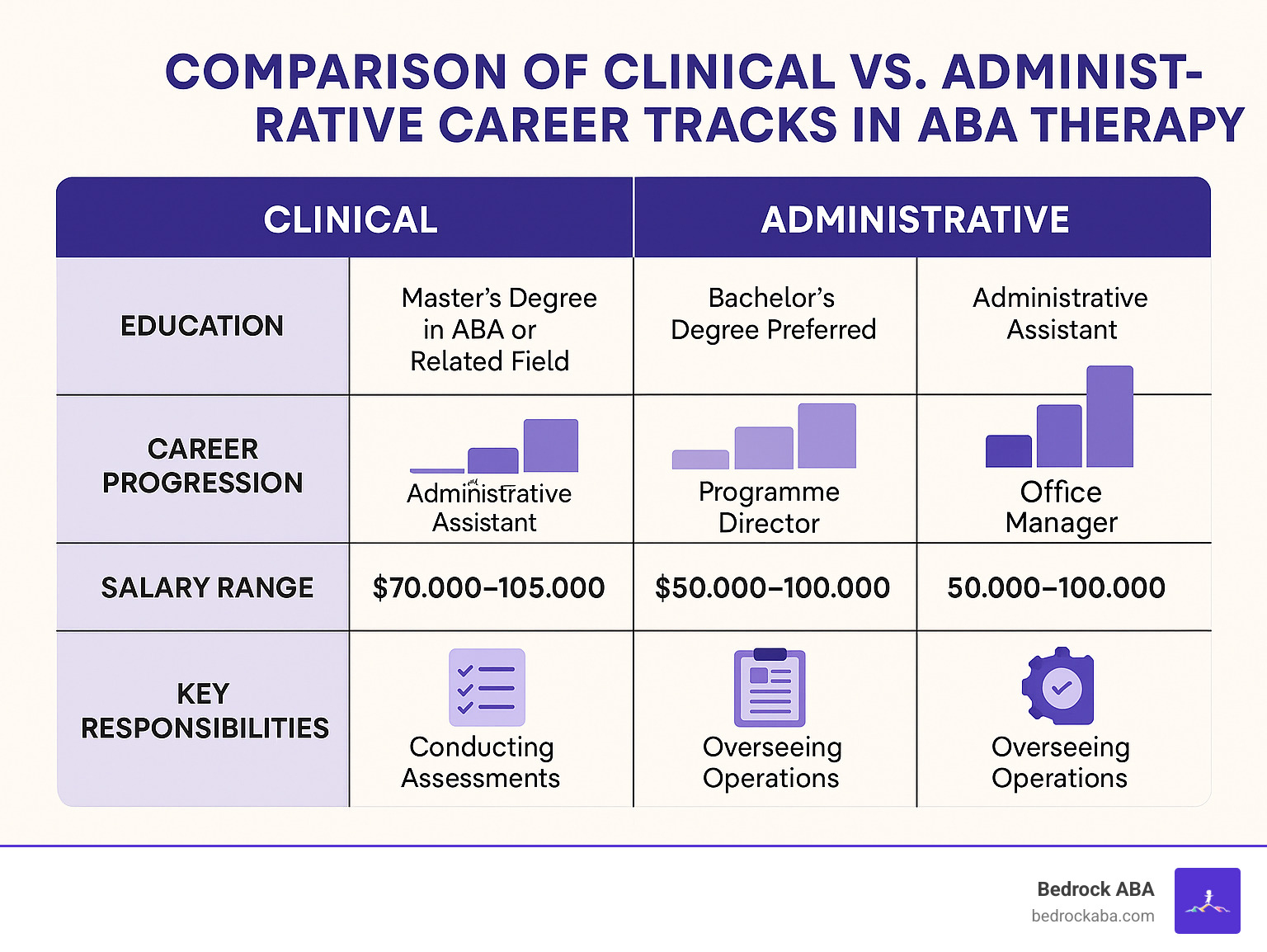
Top ABA Administration Jobs Hiring Now
The growth in autism diagnoses and expanded insurance coverage for ABA therapy has created a surge in administrative positions across various settings. From healthcare offices and schools to private clinics like ours at Bedrock ABA in Salt Lake City, Utah, administrative professionals are essential to our mission of providing personalized therapy services.
Let’s explore the most in-demand ABA administration jobs currently available in the field:

High-Impact Leadership Roles
Program Director
Program Directors are truly the heartbeat of ABA organizations. They oversee multiple locations or programs while juggling budgets, staffing needs, and those ever-changing regulatory requirements. At Bedrock ABA, our Program Directors don’t just manage—they inspire. They create strategic initiatives that keep us focused on what matters most: family-centered care.
“Being a Program Director means wearing many hats,” shares one of our team leaders. “One minute you’re reviewing clinical data, the next you’re mentoring a new supervisor, and then you’re meeting with insurance representatives—but seeing our programs change lives makes every challenge worthwhile.”
These professionals develop and implement clinical programs, manage staffing and quality, ensure compliance with insurance and state regulations, analyze program data, and build community partnerships. Their strategic vision keeps our services aligned with best practices and family needs.
Clinical Director
While Clinical Directors typically hold BCBA certification, their role extends far beyond clinical work. They’re the bridge-builders who connect administrative functions with actual service delivery. They oversee clinical operations while managing staff training and maintaining quality standards across all services. Their unique perspective helps translate clinical needs into administrative action.
Regional Manager
As Bedrock ABA continues to grow across Utah, our Regional Managers have become increasingly vital. They’re the ones ensuring that a child receives the same high-quality care whether they’re in Salt Lake City or a smaller community. Regional Managers coordinate operations across multiple locations, standardize processes, mentor site directors, and maintain consistent service quality. They’re the glue that holds expanding organizations together.
Front-Line Operations Roles
Intake Coordinator
Imagine being the first friendly voice a worried parent hears when seeking help for their child. That’s the Intake Coordinator—often the unsung hero of ABA administration jobs. They manage the critical first impression, guiding families through what can feel like an overwhelming process.
“I remember feeling so lost when seeking therapy for my son,” one Bedrock ABA parent shared. “Our Intake Coordinator was like a lighthouse—she explained everything clearly, helped with insurance, and made us feel like we weren’t alone.”
These professionals respond to family inquiries, gather intake documentation, verify insurance benefits, coordinate assessments, and guide families through onboarding. Their warmth and attention to detail set the tone for the entire therapy experience.
Scheduling Lead
ABA scheduling is like solving a complex puzzle every day. Our Scheduling Leads masterfully coordinate between therapists, families, and available spaces. They balance therapist utilization with family preferences, managing cancellations and rescheduling with grace. Their organizational skills keep our clinical team operating at maximum efficiency while ensuring families receive consistent care.
Billing Specialist
Behind every successful therapy session is a Billing Specialist making sure services are properly reimbursed. With the maze of insurance requirements for ABA services, these detail-oriented professionals ensure proper claim submission, follow up on denials, and maximize reimbursement. Their expertise in CPT codes, insurance requirements, and electronic billing systems keeps our doors open and services accessible.
Patient Access Supervisor
Overseeing both intake and scheduling teams, Patient Access Supervisors ensure smooth daily operations while resolving any escalated issues. Earning between $53,000 and $68,000 annually, these professionals serve as the primary bridge between clients and our service delivery team. They coordinate patient outreach initiatives and continuously refine workflows to improve the family experience from first contact through ongoing services.
Emerging Remote & Hybrid Positions in ABA Administration Jobs
The silver lining of the pandemic? It showed us that many ABA administration jobs can thrive in flexible work environments. Today, we’re seeing exciting new remote and hybrid opportunities:
Telehealth Coordinator
As Bedrock ABA expands our telehealth options, dedicated Telehealth Coordinators have become essential. They manage the technical aspects of virtual sessions, train families on platforms, troubleshoot connection issues, and ensure documentation meets all requirements. Their work makes therapy accessible to families regardless of location or transportation challenges.
Data Analyst
ABA therapy generates mountains of valuable data. Our Data Analysts transform these numbers into insights that improve care and demonstrate outcomes to insurance companies and stakeholders. They identify trends, generate reports, and help teams make data-driven decisions. The analytical nature of this work often makes it ideal for remote arrangements.
HR Business Partner
With the nationwide shortage of qualified ABA professionals, specialized HR Business Partners have become critical. They develop recruitment strategies, create retention programs, and manage employee relations with an understanding of the unique challenges in our field. Their expertise helps us build and maintain the exceptional team that delivers our quality services.
For those interested in remote ABA administration jobs, these specialized job boards often list opportunities:
1. Indeed.com – Filter for “remote” + “ABA administration”
2. LinkedIn Jobs – Use “ABA” + “remote” + “administration” filters
3. ZipRecruiter – Search “remote ABA administration”
4. HigherEdJobs.com – For university-affiliated ABA programs
5. BehaviorAnalystJobs.com – Specialized job board for the field
Whether you’re drawn to leadership roles, front-line operations, or emerging remote positions, ABA administration jobs offer rewarding careers that directly support the life-changing work happening in therapy sessions every day.
Qualifications & Skills for ABA Administrative Careers

Walking into ABA administration jobs is like stepping into a sweet spot where healthcare knowledge meets business savvy. Unlike our clinical teammates who focus on direct therapy, those of us in administrative roles keep the organizational wheels turning smoothly through efficient systems, careful compliance, and operational magic.
Must-Have Credentials & Certifications
I’ve seen how qualifications can vary widely across different administrative positions. If you’re looking to break into this field, here’s what typically opens doors:
For those just starting out, a bachelor’s degree in healthcare administration, business, psychology or a related field will serve you well. You’ll need a basic grasp of ABA principles (enough to speak the language) and a solid understanding of HIPAA privacy laws. Being comfortable with office software like Microsoft Office or Google Workspace is non-negotiable in today’s digital workspace.
Moving up to mid-level management? You’ll likely need that bachelor’s degree (a master’s is even better) plus 2-5 years of healthcare admin experience, preferably in behavioral health. Insurance billing knowledge becomes crucial at this level, as does proficiency with electronic health records and project management skills.
For leadership positions, we typically look for candidates with master’s degrees in healthcare or business administration, backed by 5+ years of healthcare management experience. You’ll need to understand regulatory requirements inside and out, manage budgets effectively, and have proven skills in staff development.
While BCBA certification is wonderful to have and can set you apart, it’s not usually required for purely administrative roles. The Applied Behavior Analysis Technician (ABAT) credential can be a great stepping stone, giving you enough ABA knowledge without the extensive requirements of becoming a BCBA. As research from the BACB shows, even basic certification can significantly improve career prospects in administrative roles.
Essential Soft & Tech Skills in ABA Administration Jobs
Beyond the formal credentials, what really makes someone shine in ABA administration jobs is their blend of people skills and technical know-how.
Communication skills are absolutely essential. On any given day, you might explain complex insurance processes to worried parents, collaborate with clinical teams on scheduling challenges, document important case notes, and handle sensitive conversations—all before lunch! At Bedrock ABA, we’ve found that administrators who communicate with both clarity and compassion create trust with families navigating what can be an overwhelming process.
Multitasking isn’t just helpful—it’s a survival skill. You’ll juggle phone calls while updating the schedule as emails flood in and a parent arrives early for an appointment. Your ability to stay organized and prioritize effectively will be tested daily.
Data analytics has become increasingly important too. Being able to spot trends in attendance data or identify bottlenecks in the authorization process helps our administrative team make smart decisions that improve care for everyone. You don’t need to be a statistician, but comfort with numbers and basic data visualization will take you far.
Conflict resolution skills are worth their weight in gold. Whether it’s helping a frustrated parent understand an insurance denial or mediating between team members with different priorities, your ability to find win-win solutions makes everyone’s day better.
Technology proficiency rounds out the skill set. Today’s ABA practice runs on digital systems—from EHR platforms to practice management software, from Excel spreadsheets to video conferencing for telehealth. At Bedrock ABA, we’ve seen how tech-savvy administrators can transform operations, creating smoother experiences for both families and clinical staff.
The beauty of developing these skills is that many of them transfer well from other industries. We’ve hired amazing administrators who came from hospitality, education, and retail backgrounds—people who brought fresh perspectives while quickly learning the specifics of ABA. You can learn more about the fundamental skills needed in this field on our Applied Behavior Analysis Therapy page.
What makes administrative careers in ABA so rewarding is that while you might not be delivering therapy directly, your work creates the foundation that makes excellent clinical care possible. When the administrative side runs smoothly, therapists can focus completely on helping children grow and thrive.
Salary Outlook & Career Pathways

Thinking about a career in ABA administration? You’ll be pleased to know that aba administration jobs offer both financial stability and clear growth opportunities. Unlike some career paths where advancement can feel mysterious, administrative roles in ABA provide visible stepping stones from entry-level positions all the way to executive leadership.
Average Pay Ranges by Title
When it comes to compensation, ABA administrative careers are competitive – often matching or even exceeding what clinical professionals earn at similar experience levels. Your actual salary will depend on where you live, the size of the organization, and your education and experience.
Here’s what you can generally expect across the country:
If you’re just starting out, entry-level positions like Administrative Assistants typically earn between $35,000 and $45,000 annually. Intake Coordinators, who guide families through the initial steps of ABA services, see salaries ranging from $40,000 to $55,000. Scheduling Coordinators who manage the complex therapy calendars earn around $38,000 to $48,000, while Billing Specialists who steer insurance requirements can make between $40,000 and $60,000.
As you move into mid-level management, your compensation grows accordingly. Patient Access Supervisors typically earn $53,000 to $68,000, while Office Managers see salaries between $55,000 and $75,000. Billing Managers, with their specialized knowledge of revenue cycles, can earn $60,000 to $80,000, and Operations Coordinators generally make between $50,000 and $65,000.
Leadership positions offer the most substantial compensation. Program Directors who oversee entire service lines typically earn $70,000 to well over $100,000. Operations Directors can see salaries from $80,000 to $120,000+, while Clinical Directors with administrative focus often earn between $85,000 and $130,000+. At the highest levels, Executive Directors can command salaries from $100,000 to $150,000 or more.
Many organizations, including Bedrock ABA, offer performance bonuses on top of base salaries – particularly for roles that directly impact growth or revenue management. And if you’re in a major metropolitan area like Salt Lake City, you’ll likely see higher salary ranges to offset the higher cost of living.
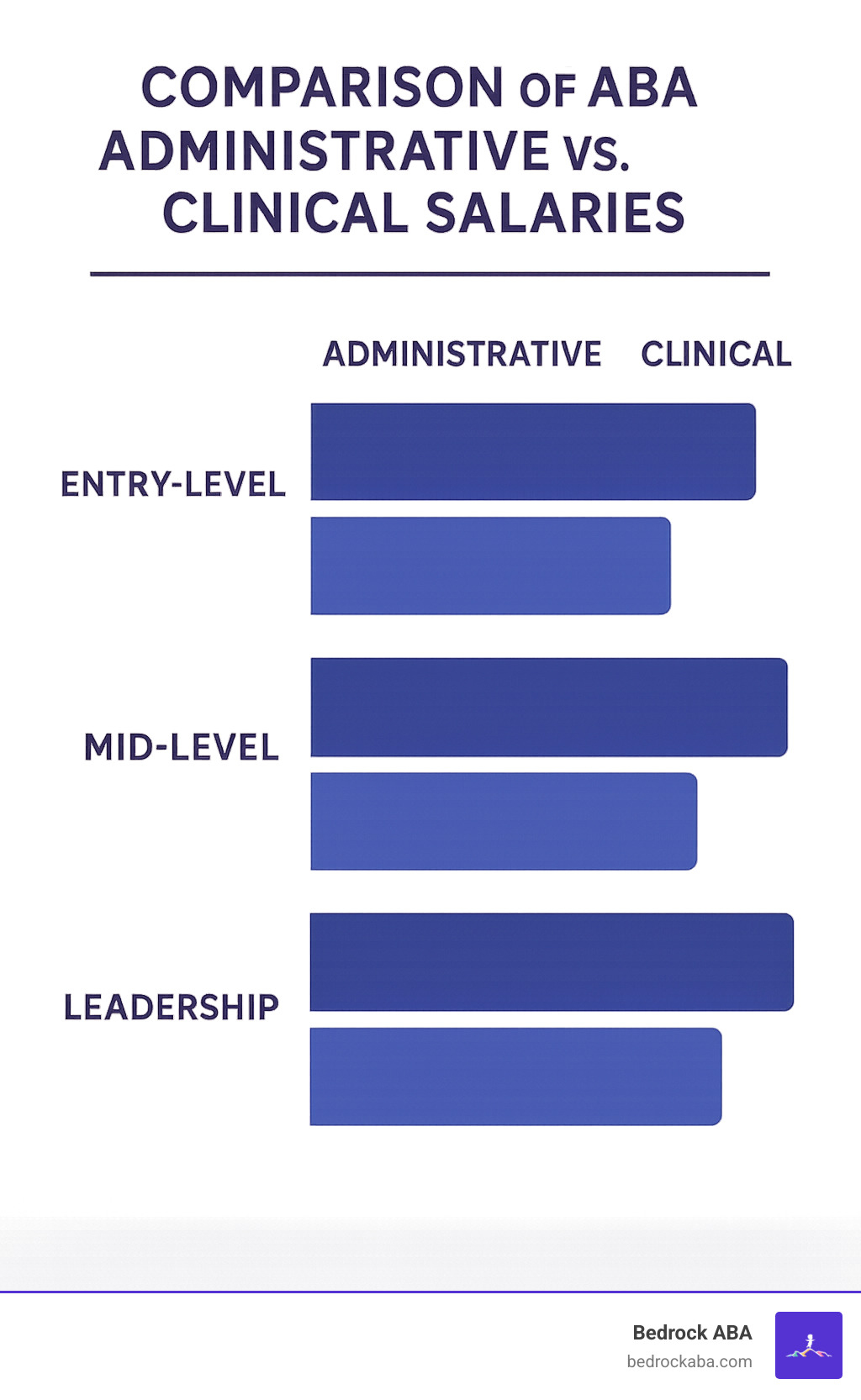
Roadmap from Tech to Administrator
One of the most beautiful aspects of aba administration jobs is that many paths lead to success. Many of our most effective administrators at Bedrock ABA actually started on the clinical side, bringing invaluable frontline experience to their administrative roles.
A common career progression often looks like this: Many begin as a Registered Behavior Technician (RBT), providing direct therapy while developing a solid understanding of ABA principles. With experience, they might become a Lead Technician, taking on training responsibilities or helping coordinate schedules.
From there, a transition to an Administrative Coordinator role focuses their skills on operational aspects like scheduling, intake, or billing. With proven success, they can advance to Department Manager, overseeing specific administrative functions. Eventually, they may grow into a Program or Operations Director position, managing the overall administrative operations for an entire clinic or program.
“My background as an RBT gives me a unique perspective,” shares one of our Operations Managers at Bedrock ABA. “When I’m designing administrative processes, I truly understand how they’ll impact our therapists on the ground. I can create systems that support our clinical team rather than adding to their workload.”
At Bedrock ABA, we actively nurture these career transitions through intentional mentorship programs that pair staff with experienced administrators. We offer cross-training opportunities so you can develop new skills while still in your current role, and provide continuing education units (CEUs) focused specifically on leadership and management development. For those pursuing further education, we even offer tuition assistance for relevant degree programs.
This thoughtful approach to career development ensures that our administrative team brings both operational excellence and a deep understanding of ABA therapy to their work – ultimately creating better experiences for the children and families we serve. Learn more about growing your career with us at Bedrock ABA Careers.
Transitioning from Clinical ABA to Administration
Making the leap from hands-on therapy to the administrative side doesn’t happen overnight. It’s a journey that many BCBAs and RBTs find both challenging and rewarding. If you’re considering moving from clinical practice into ABA administration jobs, I’ve gathered strategies from successful professionals who’ve made this transition themselves.
Upskilling Strategies
The path from clinician to administrator often requires developing a new set of skills. At Bedrock ABA, we’ve seen many talented therapists successfully transition by investing in their professional development.
Advanced education can open doors to leadership positions. While clinical roles focus on behavior analysis principles, administrative positions often benefit from business expertise. Consider pursuing an MBA or MPH to build your foundation in healthcare management. Many of our administrative leaders have found that project management certifications like PMP or CAPM help them run more efficient operations.
Hands-on administrative experience is invaluable, even if you need to create those opportunities yourself. One of our current Program Directors started by volunteering to help with scheduling challenges at her clinic. “I saw a problem with how we were handling cancellations, so I offered to create a new process,” she explains. “That small project showed leadership I could think systematically about operational issues.”
Building strong business acumen helps you speak the language of administration. Understanding insurance reimbursement models, reading financial statements, and analyzing operational data are crucial skills that set successful administrators apart. At Bedrock ABA, we encourage clinicians interested in administration to join our monthly operations meetings, where they can learn about the business side of providing therapy.
Leadership development happens through practice. Look for opportunities to mentor new staff, lead small projects, or coordinate team initiatives. These experiences build the people management skills you’ll need in administrative roles. Finding a mentor who’s already in administration can provide invaluable guidance during your transition.
Building Your Professional Brand
As you shift toward administration, you’ll need to reshape how others see you professionally. This doesn’t mean abandoning your clinical expertise—it means highlighting how that expertise makes you uniquely qualified for administrative leadership.
Your LinkedIn profile serves as your professional storefront. Update your headline and summary to reflect your administrative aspirations while honoring your clinical background. Something like “BCBA with a passion for operational excellence in ABA therapy” signals your direction without dismissing your valuable experience. Request recommendations that speak specifically to your organizational and leadership abilities.
Strategic networking connects you with opportunities that might not be advertised. Attend the administrative breakout sessions at ABA conferences. Join healthcare management webinars. Participate in leadership forums. These connections often lead to mentorship, job referrals, or simply good advice from those who’ve walked this path before you.
Positioning yourself as a thought leader builds credibility in administrative circles. Share your unique perspective on improving ABA service delivery through better operations. Consider writing articles about efficiency in assessment processes or presenting at conferences about streamlining parent training programs. Your clinical background gives you insights that pure administrators might miss.
When it’s time to apply for administrative positions, rebrand your resume to emphasize relevant experiences. Reorganize your information to highlight administrative responsibilities you’ve held, even if they were just a small part of your clinical role. Quantify your achievements wherever possible: “Reduced assessment wait times by 30% through process improvements” speaks louder than “Helped improve assessment scheduling.”
At Bedrock ABA, we value administrators who understand therapy from the inside out. Your perspective as a former clinician helps create systems that truly support effective therapy delivery rather than creating administrative burdens. As one of our Operations Directors who began as a BCBA often says, “I design our processes to protect clinical time, because I remember how precious those therapy hours are.”
The bridge between clinical expertise and administrative excellence is built one skill at a time. With strategic planning and intentional development, you can create a rewarding career path that leverages your clinical knowledge in powerful new ways.
Frequently Asked Questions about ABA Administration Jobs

What education do I need for an ABA administrative position?
I hear this question almost daily from people interested in joining our field! The truth is, educational requirements for aba administration jobs vary depending on the role you’re targeting.
For those just starting out, entry-level positions like Administrative Assistant or Intake Coordinator typically ask for a bachelor’s degree in business, healthcare administration, or psychology. Don’t worry if your degree is in another field, though – I’ve seen successful administrators come from diverse educational backgrounds. Some organizations (including ours at Bedrock ABA) may even consider candidates with associate’s degrees who bring relevant experience to the table.
If you’re aiming for mid-level roles such as Office Manager or Patient Access Supervisor, you’ll generally need that bachelor’s degree plus about 2-5 years of healthcare administration experience. Having previous behavioral health experience gives you an edge, but it’s not always a deal-breaker if you’re strong in other areas.
For those with leadership ambitions, Program Director and Operations Director positions usually require a master’s degree in healthcare administration or business, along with 5+ years of relevant experience. That said, exceptional candidates with bachelor’s degrees and extensive hands-on experience are sometimes considered too.
While BCBA certification isn’t typically mandatory for administrative roles, having a solid understanding of ABA principles definitely helps you speak the language of the clinical team. At Bedrock ABA, we particularly value candidates who bridge both worlds – those who understand the administrative side but also appreciate the nuances of ABA therapy and autism services.
How do salaries differ between clinical and administrative ABA roles?
Money talks, so let’s be transparent about what you can expect! The salary landscape between clinical and administrative paths shows some interesting patterns.
At the entry level, administrative roles like Intake Coordinators typically earn between $35,000-$55,000 annually. This might be less than what entry-level BCBAs make (around $70,000 on average), but it’s often comparable to or even higher than what RBTs earn (averaging about $39,520).
When you move into mid-level administrative positions such as Office Managers or Patient Access Supervisors, you’re looking at $50,000-$75,000, which actually puts you in the same neighborhood as many mid-career BCBAs.
What surprises many people is that senior administrative roles like Program Directors and Operations Directors can command $80,000-$120,000+ – competitive with or sometimes exceeding what senior clinical professionals earn.
Beyond just the paycheck, I’ve found that administrative roles often come with lifestyle benefits that aren’t reflected in the salary alone. You’ll typically enjoy more predictable hours and less emotional fatigue than direct therapy positions. Plus, the administrative career ladder often provides clearer pathways to executive leadership if that’s where your ambitions lie.
Which organizations hire administrative staff in ABA?
The good news is that aba administration jobs exist across a variety of settings, giving you plenty of options to find your perfect fit.
Private ABA providers like us at Bedrock ABA are obvious places to start your search. We hire administrative professionals at every level, from entry-level coordinators to senior directors who oversee entire programs.
Schools and educational institutions also need skilled administrators to coordinate ABA services for students. These roles often involve managing documentation and ensuring compliance with educational regulations, while working within the rhythm of the academic year.
If you prefer the larger healthcare ecosystem, hospitals and healthcare systems with behavioral health departments hire administrators to manage their ABA programs. These positions often offer the stability of a large organization while still focusing on the specialized needs of ABA service delivery.
Insurance companies are another option that people often overlook. They need professionals with ABA knowledge to review authorization requests, develop coverage policies, and manage provider networks. These roles can be perfect if you enjoy the analytical side of healthcare administration.
Government agencies and nonprofit organizations round out the landscape, offering opportunities to work on state-funded programs or community initiatives focused on autism and developmental disabilities.
Here in Utah, particularly around Salt Lake City, we’ve witnessed significant growth in administrative positions across all these settings as ABA services continue to expand throughout our state. This growth means more opportunities for professionals looking to make their mark in ABA administration!
Conclusion
The world of ABA administration jobs offers truly fulfilling career paths for professionals who want to make a meaningful difference in the lives of children with autism – without directly providing therapy themselves. As autism diagnoses continue to rise and insurance coverage expands, the demand for skilled administrators has skyrocketed, with job postings increasing by over 125% in the past decade.
Behind every successful ABA program stands a dedicated administrative team making the magic happen. At Bedrock ABA, we’ve seen how our administrative professionals form the backbone of our organization. From compassionate Intake Coordinators guiding nervous parents through their first steps, to visionary Program Directors ensuring clinical excellence across multiple locations – these roles create the foundation that allows our therapists to focus completely on delivering life-changing care.
What makes ABA administration jobs particularly rewarding is the unique blend of meaningful impact and professional growth they offer. You’re not just scheduling appointments or processing paperwork – you’re helping families access vital services that can transform a child’s future. As one of our Program Directors recently shared: “I may not provide direct therapy anymore, but I know my work helps hundreds of children receive better care than I could have provided to just a handful as a therapist.”
The administrative side of ABA also offers impressive career stability and advancement opportunities. With competitive salaries that often match or exceed clinical roles, clear promotion pathways, and the satisfaction of seeing organizational improvements benefit entire communities, it’s no wonder more professionals are exploring this career track.
For those with clinical backgrounds considering a transition, your hands-on experience provides invaluable perspective that can transform administrative systems to better support both therapists and families. And for experienced healthcare administrators looking for a growing field with purpose, the ABA industry welcomes your expertise as we continue expanding to meet the tremendous need for services.
At Bedrock ABA in Salt Lake City, Utah, we’re proud to be building a team that values both clinical excellence and administrative innovation. We understand that personalized, family-centered care requires not just skilled therapists, but also exceptional administrators who share our mission. Whether you’re coordinating telehealth sessions, analyzing program data, or developing new operational systems, your contribution makes our work possible.
If you’re interested in joining our administrative team at Bedrock ABA, we invite you to explore our current openings and learn more about our approach to personalized ABA therapy and telehealth services. Together, we can continue building a world where every child with autism has access to the support they need to thrive.