


Why Remote RBT Jobs Are Revolutionizing ABA Therapy Careers
Remote RBT jobs are changing how Registered Behavior Technicians deliver Applied Behavior Analysis (ABA) therapy, offering unprecedented flexibility while maintaining quality care for children with autism. Here’s what you need to know about remote RBT opportunities:
Quick Facts About Remote RBT Jobs:
– Growing demand: 17% increase in BCBA positions from 2019-2020, creating more remote supervision opportunities
– Competitive pay: Average $61,538 annually with flexible schedules and benefits
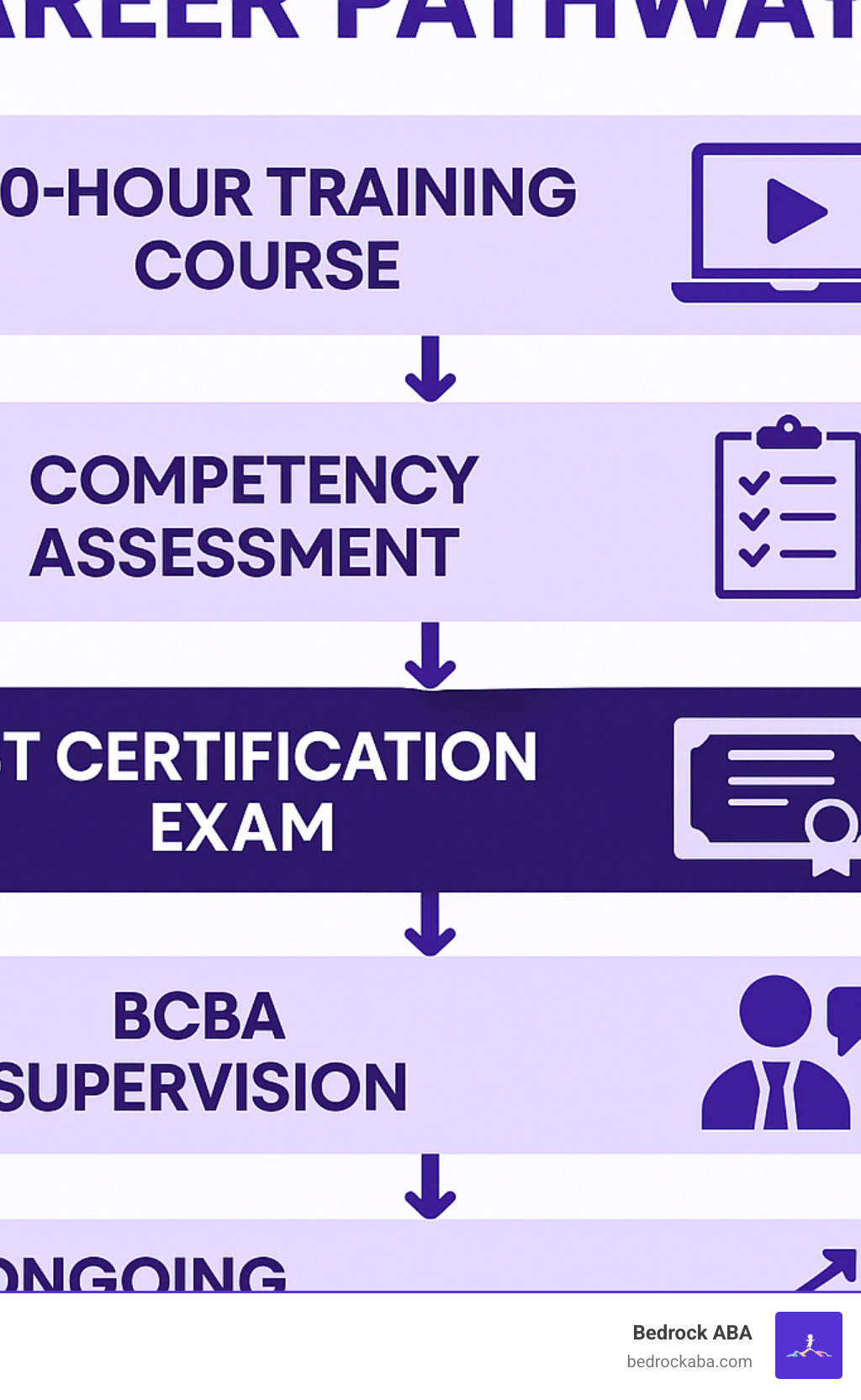
– Requirements: 40-hour RBT training course, competency assessment, and BCBA supervision
– Top hiring states: California, Texas, Florida, Georgia, and Massachusetts
– Technology needed: High-speed internet, secure video platform, and data collection software
– Career growth: 22% projected growth for BCBA roles over the next decade
The ABA field is experiencing explosive growth, with job postings jumping from 28,967 in 2010 to 65,366 in 2023. This surge creates more opportunities for RBTs to work remotely under BCBA supervision, delivering telehealth services to families who need them most.
Remote RBT positions solve two critical problems: the nationwide shortage of ABA therapists and the need for flexible work arrangements. As one remote worker noted, “Working at Golden Steps over the last year and a half has been the best professional decision I’ve ever made!”
For busy parents seeking ABA services, remote RBTs can provide consistent therapy without the stress of commuting to clinics. This model expands access to underserved areas while giving RBTs the work-life balance they need to avoid burnout.
10 Must-Know Facts About Remote RBT Jobs
The world of remote RBT jobs is exploding with opportunity, and the numbers tell an incredible story. If you’re considering this career path, you’re stepping into a field that’s not just growing—it’s changing how families access ABA therapy.
Let’s start with the jaw-dropping growth statistics. The demand for BCBAs skyrocketed by 17% from 2019 to 2020 alone, with job postings surging to an impressive 65,366 in 2023. That’s nearly double the 28,967 postings we saw back in 2010! This explosive growth creates a ripple effect, opening up more remote RBT jobs as BCBAs expand their supervision capacity to meet demand.
Your job security looks pretty fantastic too. ABA therapists can expect 14% job growth from 2018 to 2028, while BCBA-certified professionals are looking at an even more impressive 22% growth rate over the next decade. Translation? About 9,100 new job openings are expected for ABA therapists, and many of these will offer remote options.
Now, let’s talk money—because we all need to pay the bills! Remote RBT positions offer competitive salaries averaging $61,538 annually, often sweetened with benefits like flexible schedules, paid time off, and professional development opportunities. Not too shabby for a job you can do in your pajamas (though we recommend getting dressed for client sessions!).
Geographically speaking, five states are leading the charge: California, Massachusetts, Texas, Florida, and Georgia account for 40% of national BCBA demand. But here’s the beautiful thing about remote work—you’re no longer limited by your zip code. Families nationwide are gaining access to quality ABA services.
The technology aspect is where things get really exciting. Remote RBTs are using innovative digital platforms like Boom Cards and Google Slides to practice vocational tasks, conduct virtual job shadowing, and deliver interactive therapy sessions. It’s like having a therapy toolkit that fits in your laptop bag.
Of course, with great power comes great responsibility. All remote RBT work must maintain HIPAA compliance, follow telepractice guidelines, and meet state-specific licensing requirements for telehealth services. Your 40-hour RBT training course, competency assessment, and ongoing BCBA supervision remain non-negotiable requirements, regardless of whether you’re working in-person or virtually.
Here’s something that might surprise you: research shows that properly implemented telehealth ABA services can achieve comparable outcomes to in-person therapy. Some studies even indicate improved family engagement and skill generalization. That’s a win-win for everyone involved!
Remote work is also creating more inclusive opportunities within the autism community itself. Currently, only 25% of adults with autism are employed, but remote RBT positions are helping create more accessible work environments for professionals who may themselves be on the spectrum.
Finally, a word of caution: as remote opportunities multiply, so do employment scams. Legitimate remote RBT jobs never require upfront payment for training, equipment, or application fees. If someone’s asking for your credit card before offering you a job, run the other way!
The scientific research on ABA demand continues to support this growth trajectory, making remote RBT work not just a temporary trend, but a lasting change in how we deliver behavioral health services.
What Is an RBT & How Does Remote Work Change the Role?
Think of a Registered Behavior Technician as the hands-on hero of ABA therapy. RBTs implement behavior intervention plans designed by BCBAs, working directly with children to help them develop essential life skills. Traditionally, this meant showing up at homes, schools, or clinics with a bag full of materials and a head full of strategies.
Remote work hasn’t changed the heart of what RBTs do—it’s just moved the action online. You’re still implementing behavior intervention plans, collecting detailed session data, providing direct instruction and reinforcement, and following specific protocols for skill acquisition and behavior reduction. The mission remains the same: helping children with autism thrive.
But here’s where things get interesting. Remote RBTs have become masters of virtual reinforcement systems. Instead of handing out physical stickers or toys, they’re using digital reward systems, interactive games, and online token economies that kids absolutely love. Who knew that earning virtual coins could be just as motivating as the real thing?
The role has also evolved into something of a caregiver coaching position. Remote RBTs spend significant time training parents and caregivers to implement strategies between sessions. This means families become true partners in the therapeutic process, not just observers on the sidelines.
Technology has actually improved data collection in many ways. Digital platforms allow real-time data entry and immediate sharing with supervising BCBAs. No more deciphering handwritten notes or waiting for weekly reports—everything happens in real-time.
Perhaps the biggest game-changer is flexible session scheduling. Remote delivery enables more frequent, shorter sessions that work better with family schedules. A 30-minute session after school? No problem. A quick check-in during lunch? Absolutely doable.
The shift to remote work does require RBTs to develop new superpowers: technology troubleshooting, virtual engagement strategies, and family systems work. But the fundamental goal never wavers—helping children develop the skills they need to succeed in life.
Benefits & Challenges of Remote RBT Jobs
Let’s be honest about remote work—it’s not all sunshine and flexible schedules, though there’s plenty of both! Understanding the real benefits and challenges helps you make an informed decision about whether remote RBT jobs are right for you.
The flexibility and work-life balance aspect is genuinely life-changing for many RBTs. Eliminating commute time means you can roll out of bed 15 minutes before your first session (after getting properly dressed, of course!). This flexibility particularly benefits RBTs juggling family responsibilities or pursuing additional education. Less time in traffic means more time for what matters.
Expanded client reach is where remote work really shines. You can serve families in rural areas where driving to the nearest ABA clinic might take two hours. Suddenly, a child in small-town Montana has access to the same quality services as someone in downtown Los Angeles. That’s pretty amazing when you think about it.
The improved family involvement aspect often surprises new remote RBTs. When sessions happen in the family’s natural environment with parents actively participating, skill generalization improves dramatically. Parents become skilled co-therapists rather than passive observers.
Remote work also opens doors to diverse professional development opportunities. You might receive supervision from BCBAs across different geographic locations, exposing you to varied approaches and techniques you’d never encounter in a single clinic setting.
Now for the reality check. Technology barriers can turn a smooth session into a frustrating experience faster than you can say “Can you hear me now?” Both you and families need reliable internet, appropriate devices, and basic troubleshooting skills. When a three-year-old is having a meltdown and the video feed freezes, patience becomes your best friend.
Client engagement difficulties require creativity and persistence. Keeping a young child focused on a screen demands different strategies than in-person work. Some days you’ll feel like a children’s television host, complete with exaggerated expressions and animated voice.
The limited physical intervention aspect can feel restrictive. You can’t provide hands-on prompting or immediately manage challenging behaviors that require physical intervention. This is where strong caregiver coaching becomes essential.
Supervision complexity adds another layer of consideration. Ensuring adequate BCBA oversight and maintaining treatment fidelity requires more intentional planning and communication in remote settings.
Despite these challenges, many RBTs find remote work incredibly rewarding. The key is understanding what you’re signing up for and preparing accordingly.
Required Qualifications for Remote RBT Jobs
Getting qualified for remote RBT jobs follows the same foundational path as traditional RBT work, with a few extra considerations thrown into the mix. Let’s walk through what you’ll need to get started.
Your journey begins with the RBT certification process. You’ll complete the 40-hour RBT training course, which covers everything from basic ABA principles to data collection procedures. After training, you’ll need to pass both a competency assessment and the RBT certification exam. Think of this as your foundation—without it, nothing else matters.
The background check requirement from the Behavior Analyst Certification Board (BACB) is non-negotiable. This makes sense when you consider you’ll be working with vulnerable populations. You’ll also need a high school diploma or equivalent as the minimum educational requirement.
Ongoing supervision with a qualified BCBA remains essential, whether you’re working remotely or in-person. Your BCBA will provide guidance, review your work, and ensure you’re implementing interventions correctly. This relationship becomes even more important in remote settings where immediate feedback isn’t always possible.
Here’s where remote work gets specific: state requirements vary significantly for telehealth service delivery. Some states require additional licensure or registration for remote work, while others follow general RBT certification guidelines. Before accepting any remote position, verify what your state requires.
Technology competencies become crucial for remote success. You’ll need proficiency with video conferencing platforms, basic troubleshooting skills for common technical issues, and familiarity with data collection software. Understanding HIPAA-compliant communication methods isn’t just helpful—it’s legally required.
Don’t forget about continuing education units (CEUs) to maintain your certification. Some states now require specific telehealth training for remote service providers, so check your local requirements.
The good news? Most reputable employers provide technology training and ongoing support to help you succeed in remote settings. You don’t need to be a tech wizard, but you should be comfortable learning new digital tools.
Build Your Tech Toolkit for Seamless Virtual Sessions
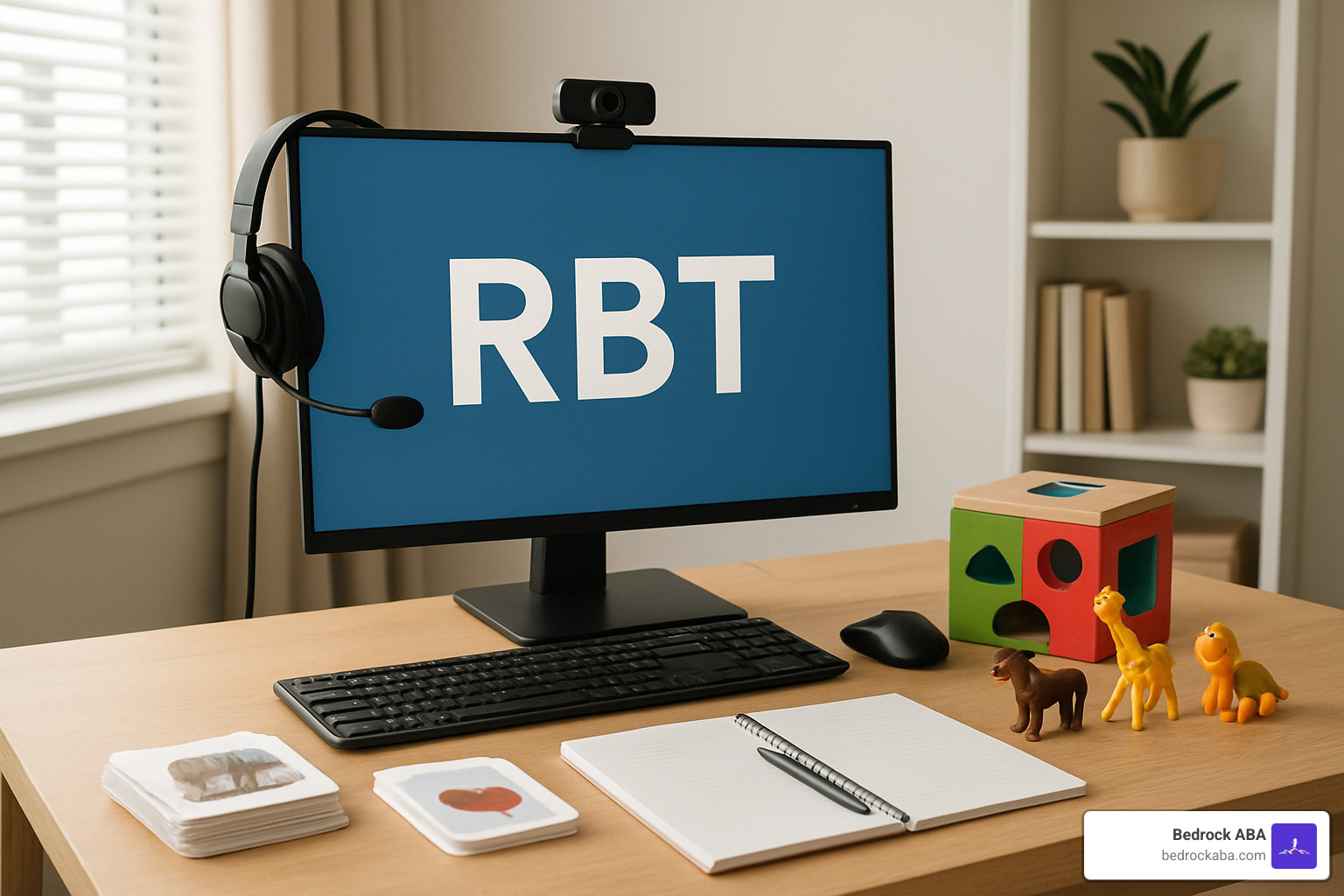
When you’re starting your journey in remote RBT jobs, having the right technology can make the difference between smooth, engaging sessions and frustrating technical difficulties. Think of your tech setup as your virtual therapy room—it needs to be reliable, secure, and designed to help children succeed.
Your secure video platform forms the foundation of everything you’ll do. HIPAA-compliant platforms like Zoom for Healthcare or Doxy.me aren’t just nice-to-have features—they’re legally required to protect your clients’ privacy. These platforms also tend to have better video quality and fewer glitches than free alternatives, which means less time troubleshooting and more time helping kids learn.
High-speed internet is your lifeline to families. You’ll want at least 25 Mbps download and 5 Mbps upload speeds to avoid those awkward frozen-screen moments. If possible, use an ethernet cable instead of WiFi. Trust us—when you’re trying to keep a five-year-old engaged through a screen, the last thing you need is a lagging connection.
Here’s where many new remote RBTs make a mistake: they try to manage everything on one small laptop screen. Dual monitors will change your life. Use one screen for your video session with the child and family, and the other for your data collection software and behavior plans. This setup lets you take notes and track progress without constantly switching windows and losing your client’s attention.
Your behavior tracking apps and data software deserve special attention. Platforms like CentralReach or Catalyst allow you to enter data in real-time and share it instantly with your supervising BCBA. This immediate feedback loop helps everyone stay on the same page about the child’s progress.
Don’t underestimate the power of a good headset. Noise-canceling features help you hear soft-spoken children clearly while blocking out household distractions. When working with kids who have communication challenges, every word matters—and clear audio can make those breakthrough moments possible.
Finally, prepare for technology hiccups with backup plans. A mobile hotspot can save the day when home internet fails, and having a backup device ready means you won’t leave families hanging when your computer decides to update itself mid-session.
More info about ABA Telehealth Therapy
Privacy & Ethical Safeguards
Working remotely means you’re entering families’ homes virtually, which comes with special responsibilities. HIPAA encryption isn’t optional—it’s the law. Every platform you use, every file you share, and every conversation you have about your clients must be protected with proper encryption and password security.
Informed consent takes on new meaning in telehealth. Families need to understand exactly how remote sessions differ from in-person therapy. They should know about potential technology limitations, privacy considerations, and what happens if sessions are recorded for supervision purposes. Clear communication upfront prevents misunderstandings later.
Parent training becomes a bigger part of your role as a remote RBT. Unlike in-person sessions where you might work more independently with the child, remote work often involves coaching caregivers in real-time. This can be incredibly powerful for skill generalization, but it requires setting clear boundaries about everyone’s role during sessions.
Troubleshooting Common Telehealth Glitches
Even with the best setup, technology will occasionally fail you. The key is being prepared with latency solutions and staying calm when things go wrong. Test your connection before each session, and teach families simple fixes like restarting their router or switching to lower video quality when bandwidth gets tight.
Backup plans aren’t just about equipment—they’re about having engaging activities ready that work even with technical interruptions. Develop a toolkit of games and exercises that don’t rely heavily on perfect video quality or split-second timing.
Caregiver coaching extends to technology support too. Create simple visual guides for common troubleshooting steps, and remember that not all families are tech-savvy. A little patience and empathy when technical difficulties arise goes a long way toward building trust and maintaining therapeutic relationships.
Where to Find Legit Remote RBT Jobs in 2024
Landing legitimate remote RBT jobs in today’s market feels a bit like online dating—there are plenty of options, but you need to know how to spot the genuine opportunities from the ones that are too good to be true. The remote work boom has created amazing opportunities for RBTs, but it’s also attracted scammers who prey on healthcare professionals looking for flexible work.
The good news? Real remote RBT jobs are out there, and they’re growing every day. You just need to know where to look and what red flags to avoid.
Specialized healthcare job boards are your best friend when searching for remote ABA positions. Sites like HealthcareJobSite, Allied Health Careers, and BehaviorJobs.com regularly feature legitimate remote openings. These platforms often pre-screen employers, which saves you time and reduces the risk of encountering fraudulent postings.
LinkedIn has become a goldmine for remote RBT opportunities. Set up job alerts for terms like “remote RBT,” “telehealth behavior technician,” and “virtual ABA therapist.” Join ABA professional groups where established companies post openings and network with other professionals who might know about upcoming positions.
Healthcare staffing agencies are increasingly specializing in telehealth placements. These agencies can be incredibly helpful with navigating state licensing requirements and credentialing processes—something that can feel overwhelming when you’re trying to work across state lines.
Don’t overlook direct employer websites either. Many established ABA companies now offer remote positions, so make it a habit to check the careers pages of reputable providers in your state and neighboring areas. Companies that have been around for years and have solid reputations are much more likely to offer legitimate remote opportunities.
Professional association resources through the Behavior Analyst Certification Board (BACB) and state ABA associations often maintain job boards with verified employers. These are typically very reliable sources since the organizations have relationships with the companies posting positions.
Now, let’s talk about those red flags. If a job posting asks you to pay for training or equipment upfront, run the other way. Legitimate employers provide necessary training and equipment—they don’t ask you to pay for it. Similarly, be wary of vague job descriptions that don’t mention specific RBT requirements or employers who won’t verify their company credentials when you ask.
Interview preparation for remote positions requires a slightly different approach than traditional roles. Research the company’s telehealth protocols and technology platforms beforehand. Be ready to share examples of how you’ve adapted ABA strategies for different environments, and don’t be shy about demonstrating your tech troubleshooting skills—these are crucial for remote work success.
When crafting your resume, include keywords like “telehealth experience,” “virtual service delivery,” “technology proficient,” and “family coaching” to help your application pass through automated screening systems.
Top States & Licensure Hotspots for Remote RBT Jobs
Some states are absolutely booming with remote RBT jobs, while others are still catching up to the telehealth revolution. Understanding where the opportunities are—and the licensing requirements that come with them—can make or break your remote job search.
California leads the pack in ABA job demand, and that extends to remote positions too. The state’s telehealth-friendly regulations and competitive salaries make it an attractive option for remote RBTs. Plus, with California’s size and diverse population, there’s consistent demand for services.
Texas is experiencing rapid growth in remote ABA opportunities, driven by population increases and growing autism awareness. The state offers good reciprocity options for RBTs licensed elsewhere, which can simplify the process of working with Texas-based families.
Florida’s strong insurance coverage for ABA services creates a stable market for remote work. The year-round population (unlike some seasonal areas) means more consistent caseloads, which translates to better job security for remote RBTs.
Georgia has emerged as an unexpected hotspot thanks to growing tech infrastructure and supportive telehealth policies. The state’s progressive approach to remote healthcare delivery has created new opportunities for ABA professionals.
Utah presents growing opportunities, particularly for serving rural communities throughout the state. With companies like Bedrock ABA establishing strong presences in areas like Salt Lake City, there’s increasing demand for remote RBTs who can reach families in more remote areas of the state.
The licensure reciprocity landscape is complex and constantly evolving. Some states allow RBTs to provide telehealth services to clients in other states under specific circumstances, but the regulations vary significantly. Always ensure you’re compliant with both your home state requirements and the regulations where your clients are located.
Several states are developing interstate compacts for telehealth services, which should simplify cross-state practice for RBTs in the future. Keep an eye on these developments—they could open up even more opportunities for remote work.
Salary Snapshot for Remote RBT Jobs
Let’s talk money—because while passion for helping children with autism is essential, you still need to pay your bills. The financial picture for remote RBT jobs is actually quite encouraging, especially when you factor in the hidden savings that come with working from home.
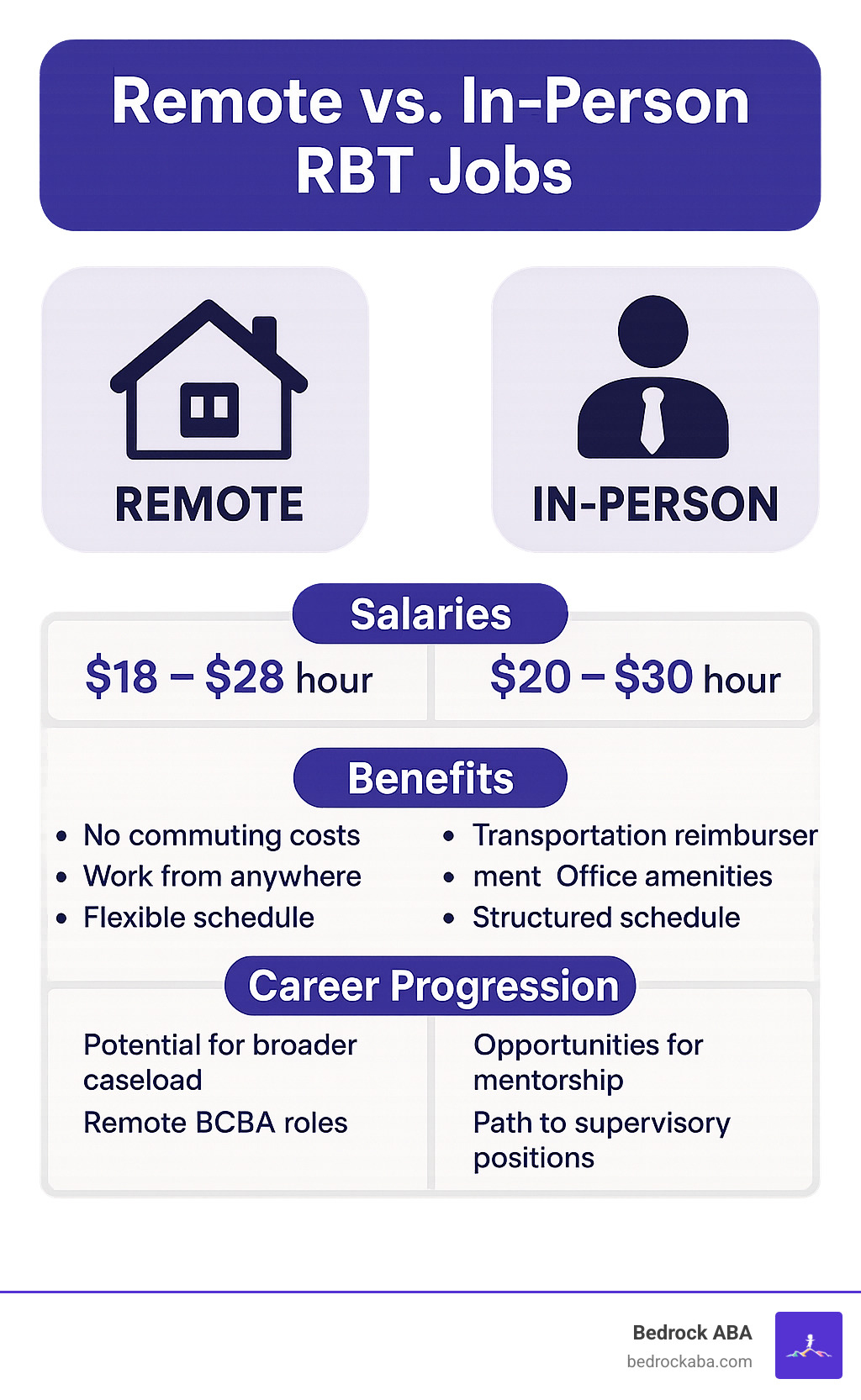
Hourly rates for remote RBTs typically range from $18-$28 for entry-level positions, with experienced practitioners earning $25-$35 per hour. These rates are competitive with in-person roles, and in many cases, they’re actually higher because employers save on overhead costs and can pass some of those savings on to employees.
Annual salaries for full-time remote RBTs generally fall between $38,000 and $58,000, with the national average hovering around $45,000. But here’s where it gets interesting—that salary often goes further than equivalent in-person positions because you’re not spending money on gas, car maintenance, work clothes, or grabbing lunch out every day.
The benefits packages for remote positions are often quite generous. Many employers offer flexible scheduling options (a huge perk for work-life balance), professional development stipends, technology allowances to help set up your home office, and the usual suspects like paid time off and health insurance. Some companies even provide continuing education reimbursement to help you advance your career.
Several factors affect your earning potential in remote RBT work. Years of experience and specialized training can significantly boost your hourly rate. Caseload size and client complexity also play roles—serving clients with more intensive needs often comes with higher compensation. The geographic location of the clients you serve matters too, as cost of living varies dramatically across states.
Here’s something that might surprise you: remote RBTs often have better access to professional development opportunities than their in-person counterparts. Online training programs, virtual conferences, and digital resources are abundant, and many employers actively encourage participation in these programs.
When you crunch the numbers, remote RBT work often comes out ahead financially. While average hourly rates might be similar to in-person work ($22-$30 for remote versus $20-$28 for in-person), remote workers save $2,000-$5,000 annually on commute costs alone. Add in the time savings (no more sitting in traffic!), increased schedule flexibility, and often better access to professional development, and the remote option becomes very attractive indeed.
| Compensation Factor | Remote RBT | In-Person RBT |
|---|---|---|
| Average Hourly Rate | $22-$30 | $20-$28 |
| Commute Costs | $0 | $2,000-$5,000/year |
| Schedule Flexibility | High | Moderate |
| Professional Development | Online access | In-person training |
| Career Advancement | BCBA pathway | BCBA pathway |
The career advancement opportunities remain strong in remote work. The pathway to becoming a BCBA is the same whether you work remotely or in-person, and many remote RBTs find they actually have more flexibility to pursue additional education while working.
Remote RBT Jobs vs. Traditional In-Person Roles: Outcomes That Matter
When families consider remote RBT jobs and telehealth ABA services, they naturally wonder: “Will my child make the same progress as they would with in-person therapy?” The research tells an encouraging story about the effectiveness of remote ABA delivery.
Client progress in remote settings often matches or even exceeds traditional in-person outcomes when certain conditions are met. The key difference isn’t the quality of progress—it’s how that progress happens. Remote therapy requires strong caregiver involvement and appropriate client selection, typically working best with children over three years old who can engage with technology.
What makes remote therapy particularly powerful is the natural environment advantage. When children learn skills in their own homes with family members actively participating, those skills tend to stick better in daily life. It’s like learning to ride a bike in your own driveway versus a distant parking lot—the familiarity helps everything click into place.
Parental satisfaction rates tell a compelling story too. About 70% of families report high satisfaction with telehealth ABA services, and their reasons make perfect sense. No more rushing through traffic to make appointments. No more waiting rooms or disrupted nap schedules. Parents can watch their child’s therapy sessions unfold, learning strategies they can use throughout the day.
The access to care improvements have been transformative for many families. Rural communities that previously had months-long waiting lists for ABA services can now connect with qualified RBTs remotely. Families dealing with medical complexities, transportation challenges, or simply living in areas with therapist shortages finally have options.
One unexpected benefit has emerged from remote therapy: improved skill generalization. When children practice communication skills at their own kitchen table or work on social interactions in their living room, these skills transfer more naturally to daily family life. The artificial barriers between “therapy time” and “real life” start to dissolve.
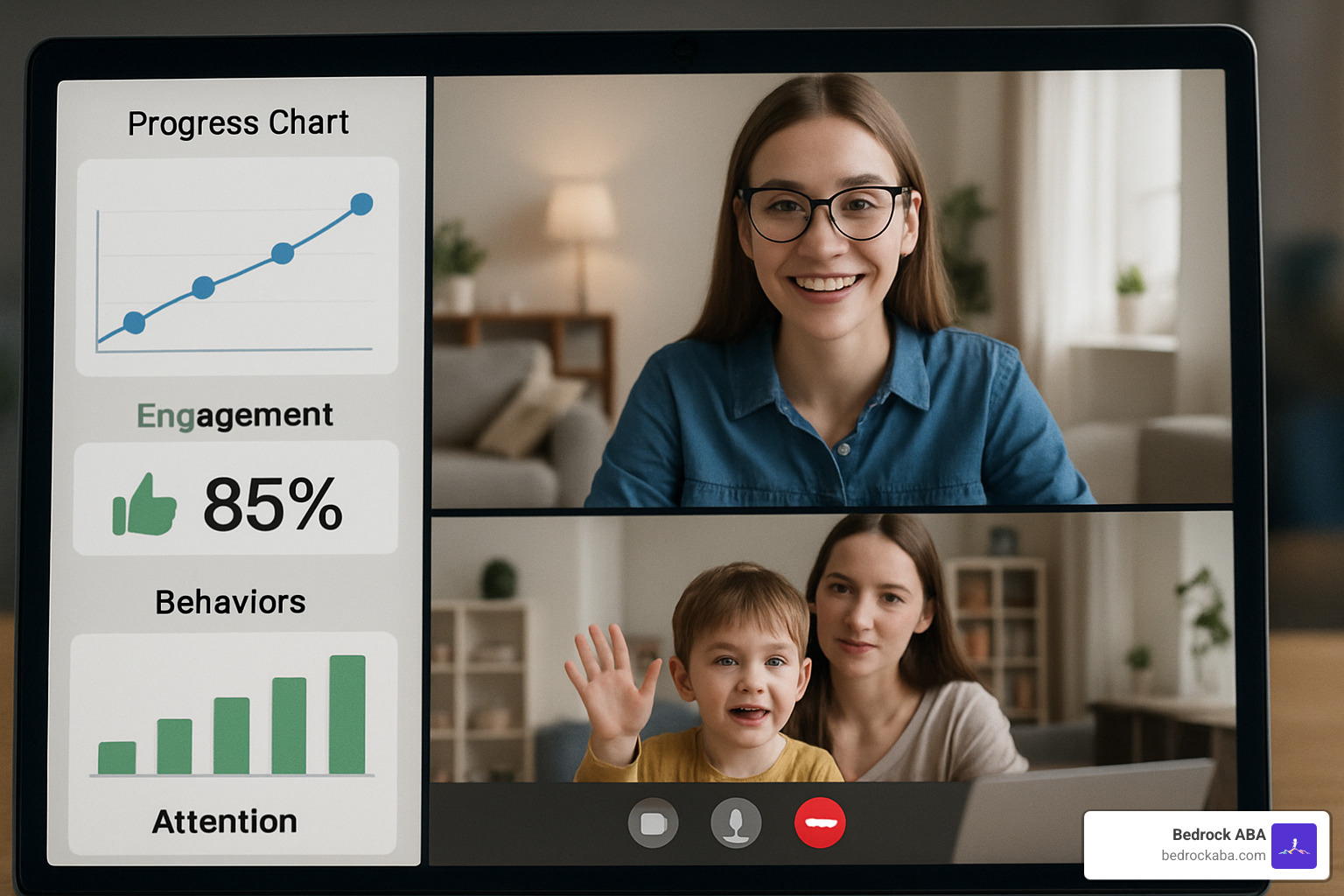
Research on Telehealth ABA Outcomes
The research foundation supporting remote ABA therapy has grown substantially, especially since the pandemic created an unplanned large-scale study of telehealth effectiveness. Multiple peer-reviewed studies now demonstrate that telehealth ABA interventions can produce meaningful behavior change and skill acquisition, with effect sizes approaching those seen in traditional in-person services.
The pandemic provided what researchers call a “natural experiment” in telehealth effectiveness. Thousands of families suddenly transitioned from in-person to remote services, and the results were surprisingly positive. Children maintained their therapeutic gains and continued making progress, proving that quality ABA therapy could happen through a screen.
Long-term outcome studies are still emerging, but preliminary research shows encouraging results. Children receiving remote ABA services demonstrate similar improvements in language development, social interactions, adaptive behaviors, and reduction of challenging behaviors compared to their in-person counterparts.
Several factors predict success in remote ABA therapy. Family commitment and active participation top the list—when parents accept their role as co-therapists, outcomes improve dramatically. The home environment setup matters too, along with technology literacy, reliable equipment, and the child’s developmental readiness for screen-based learning.
Scientific research on autism employment shows the broader impact of quality ABA services on long-term life outcomes, whether delivered remotely or in person.
Best Practices to Maximize Remote Success
Success in remote RBT jobs requires adapting proven ABA techniques for virtual delivery. Behavioral Skills Training (BST) works beautifully through video when RBTs modify their approach. Instead of physical demonstrations, they use clear verbal instructions paired with visual supports, guide caregiver practice during live sessions, and provide immediate feedback and coaching.
Caregiver collaboration becomes even more critical in remote settings. Successful remote RBTs start with thorough home environment assessments, helping families create optimal learning spaces. They train caregivers in basic ABA principles, turning parents into skilled intervention partners rather than passive observers.
The magic happens when families understand they’re not just watching therapy—they’re learning to become therapeutic throughout the day. A parent might learn to use visual schedules during morning routines or practice communication strategies during dinner preparation.
Frequent BCBA supervision takes on new importance in remote work. Weekly live session observations become essential, along with regular data review and prompt program modifications. BCBAs often find they need to provide more ongoing training and support for remote-specific challenges, but this improved supervision structure often benefits everyone involved.
The most successful remote RBT programs maintain flexible, family-centered approaches that honor each family’s unique circumstances while delivering evidence-based interventions. This balance of clinical rigor and family partnership creates the foundation for meaningful, lasting progress.
Frequently Asked Questions about Remote RBT Jobs
Starting a career in remote RBT jobs brings up many questions, especially about how traditional ABA therapy adapts to virtual environments. Let’s address the most common concerns we hear from aspiring remote RBTs.
How do supervision hours work remotely?
Remote RBT supervision maintains the same high standards as in-person work while adapting to digital platforms. The BACB still requires a minimum of 5% of your direct service hours to be spent in supervision, but the delivery methods become more flexible and often more frequent.
Direct observation happens through live video sessions where your BCBA watches you work with clients in real-time. Some BCBAs also review recorded sessions (with proper family consent), which can actually provide more detailed feedback than quick in-person check-ins.
Synchronous supervision includes your regular video meetings for case discussions, training sessions, and immediate feedback. Many remote RBTs find these sessions more focused and productive than traditional supervision because both parties come prepared with specific questions and data.
Asynchronous supervision covers email communication, detailed data review, and written feedback on your session notes. This ongoing communication often results in more comprehensive supervision than traditional models.
The beauty of remote supervision is that it often feels more collaborative. Your BCBA can see exactly what you’re seeing during sessions and provide immediate guidance when needed.
Can I work across state lines as an RBT?
Working across state lines as a remote RBT involves navigating a complex web of regulations that vary significantly from state to state. The short answer is: sometimes, but it requires careful planning and verification.
The client’s location typically determines the rules, not where you’re sitting during the session. This means if you’re in Utah providing services to a family in Nevada, you generally need to meet Nevada’s requirements for RBT practice.
Telehealth regulations add another layer of complexity. Some states require additional certifications or registrations specifically for remote service delivery. Others treat telehealth the same as in-person services.
Your supervising BCBA must also be licensed to provide services in the client’s state. This often limits cross-state opportunities to larger companies that employ BCBAs across multiple states.
Interstate compacts are slowly developing to make cross-state practice easier, but they’re still in early stages for ABA services. The regulatory landscape continues evolving as telehealth becomes more mainstream.
Before accepting any position involving cross-state work, verify current regulations with both state licensing boards. What’s legal today might change tomorrow, and compliance is your responsibility.
What equipment should my employer provide?
Equipment arrangements for remote RBT jobs vary widely among employers, and understanding these expectations upfront prevents surprises later. Most companies fall somewhere between providing everything and expecting you to handle your own setup.
Typical employer-provided equipment includes HIPAA-compliant video conferencing software licenses, access to data collection platforms like CentralReach or Catalyst, and sometimes basic computer equipment. Some forward-thinking companies provide complete home office setups, including monitors, webcams, and headsets.
Employee responsibilities usually include maintaining reliable high-speed internet, creating a quiet and private workspace, and handling basic troubleshooting. You’re also expected to maintain a professional appearance and background for video sessions.
Technology stipends represent a middle ground that many companies now offer. Instead of providing specific equipment, they give you a monthly allowance or one-time reimbursement for setting up your home office. This approach lets you choose equipment that works best for your space and preferences.
Shared costs might include partial reimbursements for internet upgrades or equipment purchases. Some companies cover software costs while expecting employees to provide hardware.
The key is asking detailed questions during the interview process. Companies that are vague about equipment expectations often expect you to handle everything yourself. Reputable employers will clearly outline what they provide and what you need to supply.
Don’t forget to factor equipment costs into your salary negotiations. A position offering $2 less per hour but providing all equipment might actually be more valuable than a higher-paying job where you cover all technology costs.
Conclusion
The future of remote RBT jobs is bright, and it’s happening right now. With a projected 22% growth rate for BCBA positions and 14% growth for ABA therapists over the next decade, we’re witnessing a fundamental shift in how ABA therapy is delivered—and it’s creating amazing opportunities for dedicated professionals like you.
This isn’t just about working from home in your pajamas (though that’s definitely a perk!). Remote RBT jobs are solving real problems: helping families in rural areas access quality therapy, reducing the stress of clinic commutes for overwhelmed parents, and giving therapists the flexibility they need to build sustainable careers without burning out.
Your Career Advancement Journey Starts Here
Many remote RBTs find that telehealth work actually accelerates their professional growth. The experience you’ll gain in family coaching, creative problem-solving, and technology integration becomes invaluable when you’re ready to pursue your BCBA credentials. Plus, the flexible schedule of remote work often makes it easier to complete graduate coursework while maintaining steady employment.
The BCBA pathway becomes more accessible when you’re not spending two hours a day commuting between clients. Remote RBTs develop strong skills in family systems intervention and collaborative care that make them standout candidates for supervisory roles.
Finding Your Perfect Remote RBT Match
Not all remote employers are created equal. Look for companies that truly invest in their remote workforce through comprehensive training, reliable technology support, and clear supervision structures. The best employers understand that supporting their team members’ professional growth and personal well-being leads to better outcomes for everyone—especially the children and families you’ll serve.
At Bedrock ABA, we’ve seen how telehealth programs can transform lives when they’re done right. Our approach combines the flexibility families desperately need with the quality supervision and support that remote RBTs deserve. We’re not just adapting to change—we’re leading it, expanding access to ABA services while helping our team members thrive in their careers.
The traffic-free lifestyle of remote RBT work represents something bigger than convenience. It’s about creating careers that allow passionate professionals to serve more families while maintaining their own health and happiness. When you’re not exhausted from driving between appointments, you can bring your best self to every session.
More info about ABA Telehealth Therapy
Whether you’re just starting your RBT journey or ready to transition from in-person work, remote positions offer exciting opportunities to grow professionally while making a meaningful impact. The future of ABA therapy is flexible, accessible, and more rewarding than ever before—and there’s never been a better time to be part of it.